
Verwandte Artikel zu Oxygen: A Play in 2 Acts
Inhaltsangabe
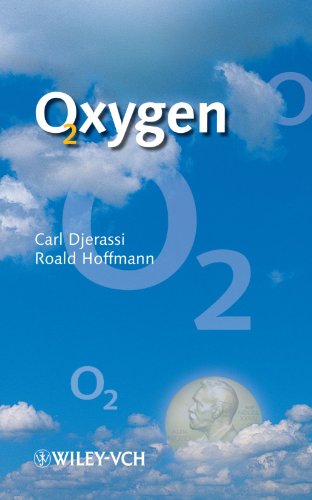
What motivates a scientist? One key factor is the pressure from the competition to be the first to discover something new. The moral consequences of this are the subject of the play "Oxygen" dealing with the discovery of this all-important element. The focus of the play is on chemical and political revolutions, as well as the Nobel Prize, which will be awarded for the 100th time in 2001. The action takes place in 1777 and 2001; and the play is written for 3 actors and 3 actresses who play a total of 11 characters. The world premiere will take place in early 2001 in San Diego, and the German premiere in September. The world-famous authors Carl Djerassi and Roald Hoffmann are a guarantee of excellence and suspense, both in their role as scientists - Carl Djerassi is known as the "Father of the Pill" while Roald Hoffmann received the Nobel Prize for chemistry in 1982 - as well as in their role as authors - Djerassi has written several successful novels, while Hoffmann is renowned for his poetry.
Die Inhaltsangabe kann sich auf eine andere Ausgabe dieses Titels beziehen.
Über die Autorin bzw. den Autor
Carl Djerassi:
Carl Djerassi, born in Vienna but educated in the US, is a writer and professor of chemistry at Stanford University. Author of over 1200 scientific publications and seven monographs, he is one of the few American scientists to have been awarded both the National Medal of Science (in 1973, for the first synthesis of a steroid oral contraceptive--"the Pill") and the National Medal of Technology (in 1991, for promoting new approaches to insect control). A member of the US National Academy of Sciences and the American Academy of Arts and Sciences as well as many foreign academies, Djerassi has received 18 honorary doctorates together with numerous other honors, such as the first Wolf Prize in Chemistry, the first Award for the Industrial Application of Science from the National Academy of Sciences, and the American Chemical Society's highest award, the Priestley Medal.
For the past decade, he has turned to fiction writing, mostly in the genre of "science-in-fiction," whereby he illustrates, in the guise of realistic fiction, the human side of scientists and the personal conflicts faced by scientists in their quest for scientific knowledge, personal recognition, and financial rewards. In addition to novels (Cantor's Dilemma; The Bourbaki Gambit; Marx, deceased; Menachem's Seed; NO), short stories (The Futurist and Other Stories), and autobiography (The Pill, Pygmy Chimps, and Degas' Horse), he has recently embarked on a trilogy of plays which he describes in his web site as "science-in-theatre"-with an emphasis on contemporary cutting-edge research in the biomedical sciences. "AN IMMACULATE MISCONCEPTION," first performed in abbreviated form at the 1998 Edinburgh Fringe Festival and subsequently (1999) as a full, 2-act play in London (New End Theatre),
San Francisco (Eureka Theatre) and Vienna (under the title UNBEFLECKT at the Jugendstiltheater), focuses on the ethical issues inherent in recent spectacular advances in the treatment of male infertility through single sperm injection (the ICSI technique). A radio adaptation was broadcast over the BBC World Service as "Play of the Week." He is also the founder of the Djerassi Resident Artists Program near Woodside, California, which provides residencies and studio space for artists in the visual arts, literature, choreography and performing arts, and music. Over 1000 artists have passed through that program since its inception in 1982.
(There is a Web site about Carl Djerassi's writing at http://www.djerassi.com)
Roald Hoffmann:
Roald Hoffmann, born in Zloczow, Poland but educated in the US, is the Frank H. T. Rhodes Professor of Humane Letters at Cornell University. One of America's most distinguished chemists, he was awarded the Nobel Prize in Chemistry. A member of the US National Academy of Sciences and the American Academy of Arts and Sciences as well as many foreign academies, Hoffmann has received 26 honorary doctorates together with numerous other honors such as the National Medal of Science. Hoffmann is the only person ever to receive the American Chemical Society's top awards in three sub- disciplines: organic chemistry, inorganic chemistry, and chemical education.
For the past dozen years, Hoffmann has simultaneously pursued a literary career. He is the author of three books of poetry, "The Metamict State" (1987), "Gaps and Verges" (1990), and "Memory Effects" (1999). His three non-fiction books deal with the overall theme of the creative and humanistic sparks of chemistry: An art/science/literature collaboration with artist Vivian Torrence, "Chemistry Imagined" (1993); "The Same and Not the Same" (1995); and "Old Wine, New Flasks: Reflections on Science and Jewish Tradition," in collaboration with Shira Leibowitz Schmidt. Hoffmann is also is the presenter of a television course, "The World of Chemistry", which has aired on many PBS Stations and abroad.
Auszug. © Genehmigter Nachdruck. Alle Rechte vorbehalten.
CAST OF CHARACTERS
Stockholm,1777
ANTOINE LAURENT LAVOISIER 34 years old.(French chemist, tax collector, economist, and public servant; discovered oxygen).
MARIE ANNE PIERRETTE PAULZE LAVOISIER 19 years old.(Wife of the above).
JOSEPH PRIESTLEY 44 years old.(English minister and chemist; discovered oxygen).
MARY PRIESTLEY 35 years old. (Wife of the above).
CARL WILHELM SCHEELE 35 years old.(Swedish apothecary; discovered oxygen).
SARA MARGARETHA POHL ( FRU POHL) 26 years old.(Became Mrs. Scheele three days prior to Carl Wilhelm's death).
COURT HERALD (off-stage male voice).
Stockholm,2001
PROF BENGT HJALMARSSON Member of the Chemistry Nobel Prize Committee of the Royal Swedish Academy of Sciences.(Same actor as Antoine Lavoisier ).
PROF. SUNE KALLSTENIUS Member of the Chemistry Nobel Prize Committee of the Royal Swedish Academy of Sciences.(Same actor as Carl Wilhelm Scheele ).
PROF. ASTRID ROSENQVIST Chair of the Chemistry Nobel Prize Committee of the Royal Swedish Academy of Sciences. (Same actress as Mrs. Priestley ).
PROF.ULF SVANHOLM Member of the Chemistry Nobel Prize Committee of the Royal Swedish Academy of Sciences.(Same actor as Joseph Priestley).
ULLA ZORN A graduate student in the History of Science and amanuensis to the Chemistry Nobel Prize Committee. (Same actress as FRU POHL ).
SCENE 1
(Sauna in Stockholm,Sweden,1777).The three women sit on a sauna bench, their bodies covered to various extents by bathing towels or appropriate sheets -Mrs. Priestley most decorously and Mme. Lavoisier most daringly. Each is wearing a different, typically 18th century, mobcap to cover her hair or wig).
MME LAVOISIER (Dreamily) I have never been beaten before ...not like that. Can we do it again?
MRS PRIESTLEY Madame! In England the birch is used for chastisement.
FRU POHL In Sweden, we consider it healthy. It brings the blood to the surface. So much better than leeches.
MRS PRIESTLEY (As towel slips off her shoulder, she quickly pulls it up) The immodesty of the sauna disquiets me.
MME LAVOISIER (Deliberately lowers her towel while addressing Mrs Priestley)
MRS PRIESTLEY ...we are just women. (Aside)...Now, were there men here ...
MRS PRIESTLEY Oh, you are young, Madame!
MME LAVOISIER Nineteen!
FRU POHL I was twenty before I married.
MRS PRIESTLEY So was I. (Turns to Fru Pohl) How many children do you have?
FRU POHL A young son. And you?
MRS PRIESTLEY Three sons and a daughter. (Turns to Mme Lavoisier) And you, Madame Lavoisier?
MME LAVOISIER None.
MRS PRIESTLEY Ah! I presume you married only recently?
MME LAVOISIER Six years ago.
FRU POHL And no children?
MRS PRIESTLEY My first child was born when we were married but ten months -
MME LAVOISIER As we say in France, chacun ` son go{t .
MRS PRIESTLEY So you think it was a matter of taste? I took it as an obligation when I married. (A touch of sarcasm) But then, of course, I was twenty ...
MME LAVOISIER Perhaps women mature faster in France ...especially those brought up in convent schools.
MRS PRIESTLEY A convent?
MME LAVOISIER Not to become a nun. And when my mother died, I left the convent to serve as my father 's hostess. I was twelve. (Pause). I even studied chemistry ..."Butter of arsenic "..."Sugar of lead "..."Flowers of zinc." What wonderful words, I thought: First chemistry in the kitchen ...then chemistry in the garden ...
MRS PRIESTLEY A child of twelve would find it charming.
MME LAVOISIER At thirteen, I escaped the attentions of a Count -much older than my father -by Marrying Monsieur Lavoisier. (Proudly). He is active in the tax collection agency for the crown. He heads the Discount Bank -
MRS PRIESTLEY A tax collector? A banker?
MME LAVOISIER (Amused) And a lawyer at twenty-one!
FRU POHL Yet your husband was invited to Sweden because of his chemical discoveries?
MME LAVOISIER So was Mrs Priestley 's husband. (Disingenuously to Mrs Priestley). He is a priest,is he not?
MRS PRIESTLEY A minister.Whom people call "Dr."Priestley. (Suddenly agitated) When you marry a man of God, you know you will find riches greater than money. But our Unitarian ideas are opposed by the Church of England. We cannot hold government office, we cannot go to Oxford or Cambridge. (Catches herself). I beg your pardon ...I was carried away.
MME LAVOISIER When I spoke of the chemistry I learned in the convent ...my husband told me something very useful. "The product of science is knowledge ...but the product of scientists is reputation." (Pause). Reputation is important to him ...and when I married him, it also became important to me.(Pause). Especially when he asked me to assist him in his endeavors.
FRU POHL He asked you that ...at age thirteen?
MME LAVOISIER Bien s{r ...There was chemistry to study. Art too. I took lessons with Jacques-Louis David ...all to help my husband. (She muses) Each day in the laboratory I made a list of what experiments were to be done. Antoine called out the numbers, I wrote them down. I drew the plates for his books ...I etched them ...I corrected them.
MRS PRIESTLEY (Suddenly compassionate) Is that why you have no children?
MME LAVOISIER (Ignores the comment) There was Latin to learn, and English too. It is I, Mrs. Priestley, who translated Dr. Priestley 's "Experiments on Different Kinds of Airs " ...and his writings on phlogiston -
MRS PRIESTLEY (Quickly interrupts) The principle of fire ...an explanation for all chemistry.
MME LAVOISIER Hi s explanation.
MRS PRIESTLEY What do you mean?
MME LAVOISIER We are not convinced -
MRS PRIESTLEY We?
MME LAVOISIER My husband is not convinced ...and therefore, I am not convinced.
„Über diesen Titel“ kann sich auf eine andere Ausgabe dieses Titels beziehen.
Suchergebnisse für Oxygen: A Play in 2 Acts

Beispielbild für diese ISBN
Oxygen
Anbieter: World of Books (was SecondSale), Montgomery, IL, USA
Verkäuferbewertung 5 von 5 Sternen

Zustand: Good. Item in good condition. Textbooks may not include supplemental items i.e. CDs, access codes etc. Artikel-Nr. 00108023561
Gebraucht kaufen
EUR 4,51
Versand gratis
Versand innerhalb von USA
Versand innerhalb von USA
Anzahl: 1 verfügbar
Beispielbild für diese ISBN
Oxygen
Anbieter: World of Books (was SecondSale), Montgomery, IL, USA
Verkäuferbewertung 5 von 5 Sternen
Zustand: Very Good. Item in very good condition! Textbooks may not include supplemental items i.e. CDs, access codes etc. Artikel-Nr. 00083038223
Gebraucht kaufen
EUR 4,51
Versand gratis
Versand innerhalb von USA
Versand innerhalb von USA
Anzahl: 2 verfügbar
Beispielbild für diese ISBN
Oxygen
Anbieter: BooksRun, Philadelphia, PA, USA
Verkäuferbewertung 5 von 5 Sternen
Paperback. Zustand: Very Good. 1. It's a well-cared-for item that has seen limited use. The item may show minor signs of wear. All the text is legible, with all pages included. It may have slight markings and/or highlighting. Artikel-Nr. 3527304134-8-1
Gebraucht kaufen
EUR 4,52
Versand gratis
Versand innerhalb von USA
Versand innerhalb von USA
Anzahl: 1 verfügbar
Beispielbild für diese ISBN
Oxygen : A Play in 2 Acts
Verlag:
Wiley & Sons, Incorporated, John, 2001
ISBN 10: 3527304134
ISBN 13: 9783527304134
Gebraucht
Softcover
Anbieter: Better World Books, Mishawaka, IN, USA
Verkäuferbewertung 5 von 5 Sternen
Zustand: Fine. Used book that is in almost brand-new condition. May contain a remainder mark. Better World Books: Buy Books. Do Good. Artikel-Nr. 14316199-6
Gebraucht kaufen
EUR 6,42
Versand gratis
Versand innerhalb von USA
Versand innerhalb von USA
Anzahl: 2 verfügbar
Beispielbild für diese ISBN
Oxygen : A Play in 2 Acts
Verlag:
Wiley & Sons, Incorporated, John, 2001
ISBN 10: 3527304134
ISBN 13: 9783527304134
Gebraucht
Softcover
Anbieter: Better World Books, Mishawaka, IN, USA
Verkäuferbewertung 5 von 5 Sternen
Zustand: Very Good. Former library copy. Pages intact with possible writing/highlighting. Binding strong with minor wear. Dust jackets/supplements may not be included. Includes library markings. Stock photo provided. Product includes identifying sticker. Better World Books: Buy Books. Do Good. Artikel-Nr. GRP70770596
Gebraucht kaufen
EUR 6,42
Versand gratis
Versand innerhalb von USA
Versand innerhalb von USA
Anzahl: 1 verfügbar
Beispielbild für diese ISBN
Oxygen : A Play in 2 Acts
Verlag:
Wiley & Sons, Incorporated, John, 2001
ISBN 10: 3527304134
ISBN 13: 9783527304134
Gebraucht
Softcover
Anbieter: Better World Books, Mishawaka, IN, USA
Verkäuferbewertung 5 von 5 Sternen
Zustand: Good. Pages intact with minimal writing/highlighting. The binding may be loose and creased. Dust jackets/supplements are not included. Stock photo provided. Product includes identifying sticker. Better World Books: Buy Books. Do Good. Artikel-Nr. GRP101885981
Gebraucht kaufen
EUR 6,42
Versand gratis
Versand innerhalb von USA
Versand innerhalb von USA
Anzahl: 1 verfügbar
Beispielbild für diese ISBN
Oxygen: A play in 2 acts
Anbieter: WorldofBooks, Goring-By-Sea, WS, Vereinigtes Königreich
Verkäuferbewertung 5 von 5 Sternen
Paperback. Zustand: Very Good. The book has been read, but is in excellent condition. Pages are intact and not marred by notes or highlighting. The spine remains undamaged. Artikel-Nr. GOR002817436
Gebraucht kaufen
EUR 6,15
EUR 6,53 Versand
Versand von Vereinigtes Königreich nach USA
Versand von Vereinigtes Königreich nach USA
Anzahl: 1 verfügbar
Beispielbild für diese ISBN
Oxygen : A Play in 2 Acts
Verlag:
Wiley & Sons, Incorporated, John, 2001
ISBN 10: 3527304134
ISBN 13: 9783527304134
Gebraucht
Softcover
Anbieter: Better World Books Ltd, Dunfermline, Vereinigtes Königreich
Verkäuferbewertung 5 von 5 Sternen
Zustand: Good. Pages intact with minimal writing/highlighting. The binding may be loose and creased. Dust jackets/supplements are not included. Stock photo provided. Product includes identifying sticker. Better World Books: Buy Books. Do Good. Artikel-Nr. GRP101885981
Gebraucht kaufen
EUR 7,24
EUR 5,83 Versand
Versand von Vereinigtes Königreich nach USA
Versand von Vereinigtes Königreich nach USA
Anzahl: 1 verfügbar
Beispielbild für diese ISBN
Oxygen : A Play in 2 Acts
Verlag:
Wiley & Sons, Incorporated, John, 2001
ISBN 10: 3527304134
ISBN 13: 9783527304134
Gebraucht
Softcover
Anbieter: Better World Books Ltd, Dunfermline, Vereinigtes Königreich
Verkäuferbewertung 5 von 5 Sternen
Zustand: Good. Former library copy. Pages intact with minimal writing/highlighting. The binding may be loose and creased. Dust jackets/supplements are not included. Includes library markings. Stock photo provided. Product includes identifying sticker. Better World Books: Buy Books. Do Good. Artikel-Nr. 8436380-6
Gebraucht kaufen
EUR 7,24
EUR 5,83 Versand
Versand von Vereinigtes Königreich nach USA
Versand von Vereinigtes Königreich nach USA
Anzahl: 1 verfügbar
Beispielbild für diese ISBN
Oxygen
Verlag:
Wiley-VCH, NY, 2001
ISBN 10: 3527304134
ISBN 13: 9783527304134
Gebraucht
Softcover
Erstausgabe
Anbieter: Buchhandlung ERLKÖNIG, Wien, Österreich
Verkäuferbewertung 4 von 5 Sternen

Softcover. Zustand: Sehr gut. 1. Auflage. Ungelesen, eine Ecke oben leicht bestoßen, fast wie neu. Artikel-Nr. 30929
Gebraucht kaufen
EUR 9,00
EUR 9,00 Versand
Versand von Österreich nach USA
Versand von Österreich nach USA
Anzahl: 1 verfügbar