
Verwandte Artikel zu The Complex Lives of Star Clusters (Astronomers'...
The Complex Lives of Star Clusters (Astronomers' Universe) - Softcover
Buch 48 von 84: Astronomers' Universe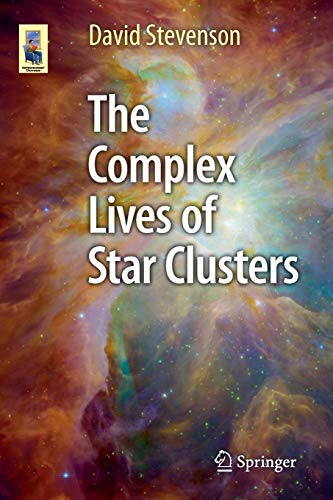
Inhaltsangabe
As with the author’s recent books Extreme Explosions and Under a Crimson Sun, the complex topic of star clusters is broken down and made accessible with clear links to other areas of astronomy in a language which the non-specialist can easily read and enjoy. The full range of topics are addressed regarding how star clusters are formed. Why is it some are dense conglomerates of stars while others are looser associations? Are the young, brilliant clusters seen in neighboring galaxies such as the Large Magellanic Cloud, M33 or M82 analogous to the ancient globulars seen in the Milky Way? How will these clusters change as their stars wane and die? More interestingly, how does living in a dense star cluster affect the fates of the stars and any attendant planets that accompany them? Star clusters form many of the most dazzling objects in the astronomers’ catalogs. Many amateur astronomers are interested in exploring how these objects are created and what it would be like to live among these objects. From the historical views of how star clusters came about to the most recent assumptions about how stars within these clusters evolve, different strands of science, from observation to theory, are woven together into a compelling investigation specifically targeted at amateur astronomers.
Die Inhaltsangabe kann sich auf eine andere Ausgabe dieses Titels beziehen.
Über die Autorin bzw. den Autor
David Stevenson was born in Paisley, Scotland, in 1968, and studied molecular biology at Glasgow University and a PhD in genetics from the University of Cambridge. After a stint in academia, he became a teacher, but continued to write science articles for various magazines including Sky & Telescope. His publications with Springer include Extreme Explosions (2014) and "Under a Crimson Sun" (2014) and he is at work on a new book about weather and exoplanets. Despite a background in Biology, David’s father inspired his interest in astronomy from an early age. Exploring the cross-roads of different scientific disciplines is a key interest and motivation in both teaching and writing.
David lives in Nottingham, UK, with his wife and family.
Von der hinteren Coverseite
As with the author’s recent books Extreme Explosions and Under a Crimson Sun, the complex topic of star clusters is broken down and made accessible with clear links to other areas of astronomy in a language which the non-specialist can easily read and enjoy. The full range of a star cluster's lifespan is depicted, as both globular and open clusters are tracked from birth to eventual death. Why is it some are dense conglomerates of stars while others are looser associations? Are the young, brilliant clusters seen in neighboring galaxies such as the Large Magellanic Cloud, M33 or M82 analogous to the ancient globulars seen in the Milky Way? How will these clusters change as their stars wane and die? More interestingly, how does living in a dense star cluster affect the fates of the stars and any attendant planets that accompany them?
Star clusters form many of the most dazzling objects in the astronomers’ catalogs. Many amateur astronomers are interested in exploring how these objects are created and what it would be like to live among these objects. From the historical views of how star clusters came about to the most recent assumptions about how stars within these clusters evolve, different strands of science, from observation to theory, are woven together into a compelling investigation specifically targeted at amateur astronomers.
„Über diesen Titel“ kann sich auf eine andere Ausgabe dieses Titels beziehen.
Suchergebnisse für The Complex Lives of Star Clusters (Astronomers'...

Beispielbild für diese ISBN
The Complex Lives of Star Clusters (Astronomers' Universe)
Verlag:
Springer International Publishing AG, Switzerland, Cham, 2015
ISBN 10: 331914233X
ISBN 13: 9783319142333
Gebraucht
Paperback
Anbieter: WorldofBooks, Goring-By-Sea, WS, Vereinigtes Königreich
Verkäuferbewertung 5 von 5 Sternen

Paperback. Zustand: Very Good. As with the authors recent books Extreme Explosions and Under a Crimson Sun,the complex topic of star clustersis broken down and made accessible with clear links to other areas of astronomy in a language which the non-specialist can easily read and enjoy.The fullrange of topics are addressed regarding how star clusters areformed.Why is it some are dense conglomerates of stars while others are looser associations?Are the young, brilliant clusters seen in neighboring galaxies such as the Large Magellanic Cloud, M33 or M82 analogous to the ancient globulars seen in the Milky Way?How will these clusters change as their stars wane and die? More interestingly, how does living in a dense star cluster affect the fates of the stars and any attendant planets that accompany them?Star clusters form many of the most dazzling objects in the astronomers catalogs. Many amateur astronomers are interested in exploring how these objects are created and what it would be like to live among these objects. From the historical views of how star clusters came about to the most recentassumptions about how stars within these clusters evolve, different strands of science, from observation to theory, are woven togetherinto a compelling investigation specifically targeted atamateur astronomers. The book has been read, but is in excellent condition. Pages are intact and not marred by notes or highlighting. The spine remains undamaged. Artikel-Nr. GOR010085341
Gebraucht kaufen
EUR 33,40
EUR 6,53 Versand
Versand von Vereinigtes Königreich nach USA
Versand von Vereinigtes Königreich nach USA
Anzahl: 1 verfügbar
Beispielbild für diese ISBN
The Complex Lives of Star Clusters (Astronomers' Universe)
Anbieter: Majestic Books, Hounslow, Vereinigtes Königreich
Verkäuferbewertung 4 von 5 Sternen

Zustand: New. 250. Artikel-Nr. 373764563
Neu kaufen
EUR 39,89
EUR 7,58 Versand
Versand von Vereinigtes Königreich nach USA
Versand von Vereinigtes Königreich nach USA
Anzahl: 1 verfügbar
Beispielbild für diese ISBN
The Complex Lives of Star Clusters (Astronomers' Universe)
Anbieter: Ria Christie Collections, Uxbridge, Vereinigtes Königreich
Verkäuferbewertung 5 von 5 Sternen
Zustand: New. In. Artikel-Nr. ria9783319142333_new
Neu kaufen
EUR 42,55
EUR 13,97 Versand
Versand von Vereinigtes Königreich nach USA
Versand von Vereinigtes Königreich nach USA
Anzahl: Mehr als 20 verfügbar
Beispielbild für diese ISBN
The Complex Lives of Star Clusters
Anbieter: Revaluation Books, Exeter, Vereinigtes Königreich
Verkäuferbewertung 5 von 5 Sternen
Paperback. Zustand: Brand New. 2015 edition. 343 pages. 9.00x6.00x1.00 inches. In Stock. Artikel-Nr. x-331914233X
Neu kaufen
EUR 66,15
EUR 14,57 Versand
Versand von Vereinigtes Königreich nach USA
Versand von Vereinigtes Königreich nach USA
Anzahl: 2 verfügbar
Foto des Verkäufers
The Complex Lives of Star Clusters
Verlag:
Springer International Publishing, 2015
ISBN 10: 331914233X
ISBN 13: 9783319142333
Neu
Kartoniert / Broschiert
Anbieter: moluna, Greven, Deutschland
Verkäuferbewertung 5 von 5 Sternen
Kartoniert / Broschiert. Zustand: New. Artikel-Nr. 29787327
Neu kaufen
EUR 36,98
EUR 48,99 Versand
Versand von Deutschland nach USA
Versand von Deutschland nach USA
Anzahl: Mehr als 20 verfügbar
Foto des Verkäufers
The Complex Lives of Star Clusters
ISBN 10: 331914233X
ISBN 13: 9783319142333
Neu
Taschenbuch
Anbieter: AHA-BUCH GmbH, Einbeck, Deutschland
Verkäuferbewertung 5 von 5 Sternen
Taschenbuch. Zustand: Neu. Druck auf Anfrage Neuware - Printed after ordering - As with the author's recent books Extreme Explosions and Under a Crimson Sun, the complex topic of star clusters is broken down and made accessible with clear links to other areas of astronomy in a language which the non-specialist can easily read and enjoy. The full range of topics are addressed regarding how star clusters are formed. Why is it some are dense conglomerates of stars while others are looser associations Are the young, brilliant clusters seen in neighboring galaxies such as the Large Magellanic Cloud, M33 or M82 analogous to the ancient globulars seen in the Milky Way How will these clusters change as their stars wane and die More interestingly, how does living in a dense star cluster affect the fates of the stars and any attendant planets that accompany them Star clusters form many of the most dazzling objects in the astronomers' catalogs. Many amateur astronomers are interested in exploring how these objects are created and what it would be like to live among these objects. From the historical views of how star clusters came about to the most recent assumptions about how stars within these clusters evolve, different strands of science, from observation to theory, are woven together into a compelling investigation specifically targeted at amateur astronomers. Artikel-Nr. 9783319142333
Neu kaufen
EUR 40,65
EUR 63,06 Versand
Versand von Deutschland nach USA
Versand von Deutschland nach USA
Anzahl: 1 verfügbar
Foto des Verkäufers
The Complex Lives of Star Clusters
Anbieter: preigu, Osnabrück, Deutschland
Verkäuferbewertung 5 von 5 Sternen
Taschenbuch. Zustand: Neu. The Complex Lives of Star Clusters | David Stevenson | Taschenbuch | Astronomers' Universe | xv | Englisch | 2015 | Springer | EAN 9783319142333 | Verantwortliche Person für die EU: Springer Verlag GmbH, Tiergartenstr. 17, 69121 Heidelberg, juergen[dot]hartmann[at]springer[dot]com | Anbieter: preigu. Artikel-Nr. 104999800
Neu kaufen
EUR 39,65
EUR 70,00 Versand
Versand von Deutschland nach USA
Versand von Deutschland nach USA
Anzahl: 5 verfügbar