Inhaltsangabe
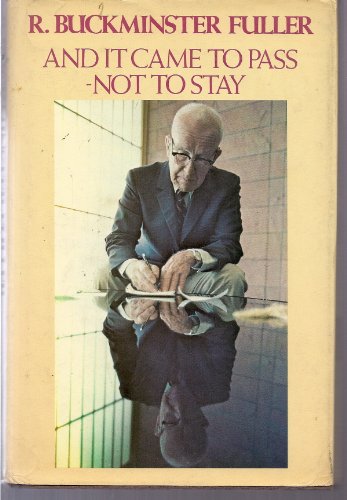
Buckminster Fuller (1895a "1983) was an architect, engineer, geometrician, cartographer, philosopher, futurist, inventor of the famous geodesic dome, and one of the most brilliant thinkers of his time. For more than five decades, he set forth his comprehensive perspective on the worlda (TM)s problems in numerous essays, which offer an illuminating insight into the intellectual universe of this renaissance man.a oe These texts remain surprisingly topical even today, decades after their initial publication. While Fuller wrote the works in the 1960a (TM)s and 1970a (TM)s, they could not be more timely: like desperately needed time-capsules of wisdom for the critical moment he foresaw, and in which we find ourselves. Long out of print, they are now being published again, together with commentary by Jaime Snyder, the grandson of Buckminster Fuller. Designed for a new generation of readers, Snyder prepared these editions with supplementary material providing background on the texts, factual updates, and interpretation of his visionary ideas. Initially published in 1969, and one of Fullera (TM)s most popular works, Operating Manual for Spaceship Earth is a brilliant synthesis of his world view. In this very accessible volume, Fuller investigates the great challenges facing humanity, and the principles for avoiding extinction and a oeexercising our option to make ita . How will humanity survive? How does automation influence individualization? How can we utilize our resources more effectively to realize our potential to end poverty in this generation? He questions the concept of specialization, calls for a design revolution of innovation, and offers advice on how to guide a oespaceship eartha toward a sustainable future. And it Came to Pass a " Not to Stay brings together Buckminster Fullera (TM)s lyrical and philosophical best, including seven a oeessaysa in a form he called his a oeventilated prosea, and as always addressing the current global crisis and his predictions for the future. These essays, including a oeHow Little I Know, a a oeWhat I am Trying to Doa oe, a oeSoft Revolutiona, and a oeEthicsa, put the task of ushering in a new era of humanity in the context of a oealways starting with the universe.a In rare form, Fuller elegantly weaves the personal, the playful, the simple, and the profound. Utopia or Oblivion is a provocative blueprint for the future. This comprehensive volume is composed of essays derived from the lectures he gave all over the world during the 1960a (TM)s. Fullera (TM)s thesis is that humanity a " for the first time in its history a " has the opportunity to create a world where the needs of 100% of humanity are met. This is Fuller in his prime, relaying his urgent message for earthians critical moment and presenting pioneering solutions which reflect his commitment to the potential of innovative design to create technology that does a oemore with lessa and thereby improves human lives . . . a oe This is what man tends to call utopia. It's a fairly small word, but inadequate to describe the extraordinary new freedom of man in a new relationship to universe - the alternative of which is obliviona . Buckminster Fuller.
Die Inhaltsangabe kann sich auf eine andere Ausgabe dieses Titels beziehen.
Reseña del editor
Buckminster Fuller (1895a "1983) was an architect, engineer, geometrician, cartographer, philosopher, futurist, inventor of the famous geodesic dome, and one of the most brilliant thinkers of his time. For more than five decades, he set forth his comprehensive perspective on the worlda (TM)s problems in numerous essays, which offer an illuminating insight into the intellectual universe of this renaissance man.a oe These texts remain surprisingly topical even today, decades after their initial publication. While Fuller wrote the works in the 1960a (TM)s and 1970a (TM)s, they could not be more timely: like desperately needed time-capsules of wisdom for the critical moment he foresaw, and in which we find ourselves. Long out of print, they are now being published again, together with commentary by Jaime Snyder, the grandson of Buckminster Fuller. Designed for a new generation of readers, Snyder prepared these editions with supplementary material providing background on the texts, factual updates, and interpretation of his visionary ideas. Initially published in 1969, and one of Fullera (TM)s most popular works, Operating Manual for Spaceship Earth is a brilliant synthesis of his world view. In this very accessible volume, Fuller investigates the great challenges facing humanity, and the principles for avoiding extinction and a oeexercising our option to make ita . How will humanity survive? How does automation influence individualization? How can we utilize our resources more effectively to realize our potential to end poverty in this generation? He questions the concept of specialization, calls for a design revolution of innovation, and offers advice on how to guide a oespaceship eartha toward a sustainable future. And it Came to Pass a " Not to Stay brings together Buckminster Fullera (TM)s lyrical and philosophical best, including seven a oeessaysa in a form he called his a oeventilated prosea, and as always addressing the current global crisis and his predictions for the future. These essays, including a oeHow Little I Know, a a oeWhat I am Trying to Doa oe, a oeSoft Revolutiona, and a oeEthicsa, put the task of ushering in a new era of humanity in the context of a oealways starting with the universe.a In rare form, Fuller elegantly weaves the personal, the playful, the simple, and the profound. Utopia or Oblivion is a provocative blueprint for the future. This comprehensive volume is composed of essays derived from the lectures he gave all over the world during the 1960a (TM)s. Fullera (TM)s thesis is that humanity a " for the first time in its history a " has the opportunity to create a world where the needs of 100% of humanity are met. This is Fuller in his prime, relaying his urgent message for earthians critical moment and presenting pioneering solutions which reflect his commitment to the potential of innovative design to create technology that does a oemore with lessa and thereby improves human lives . . . a oe This is what man tends to call utopia. It's a fairly small word, but inadequate to describe the extraordinary new freedom of man in a new relationship to universe - the alternative of which is obliviona . Buckminster Fuller.
„Über diesen Titel“ kann sich auf eine andere Ausgabe dieses Titels beziehen.
Weitere beliebte Ausgaben desselben Titels

Suchergebnisse für Buckminster Fuller And it Came to Pass - Not to Say...

Beispielbild für diese ISBN
And It Came to Pass - Not to Stay
Verlag:
Lars Müller Publishers, 2008
ISBN 10: 3037781327
ISBN 13: 9783037781326
Gebraucht
Paperback
Anbieter: ThriftBooks-Dallas, Dallas, TX, USA
Verkäuferbewertung 5 von 5 Sternen

Paperback. Zustand: Very Good. No Jacket. May have limited writing in cover pages. Pages are unmarked. ~ ThriftBooks: Read More, Spend Less. Artikel-Nr. G3037781327I4N00
Beispielbild für diese ISBN
And It Came to Pass - Not to Stay
Verlag:
Lars Müller Publishers, 2008
ISBN 10: 3037781327
ISBN 13: 9783037781326
Gebraucht
Paperback
Anbieter: ThriftBooks-Atlanta, AUSTELL, GA, USA
Verkäuferbewertung 5 von 5 Sternen
Paperback. Zustand: Very Good. No Jacket. May have limited writing in cover pages. Pages are unmarked. ~ ThriftBooks: Read More, Spend Less. Artikel-Nr. G3037781327I4N00
Beispielbild für diese ISBN
And It Came to Pass - Not to Stay
Verlag:
Lars Müller Publishers, 2008
ISBN 10: 3037781327
ISBN 13: 9783037781326
Gebraucht
Paperback
Anbieter: ThriftBooks-Dallas, Dallas, TX, USA
Verkäuferbewertung 5 von 5 Sternen
Paperback. Zustand: As New. No Jacket. Pages are clean and are not marred by notes or folds of any kind. ~ ThriftBooks: Read More, Spend Less. Artikel-Nr. G3037781327I2N00
Beispielbild für diese ISBN
And It Came to Pass -Not to Stay
Anbieter: Anybook.com, Lincoln, Vereinigtes Königreich
Verkäuferbewertung 5 von 5 Sternen
Zustand: Good. This is an ex-library book and may have the usual library/used-book markings inside.This book has soft covers. Clean from markings. In good all round condition. Please note the Image in this listing is a stock photo and may not match the covers of the actual item,300grams, ISBN:9783037781326. Artikel-Nr. 9730246
Gebraucht kaufen
EUR 23,34
Versand:
EUR 15,36
Von Vereinigtes Königreich nach USA
Anzahl: 1 verfügbar
Foto des Verkäufers
R.Buckminster Fuller : And It Came to Pass - Not to Stay (English)
Verlag:
Lars Müller Publishers, 2008
ISBN 10: 3037781327
ISBN 13: 9783037781326
Gebraucht
Softcover
Erstausgabe
Anbieter: Antiquariat UEBUE, Zürich, Schweiz
Verkäuferbewertung 5 von 5 Sternen
Softcover. Zustand: Sehr gut. 1. Auflage. Z : 12 × 19 cm, 4 ¾ × 7 ½ in, 192 pages, 5 illustrations - And it Came to Pass Not to Stay brings together a selection of Buckminster Fuller s lyrical and philosophical best, including seven essays in a form he called his ventilated prose which address global crises and his predictions for the future. Artikel-Nr. ABE-1610025249288
Gebraucht kaufen
EUR 30,80
Versand:
EUR 14,50
Von Schweiz nach USA
Anzahl: 1 verfügbar
Beispielbild für diese ISBN
And it came to pass - not to stay.
Verlag:
Lars Müller Publishers, 2008
ISBN 10: 3037781327
ISBN 13: 9783037781326
Gebraucht
Softcover
Erstausgabe
Anbieter: Kloof Booksellers & Scientia Verlag, Amsterdam, Niederlande
Verkäuferbewertung 4 von 5 Sternen

[Edited and introduction by Jaime Snyder]. Baden : Lars Müller, 2008. New edition. Paperback. 191 pp. portrait. 19 cm. - First edition published in 1976. Buckminster Fuller (1895-1983) was an architect, engineer, geometrician, cartographer, philosopher, futurist, inventor of the famous geodesic dome, and one of the most brilliant thinkers of his time. For more than five decades, he set forth his comprehensive perspective on the worlda (TM)s problems in numerous essays, which offer an illuminating insight into the intellectual universe of this renaissance man.a oe These texts remain surprisingly topical even today, decades after their initial publication. While Fuller wrote the works in the 1960a (TM)s and 1970a (TM)s, they could not be more timely: like desperately needed time-capsules of wisdom for the critical moment he foresaw, and in which we find ourselves. Long out of print, they are now being published again, together with commentary by Jaime Snyder, the grandson of Buckminster Fuller. Designed for a new generation of readers, Snyder prepared these editions with supplementary material providing background on the texts, factual updates, and interpretation of his visionary ideas. Initially published in 1969, and one of Fullera (TM)s most popular works, Operating Manual for Spaceship Earth is a brilliant synthesis of his world view. In this very accessible volume, Fuller investigates the great challenges facing humanity, and the principles for avoiding extinction and a oeexercising our option to make ita . How will humanity survive? How does automation influence individualization? How can we utilize our resources more effectively to realize our potential to end poverty in this generation? He questions the concept of specialization, calls for a design revolution of innovation, and offers advice on how to guide a oespaceship eartha toward a sustainable future. And it Came to Pass a Not to Stay brings together Buckminster Fullera (TM)s lyrical and philosophical best, including seven a oeessaysa in a form he called his a oeventilated prosea, and as always addressing the current global crisis and his predictions for the future. These essays, including a oeHow Little I Know, a a oeWhat I am Trying to Doa oe, a oeSoft Revolutiona, and a oeEthicsa, put the task of ushering in a new era of humanity in the context of a oealways starting with the universe.a In rare form, Fuller elegantly weaves the personal, the playful, the simple, and the profound. Utopia or Oblivion is a provocative blueprint for the future. This comprehensive volume is composed of essays derived from the lectures he gave all over the world during the 1960a (TM)s. Fullera (TM)s thesis is that humanity a for the first time in its history a has the opportunity to create a world where the needs of 100% of humanity are met. This is Fuller in his prime, relaying his urgent message for earthians critical moment and presenting pioneering solutions which reflect his commitment to the potential of innovative design to create technology that does a oemore with lessa and thereby improves human lives . . . a oe This is what man tends to call utopia. It's a fairly small word, but inadequate to describe the extraordinary new freedom of man in a new relationship to universe. Condition : copy. ISBN 9783037781326. Keywords : PHILOSOPHY, Artikel-Nr. 296544
Gebraucht kaufen
EUR 16,95
Versand:
EUR 30,00
Von Niederlande nach USA
Anzahl: 1 verfügbar