
Verwandte Artikel zu The Beautiful Struggle (Adapted for Young Adults):...
Inhaltsangabe
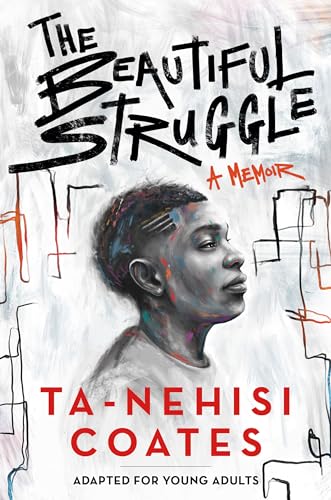
Adapted from the adult memoir by the #1 New York Times bestselling author of The Water Dancer and Between the World and Me, this father-son story explores how boys become men, and quite specifically, how Ta-Nehisi Coates became Ta-Nehisi Coates.
As a child, Ta-Nehisi Coates was seen by his father, Paul, as too sensitive and lacking focus. Paul Coates was a Vietnam vet who'd been part of the Black Panthers and was dedicated to reading and publishing the history of African civilization. When it came to his sons, he was committed to raising proud Black men equipped to deal with a racist society, during a turbulent period in the collapsing city of Baltimore where they lived.
Coates details with candor the challenges of dealing with his tough-love father, the influence of his mother, and the dynamics of his extended family, including his brother "Big Bill," who was on a very different path than Ta-Nehisi. Coates also tells of his struggles at school and with girls, making this a timely story to which many readers will relate.
Die Inhaltsangabe kann sich auf eine andere Ausgabe dieses Titels beziehen.
Über die Autorin bzw. den Autor
Ta-Nehisi Coates is the author of The Water Dancer, The Beautiful Struggle, We Were Eight Years in Power, and Between the World and Me, which won the National Book Award in 2015. He is the recipient of a MacArthur Fellowship. Ta-Nehisi lives in New York City with his wife and son. Visit him online at Ta-NehisiCoates.com and @tanehisipcoates on Instagram.
Auszug. © Genehmigter Nachdruck. Alle Rechte vorbehalten.
chapter 1
There lived a little boy who was misled . . .
When they caught us down on Charles Street, they were all that I’d heard. They did not wave banners, flash amulets or secret signs. Still, I could feel their awful name advancing out of the lore. They were remarkable. They sported the Stetsons of Hollis, but with no gold. They were shadow and rangy, like they could three-piece you—jab, uppercut, jab—from a block away. They had no eyes. They shrieked and jeered, urged themselves on, danced wildly, chanted Rock and Roll is here to stay. When Murphy Homes closed in on us, the moon ducked behind its black cloak and Fell’s Point dilettantes shuffled in boots. In those days, Baltimore was factional, segmented into crews who took their names from their local civic associations. Walbrook Junction ran everything, until they met North and Pulaski, who, craven and honorless, would punk you right in front your girl.
It was their numbers that tipped me off—no one else rolled this deep. We were surrounded by six to eight, but up and down the street, packs of them took up different corners. I was spaced-out as usual, lost in the Caves of Chaos and the magic of Optimus Prime’s vanishing trailer. It took time for me to get clear. Big Bill made them a block away, grew tense, but I did not understand, even after they touched my older brother with a right cross so awkward I thought it was a greeting.
I didn’t catch on till his arms were pumping the wind. Bill was out. Murphy Homes turned to me.
Above all the factions, Murphy Homes waved the scepter. The scale of their banditry made them mythical. Wherever they walked—Old Town, Shake & Bake, the harbor—they busted knees and melted faces. Across the land, the name rang out: Murphy Homes beat brothers with gas nozzles. Murphy Homes split backs and poured in salt. Murphy Homes moved with one eye, flew out on bat wings, performed dark rites atop Druid Hill.
I tried to follow Bill, but they cut me off. A goblin stepped out from the pack—
Hey, you going somewhere?
—and stunned me with a straight right. About that time my Converse turned to cleats and I bolted, leaving dents and divots in the concrete. The streetlights flickered, waved as I broke ankles, blew by, and when the bandits reached to check me, I left only imagination and air. I doubled back to Lexington Market. There was no sign of Bill. I reached for a pay phone.
Dad, we got banked.
Okay, son, find an adult. Stand next to an adult.
I’m in front of Lexington Market. I lost Bill.
Son, I’m on the way.
I went to stand near a man about Dad’s age waiting at a bus stop, like age could shield me. He looked over at me unfazed and then back across the streets at the growing fray of frenzied youth.
I know that Dad and Ma saved me, pulled up in their silver Rabbit, sometime after I made the call; that Dad ran off into the swarming night to find his eldest son, and for the first and only time, I was afraid for him. I know that Bill’s mother, Linda, swooped down to the harbor and found Bill first, shuttled him back out to their crib in Jamestown. I know that Bill returned to Tioga days later, and when I told him how I’d dusted Murphy Homes, how I was on some Kid Flash level, he was incredulous—
Fool, they let you get away so they could chase me.
We lived in a row house in the slope of Tioga Parkway in West Baltimore. There was a small kitchen, three bedrooms, and three bathrooms—but only one that anybody ever wanted to use. All of us slept upstairs. My folks in a modest master. My two sisters, Kris and Kell, when back from Howard University, in an area where Dad also stored his books. There was a terrace out back, with a rotting wooden balcony. I almost died out there one day. Leaning against the crumbling wood I tumbled headlong, but caught myself on the back-door roof and came lucky feetfirst to the ground.
My room was the smallest, and always checkered with scattered volumes of World Book, Childcraft, Dragonlance, and Narnia. I slept on bunk beds made from thick pine, shared the bottom with my baby brother, Menelik. Big Bill, as in all things, was up top. By mere months, he was my father’s first son, but he turned this minor advantage into heraldry. He began sentences with “As the oldest son . . .” and sought to turn all his younger siblings into warriors. Big Bill was seldom scared. He had a bop that moved the crowd, and preempted beef. When bored, he’d entertain himself, cracking on your busted fade, acne, or your off-brand kicks.
Bill: Ta-Nehisi, get outta here with those weak-ass NBAs. Know what that stands for? Next time buy Adidas.
I was only ten, hobbled by preteen status and basic nature, while Big Bill was enthralled by the lights. This was the summer of ’86. KRS-One laid siege to Queensbridge. I would stand in my bedroom, throwing up my hands, reciting the words of Todd Smith—“Walkin’ down the street, to the hard-core beat / While my JVC vibrates the concrete.” Bill and my brother John spent all summer busing tables. Bill schemed on a fat rope, one that dangled from his neck like sin. Still, his money was young, and he could not stomach the months of layaway. So he returned from the mall with two mini-ziplock bags, each the size of a woman’s fist, each glimmering, like him, in the light. They held massive rings, one adorned with a golden kite, another spanning two fingers, molded into a dollar sign.
He flashed them before me, and I was caught by how the glowing metal made him swell inside his own skin. He was profiling, lost in all his glory, when Dad stepped to him.
Dad: Son. They’re fake. Son, you’ve been had.
Bill: You’re bugging. This is fourteen-karat. I paid cash money.
Dad: Son, son. Let’s have them smelted down and tested. If it’s ten karats or more, I will pay you for the rings. With interest.
Bill agreed to my father’s proposition, convinced he was on the better end. He found a place to smelt the gold, do the math. And I don’t know what was worse—the negative results or Dad’s rueful chuckle and sermon. Afterward, Dad went over to Mondawmin and had Bill point out the merchants. Then he walked to the glass counter, brandished the results, and spoke magic words. The magic words were “fraud,” “Black community,” and “State’s attorney.” Bill never felt the same about gold again.
My father was Conscious Man. He stood a solid six feet, was handsome, mostly serious, rarely angry. Weekdays, he scooted out at six and drove an hour to the Mecca, where he guarded the books and curated the history in the exalted hall of the Moorland-Spingarn Research Center. He was modest—brown slacks, pale yellow shirt, beige Clarks—and hair cut by his own hand.
But at night, he barbecued tofu, steamed basmati, and thought of sedition. He’d untuck his shirt and descend into the cellar, then comb through layers of ancient arcana. He collected out-of-print texts, obscure lectures, and self-published monographs by writers like J. A. Rogers, Dr. Ben, and Drusilla Dunjee Houston, great seers who returned Egypt to Africa and recorded our history, when all the world said we had none. These were words that they did not want us to see, the lost archives, secret collections, folders worn yellow by water and years. But Dad brought them back.
He called this basement operation Black Classic Press, and for the Coates family there was no escape. All of that house was bent by the mad dream of mass resurrection.
But out on the block, the hoppers...
„Über diesen Titel“ kann sich auf eine andere Ausgabe dieses Titels beziehen.
Suchergebnisse für The Beautiful Struggle (Adapted for Young Adults):...

Foto des Verkäufers
The Beautiful Struggle (Adapted for Young Adults)
Anbieter: Dream Books Co., Denver, CO, USA
Verkäuferbewertung 5 von 5 Sternen

Zustand: very_good. Pages are clean with no markings. May show minor signs of wear or cosmetic defects marks, cuts, bends, or scuffs on the cover, spine, pages, or dust jacket. May have remainder marks on edges. Artikel-Nr. DBV.1984894021.VG
Gebraucht kaufen
EUR 3,79
Versand gratis
Versand innerhalb von USA
Versand innerhalb von USA
Anzahl: 1 verfügbar
Beispielbild für diese ISBN
The Beautiful Struggle (Adapted for Young Adults)
Anbieter: World of Books (was SecondSale), Montgomery, IL, USA
Verkäuferbewertung 5 von 5 Sternen
Hardback. Zustand: Good. Adapted from the adult memoir by the #1 New York Times bestselling author of The Water Dancer and Between the World and Me, this father-son story explores how boys become men, and quite specifically, how Ta-Nehisi Coates became Ta-Nehisi Coates. As a child, Ta-Nehisi Coates was seen by his father, Paul, as too sensitive and lacking focus. Paul Coates was a Vietnam vet who'd been part of the Black Panthers and was dedicated to reading and publishing the history of African civilization. When it came to his sons, he was committed to raising proud Black men equipped to deal with a racist society, during a turbulent period in the collapsing city of Baltimore where they lived.Coates details with candor the challenges of dealing with his tough-love father, the influence of his mother, and the dynamics of his extended family, including his brother Big Bill, who was on a very different path than Ta-Nehisi. Coates also tells of his struggles at school and with girls, making this a timely story to which many readers will relate. Artikel-Nr. 00097711372
Gebraucht kaufen
EUR 3,84
Versand gratis
Versand innerhalb von USA
Versand innerhalb von USA
Anzahl: 3 verfügbar
Beispielbild für diese ISBN
The Beautiful Struggle (Adapted for Young Adults)
Anbieter: World of Books (was SecondSale), Montgomery, IL, USA
Verkäuferbewertung 5 von 5 Sternen
Hardback. Zustand: Very Good. Adapted from the adult memoir by the #1 New York Times bestselling author of The Water Dancer and Between the World and Me, this father-son story explores how boys become men, and quite specifically, how Ta-Nehisi Coates became Ta-Nehisi Coates. As a child, Ta-Nehisi Coates was seen by his father, Paul, as too sensitive and lacking focus. Paul Coates was a Vietnam vet who'd been part of the Black Panthers and was dedicated to reading and publishing the history of African civilization. When it came to his sons, he was committed to raising proud Black men equipped to deal with a racist society, during a turbulent period in the collapsing city of Baltimore where they lived.Coates details with candor the challenges of dealing with his tough-love father, the influence of his mother, and the dynamics of his extended family, including his brother Big Bill, who was on a very different path than Ta-Nehisi. Coates also tells of his struggles at school and with girls, making this a timely story to which many readers will relate. Artikel-Nr. 00110388592
Gebraucht kaufen
EUR 3,84
Versand gratis
Versand innerhalb von USA
Versand innerhalb von USA
Anzahl: 1 verfügbar
Beispielbild für diese ISBN
The Beautiful Struggle (Adapted for Young Adults)
Verlag:
Delacorte Press (edition ), 2021
ISBN 10: 1984894021
ISBN 13: 9781984894021
Gebraucht
Hardcover
Anbieter: BooksRun, Philadelphia, PA, USA
Verkäuferbewertung 5 von 5 Sternen
Hardcover. Zustand: Very Good. It's a well-cared-for item that has seen limited use. The item may show minor signs of wear. All the text is legible, with all pages included. It may have slight markings and/or highlighting. Artikel-Nr. 1984894021-8-1
Gebraucht kaufen
EUR 5,93
Versand gratis
Versand innerhalb von USA
Versand innerhalb von USA
Anzahl: 1 verfügbar
Beispielbild für diese ISBN
The Beautiful Struggle (Adapted for Young Adults)
Verlag:
Random House Children's Books, 2021
ISBN 10: 1984894021
ISBN 13: 9781984894021
Gebraucht
Hardcover
Anbieter: Better World Books, Mishawaka, IN, USA
Verkäuferbewertung 5 von 5 Sternen
Zustand: Very Good. Former library copy. Pages intact with possible writing/highlighting. Binding strong with minor wear. Dust jackets/supplements may not be included. Includes library markings. Stock photo provided. Product includes identifying sticker. Better World Books: Buy Books. Do Good. Artikel-Nr. 40454810-6
Gebraucht kaufen
EUR 6,55
Versand gratis
Versand innerhalb von USA
Versand innerhalb von USA
Anzahl: 2 verfügbar
Beispielbild für diese ISBN
The Beautiful Struggle (Adapted for Young Adults)
Anbieter: ThriftBooks-Reno, Reno, NV, USA
Verkäuferbewertung 5 von 5 Sternen
Hardcover. Zustand: Good. No Jacket. Missing dust jacket; Pages can have notes/highlighting. Spine may show signs of wear. ~ ThriftBooks: Read More, Spend Less. Artikel-Nr. G1984894021I3N01
Gebraucht kaufen
EUR 6,75
Versand gratis
Versand innerhalb von USA
Versand innerhalb von USA
Anzahl: 1 verfügbar
Beispielbild für diese ISBN
The Beautiful Struggle (Adapted for Young Adults)
Anbieter: ThriftBooks-Reno, Reno, NV, USA
Verkäuferbewertung 5 von 5 Sternen
Hardcover. Zustand: Good. No Jacket. Former library book; Pages can have notes/highlighting. Spine may show signs of wear. ~ ThriftBooks: Read More, Spend Less. Artikel-Nr. G1984894021I3N10
Gebraucht kaufen
EUR 6,75
Versand gratis
Versand innerhalb von USA
Versand innerhalb von USA
Anzahl: 1 verfügbar
Beispielbild für diese ISBN
The Beautiful Struggle (Adapted for Young Adults)
Anbieter: ThriftBooks-Reno, Reno, NV, USA
Verkäuferbewertung 5 von 5 Sternen
Hardcover. Zustand: Very Good. No Jacket. Former library book; May have limited writing in cover pages. Pages are unmarked. ~ ThriftBooks: Read More, Spend Less. Artikel-Nr. G1984894021I4N10
Gebraucht kaufen
EUR 6,75
Versand gratis
Versand innerhalb von USA
Versand innerhalb von USA
Anzahl: 2 verfügbar
Beispielbild für diese ISBN
The Beautiful Struggle (Adapted for Young Adults)
Anbieter: ThriftBooks-Phoenix, Phoenix, AZ, USA
Verkäuferbewertung 5 von 5 Sternen
Hardcover. Zustand: Very Good. No Jacket. Former library book; May have limited writing in cover pages. Pages are unmarked. ~ ThriftBooks: Read More, Spend Less. Artikel-Nr. G1984894021I4N10
Gebraucht kaufen
EUR 6,75
Versand gratis
Versand innerhalb von USA
Versand innerhalb von USA
Anzahl: 1 verfügbar
Beispielbild für diese ISBN
The Beautiful Struggle (Adapted for Young Adults)
Anbieter: ThriftBooks-Dallas, Dallas, TX, USA
Verkäuferbewertung 5 von 5 Sternen
Hardcover. Zustand: Good. No Jacket. Former library book; Pages can have notes/highlighting. Spine may show signs of wear. ~ ThriftBooks: Read More, Spend Less. Artikel-Nr. G1984894021I3N10
Gebraucht kaufen
EUR 6,78
Versand gratis
Versand innerhalb von USA
Versand innerhalb von USA
Anzahl: 1 verfügbar