
Verwandte Artikel zu #NeverAgain: A New Generation Draws the Line
Inhaltsangabe
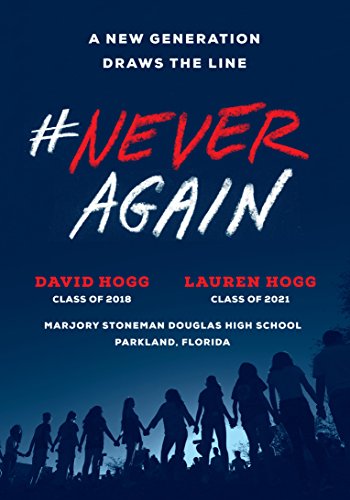
NEW YORK TIMES BESTSELLER • From two survivors of the Parkland, Florida, shooting comes a declaration for our times, and an in-depth look at the making of the #NeverAgain movement.
On February 14, 2018, seventeen-year-old David Hogg and his fourteen-year-old sister, Lauren, went to school at Marjory Stoneman Douglas High School, like any normal Wednesday. That day, of course, the world changed. By the next morning, with seventeen classmates and faculty dead, they had joined the leadership of a movement to save their own lives, and the lives of all other young people in America. It's a leadership position they did not seek, and did not want--but events gave them no choice.
The morning after the massacre, David Hogg told CNN: "We're children. You guys are the adults. You need to take some action and play a role. Work together. Get over your politics and get something done."
This book is a manifesto for the movement begun that day, one that has already changed America--with voices of a new generation that are speaking truth to power, and are determined to succeed where their elders have failed. With moral force and clarity, a new generation has made it clear that problems previously deemed unsolvable due to powerful lobbies and political cowardice will be theirs to solve. Born just after Columbine and raised amid seemingly endless war and routine active shooter drills, this generation now says, Enough. This book is their statement of purpose, and the story of their lives. It is the essential guide to the #NeverAgain movement.
Die Inhaltsangabe kann sich auf eine andere Ausgabe dieses Titels beziehen.
Über die Autorin bzw. den Autor
David Hogg (Class of 2018) and Lauren Hogg (Class of 2021) attend Marjory Stoneman Douglas High School in Parkland, Florida. They are both members of March for Our Lives.
Auszug. © Genehmigter Nachdruck. Alle Rechte vorbehalten.
1. VALENTINE’S DAY
WHEN YOU OPEN YOUR EYES BUT THE nightmare doesn’t go away, you’ve got no choice but to do something. Our first job now is to remember. Our second job is to act. Remember, act, repeat. Since that day, none of us are the same. But we are alive. And in memory of those who are not, we will remember and act for the rest of our lives. We’ve always been taught that as Americans, there is no problem that is out of our reach; that if we set our minds to it, we can solve anything. Anything except for our problem with gun violence. That can’t be fixed. When that problem flares, it’s “Hey, wow, that’s terrible. Too bad there’s nothing to be done about it.” Like it’s an act of God, or a natural disaster, something beyond our control that we are helpless to do any- thing about. Which defies all logic and reason.
We live in Florida, a place which has some experience with natural disasters. What happened on Valentine’s Day 2018 was neither natural nor an act of God. What happened that day was man-made—which means that as human beings, we have the capacity to do something about it.
Our generation has the obligation to do something about it.
In class, we learned about something called entropy. I guess you could say that entropy came to our school that day, and since the shootings, we have seen that there are powerful forces that thrive in chaos. Entropy is what the universe wants to happen. The story of existence and human civilization is the struggle against entropy—working to stick together, not fly apart. To cooperate, not fight. To love, not hate.
But I’m getting ahead of myself.
I can’t speak for everyone. If I was my fresh- man or sophomore or halfway-through-junior- year self, I would just sit here and explain everything. That’s how pretentious and overconfident I was, and probably still am, to some ex- tent. But if there’s one thing I learned from the shootings, it’s that my freshman or sophomore or halfway-through-junior-year self couldn’t have survived that day. That’s the reason for this book—we all had to find a way to survive, and we all had to come up with our own answers, but it turned out that all of our answers were just different facets of the same answer. That’s why the shootings made us stronger instead of destroying us.
So I could sit here and tell you the heroic tale of a kid who was so cool under fire and so passionate about justice that he whipped out his camera while the shooter was still shooting. But the truth is that I was thinking about something one of my teachers had been talking about a couple of days before: in the sweep of time billions of people have lived on this planet, yet the world only remembers a few hundred of them. This means that everybody else is just a background character who will be forgotten into the nothingness that is time and the universe. My teacher was talking about being humble, but I’m way too myopic and self-involved for that. My thinking went more like this: “Am I going to be just an- other background character? Is this what it’s all been leading up to? Just a bullet to the head?” And I decided, “Okay, I may be another back- ground character, but if I’m going to die I’m going to die telling a damn good story that people need to hear.”
That’s why I hit record. I was almost acting out the role that a journalist plays in a war zone, where you have to ask these questions and stay focused on one simple thing. That’s what kept me calm. And to be honest, except for one split second when the fear rushed through me, I really thought it was just a drill. Even after we knew it wasn’t a drill, it was still so hard to accept the re- ality of it.
But here’s the important thing: my sister, Lau- ren, was fourteen that day, and there’s nothing myopic or self-involved about her. After the shooting stopped, she was crying so hysterically that I didn’t want to be around her. Her friends had been murdered, and I couldn’t stand being helpless to ease her pain. You could even say that’s how this whole movement started, at least for me—I was trying to avoid my sister.
That’s why I knew I couldn’t write this book alone. So I’m going to shut up now and let her take it from here.
WELL, I GUESS I’LL START off with the day that it all happened. It was February 14, Valentine’s Day. If I had to describe the overall feeling before it started, I’d tell you that it was a great day. Everybody was just so happy, giving each other chocolates and flowers and hugs, it was like the whole school was glowing. I remember joking with my friends like, “Oh my God, if I see another couple asking each other out, I’m gonna barf.”
When the fire alarm went off, I was in TV Production, my last class of the day. We’d already had a fire drill that morning, so we thought it was just a Valentine’s Day prank. Everybody was laughing, and we took our time packing up our bags. I still remember yelling at my friend Sam to hurry up because we were taking forever, and it’s really weird for me to think that just across the campus, total hell was going on.
The first time that I kind of realized some- thing was wrong was when we got to the bottom of the stairwell, because I looked out the window and across the bus loop and saw all this movement and realized that kids were running. Just from the look in those kids’ eyes, I knew something was wrong. I can’t really describe it any other way than it was like a movie. Everything just seemed so bright. But the teachers had told us we were going to have a drill with blanks being fired and actors running around and kids pre- tending they’d been shot and stuff, so every kid around me was laughing and joking with their friends. But somehow inside of me, I knew some- thing was really wrong. The other kids’ faces . . . it’s awful to describe that look in their eyes. And I remember turning and glancing down the hall- ways and seeing more kids run by with their roses and their chocolates, girls screaming and boys just crying like I’ve never seen before. Everybody around me thought it was a joke but I knew, I knew something was wrong. So I grabbed my four closest friends from that class, and even though they were smiling and stuff, I remember yelling, “Guys, something’s wrong here.” And they were like “Lauren, it’s just a joke, it’s just a drill.”
But I was so scared. I remember looking around me and paying really close attention to my surroundings because our dad’s an FBI agent and he’s been in shootings before, so literally every single time we’d go into a movie theater or mall, our parents would tell us to make sure we know where the exits are and if anything hap- pens, to make sure to breathe.“Try to relax so you don’t panic.”
I was born in 2003, so Columbine happened before I was born, 9/11 happened before I was born, and I’ve grown up since kindergarten with code-red drills. My generation has been trained to deal with things like this.
So even though I’m usually really anxious, I went into this weird mode of calm. I was just so determined to get back to our TV Production classroom because I knew we would be safest there. I was trying to run up the stairs as fast as I could, but all these juniors and seniors were like,...
„Über diesen Titel“ kann sich auf eine andere Ausgabe dieses Titels beziehen.
Suchergebnisse für #NeverAgain: A New Generation Draws the Line

Beispielbild für diese ISBN
#NeverAgain: A New Generation Draws the Line
Verlag:
Random House Trade Paperbacks, 2018
ISBN 10: 198480183X
ISBN 13: 9781984801838
Gebraucht
Softcover
Anbieter: World of Books (was SecondSale), Montgomery, IL, USA
Verkäuferbewertung 5 von 5 Sternen

Zustand: Very Good. Item in very good condition! Textbooks may not include supplemental items i.e. CDs, access codes etc. Artikel-Nr. 00091101595
Gebraucht kaufen
EUR 3,89
Versand gratis
Versand innerhalb von USA
Versand innerhalb von USA
Anzahl: 5 verfügbar
Beispielbild für diese ISBN
#NeverAgain: A New Generation Draws the Line
Verlag:
Random House Trade Paperbacks, 2018
ISBN 10: 198480183X
ISBN 13: 9781984801838
Gebraucht
Softcover
Anbieter: World of Books (was SecondSale), Montgomery, IL, USA
Verkäuferbewertung 5 von 5 Sternen
Zustand: Good. Item in good condition. Textbooks may not include supplemental items i.e. CDs, access codes etc. Artikel-Nr. 00087734096
Gebraucht kaufen
EUR 3,89
Versand gratis
Versand innerhalb von USA
Versand innerhalb von USA
Anzahl: 8 verfügbar
Beispielbild für diese ISBN
#NeverAgain: A New Generation Draws the Line
Verlag:
Random House Trade Paperbacks (edition ), 2018
ISBN 10: 198480183X
ISBN 13: 9781984801838
Gebraucht
Paperback
Anbieter: BooksRun, Philadelphia, PA, USA
Verkäuferbewertung 5 von 5 Sternen
Paperback. Zustand: Very Good. It's a well-cared-for item that has seen limited use. The item may show minor signs of wear. All the text is legible, with all pages included. It may have slight markings and/or highlighting. Artikel-Nr. 198480183X-8-1
Gebraucht kaufen
EUR 4,23
Versand gratis
Versand innerhalb von USA
Versand innerhalb von USA
Anzahl: 1 verfügbar
Beispielbild für diese ISBN
#NeverAgain: A New Generation Draws the Line
Verlag:
Random House Trade Paperbacks (edition ), 2018
ISBN 10: 198480183X
ISBN 13: 9781984801838
Gebraucht
Paperback
Anbieter: BooksRun, Philadelphia, PA, USA
Verkäuferbewertung 5 von 5 Sternen
Paperback. Zustand: Very Good. It's a well-cared-for item that has seen limited use. The item may show minor signs of wear. All the text is legible, with all pages included. It may have slight markings and/or highlighting. Artikel-Nr. 198480183X-11-1
Gebraucht kaufen
EUR 4,24
Versand gratis
Versand innerhalb von USA
Versand innerhalb von USA
Anzahl: 2 verfügbar
Beispielbild für diese ISBN
#Neveragain: A New Generation Draws the Line
Anbieter: ThriftBooks-Dallas, Dallas, TX, USA
Verkäuferbewertung 5 von 5 Sternen
Paperback. Zustand: As New. No Jacket. Pages are clean and are not marred by notes or folds of any kind. ~ ThriftBooks: Read More, Spend Less. Artikel-Nr. G198480183XI2N00
Gebraucht kaufen
EUR 6,20
Versand gratis
Versand innerhalb von USA
Versand innerhalb von USA
Anzahl: 1 verfügbar
Beispielbild für diese ISBN
#Neveragain: A New Generation Draws the Line
Anbieter: ThriftBooks-Reno, Reno, NV, USA
Verkäuferbewertung 5 von 5 Sternen
Paperback. Zustand: As New. No Jacket. Pages are clean and are not marred by notes or folds of any kind. ~ ThriftBooks: Read More, Spend Less. Artikel-Nr. G198480183XI2N00
Gebraucht kaufen
EUR 6,20
Versand gratis
Versand innerhalb von USA
Versand innerhalb von USA
Anzahl: 1 verfügbar
Beispielbild für diese ISBN
#Neveragain: A New Generation Draws the Line
Anbieter: ThriftBooks-Phoenix, Phoenix, AZ, USA
Verkäuferbewertung 5 von 5 Sternen
Paperback. Zustand: As New. No Jacket. Pages are clean and are not marred by notes or folds of any kind. ~ ThriftBooks: Read More, Spend Less. Artikel-Nr. G198480183XI2N00
Gebraucht kaufen
EUR 6,20
Versand gratis
Versand innerhalb von USA
Versand innerhalb von USA
Anzahl: 1 verfügbar
Beispielbild für diese ISBN
#Neveragain: A New Generation Draws the Line
Anbieter: ThriftBooks-Atlanta, AUSTELL, GA, USA
Verkäuferbewertung 5 von 5 Sternen
Paperback. Zustand: As New. No Jacket. Pages are clean and are not marred by notes or folds of any kind. ~ ThriftBooks: Read More, Spend Less. Artikel-Nr. G198480183XI2N00
Gebraucht kaufen
EUR 6,20
Versand gratis
Versand innerhalb von USA
Versand innerhalb von USA
Anzahl: 1 verfügbar
Beispielbild für diese ISBN
#NeverAgain : A New Generation Draws the Line
Verlag:
Random House Publishing Group, 2018
ISBN 10: 198480183X
ISBN 13: 9781984801838
Gebraucht
Softcover
Anbieter: Better World Books, Mishawaka, IN, USA
Verkäuferbewertung 5 von 5 Sternen
Zustand: Good. Former library copy. Pages intact with minimal writing/highlighting. The binding may be loose and creased. Dust jackets/supplements are not included. Includes library markings. Stock photo provided. Product includes identifying sticker. Better World Books: Buy Books. Do Good. Artikel-Nr. 15513879-6
Gebraucht kaufen
EUR 6,54
Versand gratis
Versand innerhalb von USA
Versand innerhalb von USA
Anzahl: 3 verfügbar
Beispielbild für diese ISBN
#NeverAgain : A New Generation Draws the Line
Verlag:
Random House Publishing Group, 2018
ISBN 10: 198480183X
ISBN 13: 9781984801838
Gebraucht
Softcover
Anbieter: Better World Books: West, Reno, NV, USA
Verkäuferbewertung 5 von 5 Sternen
Zustand: Very Good. Pages intact with possible writing/highlighting. Binding strong with minor wear. Dust jackets/supplements may not be included. Stock photo provided. Product includes identifying sticker. Better World Books: Buy Books. Do Good. Artikel-Nr. 15295858-6
Gebraucht kaufen
EUR 6,54
Versand gratis
Versand innerhalb von USA
Versand innerhalb von USA
Anzahl: 1 verfügbar