
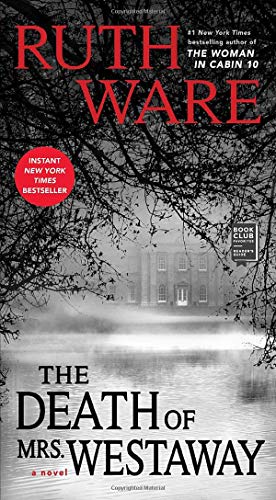
Inhaltsangabe
A “perfectly executed suspense tale very much in the mode of Daphne du Maurier’s Rebecca” (The Washington Post) from the #1 New York Times bestselling author of In a Dark, Dark Wood, The Woman in Cabin 10, The Lying Game, and The Turn of the Key.
On a day that begins like any other, Hal receives a mysterious letter bequeathing her a substantial inheritance. She realizes very quickly that the letter was sent to the wrong person—but also that the cold-reading skills she’s honed as a tarot card reader might help her claim the money.
Soon, Hal finds herself at the funeral of the deceased…where it dawns on her that there is something very, very wrong about this strange situation and the inheritance at the center of it.
Full of spellbinding menace and told in Ruth Ware’s signature suspenseful style, this is a “captivating and eerie page-turner” (The Wall Street Journal) from the Agatha Christie of our time.
Die Inhaltsangabe kann sich auf eine andere Ausgabe dieses Titels beziehen.
Über die Autorin bzw. den Autor
Ruth Ware worked as a waitress, a bookseller, a teacher of English as a foreign language, and a press officer before settling down as a full-time writer. She now lives with her family in Sussex, on the south coast of England. She is the #1 New York Times and Globe and Mail (Toronto) bestselling author of In a Dark, Dark Wood; The Woman in Cabin 10; The Lying Game; The Death of Mrs. Westaway; The Turn of the Key; One by One; The It Girl; and Zero Days. Visit her at RuthWare.com or follow her on Twitter @RuthWareWriter.
Auszug. © Genehmigter Nachdruck. Alle Rechte vorbehalten.
The Death of Mrs. Westaway
CHAPTER 1
The girl leaned, rather than walked, into the wind, clutching the damp package of fish and chips grimly under one arm even as the gale plucked at the paper, trying to unravel the parcel and send the contents skittering away down the seafront for the seagulls to claim.
As she crossed the road her hand closed over the crumpled note in her pocket, and she glanced over her shoulder, checking the long dark stretch of pavement behind her for a shadowy figure, but there was no one there. No one she could see, anyway.
It was rare for the seafront to be completely deserted. The bars and clubs were open long into the night, spilling drunk locals and tourists onto the pebbled beach right through until dawn. But tonight, even the most hardened partygoers had decided against venturing out, and now, at 9:55 p.m. on a wet Tuesday, Hal had the promenade to herself, the flashing lights of the pier the only sign of life, apart from the gulls wheeling and crying over the dark restless waters of the channel.
Hal’s short black hair blew in her eyes, her glasses were misted, and her lips were chapped with salt from the sea wind. But she hitched the parcel tighter under her arm and turned off the seafront into one of the narrow residential streets of tall white houses, where the wind dropped with a suddenness that made her stagger and almost trip. The rain didn’t let up. In fact, away from the wind it seemed to drizzle more steadily, if anything, as she turned again into Marine View Villas.
The name was a lie. There were no villas, only a slightly shabby little row of terraced houses, their paint peeling from constant exposure to the salty air. And there was no view—not of the sea or anywhere else. Maybe there had been once, when the houses were built. But since then taller, grander buildings had gone up, closer to the sea, and any view the windows of Marine View Villas might once have had was reduced to brick walls and slate roofs, even from Hal’s attic flat. Now the only benefit to living up three flights of narrow, rickety stairs was not having to listen to neighbors stomping about above your head.
Tonight, though, the neighbors seemed to be out—and had been for some time, judging by the way the door stuck on the clump of junk mail in the hall. Hal had to shove hard, until it gave and she stumbled into the chilly darkness, groping for the automatic timer switch that governed the lights. Nothing happened. Either a fuse had blown, or the bulb had burned out.
She scooped up the junk mail, doing her best in the dim light filtering in from the street to pick out the letters for the other tenants, and then began the climb up to her own attic flat.
There were no windows on the stairwell, and once she was past the first flight, it was almost pitch-black. But Hal knew the steps by heart, from the broken board on the landing to the loose piece of carpet that had come untacked on the last flight, and she plodded wearily upwards, thinking about supper and bed. She wasn’t even sure if she was hungry anymore, but the fish and chips had cost £5.50, and judging by the number of bills she was carrying, that was £5.50 she couldn’t afford to waste.
On the top landing she ducked her head to avoid the drip from the skylight, opened the door, and then at last, she was home.
The flat was small, just a bedroom opening off a kind of wide hallway that did duty as both kitchen and living room, and everything else. It was also shabby, with peeling paint and worn carpet, and wooden windows that groaned and rattled when the wind came off the sea. But it had been Hal’s home for all of her twenty-one years, and no matter how cold and tired she was, her heart never failed to lift, just a little bit, when she walked through the door.
In the doorway, she paused to wipe the salt spray off her glasses, polishing them on the ragged knee of her jeans, before dropping the paper of fish and chips on the coffee table.
It was very cold, and she shivered as she knelt in front of the gas fire, clicking the knob until it flared, and the warmth began to come back into her raw red hands. Then she unrolled the damp, rain-spattered paper packet, inhaling as the sharp smell of salt and vinegar filled the little room.
Spearing a limp, warm chip with the wooden fork, she began to sort through the mail, sifting out takeout fliers for recycling and putting the bills into a pile. The chips were salty and sharp and the battered fish still hot, but Hal found a slightly sick feeling was growing in the pit of her stomach as the stack of bills grew higher. It wasn’t so much the size of the pile but the number marked FINAL DEMAND that worried her, and she pushed the fish aside, feeling suddenly nauseated.
She had to pay the rent—that was nonnegotiable. And the electricity was high on the list too. Without a fridge or lights, the little flat was barely habitable. The gas . . . well it was November. Life without heating would be uncomfortable, but she’d survive.
But the one that really made her stomach turn over was different from the official bills. It was a cheap envelope, obviously hand-delivered, and all it said on the front, in ballpoint letters, was “Harriet Westerway, top flat.”
There was no sender’s address, but Hal didn’t need one. She had a horrible feeling that she knew who it was from.
Hal swallowed a chip that seemed to be stuck in her throat, and she pushed the envelope to the bottom of the pile of bills, giving way to the overwhelming impulse to bury her head in the sand. She wished passionately that she could hand the whole problem over to someone older and wiser and stronger to deal with.
But there was no one. Not anymore. And besides, there was a tough, stubborn core of courage in Hal. Small, skinny, pale, and young she might be—but she was not the child people routinely assumed. She had not been that child for more than three years.
It was that core that made her pick the envelope back up and, biting her lip, tear through the flap.
Inside there was just one sheet of paper, with only a couple of sentences typed on it.
Sorry to have missed you. We would like to discuss you’re financal situation. We will call again.
Hal’s stomach flipped and she felt in her pocket for the piece of paper that had turned up at her work this afternoon. They were identical, save for the crumples and a splash of tea that she had spilled over the first one when she opened it.
The message on them was not news to Hal. She had been ignoring calls and texts to that effect for months.
It was the message behind the notes that made her hands shake as she placed them carefully on the coffee table, side by side.
Hal was used to reading between the lines, deciphering the importance of what people didn’t say, as much as what they did. It was her job, in a way. But the unspoken words here required no decoding at all.
They said, We know where you work.
We know where you live.
And we will come back.
• • •
THE REST OF THE MAIL was just junk and Hal dumped it into the recycling before sitting wearily on the sofa. For a moment she let her head rest in her hands—trying not to think about her precarious bank balance, hearing her mother’s voice in her ear as if she were standing behind her, lecturing her about her A-level revision. Hal, I know you’re stressed, but you’ve got to...
„Über diesen Titel“ kann sich auf eine andere Ausgabe dieses Titels beziehen.
Weitere beliebte Ausgaben desselben Titels

Suchergebnisse für The Death of Mrs. Westaway

Beispielbild für diese ISBN
The Death of Mrs. Westaway
Anbieter: World of Books (was SecondSale), Montgomery, IL, USA
Verkäuferbewertung 5 von 5 Sternen

Zustand: Acceptable. Item in acceptable condition! Textbooks may not include supplemental items i.e. CDs, access codes etc. Artikel-Nr. 00103318759
Gebraucht kaufen
EUR 4,42
Versand gratis
Versand innerhalb von USA
Versand innerhalb von USA
Anzahl: 5 verfügbar
Beispielbild für diese ISBN
The Death of Mrs. Westaway
Anbieter: World of Books (was SecondSale), Montgomery, IL, USA
Verkäuferbewertung 5 von 5 Sternen
Zustand: Very Good. Item in very good condition! Textbooks may not include supplemental items i.e. CDs, access codes etc. Artikel-Nr. 00102566466
Gebraucht kaufen
EUR 4,42
Versand gratis
Versand innerhalb von USA
Versand innerhalb von USA
Anzahl: 5 verfügbar
Beispielbild für diese ISBN
The Death of Mrs. Westaway
Anbieter: World of Books (was SecondSale), Montgomery, IL, USA
Verkäuferbewertung 5 von 5 Sternen
Zustand: Good. Item in good condition. Textbooks may not include supplemental items i.e. CDs, access codes etc. Artikel-Nr. 00103109821
Gebraucht kaufen
EUR 4,42
Versand gratis
Versand innerhalb von USA
Versand innerhalb von USA
Anzahl: 4 verfügbar
Beispielbild für diese ISBN
The Death of Mrs. Westaway
Verlag:
Pocket Books (edition ), 2020
ISBN 10: 1982123656
ISBN 13: 9781982123659
Gebraucht
Mass Market Paperback
Anbieter: BooksRun, Philadelphia, PA, USA
Verkäuferbewertung 5 von 5 Sternen
Mass Market Paperback. Zustand: Very Good. It's a well-cared-for item that has seen limited use. The item may show minor signs of wear. All the text is legible, with all pages included. It may have slight markings and/or highlighting. Artikel-Nr. 1982123656-11-6
Gebraucht kaufen
EUR 4,72
Versand gratis
Versand innerhalb von USA
Versand innerhalb von USA
Anzahl: 1 verfügbar
Beispielbild für diese ISBN
The Death of Mrs. Westaway
Anbieter: Better World Books, Mishawaka, IN, USA
Verkäuferbewertung 5 von 5 Sternen
Zustand: Good. Former library copy. Pages intact with minimal writing/highlighting. The binding may be loose and creased. Dust jackets/supplements are not included. Includes library markings. Stock photo provided. Product includes identifying sticker. Better World Books: Buy Books. Do Good. Artikel-Nr. 37478028-6
Gebraucht kaufen
EUR 5,88
Versand gratis
Versand innerhalb von USA
Versand innerhalb von USA
Anzahl: 2 verfügbar
Beispielbild für diese ISBN
The Death of Mrs. Westaway
Anbieter: Better World Books: West, Reno, NV, USA
Verkäuferbewertung 5 von 5 Sternen
Zustand: Good. Pages intact with minimal writing/highlighting. The binding may be loose and creased. Dust jackets/supplements are not included. Stock photo provided. Product includes identifying sticker. Better World Books: Buy Books. Do Good. Artikel-Nr. 19206651-6
Gebraucht kaufen
EUR 5,88
Versand gratis
Versand innerhalb von USA
Versand innerhalb von USA
Anzahl: 1 verfügbar
Beispielbild für diese ISBN
The Death of Mrs. Westaway
Anbieter: Better World Books, Mishawaka, IN, USA
Verkäuferbewertung 5 von 5 Sternen
Zustand: Good. Pages intact with minimal writing/highlighting. The binding may be loose and creased. Dust jackets/supplements are not included. Stock photo provided. Product includes identifying sticker. Better World Books: Buy Books. Do Good. Artikel-Nr. 19206651-6
Gebraucht kaufen
EUR 5,88
Versand gratis
Versand innerhalb von USA
Versand innerhalb von USA
Anzahl: 3 verfügbar
Beispielbild für diese ISBN
The Death of Mrs. Westaway
Verlag:
Pocket Books, 2020
ISBN 10: 1982123656
ISBN 13: 9781982123659
Gebraucht
Mass Market Paperback
Anbieter: ThriftBooks-Phoenix, Phoenix, AZ, USA
Verkäuferbewertung 5 von 5 Sternen
Mass Market Paperback. Zustand: Good. No Jacket. Missing dust jacket; Pages can have notes/highlighting. Spine may show signs of wear. ~ ThriftBooks: Read More, Spend Less. Artikel-Nr. G1982123656I3N01
Gebraucht kaufen
EUR 6,23
Versand gratis
Versand innerhalb von USA
Versand innerhalb von USA
Anzahl: 1 verfügbar
Beispielbild für diese ISBN
The Death of Mrs. Westaway
Verlag:
Pocket Books, 2020
ISBN 10: 1982123656
ISBN 13: 9781982123659
Gebraucht
Mass Market Paperback
Anbieter: ThriftBooks-Atlanta, AUSTELL, GA, USA
Verkäuferbewertung 5 von 5 Sternen
Mass Market Paperback. Zustand: Good. No Jacket. Pages can have notes/highlighting. Spine may show signs of wear. ~ ThriftBooks: Read More, Spend Less. Artikel-Nr. G1982123656I3N00
Gebraucht kaufen
EUR 6,23
Versand gratis
Versand innerhalb von USA
Versand innerhalb von USA
Anzahl: 6 verfügbar
Beispielbild für diese ISBN
The Death of Mrs. Westaway
Verlag:
Pocket Books, 2020
ISBN 10: 1982123656
ISBN 13: 9781982123659
Gebraucht
Mass Market Paperback
Anbieter: ThriftBooks-Atlanta, AUSTELL, GA, USA
Verkäuferbewertung 5 von 5 Sternen
Mass Market Paperback. Zustand: Good. No Jacket. Missing dust jacket; Pages can have notes/highlighting. Spine may show signs of wear. ~ ThriftBooks: Read More, Spend Less. Artikel-Nr. G1982123656I3N01
Gebraucht kaufen
EUR 6,23
Versand gratis
Versand innerhalb von USA
Versand innerhalb von USA
Anzahl: 1 verfügbar