
Verwandte Artikel zu Call Upon the Water: A Novel
Inhaltsangabe
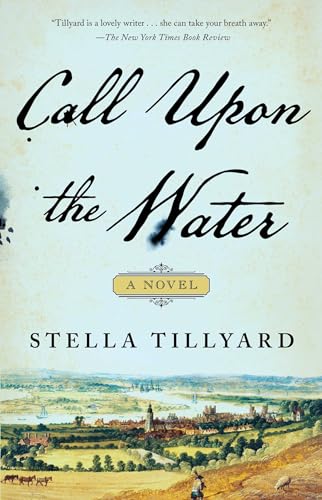
This “story of passion, possession, and a painful education in love” (Sarah Dunant, author of In the Name of the Family), spanning several decades in 17th-century Great Britain and America, evocatively explores the power of nature versus man and man versus woman by “a lovely writer [who] can take your breath away” (The New York Times Book Review).
I am an engineer and a measured man of the world. I prefer to weigh everything in the balance, to calculate and to plan. Yet my own heart is going faster than I can now count.
In 1649, Jan Brunt arrives in Great Britain from the Netherlands to work on draining and developing an expanse of marshy wetlands known as the Great Level. It is here in this wild country that he meets Eliza, a local woman whose love overturns his ordered vision. Determined to help her strive beyond her situation, Jan is heedless of her devotion to her home and way of life. When she uses the education Jan has given her to sabotage his work, Eliza is brutally punished, and Jan flees to the New World.
In the American colonies, profiteers are hungry for viable land to develop, and Jan’s skills as an engineer are highly prized. His prosperous new life is rattled, however, on a spring morning when a boy delivers a note that prompts him to remember the Great Level, and confront all that was lost there. Eliza has made it to the New World and is once again using the education Jan gave her to bend the landscape—this time to find her own place of freedom.
Perfect for fans of Hilary Mantel and Geraldine Brooks, Call Upon the Water is “a haunting book with characters who stay with the reader as their lives unfold like a sea mist” (Philippa Gregory, New York Times bestselling author).
Note: This book was published in the UK under the title The Great Level.
Die Inhaltsangabe kann sich auf eine andere Ausgabe dieses Titels beziehen.
Über die Autorin bzw. den Autor
Stella Tillyard is a British novelist and historian. She was educated at Oxford and Harvard Universities and the School of the Museum of Fine Arts in Boston. Her bestselling book Aristocrats was made into a miniseries for BBC1/Masterpiece Theatre, and sold to over twenty countries. Winner of the Meilleur Livre Etranger, the Longman-History Today Prize, and the Fawcett Prize, Tillyard has taught at Harvard University, the University of California, Los Angeles, and the Centre for Editing Lives and Letters at Queen Mary, London. She is currently a Visiting Professor in the Department of History, Classics and Archaeology at Birkbeck, University of London. Her latest novel is Call Upon the Water (published in the UK under the title The Great Level).
Auszug. © Genehmigter Nachdruck. Alle Rechte vorbehalten.
Call Upon the Water
Chapter 1
Nieuw Amsterdam, Manatus Eylandt.
The colony of Nieuw Nederland in America.
The 1st day of April, 1664.
A fair day in prospect.
The sky clear, the wind, by my weather vane, from the east.
High tide by the Stadt Huys at 20 minutes after 1 o’clock.
I have lived, for almost a dozen years, here in the colony of Nieuw Nederland, that we call the New World, though it is rightly only new to us, being as old as all creation. This, the city of Nieuw Amsterdam, is sited on the Eylandt of Manatus. It is truly not much of a city: to call it such is the pride of the inhabitants, or the way they talk in letters home. It is a town, most on the firm ground, but in part, as is our Dutch way, on land we have drained. I daresay that before long, if the colony grows and survives the difficult times, we will begin to take land from the sea both as protection and out of habit.
When I think as a Dutchman, if such I am still, I know that it is not other nations that we Dutch most dream of conquering, or other peoples. Our real enemy and our best companion is something quite different: the force of nature itself. We have been compelled for centuries to attempt the separation of land and water wherever we find them muddled up. This is our struggle; this our way of being. Here in the New World there is surely land enough for all. Mountains and plains, hills and huge valleys, it is supposed, stretch away beyond the western horizon in a vastness never seen before. They bring fear and entrancement for some. Yet we Dutch turn the other way. We seek out the waterlines: shores, rivers, estuaries and marshes.
So it is no surprise that from my garret window I look down on the canal that my men dug from a filthy stream and embanked as my contract demanded. It’s a strip of water, the Heere Gracht, jeweled silver in the morning sun. I ran it straight south to the river’s edge, clean and simple, as befits an engineer. At the shore, where once the land slid under the water in a disorderly way, the two are now divided by pilings that have given Manatus Eylandt a firm edge all round its tip. Such is the purpose of embanking: to make an edge, a clear boundary and separation.
Beyond the confines of Nieuw Amsterdam, marsh, sand and river still mingle raggedly up the island’s eastern side. There, twice a day, the tide pushes up the ribbony creeks and into the marshes. The glistening brown mud waits, and welcomes the water. When the tide goes out the flats are dappled with gulls and egrets sucking up worms and shrimp. Their cries reach me in my attic in the early morning, and through the darkness, with the casement open, comes the quock-quock of night herons searching for crabs. This is still a small place, two thousand souls. The shore and the sea are right there, beyond the wharfs and the wall. They wait, as once the flood waited, for the call to rise and cover the earth. One day the flood will come again. This is the knowledge that a Dutchman always has.
I have been in possession here long enough to call this place my home, though it is inside my house, more than on these streets, that I am myself, which is all that I wish for. Nieuw Amsterdam cannot be like the old city of Amsterdam, though the people still have the voices of their homes, the ne and ja, goedemorgen and goedenavond when the sun sinks beyond the far bank of the Noort Rivier. The very first to come here in the ship the Halve Maen also brought the flags that flew from the Fort and the Stadt Huys in bands of orange, white and blue.
That was half a century ago, and Nieuw Amsterdam flourishes in many respects, and now begins to grow. The better sort amongst the houses, such as mine is, in every way resemble those that were left behind, with gabled ends proud onto the street, high stoops and half-doors for the summer. Tall windows flank the front door, with sturdy casements and the clearest glass to be found here. I have tacked a brass plate to the door with my name and profession: Jan Brunt, Ingenieur. Along with the hinges of my doors and the clasps on my windows, this plate is polished so bright that the clouds may be observed running across it, or a face reflected if it comes up close.
On the first floor of my house stand three more windows and another in the gable end where the year of building, 1654, is finely writ in curling iron numbers, bolted into the bricks. On the gable top stands my weather vane, by which each morning I see at a glance how the wind blows. Behind my house I grow vegetables and fruit trees, sheltering them with a fine wall and taking advantage of the western sun. Tulips and other tender bulbs do not flourish here, or flower once only. I lift them for the hottest summer months, when they lie cool in my cellar like gentleman’s claret, and replant them in the autumn, yet they come back too tall and without strength.
Inside, too, the houses are much the same as you might see in Leiden or in Delft. New World oak makes good dense flooring, and the carpets on the tables come from the East Indies as do those at home. Our hearths are tiled in blue and milky white. More than anything, more even than the portraits and little landscapes transported in trunks and boxes, these tiles bring Holland here. Sitting by my fire I can lean close to its canals and windmills, its dogs and children, soldiers, scholars and skiffs at sea. Each blue brushstroke is tender and familiar to me, like a touch on the cheek.
Much is taken from old Amsterdam, but not the light, or the wind, or its long low sky. Even as a child I knew my home, its extent and look on the map. “That is Holland,” I could say to myself. I knew its shape, the round blue scoop of the Zuyder Zee, and the splayed fingers of the River Rhine that stretched into the sea.
So familiar was the picture of Holland in my mind, that I did not pay it any heed. Only when I came here to the New World did I understand the comfort of that shape, its borders drawn in black or red. Here we are, it says; here we are snug and safe, and beyond the lines lies something different. Here one thing ends and another begins. Mark it well and preserve it well.
In the New World we are just beginning to make our edges safe in this very small part, four or five islands with that of Manatus at the center. Of the rest we can say little and draw less. We know the rivers well enough, and the great lakes in the northern areas. We know there is another side, and I have seen a map of it; but what lies between, the great immensity of it, is unknown. Sometimes men appear in Nieuw Amsterdam with tales of high mountains and huge animals, but they may be liars or tell fantastic stories for the fame of it.
There was a man here, a trader in furs with a large fortune, who determined to get across to the far coast discovered by fanatic Spanish missionaries. He talked of nothing else but the journey and his desire to make out the whole shape of America once and for all and then to establish settlements therein. The wildmen, with their vagueness in matters of distance, were no good to him in his preparations. He showed them a map of the two coasts and the blank between, but they shrugged, not knowing what a map might be; or perhaps, wishing him to leave that land to them, they turned away. So he would have to do it himself, make the journey and the map.
One fine autumn day about five years ago he set off, crossed the Noort Rivier and struck west. I never heard of him again. Somewhere his bones lie in that space, unless he went south to the French...
„Über diesen Titel“ kann sich auf eine andere Ausgabe dieses Titels beziehen.
Suchergebnisse für Call Upon the Water: A Novel

Beispielbild für diese ISBN
Call Upon the Water
Anbieter: World of Books (was SecondSale), Montgomery, IL, USA
Verkäuferbewertung 5 von 5 Sternen

Paperback. Zustand: Good. I am an engineer and a measured man of the world. I prefer to weigh everything in the balance, to calculate and to plan. Yet my own heart is going faster than I can now count. Artikel-Nr. 00062114180
Gebraucht kaufen
EUR 5,79
Versand gratis
Versand innerhalb von USA
Versand innerhalb von USA
Anzahl: 1 verfügbar
Beispielbild für diese ISBN
Call Upon the Water
Anbieter: World of Books (was SecondSale), Montgomery, IL, USA
Verkäuferbewertung 5 von 5 Sternen
Paperback. Zustand: Fair. I am an engineer and a measured man of the world. I prefer to weigh everything in the balance, to calculate and to plan. Yet my own heart is going faster than I can now count. Artikel-Nr. 00051013823
Gebraucht kaufen
EUR 5,79
Versand gratis
Versand innerhalb von USA
Versand innerhalb von USA
Anzahl: 1 verfügbar
Beispielbild für diese ISBN
Call Upon the Water
Anbieter: ThriftBooks-Dallas, Dallas, TX, USA
Verkäuferbewertung 5 von 5 Sternen
Paperback. Zustand: Good. No Jacket. Pages can have notes/highlighting. Spine may show signs of wear. ~ ThriftBooks: Read More, Spend Less. Artikel-Nr. G1982120975I3N00
Gebraucht kaufen
EUR 6,05
Versand gratis
Versand innerhalb von USA
Versand innerhalb von USA
Anzahl: 1 verfügbar
Beispielbild für diese ISBN
Call Upon the Water: A Novel
Anbieter: Wonder Book, Frederick, MD, USA
Verkäuferbewertung 5 von 5 Sternen
Zustand: Very Good. Very Good condition. With remainder mark. A copy that may have a few cosmetic defects. May also contain light spine creasing or a few markings such as an owner's name, short gifter's inscription or light stamp. Artikel-Nr. P16D-01857
Gebraucht kaufen
EUR 6,43
Versand gratis
Versand innerhalb von USA
Versand innerhalb von USA
Anzahl: 1 verfügbar
Beispielbild für diese ISBN
Call upon the Water : A Novel
Anbieter: Better World Books, Mishawaka, IN, USA
Verkäuferbewertung 5 von 5 Sternen
Zustand: Very Good. Pages intact with possible writing/highlighting. Binding strong with minor wear. Dust jackets/supplements may not be included. Stock photo provided. Product includes identifying sticker. Better World Books: Buy Books. Do Good. Artikel-Nr. 39565392-6
Gebraucht kaufen
EUR 6,58
Versand gratis
Versand innerhalb von USA
Versand innerhalb von USA
Anzahl: 1 verfügbar
Beispielbild für diese ISBN
Call upon the Water : A Novel
Anbieter: Better World Books, Mishawaka, IN, USA
Verkäuferbewertung 5 von 5 Sternen
Zustand: Very Good. Former library copy. Pages intact with possible writing/highlighting. Binding strong with minor wear. Dust jackets/supplements may not be included. Includes library markings. Stock photo provided. Product includes identifying sticker. Better World Books: Buy Books. Do Good. Artikel-Nr. 45525292-6
Gebraucht kaufen
EUR 6,58
Versand gratis
Versand innerhalb von USA
Versand innerhalb von USA
Anzahl: 1 verfügbar
Beispielbild für diese ISBN
Call upon the Water
Anbieter: Revaluation Books, Exeter, Vereinigtes Königreich
Verkäuferbewertung 5 von 5 Sternen
Paperback. Zustand: Brand New. 288 pages. 8.00x5.25x0.75 inches. In Stock. Artikel-Nr. x-1982120975
Neu kaufen
EUR 22,76
EUR 11,98 Versand
Versand von Vereinigtes Königreich nach USA
Versand von Vereinigtes Königreich nach USA
Anzahl: 2 verfügbar
Foto des Verkäufers
Call upon the Water
Anbieter: GreatBookPricesUK, Woodford Green, Vereinigtes Königreich
Verkäuferbewertung 5 von 5 Sternen
Zustand: As New. Unread book in perfect condition. Artikel-Nr. 41252348
Gebraucht kaufen
EUR 21,17
EUR 17,97 Versand
Versand von Vereinigtes Königreich nach USA
Versand von Vereinigtes Königreich nach USA
Anzahl: Mehr als 20 verfügbar
Foto des Verkäufers
Call upon the Water
Anbieter: GreatBookPricesUK, Woodford Green, Vereinigtes Königreich
Verkäuferbewertung 5 von 5 Sternen
Zustand: New. Artikel-Nr. 41252348-n
Neu kaufen
EUR 24,31
EUR 17,97 Versand
Versand von Vereinigtes Königreich nach USA
Versand von Vereinigtes Königreich nach USA
Anzahl: Mehr als 20 verfügbar
Foto des Verkäufers
Call Upon the Water
Anbieter: AHA-BUCH GmbH, Einbeck, Deutschland
Verkäuferbewertung 5 von 5 Sternen
Taschenbuch. Zustand: Neu. Neuware - This "story of passion, possession, and a painful education in love" (Sarah Dunant, author of In the Name of the Family), spanning several decades in 17th-century Great Britain and America, evocatively explores the power of nature versus man and man versus woman by "a lovely writer [who] can take your breath away" (The New York Times Book Review).I am an engineer and a measured man of the world. I prefer to weigh everything in the balance, to calculate and to plan. Yet my own heart is going faster than I can now count. In 1649, Jan Brunt arrives in Great Britain from the Netherlands to work on draining and developing an expanse of marshy wetlands known as the Great Level. It is here in this wild country that he meets Eliza, a local woman whose love overturns his ordered vision. Determined to help her strive beyond her situation, Jan is heedless of her devotion to her home and way of life. When she uses the education Jan has given her to sabotage his work, Eliza is brutally punished, and Jan flees to the New World. In the American colonies, profiteers are hungry for viable land to develop, and Jan's skills as an engineer are highly prized. His prosperous new life is rattled, however, on a spring morning when a boy delivers a note that prompts him to remember the Great Level, and confront all that was lost there. Eliza has made it to the New World and is once again using the education Jan gave her to bend the landscapethis time to find her own place of freedom. Perfect for fans of Hilary Mantel and Geraldine Brooks, Call Upon the Water is "a haunting book with characters who stay with the reader as their lives unfold like a sea mist" (Philippa Gregory, New York Times bestselling author). Note: This book was published in the UK under the title The Great Level. Artikel-Nr. 9781982120979
Neu kaufen
EUR 28,13
EUR 35,00 Versand
Versand von Deutschland nach USA
Versand von Deutschland nach USA
Anzahl: 2 verfügbar