
Verwandte Artikel zu The Body
Inhaltsangabe
Set in the fictional town of Castle Rock, Maine
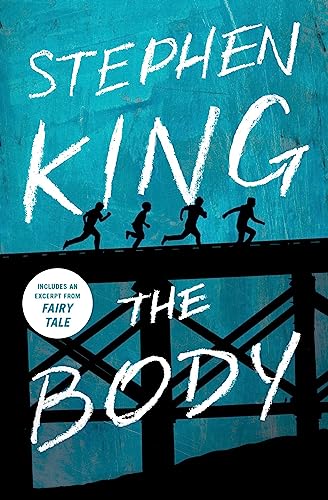
#1 New York Times bestselling author Stephen King’s timeless novella “The Body”—originally published in his 1982 short story collection Different Seasons, and adapted into the 1986 film classic Stand by Me—is now available as a stand-alone publication.
It’s 1960 in the fictional town of Castle Rock, Maine. Ray Brower, a boy from a nearby town, has disappeared, and twelve-year-old Gordie Lachance and his three friends set out on a quest to find his body along the railroad tracks. During the course of their journey, Gordie, Chris Chambers, Teddy Duchamp, and Vern Tessio come to terms with death and the harsh truths of growing up in a small factory town that doesn’t offer much in the way of a future.
A timeless exploration of the loneliness and isolation of young adulthood, Stephen King’s The Body is an iconic, unforgettable, coming-of-age story.
Die Inhaltsangabe kann sich auf eine andere Ausgabe dieses Titels beziehen.
Über die Autorin bzw. den Autor
Stephen King is the author of more than sixty books, all of them worldwide bestsellers. His recent work includes Never Flinch, the short story collection You Like It Darker (a New York Times Book Review top ten horror book of 2024), Holly (a New York Times Notable Book of 2023), Fairy Tale, Billy Summers, If It Bleeds, The Institute, Elevation, The Outsider, Sleeping Beauties (cowritten with his son Owen King), and the Bill Hodges trilogy: End of Watch, Finders Keepers, and Mr. Mercedes (an Edgar Award winner for Best Novel and a television series streaming on Peacock). His novel 11/22/63 was named a top ten book of 2011 by The New York Times Book Review and won the Los Angeles Times Book Prize for Mystery/Thriller. His epic works The Dark Tower, It, Pet Sematary, Doctor Sleep, and Firestarter are the basis for major motion pictures, with It now the highest-grossing horror film of all time. He is the recipient of the 2020 Audio Publishers Association Lifetime Achievement Award, the 2018 PEN America Literary Service Award, the 2014 National Medal of Arts, and the 2003 National Book Foundation Medal for Distinguished Contribution to American Letters. He lives in Bangor, Maine, with his wife, novelist Tabitha King.
Von der hinteren Coverseite
#1 New York Times bestselling author Stephen King's timeless novella The Body, originally published in his 1982 collection Different Seasons and adapted into the 1986 film classic Stand by Me, now available as a stand-alone edition.
Four rambunctious young boys venture into the Maine woods in search of a boy from a nearby town who has disappeared. Gordie Lachance and his three friends set out on a quest to find the missing boy's body along the railroad tracks. The Body is set outside King's iconic fictional town of Castle Rock, which is the setting of many of King's most popular books including It and The Stand, and Castle Rock, a 10-episode Hulu original series, based on King's short stories. King's The Body is an iconic coming of age story that explores the loneliness and isolation of young adulthood.
Auszug. © Genehmigter Nachdruck. Alle Rechte vorbehalten.
The Body
11
We got to the dump around one-thirty, and Vern led the way down the embankment with a Paratroops over the side! We went to the bottom in big jumps and leaped over the brackish trickle of water oozing listlessly out of the culvert which poked out of the cinders. Beyond this small boggy area was the sandy, trash-littered verge of the dump.
There was a six-foot security fence surrounding it. Every twenty feet weather-faded signs were posted. They said:
CASTLE ROCK DUMP
HOURS 4-8 P.M.
CLOSED MONDAYS
TRESPASSING STRICTLY FORBIDDEN
We climbed to the top of the fence, swung over, and jumped down. Teddy and Vern led the way toward the well, which you tapped with an old-fashioned pump—the kind from which you had to call the water with elbow-grease. There was a Crisco can filled with water next to the pump handle, and the great sin was to forget to leave it filled for the next guy to come along. The iron handle stuck off at an angle, looking a one-winged bird that was trying to fly. It had once been green, but almost all of the paint had been rubbed off by the thousands of hands that had worked that handle since 1940.
The dump is one of my strongest memories of Castle Rock. It always reminds me of the surrealist painters when I think of it—those fellows who were always painting pictures of clockfaces lying limply in the crotches of trees or Victorian living rooms standing in the middle of the Sahara or steam engines coming out of fireplaces. To my child’s eye, nothing in the Castle Rock Dump looked as if it really belonged there.
We had entered from the back. If you came from the front, a wide dirt road came in through the gate, broadened out into a semicircular area that had been bulldozed as flat as a dirt landing-strip, and then ended abruptly at the edge of the dumping-pit. The pump (Teddy and Vern were currently standing there and squabbling about who was going to prime it) was at the back of this great pit. It was maybe eighty feet deep and filled with all the American things that get empty, wear out, or just don’t work anymore. There was so much stuff that my eyes hurt just looking at it—or maybe it was your brain that actually hurt, because it could never quite decide what your eye should stop on. Then your eye would stop, or be stopped, by something that seemed as out of place as those limp clockfaces or the living room in the desert. A brass bedstead leaning drunkenly in the sun. A little girl’s dolly looking amazedly between her thighs as she gave birth to stuffing. An overturned Studebaker automobile with its chrome bullet nose glittering in the sun like some Buck Rogers missile. One of those giant water bottles they have in office buildings, transformed by the summer sun into a hot, blazing sapphire.
There was plenty of wildlife there, too, although it wasn’t the kind you see in the Walt Disney nature films or at those tame zoos where you can pet the animals. Plump rats, wood-chucks grown sleek and lumbering on such rich chow as rotting hamburger and maggoty vegetables, seagulls by the thousands, and stalking among the gulls like thoughtful, introspective ministers, an occasional huge crow. It was also the place where the town’s stray dogs came for a meal when they couldn’t find any trashcans to knock over or any deer to run. They were a miserable, ugly-tempered, mongrel lot; slat-sided and grinning bitterly, they would attack each other over a flyblown piece of bologna or a pile of chicken guts fuming in the sun.
But these dogs never attacked Milo Pressman, the dump-keeper, because Milo was never without Chopper at his heel. Chopper was—at least until Joe Camber’s dog Cujo went rabid twenty years later—the most feared and least seen dog in Castle Rock. He was the meanest dog for forty miles around (or so we heard), and ugly enough to stop a striking clock. The kids whispered legends about Chopper’s meanness. Some said he was half German shepherd, some said he was mostly boxer, and a kid from Castle View with the unfortunate name of Harry Horr claimed that Chopper was a Doberman pinscher whose vocal cords had been surgically removed so you couldn’t hear him when he was on the attack. There were other kids who claimed Chopper was a maniacal Irish wolfhound and Milo Pressman fed him a special mixture of Gaines Meal and chicken blood. These same kids claimed that Milo didn’t dare take Chopper out of his shack unless the dog was hooded like a hunting falcon.
The most common story was that Pressman had trained Chopper not just to sic but to sic specific parts of the human anatomy. Thus an unfortunate kid who had illegally scaled the dump fence to pick up illicit treasures might hear Milo Pressman cry: “Chopper! Sic! Hand!” And Chopper would grab that hand and hold on, ripping skin and tendons, powdering bones between his slavering jaws, until Milo told him to quit. It was rumored that Chopper could take an ear, an eye, a foot, or a leg . . . and that a second offender who was surprised by Milo and the ever-loyal Chopper would hear the dread cry: “Chopper! Sic! Balls!” And that kid would be a soprano for the rest of his life. Milo himself was more commonly seen and thus more commonly regarded. He was just a half-bright working joe who supplemented his small town salary by fixing things people threw away and selling them around town.
There was no sign of either Milo or Chopper today.
Chris and I watched Vern prime the pump while Teddy worked the handle frantically. At last he was rewarded with a flood of clear water. A moment later both of them had their heads under the trough, Teddy still pumping away a mile a minute.
“Teddy’s crazy,” I said softly.
“Oh yeah,” Chris said matter-of-factly. “He won’t live to be twice the age he is now, I bet. His dad burnin his ears like that. That’s what did it. He’s crazy to dodge trucks the way he does. He can’t see worth a shit, glasses or no glasses.”
“You remember that time in the tree?”
“Yeah.”
The year before, Teddy and Chris had been climbing the big pine tree behind my house. They were almost to the top and Chris said they couldn’t go any further because all of the branches up there were rotten. Teddy got that crazy, stubborn look on his face and said fuck that, he had pine tar all over his hands and he was gonna go up until he could touch the top. Nothing Chris said could talk him out of it. So up he went, and he actually made it—he only weighed seventy-five pounds or so, remember. He stood there, clutching the top of the pine in one tar-gummy hand, shouting that he was king of the world or some stupid thing like that, and then there was a sickening, rotted crack as the branch he was standing on gave way and he plummeted. What happened next was one of those things that make you sure there must be a God. Chris reached out, purely on reflex, and what he caught was a fistful of Teddy Duchamp’s hair. And although his wrist swelled up fat and he was unable to use his right hand very well for almost two weeks, Chris held him until Teddy, screaming and cursing, got his foot on a live branch thick enough to support his weight. Except for Chris’s blind grab, he would have turned and crashed and smashed all the way to the foot of the tree, a hundred and twenty feet below. When they got down, Chris was gray-faced and almost puking with the fear reaction. And Teddy wanted to fight him for pulling his hair....
„Über diesen Titel“ kann sich auf eine andere Ausgabe dieses Titels beziehen.
Suchergebnisse für The Body

Foto des Verkäufers
The Body
Anbieter: Dream Books Co., Denver, CO, USA
Verkäuferbewertung 5 von 5 Sternen

Zustand: acceptable. This copy has clearly been enjoyedâ"expect noticeable shelf wear and some minor creases to the cover. Binding is strong, and all pages are legible. May contain previous library markings or stamps. Artikel-Nr. DBV.1982103531.A
Gebraucht kaufen
EUR 4,80
Versand gratis
Versand innerhalb von USA
Versand innerhalb von USA
Anzahl: 1 verfügbar
Foto des Verkäufers
The Body
Anbieter: Dream Books Co., Denver, CO, USA
Verkäuferbewertung 5 von 5 Sternen
Zustand: good. Gently used with minimal wear on the corners and cover. A few pages may contain light highlighting or writing, but the text remains fully legible. Dust jacket may be missing, and supplemental materials like CDs or codes may not be included. May be ex-library with library markings. Ships promptly! Artikel-Nr. DBV.1982103531.G
Gebraucht kaufen
EUR 5,35
Versand gratis
Versand innerhalb von USA
Versand innerhalb von USA
Anzahl: 2 verfügbar
Beispielbild für diese ISBN
The Body
Verlag:
Scribner (edition FIRST TRADE ED), 2018
ISBN 10: 1982103531
ISBN 13: 9781982103538
Gebraucht
Paperback
Anbieter: BooksRun, Philadelphia, PA, USA
Verkäuferbewertung 5 von 5 Sternen
Paperback. Zustand: Fair. FIRST TRADE ED. The item might be beaten up but readable. May contain markings or highlighting, as well as stains, bent corners, or any other major defect, but the text is not obscured in any way. Artikel-Nr. 1982103531-7-1
Gebraucht kaufen
EUR 6,91
Versand gratis
Versand innerhalb von USA
Versand innerhalb von USA
Anzahl: 2 verfügbar
Beispielbild für diese ISBN
The Body
Verlag:
Scribner (edition FIRST TRADE ED), 2018
ISBN 10: 1982103531
ISBN 13: 9781982103538
Gebraucht
Paperback
Anbieter: BooksRun, Philadelphia, PA, USA
Verkäuferbewertung 5 von 5 Sternen
Paperback. Zustand: Very Good. FIRST TRADE ED. It's a well-cared-for item that has seen limited use. The item may show minor signs of wear. All the text is legible, with all pages included. It may have slight markings and/or highlighting. Artikel-Nr. 1982103531-11-1
Gebraucht kaufen
EUR 7,35
Versand gratis
Versand innerhalb von USA
Versand innerhalb von USA
Anzahl: 4 verfügbar
Beispielbild für diese ISBN
The Body
Anbieter: World of Books (was SecondSale), Montgomery, IL, USA
Verkäuferbewertung 5 von 5 Sternen
Paperback. Zustand: Good. #1 New York Times bestselling author Stephen King's timeless novella The Body, originally published in his 1982 collection Different Seasons and adapted into the 1986 film classic Stand by Me, now available as a stand-alone edition. Four rambunctious young boys venture into the Maine woods in search of a boy from a nearby town who has disappeared. Gordie Lachance and his three friends set out on a quest to find the missing boy's body along the railroad tracks. The Body is set outside King's iconic fictional town of Castle Rock, which is the setting of many of King's most popular books including It and The Stand, and Castle Rock, a 10-episode Hulu original series, based on King's short stories. King's The Body is an iconic coming of age story that explores the loneliness and isolation of young adulthood. Artikel-Nr. 00107434749
Gebraucht kaufen
EUR 9,06
Versand gratis
Versand innerhalb von USA
Versand innerhalb von USA
Anzahl: 14 verfügbar
Beispielbild für diese ISBN
The Body
Anbieter: World of Books (was SecondSale), Montgomery, IL, USA
Verkäuferbewertung 5 von 5 Sternen
Paperback. Zustand: Very Good. #1 New York Times bestselling author Stephen King's timeless novella The Body, originally published in his 1982 collection Different Seasons and adapted into the 1986 film classic Stand by Me, now available as a stand-alone edition. Four rambunctious young boys venture into the Maine woods in search of a boy from a nearby town who has disappeared. Gordie Lachance and his three friends set out on a quest to find the missing boy's body along the railroad tracks. The Body is set outside King's iconic fictional town of Castle Rock, which is the setting of many of King's most popular books including It and The Stand, and Castle Rock, a 10-episode Hulu original series, based on King's short stories. King's The Body is an iconic coming of age story that explores the loneliness and isolation of young adulthood. Artikel-Nr. 00109031797
Gebraucht kaufen
EUR 9,06
Versand gratis
Versand innerhalb von USA
Versand innerhalb von USA
Anzahl: 7 verfügbar
Beispielbild für diese ISBN
The Body
Anbieter: Better World Books: West, Reno, NV, USA
Verkäuferbewertung 5 von 5 Sternen
Zustand: Very Good. Pages intact with possible writing/highlighting. Binding strong with minor wear. Dust jackets/supplements may not be included. Stock photo provided. Product includes identifying sticker. Better World Books: Buy Books. Do Good. Artikel-Nr. 16031024-6
Gebraucht kaufen
EUR 10,11
Versand gratis
Versand innerhalb von USA
Versand innerhalb von USA
Anzahl: 1 verfügbar
Beispielbild für diese ISBN
The Body
Anbieter: Roundabout Books, Greenfield, MA, USA
Verkäuferbewertung 4 von 5 Sternen

paperback. Zustand: Near Fine. Condition Notes: Excellent, unmarked copy with little wear and tight binding. We ship in recyclable American-made mailers. 100% money-back guarantee on all orders. Artikel-Nr. 1775641
Gebraucht kaufen
EUR 12,27
Versand gratis
Versand innerhalb von USA
Versand innerhalb von USA
Anzahl: 1 verfügbar
Beispielbild für diese ISBN
The Body
Anbieter: medimops, Berlin, Deutschland
Verkäuferbewertung 5 von 5 Sternen
Zustand: good. Befriedigend/Good: Durchschnittlich erhaltenes Buch bzw. Schutzumschlag mit Gebrauchsspuren, aber vollständigen Seiten. / Describes the average WORN book or dust jacket that has all the pages present. Artikel-Nr. M01982103531-G
Gebraucht kaufen
EUR 10,20
EUR 10,00 Versand
Versand von Deutschland nach USA
Versand von Deutschland nach USA
Anzahl: 1 verfügbar
Beispielbild für diese ISBN
The Body
Anbieter: medimops, Berlin, Deutschland
Verkäuferbewertung 5 von 5 Sternen
Zustand: very good. Gut/Very good: Buch bzw. Schutzumschlag mit wenigen Gebrauchsspuren an Einband, Schutzumschlag oder Seiten. / Describes a book or dust jacket that does show some signs of wear on either the binding, dust jacket or pages. Artikel-Nr. M01982103531-V
Gebraucht kaufen
EUR 10,39
EUR 10,00 Versand
Versand von Deutschland nach USA
Versand von Deutschland nach USA
Anzahl: 5 verfügbar