
Verwandte Artikel zu Playing Fair: A Guide to Nonmonogamy for Men into Women...
Inhaltsangabe
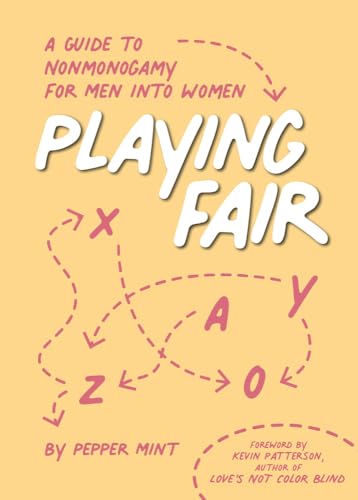
A practical guide to nonmonogamy for men into women, helping them to achieve their nonmonogamous dreams.
Good news! You can leave the constraints of monogamy behind, and step into the delightful possibilities of polyamory and open relationships. By understanding and practicing nonmonogamy, you can live to the limits of your romantic and erotic desires, while building networks of relationships that nourish and challenge you.
But it's a lot harder than it looks, and living openly will test you. Are you able to navigate discussions of jealousy with responsibility and care? Can you reject self-sabotaging patterns of selfishness and deceit? Will you employ your strength and confidence to meet the emotional needs of multiple connections.
If you’re looking to rise to the occasion, then this is the book for you! Within, you'll learn the skills and tools you'll need to navigate conscientious nonmonogamy and find your way to your fantasies.
Die Inhaltsangabe kann sich auf eine andere Ausgabe dieses Titels beziehen.
Über die Autorin bzw. den Autor
Pepper Mint is an activist, educator, and community organizer in the polyamory and BDSM communities in San Francisco.
Auszug. © Genehmigter Nachdruck. Alle Rechte vorbehalten.
Playing Fair
A Guide to Nonmonogamy for Men Into Women
By Pepper MintThorntree Press, LLC
Copyright © 2017 Pepper Mint
All rights reserved.
ISBN: 978-1-944934-38-5All rights reserved.
Contents
Foreword,
Introduction,
Letting Go of Monogamous Misconceptions,
The Emotional Journey into Nonmonogamy,
Authenticity and Integrity,
Working On Our Attraction to Women,
Being Attractive to Others,
Nonmonogamous Community,
Socializing and Flirting,
Navigating Play Parties,
Paying Attention to Our Connections,
Negotiating STI Conversations,
Letting Go of Sexual Entitlement,
Enthusiastic Sexual Consent,
When Consent Is Broken,
Supporting Women Around Abuse and Sexual Assault,
Conclusion: Seeking Paradise,
CHAPTER 1
Letting Go of Monogamous Misconceptions
As it turns out, the biggest obstacle to being nonmonogamous is ... monogamy. Or rather, the monogamous baggage we all carry.
Many nonmonogamy skills are simply relationship skills. Nevertheless, ethically conducted nonmonogamy turns a lot of established beliefs on their head — things that the culture considers so basic that they're mostly never examined. This section describes some of the ways we "think monogamous" even when we believe we don't, how these assumptions can cause problems, and how to get past them.
Consider the ways we're indoctrinated into monogamy. Most novels, movies, TV shows, and songs have a romantic relationship in them — a monogamous relationship. Almost all of our real-life relationship role models are monogamous or supposed to be. Successfully nonmonogamous people may indeed be in our lives, but they are typically closeted and therefore unlikely to be available as role models.
Everyone assumes that people pair off in couples. Invites to gatherings are usually "plus one" — that is, your one "significant other" and no one else. Socializing is built around couples, singles, or a mix of the two. Consider insurance plans and immigration law. All business and government models assume at most one other partner.
Monogamous assumptions are woven into our thinking about love and romance, long-term commitment, successful partnerships, handling of household finances, sexual fulfillment, and so on. Sexual monogamy became a formal marriage requirement centuries before most of our other relationship concepts came into existence. So we come to nonmonogamy loaded with hidden monogamous assumptions. Let's unearth some of those assumptions.
Collaboration Instead of Competition
In the monogamous world, love and sex are assumed to be scarce commodities. Many difficulties arise from this imposed economics of scarcity.
It starts with the fact that most people are already in relationships and therefore unavailable. Even in a relationship, love and sex are only available from that one other person. This is fine for people who actually want to be monogamous, but limiting and potentially traumatizing for others. Among single people even the possibility of a relationship with a new person is fraught with high-stakes peril due to fear of isolation or missed opportunities.
This scarcity mentality sets up a highly competitive situation for sex and romance. People sometimes find themselves shut out of dating almost entirely. This is particularly true if they are in a nonnormative or oppressed group — someone whose potential partners may balk at the stigma they face, whether transphobia, racism, fatphobia, ableism, or other. Even for those who are successful in the dating market, the competitive aspect of monogamy leads people to take actions of questionable morality, such as cheating or "trading up" to a more desirable partner.
Most people bring this competitive attitude when they start exploring nonmonogamy. This is particularly relevant to men competing with other men, though women are competitive as well. There's an attitude that other men should be distrusted and undermined at every opportunity, especially men who are relationship rivals. Of course this leads to drama and discord. We see a lot of bad practices sprout from this competitiveness, such as "one penis policy" relationships, where a man is allowed to see multiple women but those women are discouraged from seeing other men.
Unlike monogamy, successful nonmonogamy consistently tends to be collaborative, not competitive. Certainly the nonmonogamous dating scene can sometimes feel competitive. However, because most people in it are open to new connections and everyone knows it, dating opportunities are available to most.
Cooperation is how people get along and build connections. In nonmonogamy, supporting your partners' connections with other people is fundamentally a good idea that strengthens your own relationships. The happier your partners are in their other connections, the more fulfilled they are in general, and the happier they are with you.
So it is important to let go of competitiveness and think of yourself as on the same team as the rest of your relationship network.
This means not setting up rules that are harmful to other relationships or connections. And it definitely means not putting effort into competing with or trying to scuttle your partners' other connections. You should try to meet your partners' other lovers, and find ways to be generous to those connections. Maybe that means giving up the house for an evening so others can play. Maybe it means letting someone know that you consider their relationship with your partner to be valuable. Maybe it means inviting your partner's partner into your life in some meaningful way.
For most of us, this requires retraining. It is a skill to develop. You should consider the health of your nonmonogamous network to be important and worthy of your time, support, and encouragement. If there is drama in your network, it will probably negatively affect you. If things go well in your network, things will get better for you. Act to support the relationships and people in your network and you will find yourself with much more stability and abundance in your nonmonogamous life.
Responsibility with Freedom
Another piece of monogamous ideology is the false dichotomy between freedom and responsibility. They are not opposites; they are tightly interdependent. Behave irresponsibly, and your freedom will evaporate. Behave well to others, and your freedom will expand and flourish.
We're raised to think of monogamous marriage as the epitome of responsibility via tropes like "for better or for worse" and "the old ball and chain." This does us a number of disservices.
First, it positions nonmonogamy as both freeing and irresponsible. See the problem? If people assume that going nonmonogamous means a no-holds-barred free-for-all, they will usually fail.
Second, relationship responsibility gets associated with resentments, as in phrases like "ball and chain." This hides the fact that responsibility is a good thing that gets you places.
Men in particular seem to be very susceptible to this way of thinking. I have met many nonmonogamous men who were resistant to anything resembling expectations or responsibility, even in little ways. I constantly see men who fail to show up, to make even small promises, or to return phone calls. Men often carry the false dichotomy between having fun and building connection, between getting what you want and doing the work to get it.
Some men see avoiding responsibility as a way of taking power for themselves — that is, as an aggressive way of signaling that they can do whatever they want. Such men end up doing whatever they want ... alone.
I think that pornography tends to make this attitude worse. In mainstream porn, sex with no strings is the norm — women just walk into a situation and bang the pizza delivery guy. This is not the fault of porn — the genre just reflects the entitled male fantasy of unfettered sexual access to women. But that fantasy is rarely realized. Chances are it will never happen to you. Nevertheless, I have met many men who were on some kind of quest to find the magical land of easy women, where you just walk in the door and hot women throw themselves on you. These men jump from scene to scene looking for their fantasy and never find it. This is because in reality, women are people rather than sexual objects. People have their own desires and are picky in their own way, so connecting with them requires mutual attraction, negotiation, and consideration — not a self-centered fantasy.
Responsibility enables what I call "effective freedom," that is, the freedom to do what you want in the context of working with other people. It is important to learn how to welcome other people's desires and expectations, and to work with them cooperatively to build connection. This is true even for relatively lightweight connections. This was a very hard step for me to take, but once I did I found that my nonmonogamous sexual and relationship life blossomed. As I started doing this work, women started being much more interested in being with me and staying with me. Try to start associating personal responsibility with positive freedom — the freedom to date women in a way that works.
Women as Nonmonogamous
Another cultural myth is that women are inherently monogamous. Cultures created this myth to control women's sexuality — to keep women from sleeping around or otherwise owning their own sexual freedom. It also enables the wider control of women. That said, there is a more complex secondary layer to this myth as well.
The Western myth of women as monogamous started in the Victorian era, when sex work (the non-pejorative term for prostitution) was common and, dependent on place and time, legal. The women considered to be monogamous were only a certain kind of women — that is, "respectable" women in the gentry and newly established middle class. In short, the ones you were supposed to marry or at least aim to marry. The other type of women were sex workers and "loose women," often conflated with working class women, those in the "underclass," and women of color. This developed into what is known as the Madonna/whore complex: the idea that women are either sexually pure and uninterested in sex, or out-of-control immoral sluts. Dominant Western culture still tends to stereotype women as one or the other: highly sexual or nonsexually romantic. In reality, most women are somewhere in the middle — they are people who, like most men, look to connect (sexually, romantically, both, or otherwise) only in particular situations.
From the Madonna stereotype, many of us get the idea that the nonmonogamy we want is impossible with the women we want to build a life with, or that we have to trick or force them into it. On the whore side of the dichotomy, we tend to imagine that nonmonogamous women are hypersexual, out of control, and easily available. Both myths harm women because they lead us to not respect women's sexual agency. When moving into nonmonogamy, it is crucial to see these myths and shed them.
A lot more women are interested in nonmonogamy than mainstream culture would have you believe. The number of women is similar to the number of men. Nonmonogamous women are in it for their own reasons: freedom to connect, multiple relationships, and so on. Their complex desires lead to complex negotiations, which then lead to situations where hopefully everyone is getting what they are looking for.
Never assume that a woman is available to you because she is nonmonogamous with others. Do not assume that she is sexually free or sexual at all — just as with men, some nonmonogamous women are asexual. Likewise, do not assume that she was somehow tricked into nonmonogamy or does not actually want it. Further, do not assume that she will oppose your nonmonogamous desires or, conversely, that she will want commitment and a deep emotional connection from you. You get the idea. Cultural ideas and assumptions around women and nonmonogamy are poison and will lead you astray. Let go of this cultural noise.
CHAPTER 2The Emotional Journey into Nonmonogamy
The journey out of the monogamous world is not easy or quick for most people. It is not just a matter of letting go of old ideas. Intellectual adaptation as described above is the easy part of the work. The harder part is figuring out how to manage a lifetime of monogamous emotional conditioning — your emotional triggers and gut assumptions that still lie in wait. This cultural indoctrination can show up as jealousy, shame, guilt, anxiety, anger, withdrawal, or fear.
There are various approaches to handling these emotions and attempting to move past them. Sometimes this means doing the work to figure out what incorrect ideas or assumptions underlie your emotions and triggers, and addressing those. Other times it means finding past traumas or childhood issues that are being triggered and dealing with those directly. It may require that you or others learn to manage difficult feelings and avoid particular triggering situations. Sometimes it just takes time and learning to trust in other people. This section is devoted to describing some of this emotional work.
Learning from Others
My first piece of advice: really do the research. The skill set you need is likely deeper and harder to learn than you think. Doing as much up-front learning as you can will smooth the process.
The polyamory community seems to specialize in creating resources for learning. Some books to take a look at are The Ethical Slut, More Than Two, Opening Up, and The Jealousy Workbook. There are many others. If you live in or near a city in a Western country, chances are there are nonmonogamy workshops and discussion/support groups happening near you. Bigger conferences are less common but still pretty easy to find — look for conferences labeled polyamory, open relationships, and swinging. There are numerous online resources including podcasts, discussion forums, blogs, and other free sources of support and education. You are very lucky to be entering nonmonogamy in a time with an incredibly large resource base. Use it.
This brings up an important point. Men are indoctrinated into a harmful myth of individualism when it comes to self-work, especially emotional self-work in relationships. Western culture leads us to believe that we already know this stuff, that we should just wing it, that it is more women's responsibility than ours, and that relationships will magically go well if people are truly meant to be together. These ideas are false, especially when learning an entire new relationship format. Yet men entering nonmonogamy are often unwilling to learn from others (say, by attending workshops), to work on their own emotional journey, or to generally do emotional labor. Men tend to push emotional labor onto the women in their lives. This attitude makes your journey longer and harder and more likely to fail.
So do the reading. Attend the workshops, discussions, and conferences if you have the financial means. Use the free resources if you don't. Talk to people who are doing it well and see what they tell you. Make plans and timelines to do self-work and have hard conversations with your partner(s). Follow the boundaries and expectations established in these conversations. Drop the conceited assumption that you already know everything — I can assure you that you do not.
Instead, approach these resources and this new knowledge with humility and curiosity. Really listen to what experienced people are telling you, even if (especially if) it conflicts with what you expect.
The Nonmonogamy Timeline
The journey into nonmonogamy usually takes longer than you expect. Expect the actual process to take six months to two years before you develop a base level of comfortable practice. Even people who are naturally low in jealousy or otherwise naturally nonmonogamous tend to get blindsided as they learn new ideas and skills.
So plan to take it slowly. Beware the beginner's kid-in-a-candy-shop pattern: it can mess up your life. When people are too eager, disaster usually strikes quickly. Only then do they retrace their steps and think about getting help and working through things.
Keep in mind that six-month to two-year timeline. If you are opening a previously monogamous relationship, both of you should plan out a gradual approach where first you flirt with and kiss others, discuss how this goes, and then steadily but slowly move further to other activities. During this time, be sure to be honest and up front with new people about any limits and where you are at in your journey.
If you are starting from singlehood, begin any new connections with a discussion that you are nonmonogamous and will not be changing this. Be aware that you will likely run into some rocky periods at the three- to six-month mark in each relationship, as your connections deepen and you grapple with your new reality.
However, do not take things too slowly! And do not entirely compromise away your nonmonogamy, even for a while. It is easy to end up effectively monogamous even if that is not your intention. I have known people who were (and are) stuck in the "Let's try to open our relationship" phase for decades. You are looking for steady progress. Make a timeline and put it on a calendar, while understanding that it is common to halt or backtrack a bit.
If you do not seem to be moving forward within six months, it is time to look at the situation and possibly shake things up. If you're in a couple, you may face a choice between committing back to monogamy or breaking up. Be ready to face that possibility.
(Continues...)
Excerpted from Playing Fair by Pepper Mint. Copyright © 2017 Pepper Mint. Excerpted by permission of Thorntree Press, LLC.
All rights reserved. No part of this excerpt may be reproduced or reprinted without permission in writing from the publisher.
Excerpts are provided by Dial-A-Book Inc. solely for the personal use of visitors to this web site.
„Über diesen Titel“ kann sich auf eine andere Ausgabe dieses Titels beziehen.
Suchergebnisse für Playing Fair: A Guide to Nonmonogamy for Men into Women...

Beispielbild für diese ISBN
Playing Fair: A Guide to Nonmonogamy for Men Into Women
Anbieter: ThriftBooks-Atlanta, AUSTELL, GA, USA
Verkäuferbewertung 5 von 5 Sternen

Paperback. Zustand: As New. No Jacket. Pages are clean and are not marred by notes or folds of any kind. ~ ThriftBooks: Read More, Spend Less. Artikel-Nr. G1944934383I2N00
Gebraucht kaufen
EUR 6,11
Versand gratis
Versand innerhalb von USA
Versand innerhalb von USA
Anzahl: 1 verfügbar
Beispielbild für diese ISBN
Playing Fair: A Guide to Nonmonogamy for Men Into Women
Anbieter: ThriftBooks-Dallas, Dallas, TX, USA
Verkäuferbewertung 5 von 5 Sternen
Paperback. Zustand: Good. No Jacket. Pages can have notes/highlighting. Spine may show signs of wear. ~ ThriftBooks: Read More, Spend Less. Artikel-Nr. G1944934383I3N00
Gebraucht kaufen
EUR 6,11
Versand gratis
Versand innerhalb von USA
Versand innerhalb von USA
Anzahl: 1 verfügbar
Beispielbild für diese ISBN
Playing Fair: A Guide to Nonmonogamy for Men Into Women
Anbieter: ThriftBooks-Atlanta, AUSTELL, GA, USA
Verkäuferbewertung 5 von 5 Sternen
Paperback. Zustand: Very Good. No Jacket. May have limited writing in cover pages. Pages are unmarked. ~ ThriftBooks: Read More, Spend Less. Artikel-Nr. G1944934383I4N00
Gebraucht kaufen
EUR 6,11
Versand gratis
Versand innerhalb von USA
Versand innerhalb von USA
Anzahl: 1 verfügbar
Beispielbild für diese ISBN
Playing Fair: A Guide to Nonmonogamy for Men Into Women
Anbieter: ThriftBooks-Dallas, Dallas, TX, USA
Verkäuferbewertung 5 von 5 Sternen
Paperback. Zustand: As New. No Jacket. Pages are clean and are not marred by notes or folds of any kind. ~ ThriftBooks: Read More, Spend Less. Artikel-Nr. G1944934383I2N00
Gebraucht kaufen
EUR 6,11
Versand gratis
Versand innerhalb von USA
Versand innerhalb von USA
Anzahl: 1 verfügbar
Beispielbild für diese ISBN
Playing Fair: A Guide to Nonmonogamy for Men into Women
Anbieter: World of Books (was SecondSale), Montgomery, IL, USA
Verkäuferbewertung 5 von 5 Sternen
Paperback. Zustand: Good. Good news! You can leave the constraints of monogamy behind, and step into the delightful possibilities of polyamory and open relationships. By understanding and practicing nonmonogamy, you can live to the limits of your romantic and erotic desires, while building networks of relationships that nourish and challenge you. But it's a lot harder than it looks, and living openly will test you. Are you able to navigate discussions of jealousy with responsibility and care? Can you reject self-sabotaging patterns of selfishness and deceit? Will you employ your strength and confidence to meet the emotional needs of multiple connections. If you're looking to rise to the occasion, then this is the book for you! Within, you'll learn the skills and tools you'll need to navigate conscientious nonmonogamy and find your way to your fantasies. Artikel-Nr. 00088508863
Gebraucht kaufen
EUR 6,27
Versand gratis
Versand innerhalb von USA
Versand innerhalb von USA
Anzahl: 1 verfügbar
Beispielbild für diese ISBN
Playing Fair: A Guide to Nonmonogamy for Men into Women (Thorntree Fundamentals)
Anbieter: Singing Saw Books, Portland, OR, USA
Verkäuferbewertung 5 von 5 Sternen
Paperback. Zustand: Good. Paperback, very slight waviness to pages. Nice shape overall. Artikel-Nr. 131132632
Gebraucht kaufen
EUR 5,46
EUR 4,41 Versand
Versand innerhalb von USA
Versand innerhalb von USA
Anzahl: 1 verfügbar
Beispielbild für diese ISBN
Playing Fair: A Guide to Nonmonogamy for Men into Women (Thorntree Fundamentals)
Anbieter: WorldofBooks, Goring-By-Sea, WS, Vereinigtes Königreich
Verkäuferbewertung 5 von 5 Sternen
Paperback. Zustand: Very Good. The book has been read, but is in excellent condition. Pages are intact and not marred by notes or highlighting. The spine remains undamaged. Artikel-Nr. GOR013614633
Gebraucht kaufen
EUR 3,40
EUR 6,56 Versand
Versand von Vereinigtes Königreich nach USA
Versand von Vereinigtes Königreich nach USA
Anzahl: 1 verfügbar
Beispielbild für diese ISBN
Playing Fair : A Guide to Nonmonogamy for Men into Women
Anbieter: Better World Books: West, Reno, NV, USA
Verkäuferbewertung 5 von 5 Sternen
Zustand: Very Good. Pages intact with possible writing/highlighting. Binding strong with minor wear. Dust jackets/supplements may not be included. Stock photo provided. Product includes identifying sticker. Better World Books: Buy Books. Do Good. Artikel-Nr. 52057421-6
Gebraucht kaufen
EUR 11,63
Versand gratis
Versand innerhalb von USA
Versand innerhalb von USA
Anzahl: 1 verfügbar
Beispielbild für diese ISBN
Playing Fair: A Guide to Nonmonogamy for Men into Women
Anbieter: medimops, Berlin, Deutschland
Verkäuferbewertung 5 von 5 Sternen
Zustand: very good. Gut/Very good: Buch bzw. Schutzumschlag mit wenigen Gebrauchsspuren an Einband, Schutzumschlag oder Seiten. / Describes a book or dust jacket that does show some signs of wear on either the binding, dust jacket or pages. Artikel-Nr. M01944934383-V
Gebraucht kaufen
EUR 5,84
EUR 10,00 Versand
Versand von Deutschland nach USA
Versand von Deutschland nach USA
Anzahl: 1 verfügbar
Beispielbild für diese ISBN
Playing Fair
Anbieter: PBShop.store UK, Fairford, GLOS, Vereinigtes Königreich
Verkäuferbewertung 5 von 5 Sternen
PAP. Zustand: New. New Book. Shipped from UK. Established seller since 2000. Artikel-Nr. CX-9781944934385
Neu kaufen
EUR 19,06
EUR 3,85 Versand
Versand von Vereinigtes Königreich nach USA
Versand von Vereinigtes Königreich nach USA
Anzahl: 15 verfügbar