
Verwandte Artikel zu State is out of Date: We Can Do it Better
Inhaltsangabe
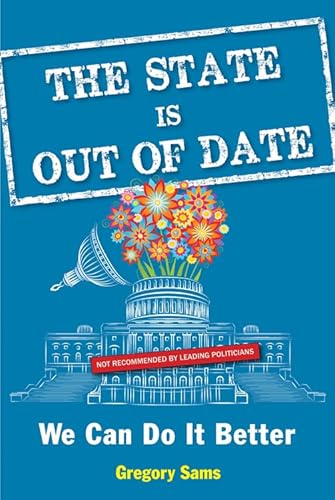
As disillusioned citizens across the planet take to the streets, do you wonder if the world's nation states will ever get it right? Will they ever assemble and enforce enough rules and regulations to bring peace and harmony to humanity?<br><br>Does anyone really think that politics is workingaside from those in power and behind it? What if living together in peace and harmony is a more natural condition than that we experience in today's conflictdriven culture? We are community animals with builtin empathy, good at organizing things and helping each other out. The most essential and reliable features of our culture arose without topdown planning by a state that has one basic objectiveto stay in power. We have enjoyed enduring civilizations in the past governed wholly from the bottomup, without need of a shepherd and sheepdogs. We can do it again - and are more connected than ever before.<br><br>Much of our world is already well governed, from the bottom up, and we struggle to find anything of lasting value in it that arose from the state. Where the state steps into our affairs, the lost freedom to choose breaks feedback loops that effortlessly weave us together. Evolution is diverted and we get things to complain about. <br><br>The State Is Out Of Date reassures us that politics is not even the primary game in town, though it sometimes may seem like the only one. It is a book for all those who wonder why politics isn't working and what would.
Die Inhaltsangabe kann sich auf eine andere Ausgabe dieses Titels beziehen.
Über die Autorin bzw. den Autor
<div> Gregory Sams has been changing the culture from the age of 19, when he cofounded SEED, the UK's first natural and organic restaurant in 1960's London. It led to Ceres Grain store, where customers could buy these foods to cook at home. Within a few years he had created the nation's first natural and organic food enterprises, including Whole Earth Foods. He was founder publisher of Harmony Magazine, to which John Lennon dedicated an eightframe cartoon, and copublished Seed, the Journal of Organic Living. In 1982 he created and christened the original VegeBurger, initiating the market for vegetarian food. In 1990 he founded Strange Attractions, the world's only shop ever dedicated to new science "chaos theory." His interest in that science planted the seeds of this book in Gregory's mind. Visit Sams at gregorysams.com. He lives in London. </div>
Auszug. © Genehmigter Nachdruck. Alle Rechte vorbehalten.
THE STATE IS OUT OF DATE
We can do it better
By Gregory SamsRed Wheel/Weiser, LLC
Copyright © 2013 Gregory Sams
All rights reserved.
ISBN: 978-1-938875-06-9All rights reserved.
Contents
| Peace, A Natural State | |
| 1 What Would an Alien Think? | |
| 2 The Emperor Has No Clothes | |
| 3 The State Is Out of Date | |
| 4 Chaos Theory | |
| 5 Playing God? | |
| 6 Can You Believe Them? | |
| 7 Natural Government versus State Control | |
| 8 Legitimizing Coercion | |
| 9 The Constant Confrontation | |
| 10 A Terminal Tool Bag | |
| 11 Our Problems, Our Solutions | |
| 12 Voting | |
| 13 Divide and Rule | |
| 14 Birthright Denied | |
| 15 The Thin Borderline | |
| 16 Who Owns You? | |
| 17 Victimless Crimes | |
| 18 Poverty and Crime: A Popular Myth | |
| 19 So What's News? | |
| 20 The State of Business | |
| 21 Global Corporation, Inc. | |
| 22 The Arms Industry Toilet | |
| 23 What's Wrong with Money? | |
| 24 Banking and Banksters | |
| 25 Strange Fruit | |
| 26 Meat of the Issue | |
| 27 The Drugs Problem | |
| 28 Positive Protest: Get Fluffy! (The Roots of Seattle) | |
| 29 A Working Example | |
| 30 The Ways and Means | |
| 31 Emptying the Corridors of Power | |
| 32 And Where from Here? | |
| Credits | |
| Big Butterflies | |
| Resources | |
| The Golden Rule |
CHAPTER 1
What Would an Alien Think?
Imagine for a moment that you are an intelligent alien on your first visit to planet Earth,coming from a planet as richly developed as ours, but with freedom, instead of top-downstate control, underpinning its culture. Your alien civilization may have little in commonwith Earth's, but could include any of the things we enjoy, such as music, dance, literature,sports, architecture, engineering, science, art, fashion, and so on. After all, none of thesethings were conceived, planned, or developed by the state, though at times it may seek toregulate some of them for the declared benefit of us all.
Most people today would assume that this alien must have a central commander andhead of state. They assume this because central command is all that we have in our ownlimited frame of reference, and is the stuff of a million science fiction stories.
Central command is certainly NOT the natural state. We have only to look around us torealize that every other life form sharing this planet has operated successfully for millenniawithout any form of central controlling structure. The dinosaurs dominated for thirty-fivetimes the period that we have been on the planet, as far as we know without the need ofparliaments, kings, or ruling bodies.
I know of no voting council of trees which determines the specific proportions and varietiesof trees in a given forest. In many cases, such as the oak tree, the long-term successfulspecies has figured out how to cooperate with as many other species as possible (up tothree hundred, in the case of the oak). This ability to cooperate with other forms of life is afar more intelligent long-term survival strategy than is that of domination and control byrulers and ruling bodies.
Why do we assume that any intelligent alien species, even more advanced than ours, willhave the same sort of flawed structures as ourselves, with powerful leaders, militaryforces, and lawmaking bodies? Why is it inconceivable to us that any other advancedcivilization could be operating, as does every successful structure in the Universe, in astate of freedom? These aren't deep questions—they just reveal the deep rut in which ourimagination is trapped.
We assume that any intelligent creature capable of space travel will come equipped withplasma guns, ionic blasters, phaser bolts, and a full arsenal of high-tech weaponry withwhich to kill and destroy. Why? We humans have experienced a dramatic and possiblyunique evolution of methods to kill each other. A mainstay of our chosen culturalentertainment involves depictions of us killing each other in countless war andconfrontational movies. Are we to assume that this is a normal or natural element of anyhighly developed civilization?
Is mankind alone in the Universe? Or are there somewhere other intelligent beings lookingup into their night sky from very different worlds and asking the same kind of question?
Carl Sagan and Frank Drake
Our alien may have learned how to travel along the fractal patterns of hyperspace and beable to outmaneuver a missile or fighter jet. But it is quite possible that its civilization neverfigured out how to split the atom. Maybe it never had the fear of a Hitler to inspire itsscientists to tap such a destructive force. The consequences of this discovery have beenextremely negative and continue to pose an ongoing threat to the very survival of ourspecies. Yet we assume that a higher alien intelligence will have even greater means ofself-destruction at its disposal. This is a basically illogical assumption. More destructivepower is neither the hallmark of higher intelligence nor the route to long-term peace andstability.
We assume that our highly developed alien will have a highly developed state overseeinga well-regulated society. Yet what does the central controlling state actually give us—notone specific state here or there, but the beast in general—the totality of states runningtheir own big and little nations throughout the world? They primarily came into being forone reason alone—to protect us from other versions of themselves. It is difficult to findanything else they do that we treasure, or are satisfied by. They take vast sums of moneyfrom us and send back a little here and there, sprinkling it on the poor and hungry if theyare left-wing, or subsidizing the unworthy and unnecessary if they are right-wing. Themajority of it though, whichever wing of the bird the center tilts toward, is wasted andsquandered in useless, unproductive, and often downright damaging activities.
Probably 80 percent of what the state does is unnecessary or unproductive, things we arequite capable of sorting out in society without resorting to one ruling body, supported bypolice, the military, nuclear arsenals, parliaments, dictators, presidents, and vast armies ofbureaucrats. I refer to things such as which side of the road we drive on, what size foodpackaging must be, how we generate electricity, what constitutes an acceptable dwellingor house, how two people make a commitment to each other, what types of medicine weuse, or how many hours we work in a week. Don't imagine that we would live in somedisordered mess without a central command issuing all these rules. Wherever they do notexist in our society we seem to have developed real order.
The other 20 percent of the state's frame of activities consists of valuable and necessarygoverning functions. Unfortunately, the state often delivers inadequate and wastefulservices in these areas—services that are deteriorating...
„Über diesen Titel“ kann sich auf eine andere Ausgabe dieses Titels beziehen.
Suchergebnisse für State is out of Date: We Can Do it Better

Beispielbild für diese ISBN
State Is Out of Date: We Can Do It Better
Anbieter: WorldofBooks, Goring-By-Sea, WS, Vereinigtes Königreich
Verkäuferbewertung 5 von 5 Sternen

Paperback. Zustand: Fair. A readable copy of the book which may include some defects such as highlighting and notes. Cover and pages may be creased and show discolouration. Artikel-Nr. GOR015104860
Gebraucht kaufen
EUR 13,84
EUR 6,59 Versand
Versand von Vereinigtes Königreich nach USA
Versand von Vereinigtes Königreich nach USA
Anzahl: 1 verfügbar
Beispielbild für diese ISBN
The State Is Out of Date: We Can Do It Better
Anbieter: WorldofBooks, Goring-By-Sea, WS, Vereinigtes Königreich
Verkäuferbewertung 5 von 5 Sternen
Paperback. Zustand: Very Good. The book has been read, but is in excellent condition. Pages are intact and not marred by notes or highlighting. The spine remains undamaged. Artikel-Nr. GOR006986741
Gebraucht kaufen
EUR 13,84
EUR 6,59 Versand
Versand von Vereinigtes Königreich nach USA
Versand von Vereinigtes Königreich nach USA
Anzahl: 3 verfügbar
Foto des Verkäufers
State Is Out of Date: We Can Do It Better
Anbieter: Chapter Two Books, Ammanford, Vereinigtes Königreich
Verkäuferbewertung 5 von 5 Sternen
paperback. Zustand: Good. Signed. Personalised signing. SIGNED COPY. Artikel-Nr. mon0001631992
Gebraucht kaufen
EUR 36,35
EUR 21,17 Versand
Versand von Vereinigtes Königreich nach USA
Versand von Vereinigtes Königreich nach USA
Anzahl: 1 verfügbar