
Verwandte Artikel zu Jump-Starting Boys: Help Your Reluctant Learner Find...
Inhaltsangabe
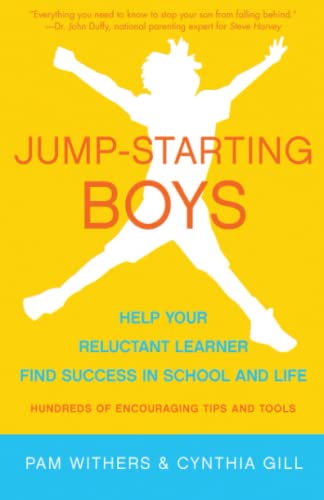
Everyone knows that boys are falling behind in education. Largely left out of the discussion are parents of boys, who are most aware that their bright, eager sons hit an invisible wall somewhere near fourth grade, after which they become disengaged, discouraged, and disaffected. There are dozens of books on underachieving boys, but most parents brave enough to lift one off the shelf are instantly intimidated by the footnotes, graphs, case studies, and academic-speak addressed almost entirely to educators. What about the average guilt-ridden, frustrated mother or father of an underachieving boy?
Jump-Starting Boys is the first book on the market that empowers parents, helping them reclaim the duties and rewards of raising their children and navigate the influences of school and media. Filled with reassurance and support, the authors turn fear and guilt into can-do confidence. Through easy tips and action list sidebars, this is the most practical, readable book on the topic.
Die Inhaltsangabe kann sich auf eine andere Ausgabe dieses Titels beziehen.
Über die Autorin bzw. den Autor
Pam Withers is a former business journalist and the bestselling, award-nominated author of more than a dozen adventure novels particularly popular with teen boys. They include Peak Survival, Skater Stuntboys, and Vertical Limits. She is also co-author with John Izzo of the highly acclaimed Values Shift: The New Work Ethic and What It Means for Business (Prentice Hall Canada 2000). Her magazine writing credits include McCalls, Working Woman, Profit, and numerous inflight magazinesWithers travels North America extensively, speaking at schools, librarians' and writers' conferences. She's a dual U.S./Canadian citizen. The second of six siblings, she spent her growing-up years trying to measure up to her smarter, better-looking older sister, Cynthia. (She has just about outgrown that.) Withers and her husband, a university professor, live in Vancouver, Canada, where they recently completed raising a high-energy son who spent his adolescence as the official teen editor of her teen adventure novels. Her website is PamWithers.com.During her thirty-year career as a high school teacher, Cynthia Gill, M.A., L.M.F.T. worked on innovative curricula development and served as an academic dean, while winning acclaim for her work in the classroom. She completed her master's degree in Adlerian psychotherapy and counseling in 2006, and has since worked with adolescents, children and families as a licensed marriage and family therapist.Gill has taught as an adjunct faculty member at Globe University and enjoys public speaking, particularly on parent education. She has led numerous groups of students on educational and service trips to Russia, Germany and Latin America. A former homeschooling mom, she also served as a consultant to homeschooling families with an accrediting organization. She and her husband live in Minneapolis and like to travel in between visits from their three grown sons, two daughters-in-law and three grandchildren.John Duffy is a clinical psychologist and certified life coach with a thriving private practice in the Chicago area. He is also a national parenting and relationships expert on The Steve Harvey Show. Duffy consults with individuals, groups and corporations in a number of areas, including Emotional Intelligence, stress management, balancing work and family, conflict resolution, goal-setting and the power of thoughts in bringing about change. Dr. Duffy's highly satisfied clients include Sears, Allstate, General Electric, Household Financial, Exxon Mobil, Accenture, Bank of America and Hewitt Associates. The Duffy family lives in Chicago, Illinois.
Von der hinteren Coverseite
Positive Solutions To Get Your Son Back on Track
Why is your smart, perceptive son suddenly struggling at school? Are daily arguments about homework turning your home into a battle zone? It is no secret boys are falling behind in education, with fewer young men graduating from high school and enrolling in college every year. Filled with reassurance and support, Jump-Starting Boys has heart-warming true stories, take-action checklists and over 200 helpful tips. Educators and mothers themselves, authors Pam Withers and Cynthia Gill, MA, LMFT, turn fear and guilt into can-do confidence through easy techniques and achievable solutions. Finallya book that truly targets concerned parents and helps you work with your son to make sure he beats the odds and becomes a lifelong learner!
LEARN HOW TO:
Determine your son’s learning style and how best to help him learn
Strengthen your child’s memory
Encourage him to appreciate math and science (even if you don’t)
Engage your reluctant reader via book clubs, graphic novels and kinesthetic activities
Limit his screen time without coming across as a tyrant
Use his interest in technology to foster excitement about learning and forming good homework habits
Why is your smart, perceptive son suddenly struggling at school? Are daily arguments about homework turning your home into a battle zone? It is no secret boys are falling behind in education, with fewer young men graduating from high school and enrolling in college every year. Filled with reassurance and support, Jump-Starting Boys has heart-warming true stories, take-action checklists and over 200 helpful tips. Educators and mothers themselves, authors Pam Withers and Cynthia Gill, MA, LMFT, turn fear and guilt into can-do confidence through easy techniques and achievable solutions. Finallya book that truly targets concerned parents and helps you work with your son to make sure he beats the odds and becomes a lifelong learner!
LEARN HOW TO:
Determine your son’s learning style and how best to help him learn
Strengthen your child’s memory
Encourage him to appreciate math and science (even if you don’t)
Engage your reluctant reader via book clubs, graphic novels and kinesthetic activities
Limit his screen time without coming across as a tyrant
Use his interest in technology to foster excitement about learning and forming good homework habits
Auszug. © Genehmigter Nachdruck. Alle Rechte vorbehalten.
Jump-Starting Boys
Help Your Reluctant Learner Find Success in School and LifeBy Pam WithersViva Editions
Copyright © 2013 Pam WithersAll right reserved.
ISBN: 9781936740390
Brains and hormones
If boys and girls are different, is that how they’re born, or the way we raise them? We can’t emphasize enough what a silly question this is, because the answer is obviously some of each. Experts will never agree on exactly how much is nature versus nurture, nor exactly which types of behaviors align with which.
And that’s okay, because parents don’t need to get into the murky debate over how differently-wired brains and hormones can affect language and learning, to get the information they need to raise their sons well. They just need to stay open-minded to the fact that there are differences, both physical and cultural, and that their parenting style will have only limited influence against these. While a degree of skepticism is healthy, it is counterproductive to ignore all the science. If women are particularly wary of the nature-versus-nurture debate, that’s understandable, given that they’ve been the ones most hurt in the past by misinformation and manipulations.
As Christina Hoff Sommers says in The War Against Boys, “It wasn’t all that long ago that intelligent men were deploying the idea of innate differences to justify keeping women down socially, legally and politically. The corrective to that shameful history is not more bad science and rancorous philosophy; it is good science and clear thinking about the rights of all individuals, however they may differ.”
In recent years, key developments in many areas of science (neuroscience, evolutionary psychology, genetics and neuroendocrinology) confirm the many differences with which boys and girls are born – in other words, differences that scientists pretty much agree can be chalked up to nature, not nurture.
Here’s the key one: Girls’ brains tend to mature earlier than boys’. That’s why girls develop faster than boys in many ways, but especially as regards reading, speaking and writing. The gap shows up at around age three, and closes about the time boys hit seventeen.
Most people accept this in the preschool years; it seems everyone knows about it and alters their expectations accordingly. But by kindergarten, parents and teachers are wary of treating kids differently, or allowing for different sets of expectations based on gender. Add to that the trend towards kindergartens focusing on academics over activities that kids initiate (which favors girls over boys), larger class sizes (leading to “crowd control” measures to which girls adapt more easily than boys) and the lack of male teachers in elementary schools (allowing for inadvertent biases, like a lack of tolerance for squirming boys).
Now add the next key factor: Boys tend to be more impulsive and need to move around more than girls. Not a problem as long as parents and teachers accept this. But as the number of male teachers (and principals) has decreased in elementary schools, class sizes have expanded and energy-absorbing activities like art, gym, drama and recess have been cut back, boys’ natural energy is often seen as unnatural. Hence, the skyrocketing number of boys referred to those who would prescribe drugs that calm them. Have parents and teachers begun to see boys as faulty girls?
As they progress through elementary grades, boys feel the ever heavier weight of disapproval. What parent isn’t distressed when phoned by the principal or given a negative report at a parent-teacher conference? Imagine being told your son is not reading well (compared with whom?), not reading the “right” things (determined largely by female teachers and female librarians) and not settling into writing exercises (which may be heavily skewed to what females like as we discuss in Chapter Eight).
Any tolerance adults have for boys’ language lag in preschool disappears by the time boys reach puberty, likely a major contributing factor to boys developing a negative view of their own language skills and beginning to tune out. The exceptions, as we’ve pointed out before, are the “elites,” typically blessed with strict time limits on screen time at home, ample literary encouragement from their families, positive reinforcement at home for what reading and writing they are doing and positive male role models in their lives.
Basically, differences in brain structure, hormone levels and speed of maturing work against boys when it comes to reading, writing and impulse control. But the existence of “elite boys” proves that those who get encouragement and support can thrive.
As Michael Sullivan puts it in Connecting Boys with Books 2, “The reading gap can be explained largely in terms of brain development lag, making it much less frightening, because boys’ brains eventually catch up, presumably along with their ability to handle language. What then becomes the issue is how we treat children while this brain lag exists, because the development lag really disappears only during the last stages of high school, and by then we have little opportunity to make up for any ground lost.”
The trick for parents is to give boys a more physical learning environment (let them be antsy, handle materials, illustrate or act out stories), give them more frequent breaks and do whatever it takes to keep them supported and motivated until the gender gap starts to close so they won’t label themselves stupid or lazy and give up.
In other words, patience is required when it comes to boys’ reading and writing. And starting them before they’re ready (age five or so) can backfire.
SIDEBAR
Set high standards
One thing I’ve noticed over the years is that some parents are reluctant to set tough academic standards for their children with learning disabilities (LD). They fear that setting the bar high will cause their kids to become overwhelmed and filled with anxiety.
In reality, that attitude does more harm than good. Their insecurity comes across as a lack of confidence in their child’s ability to do well in school. Truthfully, many students with LD want to be challenged!
Every day, students with LD are reminded that they learn differently. From the support they receive to the accommodations they’re given, the message is loud and clear: You don’t learn like everyone else, and because of that you need special treatment.
Parents have an opportunity to counter the message kids get at school. By maintaining high academic standards and holding their children accountable for their schoolwork, they telegraph their belief that their kids can achieve at levels equal to if not better than their peers.
For students with LD, school is often not a safe zone. They may spend a large part of the day feeling out of place and discouraged. Home, on the other hand, is a safe haven. It’s an environment where the pressure is off, and they’re free to explore who they are and gain self-awareness along the way.
Parents should take advantage of that comfort level and push their child academically, helping her to gain confidence and develop the determination to succeed. With consistent encouragement and accountability, students will internalize the belief that they can meet any academic challenge that comes their way.
I learned that lesson early on, and it’s one I’ve never forgotten. When I was in...
„Über diesen Titel“ kann sich auf eine andere Ausgabe dieses Titels beziehen.
Suchergebnisse für Jump-Starting Boys: Help Your Reluctant Learner Find...

Beispielbild für diese ISBN
Jump-Starting Boys: Help Your Reluctant Learner Find Success in School and Life
Anbieter: World of Books (was SecondSale), Montgomery, IL, USA
Verkäuferbewertung 5 von 5 Sternen

Zustand: Very Good. Item in very good condition! Textbooks may not include supplemental items i.e. CDs, access codes etc. Artikel-Nr. 00075774907
Gebraucht kaufen
EUR 4,69
Versand gratis
Versand innerhalb von USA
Versand innerhalb von USA
Anzahl: 4 verfügbar
Beispielbild für diese ISBN
Jump-Starting Boys: Help Your Reluctant Learner Find Success in School and Life
Anbieter: World of Books (was SecondSale), Montgomery, IL, USA
Verkäuferbewertung 5 von 5 Sternen
Zustand: Good. Item in good condition. Textbooks may not include supplemental items i.e. CDs, access codes etc. Artikel-Nr. 00096502989
Gebraucht kaufen
EUR 4,69
Versand gratis
Versand innerhalb von USA
Versand innerhalb von USA
Anzahl: 1 verfügbar
Beispielbild für diese ISBN
Jump-Starting Boys
Anbieter: ThriftBooks-Atlanta, AUSTELL, GA, USA
Verkäuferbewertung 5 von 5 Sternen
Paperback. Zustand: Good. No Jacket. Former library book; Pages can have notes/highlighting. Spine may show signs of wear. ~ ThriftBooks: Read More, Spend Less. Artikel-Nr. G1936740397I3N10
Gebraucht kaufen
EUR 5,86
Versand gratis
Versand innerhalb von USA
Versand innerhalb von USA
Anzahl: 1 verfügbar
Beispielbild für diese ISBN
Jump-Starting Boys
Anbieter: ThriftBooks-Dallas, Dallas, TX, USA
Verkäuferbewertung 5 von 5 Sternen
Paperback. Zustand: As New. No Jacket. Pages are clean and are not marred by notes or folds of any kind. ~ ThriftBooks: Read More, Spend Less. Artikel-Nr. G1936740397I2N00
Gebraucht kaufen
EUR 5,86
Versand gratis
Versand innerhalb von USA
Versand innerhalb von USA
Anzahl: 1 verfügbar
Beispielbild für diese ISBN
Jump-Starting Boys : Help Your Reluctant Learner Find Success in School and Life
Anbieter: Better World Books, Mishawaka, IN, USA
Verkäuferbewertung 5 von 5 Sternen
Zustand: Very Good. Former library copy. Pages intact with possible writing/highlighting. Binding strong with minor wear. Dust jackets/supplements may not be included. Includes library markings. Stock photo provided. Product includes identifying sticker. Better World Books: Buy Books. Do Good. Artikel-Nr. 1659771-75
Gebraucht kaufen
EUR 6,08
Versand gratis
Versand innerhalb von USA
Versand innerhalb von USA
Anzahl: 2 verfügbar
Foto des Verkäufers
Jump-Starting Boys: Help Your Reluctant Learner Find Success in School and Life
Anbieter: WeBuyBooks, Rossendale, LANCS, Vereinigtes Königreich
Verkäuferbewertung 5 von 5 Sternen
paperback. Zustand: Good. Most items will be dispatched the same or the next working day. A copy that has been read but remains in clean condition. All of the pages are intact and the cover is intact and the spine may show signs of wear. The book may have minor markings which are not specifically mentioned. Artikel-Nr. rev4243021084
Gebraucht kaufen
EUR 8,88
EUR 6,88 Versand
Versand von Vereinigtes Königreich nach USA
Versand von Vereinigtes Königreich nach USA
Anzahl: 1 verfügbar
Beispielbild für diese ISBN
Jump-Starting Boys
Anbieter: PBShop.store UK, Fairford, GLOS, Vereinigtes Königreich
Verkäuferbewertung 5 von 5 Sternen
PAP. Zustand: New. New Book. Shipped from UK. Established seller since 2000. Artikel-Nr. L2-9781936740390
Neu kaufen
EUR 18,59
EUR 4,84 Versand
Versand von Vereinigtes Königreich nach USA
Versand von Vereinigtes Königreich nach USA
Anzahl: Mehr als 20 verfügbar
Beispielbild für diese ISBN
Jump-Starting Boys: Help Your Reluctant Learner Find Success in School and Life
Anbieter: Revaluation Books, Exeter, Vereinigtes Königreich
Verkäuferbewertung 5 von 5 Sternen
Paperback. Zustand: Brand New. 285 pages. 8.25x5.50x1.00 inches. In Stock. Artikel-Nr. x-1936740397
Neu kaufen
EUR 23,71
EUR 11,63 Versand
Versand von Vereinigtes Königreich nach USA
Versand von Vereinigtes Königreich nach USA
Anzahl: 2 verfügbar
Foto des Verkäufers
Jump-Starting Boys
Anbieter: AHA-BUCH GmbH, Einbeck, Deutschland
Verkäuferbewertung 5 von 5 Sternen
Taschenbuch. Zustand: Neu. Neuware - Everyone knows that boys are falling behind in education. Largely left out of the discussion are parents of boys, who are most aware that their bright, eager sons hit an invisible wall somewhere near fourth grade, after which they become disengaged, discouraged, and disaffected. There are dozens of books on underachieving boys, but most parents brave enough to lift one off the shelf are instantly intimidated by the footnotes, graphs, case studies, and academic-speak addressed almost entirely to educators. What about the average guilt-ridden, frustrated mother or father of an underachieving boy Jump-Starting Boys is the first book on the market that empowers parents, helping them reclaim the duties and rewards of raising their children and navigate the influences of school and media. Filled with reassurance and support, the authors turn fear and guilt into can-do confidence. Through easy tips and action list sidebars, this is the most practical, readable book on the topic. Artikel-Nr. 9781936740390
Neu kaufen
EUR 26,61
EUR 35,00 Versand
Versand von Deutschland nach USA
Versand von Deutschland nach USA
Anzahl: 2 verfügbar
Foto des Verkäufers
Jump-Starting Boys
Anbieter: moluna, Greven, Deutschland
Verkäuferbewertung 5 von 5 Sternen
Zustand: New. Über den AutorrnrnPam Withers is a former business journalist and the bestselling, award-nominated author of more than a dozen adventure novels particularly popular with teen boys. They include Peak Survival, Skater Stuntboys, and Vertical . Artikel-Nr. 905867837
Neu kaufen
EUR 21,28
EUR 48,99 Versand
Versand von Deutschland nach USA
Versand von Deutschland nach USA
Anzahl: Mehr als 20 verfügbar