
Verwandte Artikel zu Cape Cod Noir (Akashic Noir)
Inhaltsangabe
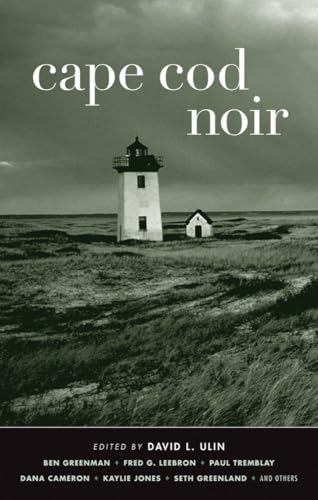
"Youthful alienation and despair dominate the 13 stories in Akashic's noir volume devoted to Cape Cod. [It] will satisfy those with a hankering for a taste of the dark side." --Publishers Weekly
"David L. Ulin has put together a malicious collection of short stories that will stay with you long after you return home safe." --The Cult: The Official Chuck Palahniuk Website
Akashic Books continues its groundbreaking series of original noir anthologies, launched in 2004 with Brooklyn Noir. Each story is set in a distinct neighborhood or location within the city of the book.
Brand-new stories by: William Hastings, Elyssa East, Dana Cameron, Paul Tremblay, Adam Mansbach, Seth Greenland, Lizzie Skurnick, David L. Ulin, Kaylie Jones, Fred G. Leebron, Ben Greenman, Dave Zeltserman, and Jedediah Berry.
From the introduction by David L. Ulin:
"Here, we see the inverse of the Cape Cod stereotype, with its sailboats and its presidents. Here, we see the flip side of the Kennedys, of all those preppies in docksiders eating steamers, of the whale watchers and bicycles and kites. Here, we see the Cape beneath the surface, the Cape after the summer people have gone home. It doesn't make the other Cape any less real, but it does suggest a symbiosis, in which our sense of the place can't help but become more complicated, less about vacation living than something more nuanced and profound . . ."
"For me, Cape Cod is a repository of memory: forty summers in the same house will do that to you. But it is also a landscape of hidden tensions, which rise up when we least anticipate. In part, this has to do with social aspiration, which is one of the things that brought my family, like many others, to the Cape. In part, it has to do with social division, which has been a factor since at least the end of the nineteenth century, when then summer trade began. There are lines here, lines that get crossed and lines that never get crossed, the kinds of lines that form the web of noir. Call it what you want--summer and smoke is how I think of it--but that's the Cape Cod at the center of this book."
Die Inhaltsangabe kann sich auf eine andere Ausgabe dieses Titels beziehen.
Über die Autorin bzw. den Autor
DAVID L. ULIN is a former book critic and book editor for the Los Angeles Times. A 2015 Guggenheim Fellow, Ulin is the author or editor of ten books, including Sidewalking: Coming to Terms with Los Angeles, Labyrinth, The Lost Art of Reading: Why Books Matter in a Distracted Time, Cape Cod Noir, and Writing Los Angeles: A Literary Anthology, which won a 2002 California Book Award. He has written for the Atlantic Monthly, the Nation, the New York Times Book Review, and National Public Radio's All Things Considered. He teaches in the low residency MFA in Creative Writing Program at the University of California, Riverside's Palm Desert Graduate Center.
Auszug. © Genehmigter Nachdruck. Alle Rechte vorbehalten.
Cape Cod Noir
By David L. UlinAkashic Books
Copyright © 2011 Akashic BooksAll right reserved.
ISBN: 978-1-936070-97-8
Contents
11............................................Introduction17............................................William Hastings Falmouth Ten-Year Plan36............................................Elyssa East Buzzards Bay Second Chance57............................................Dana Cameron Eastham Ardent74............................................Paul Tremblay Dennisport Nineteen Snapshots of Dennisport89............................................Adam Mansbach Martha's Vineyard Variations on a Fifty-Pound Bale103...........................................Seth Greenland Hyannisport Bad Night in Hyannisport116...........................................Lizzie Skurnick Wellfleet Spectacle Pond129...........................................David L. Ulin Harwichport La Jetée148...........................................Kaylie Jones Dennis The Occidental Tourist163...........................................Fred G. Leebron Provincetown The Exchange Student181...........................................Ben Greenman Woods Hole Viva Regina190...........................................Dave Zeltserman Sandwich When Death Shines Bright202...........................................Jedediah Berry Yarmouth Twenty-Eight Scenes for Neglected Guests222...........................................About the Contributors
Introduction
Summer and Smoke
I first began to think of Cape Cod in noir-ish terms during the fall of 1979. I say that, of course, entirely in hindsight, since noir was not then part of my lexicon. I was eighteen, just out of high school, on a year off that would later take me to South Texas and San Francisco. My best friend and I were making this journey together, and before we left, I spent a week at his parents' cottage in Wellfleet, where he was living alone, working as a cranberry picker, stockpiling money for the trip. Every day, he would go to work, and I would pretend to write a novel, staring out the windows at the gray October sky. At night, we would go to bars. The house was on a marshy point of land known as Lieutenant's Island, which was only an island at high tide. Some nights, we'd come back to find the road flooded, as if it had never been at all. I was not new to the Cape—I'd spent summers there, or parts of summers, since 1971—but this was a more conditional experience, more elemental and more charged. The same was true of the bars we frequented: dark places, their air thick with cigarette smoke and a kind of survivor's tenacity. Cape Cod in the off-season was a hunkered-down place, if not in hibernation exactly then in a strange, suspended state. In those days, before the Internet, when even cable TV was still scarce, there was nothing to do but drink.
Here, we see the inverse of the Cape Cod stereotype, with its sailboats and its presidents. Here, we see the flip side of the Kennedys, of all those preppies in docksiders eating steamers, of the whale watchers and bicycles and kites. Here, we see the Cape beneath the surface, the Cape after the summer people have gone home. It doesn't make the other Cape any less real, but it does suggest a symbiosis, in which our sense of the place can't help but become more complicated, less about vacation living than something more nuanced and profound.
This, it might be said, is also the case with noir, which is the dime-store genre that exposes our hearts of darkness, the literary equivalent of the blues. In noir, bad things happen to good people—or more accurately, possibilities narrow, until every option is compromised and no one ever wins. How one deals with that might seem a narrative question, but noir is less about the particulars of story than it is about point-of-view. As for the way such a point-of-view asserts itself, I think of it as stoic, stripped clean of illusion, like the faces I used to see in those off-season bars. In noir, we know that help is not coming, that the universe devolves to entropy, that everything goes from bad to worse. And yet, if this leaves us resigned or even hopeless, we have no choice but to deal with it as best we can. "I needed a drink, I needed a lot of life insurance, I needed a vacation, I needed a home in the country. What I had was a coat, a hat and a gun," Philip Marlowe observes in Raymond Chandler's Farewell, My Lovely, a novel that helped define the noir aesthetic, and seventy-one years later, that air of desolate clarity, of a character staring into the abyss as the abyss stares back, is still the form's defining sensibility, a cry in the darkness of a world that is, at best, apathetic, and at worst, in violent disarray.
Cape Cod Noir is an attempt to pay tribute to that perspective even as it moves beyond the traditional landscape of noir. The idea is to stretch a little, to gather writing rich in local color, while remaining true to the ethos of the genre. Here, you'll find a range of work, from the contemporary noir of Paul Tremblay and Dave Zeltserman to the more fanciful creations of Adam Mansbach and Jedediah Berry, whose stories go in unexpected directions, asking us to question our assumptions about the form. Dana Cameron's "Ardent" takes us back to the eighteenth century, while Elyssa East and William Hastings portray a Cape Cod the tourist brochures don't recognize, marked by hard luck, history, and loss. In some stories, noir operates mostly in the background, like a whisper in the air. But this, too, is as it should be, for if there is a principle at work, it is that noir has become, in its three-quarters of a century of evolution, both stylized and supple, less a way of writing than a way of seeing, less about crime or plot or killing (although there is plenty of that in these pages) than about how we live.
What I'm saying, I suppose, is that noir forces us to face things, that it cuts to the chase. It functions, to borrow a phrase from William S. Burroughs, as a kind of "NAKED Lunch—a frozen moment when everyone sees what is on the end of every fork." We expect this when it comes to cities, where noir grew up during the Depression, or in the rural corners staked out by authors from Edward Anderson in the 1930s to Daniel Woodrell in the present day. Still, what my experiences on the Cape suggest is that noir is everywhere. You can see it in the desperate excitations of the summer people, the desire to make their vacations count. You can see it in the tension of the year-rounders, who rely on the seasonal trade for survival, even as they must tolerate having their communities overrun. You can see it in the history of the place; the Pilgrims landed first at Provincetown, after all. And after Labor Day, once the tourists have gone home, it is still a lot like it has always been: desolate, empty in the thin gray light, with little to do in the slow winter months. You drink, you brood, you wait for summer, when the cycle starts all over again.
When I was a kid, and first exploring my little corner of the Cape, I used to spend a lot of time alone. I would ride my bike or walk for hours, watching all the summertime activities, keeping myself a bit apart. Even then, I had the sense that there was more going on than I was seeing on the surface, that there were promises that had been left unkept. This, I've come to realize, is true everywhere, but it has a different feeling in a summer place. For me, Cape Cod is a repository of memory: forty summers in the same house will do that to you. But it is also a landscape of...
„Über diesen Titel“ kann sich auf eine andere Ausgabe dieses Titels beziehen.
Suchergebnisse für Cape Cod Noir (Akashic Noir)

Beispielbild für diese ISBN
Cape Cod Noir
Anbieter: World of Books (was SecondSale), Montgomery, IL, USA
Verkäuferbewertung 5 von 5 Sternen

Paperback. Zustand: Good. Los Angeles Times book critic David L. Ulin has been holidaying in Cape Cod, Massachusetts, every summer since he was a boy. He knows the terrain inside out - enough to identify the squalid underbelly of this allegedly idyllic location. His editing prowess is a perfect match for this fine volume. Features brand-new stories by David L. Ulin, Ben Greenman, Lizzie Skurnick, Dana Cameron, Jedidiah Berry, Paul Tremblay, Vincent McCaffery, Seth Greenland, Kaylie Jones, Adan Mansbach, Elyssa East, Fred Leebron, William Hastings and others. Artikel-Nr. 00110677722
Gebraucht kaufen
EUR 5,44
Versand gratis
Versand innerhalb von USA
Versand innerhalb von USA
Anzahl: 1 verfügbar
Beispielbild für diese ISBN
Cape Cod Noir (Akashic Noir)
Verlag:
Akashic Books, Ltd. (edition First Edition), 2011
ISBN 10: 1936070979
ISBN 13: 9781936070978
Gebraucht
Paperback
Erstausgabe
Anbieter: BooksRun, Philadelphia, PA, USA
Verkäuferbewertung 5 von 5 Sternen
Paperback. Zustand: Very Good. First Edition. It's a well-cared-for item that has seen limited use. The item may show minor signs of wear. All the text is legible, with all pages included. It may have slight markings and/or highlighting. Artikel-Nr. 1936070979-11-1
Gebraucht kaufen
EUR 5,77
Versand gratis
Versand innerhalb von USA
Versand innerhalb von USA
Anzahl: 1 verfügbar
Beispielbild für diese ISBN
Cape Cod Noir
Anbieter: ThriftBooks-Phoenix, Phoenix, AZ, USA
Verkäuferbewertung 5 von 5 Sternen
Paperback. Zustand: Good. No Jacket. Pages can have notes/highlighting. Spine may show signs of wear. ~ ThriftBooks: Read More, Spend Less. Artikel-Nr. G1936070979I3N00
Gebraucht kaufen
EUR 6,06
Versand gratis
Versand innerhalb von USA
Versand innerhalb von USA
Anzahl: 1 verfügbar
Beispielbild für diese ISBN
Cape Cod Noir
Anbieter: ThriftBooks-Atlanta, AUSTELL, GA, USA
Verkäuferbewertung 5 von 5 Sternen
Paperback. Zustand: Very Good. No Jacket. May have limited writing in cover pages. Pages are unmarked. ~ ThriftBooks: Read More, Spend Less. Artikel-Nr. G1936070979I4N00
Gebraucht kaufen
EUR 6,06
Versand gratis
Versand innerhalb von USA
Versand innerhalb von USA
Anzahl: 1 verfügbar
Beispielbild für diese ISBN
Cape Cod Noir
Anbieter: ThriftBooks-Dallas, Dallas, TX, USA
Verkäuferbewertung 5 von 5 Sternen
Paperback. Zustand: Good. No Jacket. Pages can have notes/highlighting. Spine may show signs of wear. ~ ThriftBooks: Read More, Spend Less. Artikel-Nr. G1936070979I3N00
Gebraucht kaufen
EUR 6,06
Versand gratis
Versand innerhalb von USA
Versand innerhalb von USA
Anzahl: 1 verfügbar
Beispielbild für diese ISBN
Cape Cod Noir
Anbieter: ThriftBooks-Dallas, Dallas, TX, USA
Verkäuferbewertung 5 von 5 Sternen
Paperback. Zustand: As New. No Jacket. Pages are clean and are not marred by notes or folds of any kind. ~ ThriftBooks: Read More, Spend Less. Artikel-Nr. G1936070979I2N00
Gebraucht kaufen
EUR 6,06
Versand gratis
Versand innerhalb von USA
Versand innerhalb von USA
Anzahl: 1 verfügbar
Beispielbild für diese ISBN
Cape Cod Noir
Anbieter: ThriftBooks-Dallas, Dallas, TX, USA
Verkäuferbewertung 5 von 5 Sternen
Paperback. Zustand: Good. No Jacket. Former library book; Pages can have notes/highlighting. Spine may show signs of wear. ~ ThriftBooks: Read More, Spend Less. Artikel-Nr. G1936070979I3N10
Gebraucht kaufen
EUR 6,06
Versand gratis
Versand innerhalb von USA
Versand innerhalb von USA
Anzahl: 1 verfügbar
Beispielbild für diese ISBN
Cape Cod Noir
Anbieter: ThriftBooks-Reno, Reno, NV, USA
Verkäuferbewertung 5 von 5 Sternen
Paperback. Zustand: Good. No Jacket. Pages can have notes/highlighting. Spine may show signs of wear. ~ ThriftBooks: Read More, Spend Less. Artikel-Nr. G1936070979I3N00
Gebraucht kaufen
EUR 6,06
Versand gratis
Versand innerhalb von USA
Versand innerhalb von USA
Anzahl: 1 verfügbar
Beispielbild für diese ISBN
Cape Cod Noir
Anbieter: ThriftBooks-Atlanta, AUSTELL, GA, USA
Verkäuferbewertung 5 von 5 Sternen
Paperback. Zustand: Good. No Jacket. Pages can have notes/highlighting. Spine may show signs of wear. ~ ThriftBooks: Read More, Spend Less. Artikel-Nr. G1936070979I3N00
Gebraucht kaufen
EUR 6,06
Versand gratis
Versand innerhalb von USA
Versand innerhalb von USA
Anzahl: 1 verfügbar
Beispielbild für diese ISBN
Cape Cod Noir
Anbieter: Revaluation Books, Exeter, Vereinigtes Königreich
Verkäuferbewertung 5 von 5 Sternen
Paperback. Zustand: Brand New. original edition. 280 pages. 8.25x5.25x0.75 inches. In Stock. Artikel-Nr. __1936070979
Neu kaufen
EUR 12,93
EUR 11,67 Versand
Versand von Vereinigtes Königreich nach USA
Versand von Vereinigtes Königreich nach USA
Anzahl: 2 verfügbar