
The Persian Gulf: The Rise and Fall of Bandar-E Lengeh, the Distribution Center for the Arabian Coast, 1750-1930 - Softcover
Inhaltsangabe
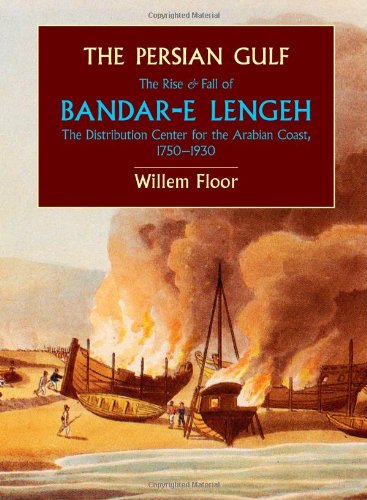
A small, sleepy port in the Persian Gulf, Bandar-e Lengeh has had a varied and checkered history since its launch onto the historical scene around 1750. In those days the tribal people of the region felt at home on both sides of the Gulf and often went to wherever they thought would offer them a better life. When the Qavasem Arabs moved to Lengeh and developed it, they turned it from a sleepy fishing town into a pirate's nest. They, together with their kith and kin in Sharjah and Ras al-Khaimah, became the scourge of the Gulf until 1819 when the British burnt all three ports to the ground. After this, convinced that piracy was not worth the cost, the people of Lengeh became peaceful, and very successful as traders and pearl fishers. Lengeh became the distribution center for the entire Arabian Coast and rivaled Bahrain as the pearl clearing center of the Gulf. This success attracted people from all over the Gulf to come and live in Lengeh, making it a symbol of the Gulf migratory culture (havaleh). Lengeh's success and prosperity did not end because of competition, but because in 1903 the Iranian government enacted a new customs regime for all their ports-but Lengeh was an "Arabian" port located in Iran. As a result, Lengeh lost its competitive position to Dubai, which opened its doors to many of Lengeh's merchants. Thereafter, Lengeh declined and by 1930 it was once again a minor port and fishing town. The Persian Gulf: The Rise and Fall of Bandar-e Lengeh, The Distribution Center for the Arabian Coast, 1750-1930 is the third volume of the Persian Gulf series by Willem Floor. This book is a rich compendium of Iranian, Dutch, and British reports and primary sources. It is also full of enthralling research into the work of travelers in the region. While it is essential reading for all scholars of the history of the Gulf, it is also informative and satisfying for those readers interested in the history of the region in general. The previous volumes of the series are: The Persian Gulf: A Political and Economic History of 5 Port Cities, 1500-1750, and The Persian Gulf: The Rise of the Gulf Arabs, The Politics of Trade on the Persian Littoral, 1747-1792.
Die Inhaltsangabe kann sich auf eine andere Ausgabe dieses Titels beziehen.
Über die Autorin bzw. den Autor
Dr Willem Floor studied development economics, non-western sociology, as well as Persian, Arabic, and Islamology from 1963-1967 at the University of Utrecht (the Netherlands). He received his doctoral degree from the University of Leiden in 1971. Since 1983, Dr Floor has been employed by the World Bank as an energy specialist. Throughout this time, he has published extensively on the socio-economic history of Iran.
„Über diesen Titel“ kann sich auf eine andere Ausgabe dieses Titels beziehen.
Suchergebnisse für The Persian Gulf: The Rise and Fall of Bandar-E Lengeh,...

Beispielbild für diese ISBN
Persian Gulf
Anbieter: PBShop.store US, Wood Dale, IL, USA
Verkäuferbewertung 5 von 5 Sternen

PAP. Zustand: New. New Book. Shipped from UK. Established seller since 2000. Artikel-Nr. GZ-9781933823393
Beispielbild für diese ISBN
Persian Gulf
Anbieter: PBShop.store UK, Fairford, GLOS, Vereinigtes Königreich
Verkäuferbewertung 4 von 5 Sternen

PAP. Zustand: New. New Book. Shipped from UK. Established seller since 2000. Artikel-Nr. GZ-9781933823393
Neu kaufen
EUR 41,09
EUR 5,80 Versand
Versand von Vereinigtes Königreich nach USA
Versand von Vereinigtes Königreich nach USA
Anzahl: 3 verfügbar
Beispielbild für diese ISBN
The Persian Gulf: The Rise and Fall of Bandar-e Lengeh, The Distribution Center for the Arabian Coast, 1750-1930
Anbieter: Ria Christie Collections, Uxbridge, Vereinigtes Königreich
Verkäuferbewertung 5 von 5 Sternen
Zustand: New. In. Artikel-Nr. ria9781933823393_new
Neu kaufen
EUR 37,60
EUR 13,83 Versand
Versand von Vereinigtes Königreich nach USA
Versand von Vereinigtes Königreich nach USA
Anzahl: Mehr als 20 verfügbar
Beispielbild für diese ISBN
The Persian Gulf
Anbieter: Kennys Bookstore, Olney, MD, USA
Verkäuferbewertung 5 von 5 Sternen
Zustand: New. Num Pages: 186 pages, b/w photos & tables. BIC Classification: 1FBX; GTB. Category: (G) General (US: Trade). Dimension: 279 x 210 x 11. Weight in Grams: 488. . 2010. Paperback Original. Paperback. . . . . Books ship from the US and Ireland. Artikel-Nr. V9781933823393
Neu kaufen
EUR 54,26
EUR 9,01 Versand
Versand innerhalb von USA
Versand innerhalb von USA
Anzahl: 2 verfügbar
Beispielbild für diese ISBN
The Persian Gulf: The Rise and Fall of Bandar-e Lengeh, The Distribution Center for the Arabian Coast, 1750-1930
Anbieter: Revaluation Books, Exeter, Vereinigtes Königreich
Verkäuferbewertung 5 von 5 Sternen
Paperback. Zustand: Brand New. paperback original edition. 200 pages. 10.75x8.00x0.50 inches. In Stock. Artikel-Nr. x-1933823399
Neu kaufen
EUR 64,91
EUR 11,55 Versand
Versand von Vereinigtes Königreich nach USA
Versand von Vereinigtes Königreich nach USA
Anzahl: 2 verfügbar
Foto des Verkäufers
Persian Gulf
Anbieter: moluna, Greven, Deutschland
Verkäuferbewertung 5 von 5 Sternen
Zustand: New. KlappentextrnrnA small, sleepy port in the Persian Gulf, Bandar-e Lengeh has had a varied and chequered history since its launch onto the historical scene around 1750. In those days the tribal people of the region felt at home on both sides of t. Artikel-Nr. 597256593
Neu kaufen
EUR 42,23
EUR 48,99 Versand
Versand von Deutschland nach USA
Versand von Deutschland nach USA
Anzahl: Mehr als 20 verfügbar
Foto des Verkäufers
The Persian Gulf: The Rise and Fall of Bandar-E Lengeh, the Distribution Center for the Arabian Coast, 1750-1930
Anbieter: AHA-BUCH GmbH, Einbeck, Deutschland
Verkäuferbewertung 5 von 5 Sternen
Taschenbuch. Zustand: Neu. Neuware - A small, sleepy port in the Persian Gulf, Bandar-e Lengeh has had a varied and chequered history since its launch onto the historical scene around 1750. In those days the tribal people of the region felt at home on both sides of the Gulf and often went to wherever they thought would offer them a better life. When the Qavasem Arabs moved to Lengeh and developed it, they turned it from a sleepy fishing town into a pirate's nest. They, together with their kith and kin in Sharjah and Ras al-Khaimah, became the scourge of the Gulf until 1819 when the British burnt all three ports to the ground. After this, convinced that piracy was not worth the cost, the people of Lengeh became peaceful, and very successful as traders and pearl fishers. Lengeh became the distribution center for the entire Arabian Coast and rivalled Bahrain as the pearl clearing centre of the Gulf. This success attracted people from all over the Gulf to come and live in Lengeh, making it a symbol of the Gulf migratory culture (havaleh). Lengeh's success and prosperity did not end because of competition, but because in 1903 the Iranian government enacted a new customs regime for all their ports -- but Lengeh was an 'Arabian' port located in Iran. As a result, Lengeh lost its competitive position to Dubai, which opened its doors to many of Lengeh's merchants. Thereafter, Lengeh declined and by 1930 it was once again a minor port and fishing town. This is the third volume of the Persian Gulf series. The book is a rich compendium of Iranian, Dutch, and British reports and primary sources. It is also full of enthralling research into the work of travellers in the region. While it is essential reading for all scholars of the history of the Gulf, it is also informative and satisfying for those readers interested in the history of the region in general. Artikel-Nr. 9781933823393
Neu kaufen
EUR 52,40
EUR 62,34 Versand
Versand von Deutschland nach USA
Versand von Deutschland nach USA
Anzahl: 2 verfügbar