
Verwandte Artikel zu Phoenix Noir (Akashic Noir)
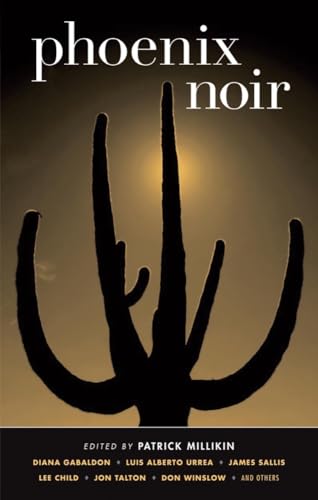
Inhaltsangabe
"Patrick Millikin . . . as if to prove his witty claim that 'sunshine is the new noir, ' offers one superb specimen, 'Whiteout on Van Buren, ' in which [author] Don Winslow makes skillful use of a city street at high noon to provide the perfect metaphor for life and death." --New York Times Crime Fiction Column
Akashic Books continues its groundbreaking series of original noir anthologies, launched in 2004 with Brooklyn Noir. Each story is set in a distinct neighborhood or location within the city of the book.
Brand-new stories by: Diana Gabaldon, Lee Child, James Sallis, Luis Alberto Urrea, Jon Talton, Megan Abbott, Charles Kelly, Robert Anglen, Patrick Millikin, Laura Tohe, Kurt Reichenbaugh, Gary Phillips, David Corbett, Don Winslow, Dogo Barry Graham, and Stella Pope Duarte.
From the introduction by Patrick Millikin:
"Early boosters promoted Phoenix as a desert paradise, a lush resort town where health-seekers could enjoy the benefits of clean dry air and warm winter weather . . . Yet from the very beginning, Phoenix has always had a darker side. It is a city founded upon shady development deals, good ol' boy politics, police corruption, organized crime, and exploitation of natural resources. Close proximity to the Mexican border makes the city a natural destination spot for illegal trafficking of all kinds--narcotics, weapons, humans . . .
Modern-day Phoenix is a textbook case of suburban sprawl gone unchecked. Endless cookie-cutter housing developments, slapped up on the cheap, metastasize outward into the desert, soaking up energy and water that we don't really have. All of that concrete and asphalt traps the heat, raising temperatures to apocalyptic extremes . . .
The stories in this collection represent our city in all of its contradictory glory, the good and the bad, urban blight and stark natural beauty, everything jumbled together and served up smokin' hot, just the way we like it."
Die Inhaltsangabe kann sich auf eine andere Ausgabe dieses Titels beziehen.
Über die Autorin bzw. den Autor
PATRICK MILLIKIN is a bookseller at the Poisoned Pen Bookstore in Scottsdale. As a freelance writer, his articles, interviews, and reviews have appeared in Publishers Weekly, Firsts Magazine, Paradoxa, Yourflesh Quarterly, and other publications. He is the editor of Phoenix Noir. Millikin currently lives in central Phoenix.
Auszug. © Genehmigter Nachdruck. Alle Rechte vorbehalten.
Phoenix Noir
Akashic Books
Copyright © 2009 Akashic BooksAll right reserved.
ISBN: 978-1-933354-85-9
Contents
Introduction....................................................................17Jon Talton Bull Downtown......................................................37Charles Kelly The Eighth Deadly Sin Hassayampa Valley.........................48Diana Gabaldon Dirty Scottsdale Desert Botanical Garden.......................79Robert Anglen Growing Back Apache Junction....................................103Luis Alberto Urrea Amapola Paradise Valley....................................126Lee Child Public Transportation Chandler......................................133Patrick Millikin Devil Doll Tovrea Castle.....................................148Laura Tohe Tom Snag Indian School Road........................................163James Sallis Others of My Kind Glendale.......................................177Kurt Reichenbaugh Valerie Grand Avenue........................................194Gary Phillips Blazin' on Broadway South Phoenix...............................216Megan Abbott It's Like a Whisper Scottsdale...................................231David Corbett Dead by Christmas Tempe.........................................254Don Winslow Whiteout on Van Buren Van Buren Strip.............................264Dogo Barry Graham By the Time He Got to Phoenix Christown.....................287Stella Pope Duarte Confession Harmon Park.....................................300
Introduction
Sunshine Is the New Noir
Phoenix is a young city, even by Arizona standards. The desert metropolis, easily the largest in the Southwest today, wasn't established until 1867, much later than Tucson, Prescott, and other Arizona towns. As the legend goes, fortune-seeker and former Confederate soldier Jack Swilling noticed the ruins of the extensive Hohokam canal system while passing through the Salt River Valley and recognized the economic potential in getting the irrigation ditches up and running again. Centuries earlier, the Hohokam Indians had disappeared, no one really knows why, but the elaborate canal system they left behind provided the foundation upon which a new city would arise. Swilling battled alcoholism and opiate addiction and would later die in Yuma Territorial Prison under suspicion of highway robbery (he was posthumously cleared of the charge).
Although historians debate whether Swilling or fellow pioneer Darrell Duppa first named the town "Phoenix," the idea it evoked, a new civilization rising out of the ashes of a previous culture, is revealing. It implied new beginnings, a place where hard-working young families from the East could start over anew. Of course, it wasn't always such a great deal for the nearby Pima and Maricopa Indians.
Early boosters promoted Phoenix as a desert paradise, a lush resort town where health-seekers could enjoy the benefits of clean dry air and warm winter weather. The burgeoning city was quickly so infested with "lungers" -people suffering from tuberculosis and other respiratory ailments-that alarmed citizens pressured advertisers to downplay the palliative effects of the environment. Magazine ads from the '40s and '50s show squeaky clean white families enjoying the "relaxed pace" of desert living: children playing in the sunshine, Dad practicing his golf swing or sipping a highball by the swimming pool.
From the very beginning, Phoenix has always had a darker side. It is a city founded upon shady development deals, good ol' boy politics, police corruption, organized crime, and exploitation of natural resources. Close proximity to the Mexican border makes the city a natural destination spot for illegal trafficking of all kinds-narcotics, weapons, humans. These days, "America's Toughest Sheriff" Joe Arpaio routinely makes headlines for his vigilante-style hunting of illegal aliens and his casual disregard of human rights. And he keeps getting reelected.
Modern-day Phoenix is a textbook case of suburban sprawl gone unchecked. Endless cookie-cutter housing developments, slapped up on the cheap, metastasize outward into the desert, soaking up energy and water that we don't really have. All of that concrete and asphalt traps the heat, raising temperatures to apocalyptic extremes. During the summer, these "heat bubbles" can be lethal (during one record-breaking month in 2004, fourteen people died from heat exposure, most of them homeless).
The city recently overtook Philadelphia to become the fifth largest city in the country, and the Phoenix metro area now rivals Los Angeles County in size. As in all major cities, the gulf between Phoenix's haves and have-nots continues to widen with the steady decline of the middle class. The affluent northeast valley-Scottsdale, Paradise Valley, Carefree-has little in common with the sunburned working-class neighborhoods of South Phoenix and much of the west valley, though the developers are trying to change that with gentrification. The population of the city continues to grow and morph, but the legacy of the early ward system, in which much of the political representation resided in the wealthier-and whiter-first and second wards, lives on to this day.
What does all this mean? Crime, and lots of it. The stories collected in this anthology provide a revealing glimpse of a dark underbelly that the tourists rarely see. Novelist and veteran journalist Jon Talton provides a masterly portrayal of WWII-era Phoenix, back when The Deuce, our old skid row, was in its heyday and the city's corrupt power structure already firmly entrenched. Edgar Award-winning author Megan Abbott offers a stylish interpretation of the notorious Bob Crane murder, and brilliantly captures the mellow, sun-baked vibe of Scottsdale during the 1970s. Diana Gabaldon takes the lid off contemporary Scottsdale with a dark and sordid tale combining such disparate elements as squirrel genocide, an illegal orchid smuggling operation, and a murdered Welsh botanist. Investigative reporter Robert Anglen gives us a tour de force of noir depravity about a career loser from East Mesa who is forced to live his miserable life ... backwards. Up-and-coming Phoenix scribe Kurt Reichenbaugh delivers the goods with a lean and nasty tale of betrayal along downtown's storied Grand Avenue. Longtime Phoenicians will dig Gary Phillips's contribution, in which L.A. detective Ivan Monk comes to town to investigate some loose ends surrounding the early-'70s murder of a local soul singer. The story was inspired by the real-life slaying of Arlester "Dyke" Christian of funk/R&B group Dyke and the Blazers, whose big hit "Funky Broadway" few realized was based on the main drag in South Phoenix. And then there's Navajo writer Laura Tohe's bad-ass riff on the femme fatale convention when her womanizing protagonist meets his match with a lady who just ain't human. This is but a sampling of the dark and diverse tales you'll find in Phoenix Noir.
I hope you enjoy this collection. The stories represent our city in all of its contradictory glory, the good and the bad, urban blight and stark natural beauty, everything jumbled together and served up smokin' hot, just the way we like it.
Patrick Millikin Phoenix, AZ July 2009
(Continues...)
Excerpted from Phoenix Noir Copyright © 2009 by Akashic Books. Excerpted by permission.
All rights reserved. No part of this excerpt may be reproduced or reprinted without permission in writing from the publisher.
Excerpts are provided by Dial-A-Book...
„Über diesen Titel“ kann sich auf eine andere Ausgabe dieses Titels beziehen.
Suchergebnisse für Phoenix Noir (Akashic Noir)

Beispielbild für diese ISBN
Phoenix Noir
Anbieter: ThriftBooks-Dallas, Dallas, TX, USA
Verkäuferbewertung 5 von 5 Sternen

Paperback. Zustand: Good. No Jacket. Pages can have notes/highlighting. Spine may show signs of wear. ~ ThriftBooks: Read More, Spend Less. Artikel-Nr. G1933354852I3N00
Gebraucht kaufen
EUR 5,82
Versand gratis
Versand innerhalb von USA
Versand innerhalb von USA
Anzahl: 2 verfügbar
Beispielbild für diese ISBN
Phoenix Noir
Anbieter: ThriftBooks-Reno, Reno, NV, USA
Verkäuferbewertung 5 von 5 Sternen
Paperback. Zustand: Good. No Jacket. Pages can have notes/highlighting. Spine may show signs of wear. ~ ThriftBooks: Read More, Spend Less. Artikel-Nr. G1933354852I3N00
Gebraucht kaufen
EUR 5,82
Versand gratis
Versand innerhalb von USA
Versand innerhalb von USA
Anzahl: 1 verfügbar
Beispielbild für diese ISBN
Phoenix Noir
Anbieter: ThriftBooks-Phoenix, Phoenix, AZ, USA
Verkäuferbewertung 5 von 5 Sternen
Paperback. Zustand: Good. No Jacket. Pages can have notes/highlighting. Spine may show signs of wear. ~ ThriftBooks: Read More, Spend Less. Artikel-Nr. G1933354852I3N00
Gebraucht kaufen
EUR 5,82
Versand gratis
Versand innerhalb von USA
Versand innerhalb von USA
Anzahl: 1 verfügbar
Beispielbild für diese ISBN
Phoenix Noir
Anbieter: ThriftBooks-Atlanta, AUSTELL, GA, USA
Verkäuferbewertung 5 von 5 Sternen
Paperback. Zustand: Fair. No Jacket. Former library book; Readable copy. Pages may have considerable notes/highlighting. ~ ThriftBooks: Read More, Spend Less. Artikel-Nr. G1933354852I5N10
Gebraucht kaufen
EUR 5,82
Versand gratis
Versand innerhalb von USA
Versand innerhalb von USA
Anzahl: 1 verfügbar
Beispielbild für diese ISBN
Phoenix Noir
Anbieter: ThriftBooks-Dallas, Dallas, TX, USA
Verkäuferbewertung 5 von 5 Sternen
Paperback. Zustand: Good. No Jacket. Former library book; Pages can have notes/highlighting. Spine may show signs of wear. ~ ThriftBooks: Read More, Spend Less. Artikel-Nr. G1933354852I3N10
Gebraucht kaufen
EUR 5,82
Versand gratis
Versand innerhalb von USA
Versand innerhalb von USA
Anzahl: 1 verfügbar
Beispielbild für diese ISBN
Phoenix Noir
Anbieter: ThriftBooks-Atlanta, AUSTELL, GA, USA
Verkäuferbewertung 5 von 5 Sternen
Paperback. Zustand: Very Good. No Jacket. May have limited writing in cover pages. Pages are unmarked. ~ ThriftBooks: Read More, Spend Less. Artikel-Nr. G1933354852I4N00
Gebraucht kaufen
EUR 5,82
Versand gratis
Versand innerhalb von USA
Versand innerhalb von USA
Anzahl: 1 verfügbar
Beispielbild für diese ISBN
Phoenix Noir
Anbieter: ThriftBooks-Atlanta, AUSTELL, GA, USA
Verkäuferbewertung 5 von 5 Sternen
Paperback. Zustand: Good. No Jacket. Pages can have notes/highlighting. Spine may show signs of wear. ~ ThriftBooks: Read More, Spend Less. Artikel-Nr. G1933354852I3N00
Gebraucht kaufen
EUR 5,82
Versand gratis
Versand innerhalb von USA
Versand innerhalb von USA
Anzahl: 1 verfügbar
Beispielbild für diese ISBN
Phoenix Noir
Anbieter: ThriftBooks-Dallas, Dallas, TX, USA
Verkäuferbewertung 5 von 5 Sternen
Paperback. Zustand: Fair. No Jacket. Readable copy. Pages may have considerable notes/highlighting. ~ ThriftBooks: Read More, Spend Less. Artikel-Nr. G1933354852I5N00
Gebraucht kaufen
EUR 5,82
Versand gratis
Versand innerhalb von USA
Versand innerhalb von USA
Anzahl: 1 verfügbar
Beispielbild für diese ISBN
Phoenix Noir
Verlag:
Akashic Books, 2009
ISBN 10: 1933354852
ISBN 13: 9781933354859
Gebraucht
Softcover
Erstausgabe
Anbieter: Better World Books, Mishawaka, IN, USA
Verkäuferbewertung 5 von 5 Sternen
Zustand: Good. First Edition. Pages intact with minimal writing/highlighting. The binding may be loose and creased. Dust jackets/supplements are not included. Stock photo provided. Product includes identifying sticker. Better World Books: Buy Books. Do Good. Artikel-Nr. 4069586-6
Gebraucht kaufen
EUR 6,41
Versand gratis
Versand innerhalb von USA
Versand innerhalb von USA
Anzahl: 1 verfügbar
Beispielbild für diese ISBN
Phoenix Noir
Verlag:
Akashic Books, 2009
ISBN 10: 1933354852
ISBN 13: 9781933354859
Gebraucht
Softcover
Erstausgabe
Anbieter: Better World Books, Mishawaka, IN, USA
Verkäuferbewertung 5 von 5 Sternen
Zustand: Good. First Edition. Former library copy. Pages intact with minimal writing/highlighting. The binding may be loose and creased. Dust jackets/supplements are not included. Includes library markings. Stock photo provided. Product includes identifying sticker. Better World Books: Buy Books. Do Good. Artikel-Nr. 1651742-6
Gebraucht kaufen
EUR 6,41
Versand gratis
Versand innerhalb von USA
Versand innerhalb von USA
Anzahl: 1 verfügbar