
Verwandte Artikel zu Anna In-Between
Inhaltsangabe
"A psychologically and emotionally astute family portrait, with dark themes like racism, cancer and the bittersweet longing of the immigrant." --New York Times Book Review, Editors' Choice
"Nunez has created a moving and insightful character study while delving into the complexities of identity politics. Highly recommended." --Library Journal, Starred Review
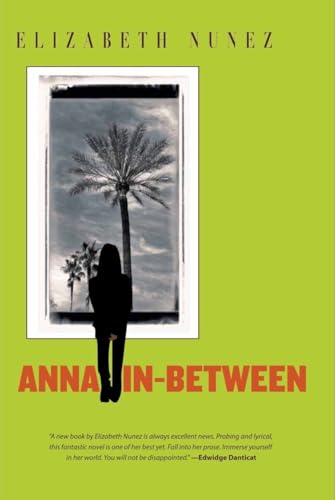
Anna In-Between is Elizabeth Nunez's finest achievement to date. In spare prose, with laserlike attention to every word and the juxtaposition of words to each other, Nunez returns to her themes of emotional alienation, within the context of class and color discrimination, so richly developed in her earlier novels. Anna, the novel's main character, who has a successful publishing career in the US, is the daughter of an upper-class Caribbean family. While on vacation in the island home of her birth she discovers that her mother, Beatrice, has breast cancer. Beatrice categorically rejects all efforts to persuade her to go to the US for treatment, even though it is, perhaps, her only chance of survival. Anna and her father, who tries to remain respectful of his wife's wishes, must convince her to change her mind.
In a convergence of craftsmanship, unflinching honesty, and the ability to universalize the lives of her characters, Nunez tells a story that explores our longing for belonging to a community, the age-old love-repulsion relationship between mother and daughter, the Freudian overtones in the love between daughter and father, and the mutual respect that is essential for a successful marriage. One of the crowning achievements of this novel is that it shines a harsh light on the ambiguous situation of this ruling-class family who rose from the constraints of colonialism to employ their own servants. It is a strength of the novel that it understands that the political truth is not distinct from the truth of the family or the truth of love relationships; they are integrated into a unity in this novel constituting one unbroken reality as they are in real life.
Die Inhaltsangabe kann sich auf eine andere Ausgabe dieses Titels beziehen.
Über die Autorin bzw. den Autor
ELIZABETH NUNEZ immigrated to the US from Trinidad after high school. She is the author of ten novels and the coeditor of the anthology Blue Latitudes: Caribbean Women Writers at Home and Abroad. Nunez received her PhD in English from New York University and is a Distinguished Professor at Hunter College, where she teaches creative writing. Nunez is cofounder of the National Black Writers Conference and was executive producer for the 2004 Emmy-nominated CUNY TV series, Black Writers in America. Her awards include the 2013 National Council for Research on Women Outstanding Trailblazer Award, the 2013 Caribbean American Distinguished Writer Award, the 2012 Trinidad and Tobago Lifetime Literary Award, and more. Nunez's works have been nominated for numerous awards, including the PEN Oakland/Josephine Miles Award, the 2012 NAACP Image Award for Outstanding Literary Fiction, an International Dublin Literary Award, the Trinidad and Tobago One Book, One Community selection, New York Times Book Review Editors' Choice, Novel of the Year for Black Issues Book Review, an American Book Award, the Independent Publishers Book Award, and several others. Her titles have also received starred reviews from Publishers Weekly, Booklist, and Library Journal. Her novels Anna In-Between, Even in Paradise, Boundaries, Prospero's Daughter, Grace, Discretion, and her memoir Not for Everyday Use are published by Akashic Books, as is her latest novel, Now Lila Knows.
Auszug. © Genehmigter Nachdruck. Alle Rechte vorbehalten.
Anna In-Between
By Elizabeth NunezAkashic Books
Copyright © 2009 Elizabeth NunezAll right reserved.
ISBN: 978-1-933354-84-2
Chapter One
Morning. Seven twenty-seven. The bell rings, calling the family to breakfast. Anna makes a quick, final check in the mirror. Three more minutes. Everything is in place. Her hair is brushed back smoothly across her head and gathered at the nape of her neck with a brown tortoise shell clasp. No need for makeup. After a cold winter in New York, the heat from the Caribbean sun has stirred her blood to the surface and left her face flushed, her brown skin glowing, her lips fiery bronze. One year short of forty she still attracts attention, a second look, though not necessarily an admiring glance. Her facial features set her apart from most of the native-born blacks in New York who trace ancestors to West Africa. With her long nose, deep-set eyes, high cheekbones, and red-tinged toffee brown coloring, she is often mistaken for an Ethiopian, sometimes an Indian. A visible immigrant.The bell again. Another number drops on the minute column on the digital clock. Seven twenty-nine. She runs her fingers around the waistband of her white shorts, tucks in the light pink-collared knit shirt she has chosen carefully, twirls, adjusts, checks herself in the mirror again, bends down, tightens the straps on her brown sandals. She is ready. Prepared.
Another bell. The last. Seven thirty. She leaves the bedroom and walks down the corridor toward the family dining room. Her parents are already seated, her father at the head of the table, her mother at his right.
At the right hand of the Father. The lines of a remembered childhood prayer flit across her brain. A little girl, too young to understand place, she had climbed into her father's chair. "Sit down, Daddy. Sit down." She pointed to a vacant chair. But her father kept moving, pacing back and forth behind her, scratching his chin, his forehead furrowed. Her mother came to his rescue and lifted her out of the chair. "That's Daddy's place," she said.
"Anna!" Her mother has heard her footsteps. "How lovely you look!"
As if the spoken word were a tangible thing, Anna feels lovely spread across her face and pull her lips back into a broad smile.
Her mother is impeccably dressed-as she always is. This morning she is wearing one of the American dresses Anna bought for her, a beige linen shift with large white buttons that run from the neck to the hem. On her mother the dress looks elegant, much more than had ever seemed possible to Anna when she picked it out from the sales rack at Bloomingdale's.
"Your complexion was sallow when you arrived," her mother says. "But look at you now!"
At seventy-one, Beatrice Sinclair is still as beautiful as the picture Anna has carried in her head from the first time she left home more than twenty years ago. In that uncanny way that husbands and wives grow to resemble each other, her mother resembles her father. The color of their skin is butterscotch brown, their features an amalgam of the aboriginal, the conquerors, the enslaved, the enslavers: the Amerindian people who first lived on the island, the Europeans who for centuries claimed it, the Africans brought there on slave ships, Indians and Chinese who exchanged indentured labor for the hope of land ownership; others, like the impoverished Portuguese, who came seeking their fortune. But in the nineteenth century the island was not yet El Dorado, though there was money to be made in cocoa and sugarcane. One century later the Spanish explorers would be proven right. Not yellow gold, but black gold-oil-lay in abundance in swollen pockets under the island's coastal waters and across its southern lands.
Objectively, the resemblance between Beatrice and John Sinclair ends there, with this combination of Amerindian, European, and African blood that runs in their veins. But husbands and wives who have lived together this long often unconsciously mimic each other's expressions, softening objective differences, molding distinctive features so that one barely notices that the shapes of the faces are different, that the noses, eyes, and mouths are not the same. Beatrice's face is rounder than John's, her eyes deeper and darker, her cheekbones raised high like those of her Amerindian aboriginal ancestors. The shape of their lips is inverted, Beatrice's top lip fuller than her bottom lip, John's top lip thinner. Indeed, both of John's lips, the top and the bottom, are quite thin. When he clamps his mouth shut in anger, his lips disappear. His nose is long, bent at the tip; hers flares slightly at the end of her nose bridge. Yet the impression they give is that of relatives who share a similar lineage.
"The bell was for us," Beatrice Sinclair says, a sort of apology directed to her daughter. "You needn't have come out."
But Anna is in her mother's house and she knows that as long as one's parents are alive, one is still a child, their child. If one returns to the house where they raised you, where you were a child, a dependent, you show respect, you obey their rules, no matter if you are nearing forty, no matter if you have a big job, with big responsibilities, as she has, as a senior editor at the Windsor publishing company in New York City, head of the company's imprint, Equiano Books, with the power to say yes or no, to fulfill or dash the hopes of writers. So she holds her tongue. She does not say, How did you expect me to sleep through three bells? She does not say, You wanted me up. The bell was to make sure I would be here on time for breakfast. She has not forgotten the rules: breakfast at seven thirty; lunch at twelve thirty; tea at four; dinner at six.
"I was already awake," she says. She greets her parents formally. "Good morning, Mummy. Good morning, Daddy."
In her parents' house, in the home of Caribbean parents, the child says, Good morning, Mummy. Good morning, Daddy. At night before she goes to bed she says good night to her parents. This is the custom, the respect that is expected even of grownup children, even of adults nearing forty.
"I heard you when you got up, Daddy," she says to her father.
He was wearing pajamas when she saw him through her bedroom window at dawn, the fabric at the top of the pants bunched together in his hands like a bouquet of flowers, the two ends of the string drawn through the loop of waistband dangling loose at the opening. She had given him the pajama set and the bedroom slippers he was wearing, both she had bought in winter, conscious even then that the sleeves and pants of the pajamas were too long, the slippers made of velvet, too thick for this tropical climate. Her chest tightened when he bent down, releasing one hand to pick up the rolled up newspaper the paperboy threw over the gate. So much dignity. An old man in his pajamas, wearing velvet slippers to please her, holding the top of his pants in one hand to keep them from falling. He is not in pajamas now, but he has on the same shirt and shorts he wore the day before, a sea blue cotton shirt that is wrinkled, khaki shorts that are stained. Her mother has long given up her battle to change this habit he has of wearing the same clothes day after day. The logic of his defense has left her frustrated. "Wasting water in a drought," he says in the dry season when she tells him that Lydia, their helper, would happily wash his clothes. In the wet season he takes the offensive, challenging her to criticize him. "Do I look untidy?" And in truth John Sinclair never looks untidy. Even in a wrinkled shirt and stained...
„Über diesen Titel“ kann sich auf eine andere Ausgabe dieses Titels beziehen.
Suchergebnisse für Anna In-Between

Beispielbild für diese ISBN
Anna In-between
Anbieter: World of Books (was SecondSale), Montgomery, IL, USA
Verkäuferbewertung 5 von 5 Sternen

Hardback. Zustand: Good. In spare prose and with laser-like attention to every word, prolific Caribbean writer Elizabeth Nunez returns to the theme of emotional alienation - within the context of class and colour discrimination - so richly developed in her earlier novels. The finest novel yet from a deservedly exalted Caribbean writer. Artikel-Nr. 00104917729
Gebraucht kaufen
EUR 6,49
Versand gratis
Versand innerhalb von USA
Versand innerhalb von USA
Anzahl: 1 verfügbar
Beispielbild für diese ISBN
Anna In-Between
Anbieter: ThriftBooks-Dallas, Dallas, TX, USA
Verkäuferbewertung 5 von 5 Sternen
Hardcover. Zustand: Very Good. No Jacket. May have limited writing in cover pages. Pages are unmarked. ~ ThriftBooks: Read More, Spend Less. Artikel-Nr. G1933354844I4N00
Gebraucht kaufen
EUR 6,50
Versand gratis
Versand innerhalb von USA
Versand innerhalb von USA
Anzahl: 1 verfügbar
Beispielbild für diese ISBN
Anna In-Between
Anbieter: ThriftBooks-Atlanta, AUSTELL, GA, USA
Verkäuferbewertung 5 von 5 Sternen
Hardcover. Zustand: Good. No Jacket. Former library book; Pages can have notes/highlighting. Spine may show signs of wear. ~ ThriftBooks: Read More, Spend Less. Artikel-Nr. G1933354844I3N10
Gebraucht kaufen
EUR 6,50
Versand gratis
Versand innerhalb von USA
Versand innerhalb von USA
Anzahl: 1 verfügbar
Beispielbild für diese ISBN
Anna In-Between
Anbieter: ThriftBooks-Atlanta, AUSTELL, GA, USA
Verkäuferbewertung 5 von 5 Sternen
Hardcover. Zustand: Very Good. No Jacket. Former library book; May have limited writing in cover pages. Pages are unmarked. ~ ThriftBooks: Read More, Spend Less. Artikel-Nr. G1933354844I4N10
Gebraucht kaufen
EUR 6,50
Versand gratis
Versand innerhalb von USA
Versand innerhalb von USA
Anzahl: 1 verfügbar
Beispielbild für diese ISBN
Anna In-Between
Anbieter: ThriftBooks-Dallas, Dallas, TX, USA
Verkäuferbewertung 5 von 5 Sternen
Hardcover. Zustand: Good. No Jacket. Former library book; Pages can have notes/highlighting. Spine may show signs of wear. ~ ThriftBooks: Read More, Spend Less. Artikel-Nr. G1933354844I3N10
Gebraucht kaufen
EUR 6,50
Versand gratis
Versand innerhalb von USA
Versand innerhalb von USA
Anzahl: 1 verfügbar
Beispielbild für diese ISBN
Anna In-Between
Anbieter: Better World Books, Mishawaka, IN, USA
Verkäuferbewertung 5 von 5 Sternen
Zustand: Very Good. Former library copy. Pages intact with possible writing/highlighting. Binding strong with minor wear. Dust jackets/supplements may not be included. Includes library markings. Stock photo provided. Product includes identifying sticker. Better World Books: Buy Books. Do Good. Artikel-Nr. 3984898-6
Gebraucht kaufen
EUR 8,32
Versand gratis
Versand innerhalb von USA
Versand innerhalb von USA
Anzahl: 1 verfügbar
Beispielbild für diese ISBN
Anna In-Between
Anbieter: Better World Books, Mishawaka, IN, USA
Verkäuferbewertung 5 von 5 Sternen
Zustand: Good. Former library copy. Pages intact with minimal writing/highlighting. The binding may be loose and creased. Dust jackets/supplements are not included. Includes library markings. Stock photo provided. Product includes identifying sticker. Better World Books: Buy Books. Do Good. Artikel-Nr. 4169893-6
Gebraucht kaufen
EUR 8,32
Versand gratis
Versand innerhalb von USA
Versand innerhalb von USA
Anzahl: 1 verfügbar
Beispielbild für diese ISBN
Anna In-Between
Anbieter: Better World Books Ltd, Dunfermline, Vereinigtes Königreich
Verkäuferbewertung 5 von 5 Sternen
Zustand: Very Good. Former library copy. Pages intact with possible writing/highlighting. Binding strong with minor wear. Dust jackets/supplements may not be included. Includes library markings. Stock photo provided. Product includes identifying sticker. Better World Books: Buy Books. Do Good. Artikel-Nr. 3984898-6
Gebraucht kaufen
EUR 10,99
EUR 5,93 Versand
Versand von Vereinigtes Königreich nach USA
Versand von Vereinigtes Königreich nach USA
Anzahl: 1 verfügbar
Beispielbild für diese ISBN
Anna In-Between (First Edition)
Verlag:
Akashic Books, New York, 2009
ISBN 10: 1933354844
ISBN 13: 9781933354842
Gebraucht
Hardcover
Erstausgabe
Anbieter: Dan Pope Books, West Hartford, CT, USA
Verkäuferbewertung 5 von 5 Sternen
Hardcover. Zustand: Fine. Zustand des Schutzumschlags: Fine. 1st Edition. First printing. A fine copy in a fine jacket. A clean copy without any marks. Nunez was nominated for a 2012 NAACP Image Award. Anna In-Between was selected for the 2010 PEN Oakland Josephine Miles Award for literary excellence. Artikel-Nr. FLAHIVE-802
Gebraucht kaufen
EUR 36,66
EUR 4,00 Versand
Versand innerhalb von USA
Versand innerhalb von USA
Anzahl: 1 verfügbar