
Inhaltsangabe
"Not since Jerzy Kosinski’s The Painted Bird or Agota Kristof’s Notebook Trilogy has there been such a harrowing novel about what it’s like to be a young person in a war. That Chris Abani is able to find humanity, mercy, and even, yes, forgiveness, amid such devastation is something of a miracle.”—Rebecca Brown, author of The End of Youth
"The moment you enter these pages, you step into a beautiful and terrifying dream. You are in the hands of a master, a literary shaman. Abani casts his spell so completely—so devastatingly—you emerge cleansed, redeemed, and utterly haunted."—Brad Kessler, author of Birds in Fall
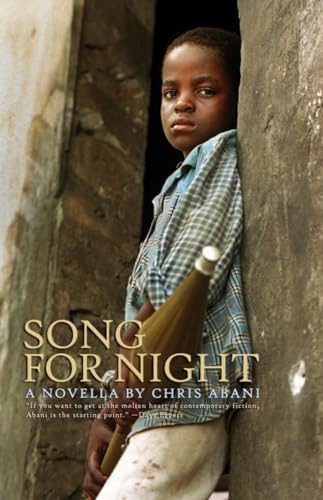
Part Inferno, part Paradise Lost, and part Sunjiata epic, Song for Night is the story of a West African boy soldier’s lyrical, terrifying, yet beautiful journey through the nightmare landscape of a brutal war in search of his lost platoon. The reader is led by the voiceless protagonist who, as part of a land mine-clearing platoon, had his vocal chords cut, a move to keep these children from screaming when blown up, and thereby distracting the other minesweepers. The book is written in a ghostly voice, with each chapter headed by a line of the unique sign language these children invented. This book is unlike anything else ever written about an African war.
Chris Abani is a Nigerian poet and novelist and the author of The Virgin of Flames, Becoming Abigail (a New York Times Editor’s Choice), and GraceLand (a selection of the Today Show Book Club and winner of the 2005 PEN/Hemingway Prize and the Hurston/Wright Legacy Award). His other prizes include a PEN Freedom to Write Award, a Prince Claus Award, and a Lannan Literary Fellowship. He lives and teaches in California.
"The moment you enter these pages, you step into a beautiful and terrifying dream. You are in the hands of a master, a literary shaman. Abani casts his spell so completely—so devastatingly—you emerge cleansed, redeemed, and utterly haunted."—Brad Kessler, author of Birds in Fall
Part Inferno, part Paradise Lost, and part Sunjiata epic, Song for Night is the story of a West African boy soldier’s lyrical, terrifying, yet beautiful journey through the nightmare landscape of a brutal war in search of his lost platoon. The reader is led by the voiceless protagonist who, as part of a land mine-clearing platoon, had his vocal chords cut, a move to keep these children from screaming when blown up, and thereby distracting the other minesweepers. The book is written in a ghostly voice, with each chapter headed by a line of the unique sign language these children invented. This book is unlike anything else ever written about an African war.
Chris Abani is a Nigerian poet and novelist and the author of The Virgin of Flames, Becoming Abigail (a New York Times Editor’s Choice), and GraceLand (a selection of the Today Show Book Club and winner of the 2005 PEN/Hemingway Prize and the Hurston/Wright Legacy Award). His other prizes include a PEN Freedom to Write Award, a Prince Claus Award, and a Lannan Literary Fellowship. He lives and teaches in California.
Die Inhaltsangabe kann sich auf eine andere Ausgabe dieses Titels beziehen.
Über die Autorinnen und Autoren
Chris Abani, curator of Akashic's Black Goat poetry imprint, is a Nigerian poet and novelist and the author of Song for Night, The Virgin of Flames, Becoming Abigail, and GraceLand (a selection of the Today Show Book Club; winner of the 2005 PEN/Hemingway Prize and the Hurston/Wright Legacy Award).
Chris Abani is a professor at the University of California, Riverside.
Auszug. © Genehmigter Nachdruck. Alle Rechte vorbehalten.
Song for Night
a novella By Chris AbaniAkashic Books
Copyright © 2006 Chris AbaniAll right reserved.
ISBN: 978-1-933354-31-6
Chapter One
Silence Is a Steady Hand, Palm Flat
What you hear is not my voice.
I have not spoken in three years: not since I left boot camp. It has been three years of a senseless war, and though the reasons for it are clear, and though we will continue to fight until we are ordered to stop-and probably for a while after that-none of us can remember the hate that led us here. We are simply fighting to survive the war. It is a strange place to be at fifteen, bereft of hope and very nearly of your humanity. But that is where I am nonetheless. I joined up at twelve. We all wanted to join then: to fight. There was a clear enemy, and having lost loved ones to them, we all wanted revenge.
If you are anything like Ijeoma you will say that I sound too old for my age. She always said that: said, because although her name in Igbo means Good Life, she died young, a year ago, aged fourteen, her wiry frame torn apart by an explosion. Since she couldn't speak either, it might be misleading to say she said, but we have developed a crude way of said talking, a sort of sign language that we have become fluent in. For instance, silence is a steady hand, palm flat, facing down. The word silencio, which we also like, involves the same sign with the addition of wiggling fingers, and though this seems like a playful touch, it actually means a deeper silence, or danger, and as in any language, context is everything. Our form of speech is nothing like the kind of sign language my deaf cousin studied in a special school before the war. But it serves us well. Our job is too intense for idle chatter.
I am part of a platoon of mine diffusers. Our job is to clear roads and access routes of mines. Though it sounds simple, our job is complicated because the term access routes could be anything from a bush track to a swath cut through a rice paddy. Our equipment is basic: rifles to protect against enemy troops, wide-blade machetes for clearing brush and digging up the mines, and crucifixes, scapulars, and other religious paraphernalia to keep us safe.
We were not chosen for our manual dexterity or because of our advanced intelligence, though most of us are very intelligent. We were chosen simply because we were small, slight even, and looked like we wouldn't grow much in the nutrition-lacking environment of a battlefield. We were chosen because our light weight would protect us from setting off the deadly mines even when we stepped on them. Well, they were right about the former, even now at fifteen I can pass for an average twelve-year-old. But they were so wrong about the latter. Even guinea fowl set off the mines. But they must have known: that is why they imposed the silence. I finger the scar on my throat that marks the cut that ended my days of speech.
There is a lot to be said for silence, especially when it comes to you young. The interiority of the head, which is a misnomer-misnomer being one of those words silence brings you-but there is something about the mind's interiority no less that opens up your view of the world. It is a curious place to live and makes you deep beyond your years and familiar with death. But that is what this war has done. I am not a genius, though I would like to be, I am just better versed at the interior monologue that is really the measure of age, of the passage of time. Why do I say this? Because when we say the passage of time we mean awareness of the passage of time, and when we say old, we really mean experienced. I know all this because my job requires me to concentrate on every second of my life as though it were the last. Of course if you are hearing any of this at all it's because you have gained access to my head. You would also know then that my inner-speech is not in English, because there is something atavistic about war that rejects all but the primal language of the genes to comprehend it, so you are in fact hearing my thoughts in Igbo. But we shan't waste time on trying to figure all that out because as I said before, time here is precious and not to be wasted on peculiarities, only on what is essential.
I have become separated from my unit. I don't know for how long since I have only just regained consciousness. I am having no luck finding them yet, which is ironic given that my mother named me My Luck. But as Grandfather said, one should never stop searching for the thing we desire most. And right now, finding my unit is what I desire most. We were all together, when one of us, Nebuchadnezzar I think it was, stepped on a mine. We all ducked when we heard it arming-that ominous clicking that sounds like the mechanism of a child's toy. The rule of thumb is that if you hear the explosion, you survived the blast. Like lightning and thunder. I heard the click and I heard the explosion even though I was lifted into the air. But the aftershock can do that. Drop you a few feet from where you began. When I came to, everyone was gone. They must have thought I was dead and so set off without me: that is annoying and not just because I have been left but because protocol demands that we count the dead and tally the wounded after each explosion or sweep. Stupid fools. Wait until I catch up with them, I will chew them out; protocol is all that's kept us alive. Counting is not just a way to keep track of numbers, ours and the enemy's, but also a way to make sure the dead are really dead. In training they told us to maximize opportunities such as these to up our kill ratio; for which we would be rewarded with extra food and money we can't spend. I like to pretend that I do it to ease the suffering of the mutilated but still undead foes, that my bullet to their brain or knife across their throat is mercy; but the truth is, deep down somewhere I enjoy it, revel in it almost. Not without cause of course: they did kill my mother in front of me, but still, it is for me, not her, this feeling, these acts. The downside of silence is that it makes self-delusion hard. I rub my eyes and spit dirt from my mouth along with a silent curse aimed at my absent comrades. If they'd checked they would have noticed that I wasn't dead.
The first thing I do is search for Nebu's body. That's the way it is laid out in the manual (although of course none of us has ever seen the manual but Major Essien drummed it into us and we know it by heart): first locate and account for friendly casualties, then hostiles; in that order-friend, then foe. The funny thing is, though I search, I can't find Nebu's body. There are no other bodies either, which means the enemy hasn't been around.
Let me explain something, which on the surface might sound illogical but isn't. We all lay land mines, the rebels and the federal troops, us and the enemy, but we do it in such a hurry that no one bothers to map these land mine sites, no one remembers where they are. That and the fact that territory shifts between us faster than sand tracking a desert, ground daily gained and lost, makes it hard to keep up. Given that the mine diffusers and scouts are always the advance guards, it is easy to see how minefields are often places where we intersect. In this case however it seems like there was no enemy, that Nebu simply got careless; or unlucky.
My first instinct is always survival so I abandon the search as quickly as I can and get out of the open. I debate whether to head for the river, fifty yards to my left, or the tree cover, seventy yards or so to my right. I choose the...
„Über diesen Titel“ kann sich auf eine andere Ausgabe dieses Titels beziehen.
Weitere beliebte Ausgaben desselben Titels

Suchergebnisse für Song for Night

Beispielbild für diese ISBN
Song for Night: A Novella
Anbieter: World of Books (was SecondSale), Montgomery, IL, USA
Verkäuferbewertung 5 von 5 Sternen

Zustand: Good. Item in good condition. Textbooks may not include supplemental items i.e. CDs, access codes etc. Artikel-Nr. 00101120057
Gebraucht kaufen
EUR 4,11
Versand gratis
Versand innerhalb von USA
Versand innerhalb von USA
Anzahl: 2 verfügbar
Beispielbild für diese ISBN
Song for Night: A Novella
Anbieter: World of Books (was SecondSale), Montgomery, IL, USA
Verkäuferbewertung 5 von 5 Sternen
Zustand: Very Good. Item in very good condition! Textbooks may not include supplemental items i.e. CDs, access codes etc. Artikel-Nr. 00101280395
Gebraucht kaufen
EUR 4,11
Versand gratis
Versand innerhalb von USA
Versand innerhalb von USA
Anzahl: 1 verfügbar
Beispielbild für diese ISBN
Song for Night: A Novella
Verlag:
Akashic Books, Ltd. (edition ), 2007
ISBN 10: 1933354313
ISBN 13: 9781933354316
Gebraucht
Paperback
Anbieter: BooksRun, Philadelphia, PA, USA
Verkäuferbewertung 5 von 5 Sternen
Paperback. Zustand: Very Good. It's a well-cared-for item that has seen limited use. The item may show minor signs of wear. All the text is legible, with all pages included. It may have slight markings and/or highlighting. Artikel-Nr. 1933354313-11-1
Gebraucht kaufen
EUR 4,71
Versand gratis
Versand innerhalb von USA
Versand innerhalb von USA
Anzahl: 1 verfügbar
Beispielbild für diese ISBN
Song for Night
Anbieter: ThriftBooks-Reno, Reno, NV, USA
Verkäuferbewertung 5 von 5 Sternen
Paperback. Zustand: Very Good. No Jacket. May have limited writing in cover pages. Pages are unmarked. ~ ThriftBooks: Read More, Spend Less. Artikel-Nr. G1933354313I4N00
Gebraucht kaufen
EUR 5,87
Versand gratis
Versand innerhalb von USA
Versand innerhalb von USA
Anzahl: 1 verfügbar
Beispielbild für diese ISBN
Song for Night
Anbieter: ThriftBooks-Atlanta, AUSTELL, GA, USA
Verkäuferbewertung 5 von 5 Sternen
Paperback. Zustand: Very Good. No Jacket. Missing dust jacket; May have limited writing in cover pages. Pages are unmarked. ~ ThriftBooks: Read More, Spend Less. Artikel-Nr. G1933354313I4N01
Gebraucht kaufen
EUR 5,87
Versand gratis
Versand innerhalb von USA
Versand innerhalb von USA
Anzahl: 1 verfügbar
Beispielbild für diese ISBN
Song for Night
Anbieter: ThriftBooks-Atlanta, AUSTELL, GA, USA
Verkäuferbewertung 5 von 5 Sternen
Paperback. Zustand: Very Good. No Jacket. May have limited writing in cover pages. Pages are unmarked. ~ ThriftBooks: Read More, Spend Less. Artikel-Nr. G1933354313I4N00
Gebraucht kaufen
EUR 5,87
Versand gratis
Versand innerhalb von USA
Versand innerhalb von USA
Anzahl: 1 verfügbar
Beispielbild für diese ISBN
Song for Night
Anbieter: ThriftBooks-Atlanta, AUSTELL, GA, USA
Verkäuferbewertung 5 von 5 Sternen
Paperback. Zustand: Very Good. No Jacket. Former library book; May have limited writing in cover pages. Pages are unmarked. ~ ThriftBooks: Read More, Spend Less. Artikel-Nr. G1933354313I4N10
Gebraucht kaufen
EUR 5,87
Versand gratis
Versand innerhalb von USA
Versand innerhalb von USA
Anzahl: 1 verfügbar
Beispielbild für diese ISBN
Song for Night
Anbieter: Better World Books, Mishawaka, IN, USA
Verkäuferbewertung 5 von 5 Sternen
Zustand: Good. 1 Edition. Former library copy. Pages intact with minimal writing/highlighting. The binding may be loose and creased. Dust jackets/supplements are not included. Includes library markings. Stock photo provided. Product includes identifying sticker. Better World Books: Buy Books. Do Good. Artikel-Nr. 4668693-6
Gebraucht kaufen
EUR 5,91
Versand gratis
Versand innerhalb von USA
Versand innerhalb von USA
Anzahl: 1 verfügbar
Beispielbild für diese ISBN
Song for Night
Anbieter: Better World Books, Mishawaka, IN, USA
Verkäuferbewertung 5 von 5 Sternen
Zustand: Good. 1 Edition. Pages intact with minimal writing/highlighting. The binding may be loose and creased. Dust jackets/supplements are not included. Stock photo provided. Product includes identifying sticker. Better World Books: Buy Books. Do Good. Artikel-Nr. 4714823-6
Gebraucht kaufen
EUR 5,91
Versand gratis
Versand innerhalb von USA
Versand innerhalb von USA
Anzahl: 1 verfügbar
Beispielbild für diese ISBN
Song for Night
Anbieter: Better World Books: West, Reno, NV, USA
Verkäuferbewertung 5 von 5 Sternen
Zustand: Good. 1 Edition. Former library copy. Pages intact with minimal writing/highlighting. The binding may be loose and creased. Dust jackets/supplements are not included. Includes library markings. Stock photo provided. Product includes identifying sticker. Better World Books: Buy Books. Do Good. Artikel-Nr. 4668693-6
Gebraucht kaufen
EUR 6,09
Versand gratis
Versand innerhalb von USA
Versand innerhalb von USA
Anzahl: 1 verfügbar