
Verwandte Artikel zu Aging Asia: The Economic and Social Implications of...
Aging Asia: The Economic and Social Implications of Rapid Demographic Change in China, Japan, and South Korea - Softcover
Inhaltsangabe
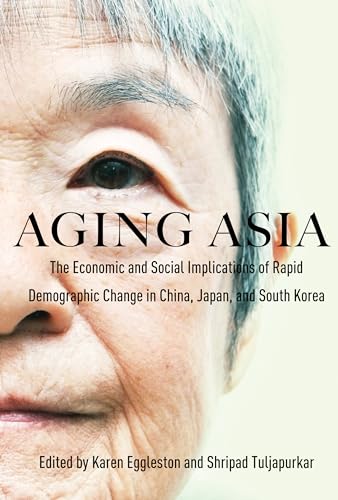
In the past fifty years, two factors have led to global population aging: a decline in fertility to levels close to-or even below-replacement and a decline in mortality that has increased world average life expectancy by nearly 67 percent. As the population skews toward fewer young people and more elderly who live longer postretirement lives, demographic changes-labor force participation, savings, economic growth, living arrangements, marriage markets, and social policy-are transforming society in fundamental, irreversible ways. Nowhere are these effects of aging and demographic change more acute-nor their long-term effects more potentially significant-than in the Asia-Pacific region. How will these developments impact the economies and social protection systems of Japan, South Korea, China, and, by extension, the United States?
To assess this question, Aging Asia showcases cutting-edge, policy-relevant research. The first section focuses on demographic trends and their economic implications; the second section approaches select topics from a global comparative perspective, including social insurance financing, medical costs, and long-term care.
Die Inhaltsangabe kann sich auf eine andere Ausgabe dieses Titels beziehen.
Über die Autorinnen und Autoren
Karen Eggleston is the director of the Asia Health Policy Program (AHPP) at Shorenstein APARC, Stanford University.
Shripad Tuljapurkar is professor of biology and the Dean & Virginia Morrison Professor of Population Studies at Stanford University. He also directs demographic programs at Stanford's Center for the Demography, Economics and Health of Aging, and the Stanford Center for Population Research in the Institute for Research in the Social Sciences.
Karen Eggleston is Senior Fellow at the Freeman Spogli Institute for International Studies (FSI) at Stanford University and Director of the Stanford Asia Health Policy Program at the Shorenstein Asia-Pacific Research Center at FSI. She is also a Fellow with the Center for Innovation in Global Health at Stanford University School of Medicine, and a Faculty Research Fellow of the National Bureau of Economic Research.
Shripad Tuljapurkar is Professor of Biology and the Dean & Virginia Morrison Professor of Population Studies at Stanford University.
Karen Eggleston is the director of the Asia Health Policy Program (AHPP) at Shorenstein APARC, Stanford University.
Shripad Tuljapurkar is professor of biology and the Dean & Virginia Morrison Professor of Population Studies at Stanford University. He also directs demographic programs at Stanford's Center for the Demography, Economics and Health of Aging, and the Stanford Center for Population Research in the Institute for Research in the Social Sciences.
„Über diesen Titel“ kann sich auf eine andere Ausgabe dieses Titels beziehen.
Suchergebnisse für Aging Asia: The Economic and Social Implications of...

Beispielbild für diese ISBN
Aging Asia: The Economic and Social Implications of Rapid Demographic Change in China, Japan, and South Korea
ISBN 10: 1931368201
ISBN 13: 9781931368209
Gebraucht
Paperback
Anbieter: BooksRun, Philadelphia, PA, USA
Verkäuferbewertung 5 von 5 Sternen

Paperback. Zustand: Very Good. 1. It's a well-cared-for item that has seen limited use. The item may show minor signs of wear. All the text is legible, with all pages included. It may have slight markings and/or highlighting. Artikel-Nr. 1931368201-8-1
Gebraucht kaufen
EUR 13,24
Versand gratis
Versand innerhalb von USA
Versand innerhalb von USA
Anzahl: 1 verfügbar
Beispielbild für diese ISBN
Aging Asia
Anbieter: PBShop.store UK, Fairford, GLOS, Vereinigtes Königreich
Verkäuferbewertung 5 von 5 Sternen
PAP. Zustand: New. New Book. Shipped from UK. Established seller since 2000. Artikel-Nr. FW-9781931368209
Neu kaufen
EUR 26,55
EUR 4,86 Versand
Versand von Vereinigtes Königreich nach USA
Versand von Vereinigtes Königreich nach USA
Anzahl: 15 verfügbar
Beispielbild für diese ISBN
Aging Asia: The Economic and Social Implications of Rapid Demographic Change in China, Japan, and South Korea
Verlag:
The Walter H. Shorenstein Asia-Pacific Reserach Center, 2010
ISBN 10: 1931368201
ISBN 13: 9781931368209
Gebraucht
Softcover
Anbieter: Anybook.com, Lincoln, Vereinigtes Königreich
Verkäuferbewertung 5 von 5 Sternen
Zustand: Good. This is an ex-library book and may have the usual library/used-book markings inside.This book has soft covers. In good all round condition. Please note the Image in this listing is a stock photo and may not match the covers of the actual item,400grams, ISBN:9781931368209. Artikel-Nr. 3715228
Gebraucht kaufen
EUR 18,10
EUR 15,88 Versand
Versand von Vereinigtes Königreich nach USA
Versand von Vereinigtes Königreich nach USA
Anzahl: 1 verfügbar
Beispielbild für diese ISBN
Aging Asia: The Economic and Social Implications of Rapid Demographic Change in China, Japan, and South Korea
Verlag:
Walter H. Shorenstein Asia-Pacific Research Center, 2011
ISBN 10: 1931368201
ISBN 13: 9781931368209
Neu
Softcover
Anbieter: Ria Christie Collections, Uxbridge, Vereinigtes Königreich
Verkäuferbewertung 5 von 5 Sternen
Zustand: New. In English. Artikel-Nr. ria9781931368209_new
Neu kaufen
EUR 29,38
EUR 10,94 Versand
Versand von Vereinigtes Königreich nach USA
Versand von Vereinigtes Königreich nach USA
Anzahl: Mehr als 20 verfügbar
Beispielbild für diese ISBN
Aging Asia: The Economic and Social Implications of Rapid Demographic Change in China, Japan, and South Korea
Verlag:
Brookings Institution Press, 2010
ISBN 10: 1931368201
ISBN 13: 9781931368209
Gebraucht
Softcover
Anbieter: Anybook.com, Lincoln, Vereinigtes Königreich
Verkäuferbewertung 5 von 5 Sternen
Zustand: Good. This is an ex-library book and may have the usual library/used-book markings inside.This book has soft covers. In good all round condition. Please note the Image in this listing is a stock photo and may not match the covers of the actual item,450grams, ISBN:9781931368209. Artikel-Nr. 4144089
Gebraucht kaufen
EUR 24,88
EUR 15,88 Versand
Versand von Vereinigtes Königreich nach USA
Versand von Vereinigtes Königreich nach USA
Anzahl: 1 verfügbar
Beispielbild für diese ISBN
Aging Asia
ISBN 10: 1931368201
ISBN 13: 9781931368209
Neu
Softcover
Anbieter: Kennys Bookstore, Olney, MD, USA
Verkäuferbewertung 5 von 5 Sternen
Zustand: New. In the past fifty years, two factors have led to global population aging: a decline in fertility to levels close to --or even below --replacement and a decline in mortality that has increased world average life expectancy by nearly 67 percent. Editor(s): Eggleston, Karen; Tuljapurkar, Shripad. Num Pages: 360 pages, Illustrations. BIC Classification: 1FPC; 1FPJ; 1FPKS; KCL. Category: (G) General (US: Trade). Dimension: 156 x 230 x 12. Weight in Grams: 318. . 2011. Paperback. . . . . Books ship from the US and Ireland. Artikel-Nr. V9781931368209
Neu kaufen
EUR 39,62
EUR 9,10 Versand
Versand innerhalb von USA
Versand innerhalb von USA
Anzahl: Mehr als 20 verfügbar
Beispielbild für diese ISBN
Aging Asia: The Economic and Social Implications of Rapid Demographic Change in China, Japan, and South Korea
Verlag:
Asia Pacific Research Inst for, 2010
ISBN 10: 1931368201
ISBN 13: 9781931368209
Neu
Paperback
Anbieter: Revaluation Books, Exeter, Vereinigtes Königreich
Verkäuferbewertung 5 von 5 Sternen
Paperback. Zustand: Brand New. 360 pages. 8.90x5.91x0.59 inches. In Stock. Artikel-Nr. x-1931368201
Neu kaufen
EUR 47,64
EUR 11,68 Versand
Versand von Vereinigtes Königreich nach USA
Versand von Vereinigtes Königreich nach USA
Anzahl: 2 verfügbar
Foto des Verkäufers
Aging Asia
Verlag:
SHORENSTEIN ASIA PACIFIC RES C, 2011
ISBN 10: 1931368201
ISBN 13: 9781931368209
Neu
Kartoniert / Broschiert
Anbieter: moluna, Greven, Deutschland
Verkäuferbewertung 5 von 5 Sternen
Kartoniert / Broschiert. Zustand: New. In the past fifty years, two factors have led to global population aging: a decline in fertility to levels close to -or even below -replacement and a decline in mortality that has increased world average life expectancy by nearly 67 percent.Übe. Artikel-Nr. 597251932
Neu kaufen
EUR 42,00
EUR 48,99 Versand
Versand von Deutschland nach USA
Versand von Deutschland nach USA
Anzahl: Mehr als 20 verfügbar
Foto des Verkäufers
Aging Asia : The Economic and Social Implications of Rapid Demographic Change in China, Japan, and South Korea
ISBN 10: 1931368201
ISBN 13: 9781931368209
Neu
Taschenbuch
Anbieter: AHA-BUCH GmbH, Einbeck, Deutschland
Verkäuferbewertung 5 von 5 Sternen
Taschenbuch. Zustand: Neu. Neuware - In the past fifty years, two factors have led to global population aging: a decline in fertility to levels close to-or even below-replacement and a decline in mortality that has increased world average life expectancy by nearly 67 percent. As the population skews toward fewer young people and more elderly who live longer postretirement lives, demographic changes-labor force participation, savings, economic growth, living arrangements, marriage markets, and social policy-are transforming society in fundamental, irreversible ways. Nowhere are these effects of aging and demographic change more acute-nor their long-term effects more potentially significant-than in the Asia-Pacific region. How will these developments impact the economies and social protection systems of Japan, South Korea, China, and, by extension, the United States To assess this question, Aging Asia showcases cutting-edge, policy-relevant research. The first section focuses on demographic trends and their economic implications; the second section approaches select topics from a global comparative perspective, including social insurance financing, medical costs, and long-term care. Artikel-Nr. 9781931368209
Neu kaufen
EUR 76,45
EUR 30,50 Versand
Versand von Deutschland nach USA
Versand von Deutschland nach USA
Anzahl: 2 verfügbar