
Verwandte Artikel zu Writing Home
Inhaltsangabe
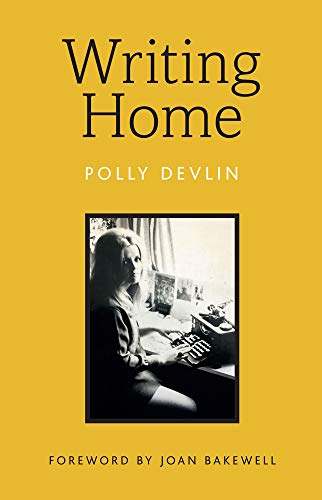
Polly Devlin is a writer, broadcaster and filmmaker. She holds an OBE for services to literature. After spending her childhood in Northern Ireland, at the age of twenty-two she took up her first job—as a writer, and soon features editor—on British Vogue, at the heart of 1960s London. A couple of years later she was again transported, to New York, to work for Diana Vreeland on American Vogue—where, once more, she was very much part of the scene she wrote about in her newspaper column and articles including for The Sunday Times, New Statesman and Observer. Her first book, All of Us There, is now a Virago Modern Classic. The most recent, New York: Places to Write Home About (Pimpernel Press, 2017; published in the United States by Gibbs Smith, as New York: Behind Closed Doors) was greeted with delight on both sides of the Atlantic. She now divides her time between London and New York, where, until her recent retirement, she taught Creative Non-Fiction at Barnard College, Columbia University. Polly Devlin lives in West London.
Die Inhaltsangabe kann sich auf eine andere Ausgabe dieses Titels beziehen.
Über die Autorin bzw. den Autor
Polly Devlin is a writer, broadcaster and filmmaker. She holds an OBE for services to literature. After spending her childhood in Northern Ireland, at the age of twenty-two she took up her first job—as a writer, and soon features editor—on British Vogue, at the heart of 1960s London. A couple of years later she was again transported, to New York, to work for Diana Vreeland on American Vogue—where, once more, she was very much part of the scene she wrote about in her newspaper column and articles including for The Sunday Times, New Statesman and Observer. Her first book, All of Us There, is now a Virago Modern Classic. The most recent, New York: Places to Write Home About (Pimpernel Press, 2017; published in the United States by Gibbs Smith, as New York: Behind Closed Doors) was greeted with delight on both sides of the Atlantic. She now divides her time between London and New York, where, until her recent retirement, she taught Creative Non-Fiction at Barnard College, Columbia University. Polly Devlin lives in West London.
Auszug. © Genehmigter Nachdruck. Alle Rechte vorbehalten.
Writing Home
By Polly DevlinPimpernel Press Limited
Copyright © 2019 Polly Devlin
All rights reserved.
ISBN: 978-1-910258-33-0All rights reserved.
Contents
Introduction by Joan Bakewell,
Flight Path,
The Road to King's Island,
A Family Christmas,
The Millstone,
Tinkers,
Initiatory Drawings,
Tumbleweed at Vogue,
Diana Vreeland: Wrists, Mists and Poets,
Portrait of the Artist as a Young Interviewer,
An Oddity,
Guess Who's Coming to Dinner,
The Quality of Women,
A Child of Dominica: Jean Rhys,
Stacking the Linen,
Sunday Morning in the Country,
On Blondeness,
Deceived by Ornament,
Camping It Up,
The Stag of the Stubble,
Rooks,
The Shadow of the Oak,
Dublin Opinion,
Et in Arcadia Ego,
A Christmas Miracle,
Thank You for Your Custom,
Why Are There No Great Women Artists? Give Me a Break!,
The Last Christmas Tree,
Home Thoughts in the Vernacular,
A B Special Incident,
Sunshine and Incense,
The Longest Day,
A Room of My Own: Manhattan,
The F Word,
Intricate Rented World,
The Last Time I Saw Paris,
The Cranes Are Flying,
Look Back in Wonder,
Realms of Gold,
What Makes a Marriage Last?,
Thoughts on Seamus Heaney,
Two Parakeets and a Blackthorn Tree,
Index,
Acknowledgements,
CHAPTER 1
Flight Path
There are histories where the beginning is still happening.
So it is with the event known as the Flight of the Earls. Over four hundred years ago, in September 1607, the news reached the native population of Ulster, the most Gaelic province of Ireland and the one that had held out the longest against the English, that the most powerful chieftain in Ireland, Hugh O'Neill, Earl of Tyrone, leader of the resistance during the Nine Years' War, had set sail in an unnamed French warship for Europe from Rathmullan on Lough Swilly in Derry, with ninety-nine others, including the nobility of the north, their wives and children and followers. The desperate centuries-long warfare with England was over, the native culture and order was broken.
His brother Cormac O'Neill wrote of his leadership, 'For all the Irish obey O'Neill as sails obey the wind. For they have as much love for him as sons do for their parents both for his own sake as for hatred of the English.' And with his departure the Gaelic dispensation of Tanistry and Brehon law that had lasted for millennia, a whole way of life and culture, was doomed. It was calamity for people like us, his henchmen, his clan, his soldiers. The waves behind his ship are still breaking on our shores.
The event was not called the Flight of the Earls until a century later and many think the term is misguided and loaded – that there was nothing fugitive about their journey but rather that the leaders of Ulster had left for Spain to get help and reinforcements to continue the bitter fight to the death. But nevertheless, a flight it was, leaving Ulster rudderless, open to the worst, to what was inevitably going to happen, to the storms ahead, to the wreck of a nation.
That benighted voyage is on an endless loop of what if ... and if only ... to those to whom the worst did happen. My family for a start.
A list preserved in the Borghese Papers in Rome records that as the ship at last reached the shores of France after a hellish crossing, which took twenty-three days when it should have taken four or five – there was one barrel of water left (though there were five gallons of beer). The sad fugitives – not unlike the ones we see now every day on our screens, pushed out of their homeland on to stormy seas to seek refuge where they may – landed near Rouen, exhausted and sick, and began their epic journey across Europe. Their hopes for further help from Spain were fruitless and The O'Neill died in Rome in 1616.
O'Neill had held together many opposing strands in Ulster – the chieftains quarrelled among themselves and cattle raids were a way of life, and he was arbiter of these quarrels; the English were always on the rampage, burning, killing, annexing territory and he negotiated with them and with their Queen. He knew that the war he was waging was between two wholly different civilizations, the one despising the other. So, the Flight is one of the most calamitous events in Irish history. Everything fell apart. The Annals of the Four Masters, written in the early seventeenth century, judged it thus: 'Woe to the heart that meditated, woe to the mind that conceived, woe to the council that decided on, the project of their setting out on this voyage, without knowing whether they should ever return to their native principalities or patrimonies to the end of the world.' With the leaders gone, the way lay clear for the agrarian settlement known as the Plantation of Ulster, a weasel description of illegal acquisition and theft. Our land was taken, brought under English jurisdiction and laws and parcelled out to Protestant settlers from England and Scotland and, as the historian George Hill wrote in his book The Plantation of Ulster, 'When the native gentry lost their homes and houses they received short shrift; anyone found lingering around their old homes could expect to be shot ... The British settlers generally do not appear to have had any kind thoughts or sympathies; for that class who had been more respectable than themselves they naturally cherished a vague terror ... We may imagine something of the agony and dismay of those who had occupied positions of comfort and respect throughout the several counties of Ulster but who were doomed to be outcast on their own soil.'
We may well imagine. I don't need to – the agony and dismay is in our DNA. My English name is Devlin but it is also Doibhlin (with prefix Ni because I am female; the male line is O'Doibhlin). It is an ancient Irish tribal name or more accurately it is the name of an Irish sept – a branch of a clan.
The O'Doibhlin had been part of the praetorian guard to The O'Neill. They were horsemen and what might now be called courtiers, though from the sound of it they were far from courtly, since their duties included the taking and guarding of hostages and collecting fines for robbery.
My grandfather was known as the Hatchet Man. I thought that it was a contemporaneous nickname given because he had a terrifying temper, and only years later discovered that the appellation was passed from generation to generation and comes from our breeding – to have a temper which rarely erupts but, when provoked, is upsetting all round, or, as cousin Willie said on seeing mine in action, 'fuckin' lethal'.
The clan lived beside Lough Neagh, near three sites of great significance in our history: Tullyhogue, O'Neill's headquarters (the name means Mound of the Young Warriors), and two settlements, small towns now called Dungannon and Stewartstown. Dungannon was from the Gaelic, Dun Eigeann. Stewartstown is a new name: it was originally known as An Craobh and is still called that by old local people. It too was an O'Neill stronghold. The O'Doibhlin had a castle near the lough, at Roughan, where our legend has it that in one battle a thousand of our sept were killed.
Tullyhogue, the crowning place of the kings of Ulster with its throne and its crowning stone, was the centre of the world for my ancestors. It was destroyed by the piratical Sir Toby Caulfeild – what a piece of work he was – who was appointed receiver of the rents of The O'Neill after the...
„Über diesen Titel“ kann sich auf eine andere Ausgabe dieses Titels beziehen.
Suchergebnisse für Writing Home

Beispielbild für diese ISBN
Writing Home
Anbieter: AwesomeBooks, Wallingford, Vereinigtes Königreich
Verkäuferbewertung 5 von 5 Sternen

Paperback. Zustand: Very Good. Writing Home This book is in very good condition and will be shipped within 24 hours of ordering. The cover may have some limited signs of wear but the pages are clean, intact and the spine remains undamaged. This book has clearly been well maintained and looked after thus far. Money back guarantee if you are not satisfied. See all our books here, order more than 1 book and get discounted shipping. Artikel-Nr. 7719-9781910258330
Gebraucht kaufen
EUR 3,74
EUR 4,92 Versand
Versand von Vereinigtes Königreich nach USA
Versand von Vereinigtes Königreich nach USA
Anzahl: 2 verfügbar
Beispielbild für diese ISBN
Writing Home
Anbieter: Better World Books Ltd, Dunfermline, Vereinigtes Königreich
Verkäuferbewertung 5 von 5 Sternen
Zustand: Very Good. Former library copy. Pages intact with possible writing/highlighting. Binding strong with minor wear. Dust jackets/supplements may not be included. Includes library markings. Stock photo provided. Product includes identifying sticker. Better World Books: Buy Books. Do Good. Artikel-Nr. 18574905-20
Gebraucht kaufen
EUR 5,77
EUR 5,97 Versand
Versand von Vereinigtes Königreich nach USA
Versand von Vereinigtes Königreich nach USA
Anzahl: 1 verfügbar
Beispielbild für diese ISBN
Writing Home
Verlag:
Pimpernel Press Ltd 30/05/2019, 2019
ISBN 10: 1910258334
ISBN 13: 9781910258330
Gebraucht
Paperback
Anbieter: Bahamut Media, Reading, Vereinigtes Königreich
Verkäuferbewertung 4 von 5 Sternen

Paperback. Zustand: Very Good. Shipped within 24 hours from our UK warehouse. Clean, undamaged book with no damage to pages and minimal wear to the cover. Spine still tight, in very good condition. Remember if you are not happy, you are covered by our 100% money back guarantee. Artikel-Nr. 6545-9781910258330
Gebraucht kaufen
EUR 4,96
EUR 8,34 Versand
Versand von Vereinigtes Königreich nach USA
Versand von Vereinigtes Königreich nach USA
Anzahl: 1 verfügbar
Foto des Verkäufers
Writing Home
Anbieter: WeBuyBooks, Rossendale, LANCS, Vereinigtes Königreich
Verkäuferbewertung 5 von 5 Sternen
paperback. Zustand: Very Good. Most items will be dispatched the same or the next working day. A copy that has been read, but is in excellent condition. Pages are intact and not marred by notes or highlighting. The spine remains undamaged. Artikel-Nr. rev4294112815
Gebraucht kaufen
EUR 1,71
EUR 12,00 Versand
Versand von Vereinigtes Königreich nach USA
Versand von Vereinigtes Königreich nach USA
Anzahl: 2 verfügbar
Foto des Verkäufers
Writing Home
Anbieter: WeBuyBooks, Rossendale, LANCS, Vereinigtes Königreich
Verkäuferbewertung 5 von 5 Sternen
paperback. Zustand: Good. Most items will be dispatched the same or the next working day. A copy that has been read but remains in clean condition. All of the pages are intact and the cover is intact and the spine may show signs of wear. The book may have minor markings which are not specifically mentioned. Artikel-Nr. rev8309329808
Gebraucht kaufen
EUR 1,86
EUR 12,00 Versand
Versand von Vereinigtes Königreich nach USA
Versand von Vereinigtes Königreich nach USA
Anzahl: 2 verfügbar
Beispielbild für diese ISBN
Writing Home
Anbieter: WorldofBooks, Goring-By-Sea, WS, Vereinigtes Königreich
Verkäuferbewertung 5 von 5 Sternen
Paperback. Zustand: Very Good. The book has been read, but is in excellent condition. Pages are intact and not marred by notes or highlighting. The spine remains undamaged. Artikel-Nr. GOR009901119
Gebraucht kaufen
EUR 8,19
EUR 6,69 Versand
Versand von Vereinigtes Königreich nach USA
Versand von Vereinigtes Königreich nach USA
Anzahl: 5 verfügbar