
Verwandte Artikel zu The Queen of Spades and Selected Works (Pushkin Collection)
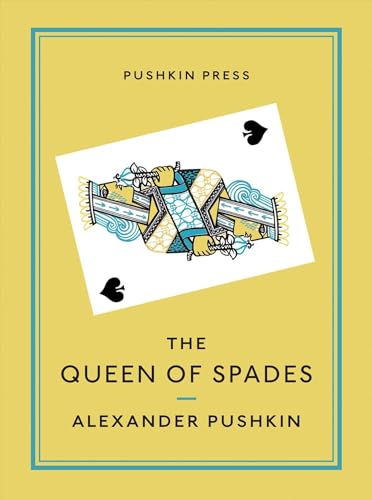
Inhaltsangabe
"The Queen of Spades" is one of the most famous tales in Russian literature, and inspired the eponymous opera by Tchaikovsky; in "The Stationmaster", from The Tales of the Late Ivan Petrovich Belkin, Pushkin reworks the parable of the Prodigal Son; "Tsar Nikita and his Forty Daughters" is one of Pushkin's bawdier early poems; and the narrative poem "The Bronze Horseman", inspired by a St Petersburg statue of Peter the Great, is one of Pushkin's best-known and most influential works. The volume also includes a selection of Pushkin's best lyric poetry.
Contents:
- Short Stories: The Queen of Spades ; The Stationmaster
- Drama: Extracts from Boris Godunov and Mozart and Salieri
- The Bronze Horseman (narrative poem), Tsar Nikita and His Forty
Daughters (folk poem) and 14 lyric poems
- Novel in Verse: Extract from Yevgeny Onegin (novel in verse)
Pushkin Collection editions feature a spare, elegant series style and superior, durable components. The Collection is typeset in Monotype Baskerville, litho-printed on Munken Premium White Paper and notch-bound by the independently owned printer TJ International in Padstow. The covers, with French flaps, are printed on Colorplan Pristine White Paper. Both paper and cover board are acid-free and Forest Stewardship Council (FSC) certified.
Die Inhaltsangabe kann sich auf eine andere Ausgabe dieses Titels beziehen.
Über die Autorinnen und Autoren
Alexander Sergeyevich Pushkin ranks as one of Russia’s greatest writers. Born in 1799, he published his first poem when he was a teenager, and attained fame in 1820 with his first long poem, Ruslan and Lyudmila. In the late 1820s he found himself the target of government censors, unable to travel or publish at will; during this time, he wrote his most famous play, Boris Godunov, and Eugene Onegin (published 1825–1832). The Queen of Spades, his most famous prose work, was published in 1834; his best known poem, "The Bronze Horseman", appeared after his death (from a wound sustained in a duel) in 1837.
Alexander Sergeyevich Pushkin ranks as one of Russia’s greatest writers. Born in 1799, he published his first poem when he was a teenager, and attained fame in 1820 with his first long poem, Ruslan and Lyudmila. In the late 1820s he found himself the target of government censors, unable to travel or publish at will; during this time, he wrote his most famous play, Boris Godunov, and Eugene Onegin (published 1825–1832). The Queen of Spades, his most famous prose work, was published in 1834; his best known poem, "The Bronze Horseman", appeared after his death (from a wound sustained in a duel) in 1837.
Auszug. © Genehmigter Nachdruck. Alle Rechte vorbehalten.
The Queen of Spades
And Selected Works
By Alexander Pushkin, Anthony BriggsSteerforth Press
Copyright © 2012 Pushkin Press
All rights reserved.
ISBN: 978-1-908968-03-6All rights reserved.
Contents
Introduction, 9,
The Queen of Spades, 15,
The Stationmaster, 57,
Extract from the Blank-Verse Tragedy Boris Godunov, 76,
Mozart and Salieri, 78,
The Bronze Horseman, 89,
Tsar Nikita and His Forty Daughters, 109,
Extract from Yevgeny Onegin, 119,
The Prophet, 124,
To Anna Kern, 126,
Winter Evening, 128,
The Upas Tree, 130,
Man Found Drowned, 132,
'Winter. What Shall We Do?', 136,
'When I Stroll Down a Busy Street', 139,
'Oh, I Have Loved You', 141,
'No, Not for Me the Stormiest Pleasures of the Senses', 142,
'When I Reach Over to Enfold You', 143,
'The Time Has Come, Dear Friend', 144,
Autumn (A Fragment), 145,
Elegy, 151,
Remembrance, 152,
'I Have My Monument', 153,
CHAPTER 1
THE QUEEN OF SPADES
The Queen of Spades has a hidden meaning — bad blood.
Fortune-Telling Companion, Latest Edition
I
In all kinds of weather
They sat down together
When able,
And soon — for God's sake! —
They were doubling the stake
At the table.
They marked cards with crosses,
And wrote down their losses
In chalk.
Yes, in all kinds of weather
They got down together
To work.
There was once a card game at the residence of Horse Guardsman Narumov. A long winter night had slipped by unnoticed, and it was past four o'clock when they sat down to dine. The winners thoroughly enjoyed their dinner; the others sat there at empty places, unable to concentrate on anything. But champagne was served, the conversation struck up again, and everybody was involved.
"How'd you get on, Surin?" asked the host.
"Lost. I always do. To be honest, I'm just not lucky I don't take any risks, I never raise the stakes, I don't let anything put me off, and I still end up losing!"
"And you've never been tempted? Never done any doubling up? ... Your willpower amazes me."
"Well, what about Hermann?" said one of the guests, gesturing towards a young Engineers officer. "Never picked up a card since the day he was born, never doubled a stake, and he sits here till five in the morning just watching us gamble."
"I'm very interested in gambling," said Hermann, "but I'm in no situation to sacrifice what is essential in the hope of winning something superfluous."
"Hermann's from Germany. He calculates the odds. Nothing more to it than that," put in Tomsky. "If there's one person I don't understand, it's my grandmother, Countess Anna Fedotovna."
"Why? What d'you mean?" cried the company.
"What I can't work out," Tomsky went on, "is why my grandmother never has a bet."
"What's so funny about that?" said Narumov. "An old woman of eighty who doesn't gamble?"
"So, you've never heard anything about her?"
"No! Honestly, I haven't. Nothing at all!"
"Oh, well, listen to this. You ought to know that, fifty-odd years ago, my grandmother used to go to Paris, where she was considered the latest thing. People flocked after her to get a glimpse of the 'Venus from Moscow'. Richelieu pursued her, and Grandmother swears he nearly shot himself because of her hard heart. At that time the ladies liked to play faro. One day at court she lost to the Duke of Orléans on credit — it was a large sum of money. Back home, as she peeled off her beauty spots and unfastened her crinoline, Grandmother declared her loss to my grandfather and ordered him to pay it off. My late grandfather, I seem to recall, was like a butler to my grandmother. He dreaded her like fire, but when he heard about this terrible loss of hers he lost his temper, brought out the accounts, pointing out that they had spent half a million in half a year, that living near Paris wasn't the same as living on their own estates near Moscow or Saratov, and refused point-blank to pay. Grandmother slapped his face and went off to bed alone as a sign of her displeasure. The next morning she sent for her husband, hoping that marital punishment would have had its effect on him, but she found him intransigent. For the first time in her life she was reduced to persuasion and argument with him; her idea was to bring him to heel by deigning to point out that there are different kinds of debt, and that there is a difference between a prince and a coach-builder. No use! Grandfather was in revolt. Nothing more to be said. Grandmother had no idea what to do.
"She numbered among her acquaintances one quite remarkable man. You will have heard the name of Count Saint-Germain, about whom such wonderful stories are told. You will know that he had claimed to be the Wandering Jew, the discoverer of the elixir of life, and the philosopher's stone, and so on. He was ridiculed as a charlatan, but Casanova in his memoirs refers to him as a spy. Putting that aside, Saint-Germain, for all his air of mystery, had a handsome look about him and a charismatic personality. To this day Grandmother loves him to distraction, and she gets angry when disrespectful things are said about him. Grandmother knew that he had access to big money. Deciding to throw herself on his mercy, she wrote him a note asking him to come round and see her without delay. The old eccentric lost no time in getting there, and found her prostrate with grief. She described her husband's barbarity in the darkest terms, and ended by placing all her hopes on his friendship and generosity.
"Saint-Germain gave it some thought. 'I can oblige you with that sum of money,' he said, 'but I know you will never rest until you have been able to pay me back, and I wouldn't wish to cause you any more trouble. There is another solution: you can win it all back.'
"'But, my dear Count,' Grandmother replied, 'I'm telling you — we have no money at all.'
"'Money is not required,' replied Saint-Germain. 'Please let me finish.'
"At this point he told her a secret that any of us would pay a good deal to learn ..."
The young gamblers redoubled their interest. Tomsky lit his pipe, pulled on it, and spoke further.
"That same evening Grandmother turned up at the Jeu de la Reine in Versailles. The Duke of Orléans was dealing. Grandmother muttered a word of apology for not bringing the money to pay off her debt, concocting a little story by way of excuse, and she began to bet against him. She chose three cards, and played them one after the other; all three won at the first turn of the cards, doubling up in series, and Grandmother had recouped her entire debt."
"Fluke!" said one of the guests.
"Fairy tale!" cried Hermann.
"Could have been marked cards," was the response from a third guest, eager to join in.
"I think not," observed Tomsky with some gravity
"What?" said Narumov. "You have a grandmother who can play three winning cards in a row, and in all this time you haven't got hold of her magic formula?"
"Not much chance of that!" replied Tomsky. "She had four sons, one of them being my father. They were all desperate gamblers, and she never told her secret to any one of them, even though it could have done them a lot of good, and me, too, for that matter. But my uncle, Count Ivan Ilyich, told me something which he swore was true. That man Chaplitsky — he's dead now, squandered millions and died in poverty — in his youth once lost...
„Über diesen Titel“ kann sich auf eine andere Ausgabe dieses Titels beziehen.
Suchergebnisse für The Queen of Spades and Selected Works (Pushkin Collection)

Beispielbild für diese ISBN
The Queen of Spades and Selected Works (Pushkin Collection)
Verlag:
Pushkin Collection (edition Reprint), 2013
ISBN 10: 1908968036
ISBN 13: 9781908968036
Gebraucht
Paperback
Anbieter: BooksRun, Philadelphia, PA, USA
Verkäuferbewertung 5 von 5 Sternen

Paperback. Zustand: Very Good. Reprint. It's a well-cared-for item that has seen limited use. The item may show minor signs of wear. All the text is legible, with all pages included. It may have slight markings and/or highlighting. Artikel-Nr. 1908968036-11-1
Gebraucht kaufen
EUR 10,10
Versand gratis
Versand innerhalb von USA
Versand innerhalb von USA
Anzahl: 1 verfügbar
Beispielbild für diese ISBN
The Queen of Spades and Selected Works (Pushkin Collection)
Anbieter: WorldofBooks, Goring-By-Sea, WS, Vereinigtes Königreich
Verkäuferbewertung 5 von 5 Sternen
Paperback. Zustand: Very Good. The book has been read, but is in excellent condition. Pages are intact and not marred by notes or highlighting. The spine remains undamaged. Artikel-Nr. GOR006041791
Gebraucht kaufen
EUR 7,34
EUR 6,72 Versand
Versand von Vereinigtes Königreich nach USA
Versand von Vereinigtes Königreich nach USA
Anzahl: 4 verfügbar
Foto des Verkäufers
The Queen of Spades and Selected Works (Pushkin Collection)
Anbieter: MusicMagpie, Stockport, Vereinigtes Königreich
Verkäuferbewertung 5 von 5 Sternen
Zustand: Very Good. 1793199983. 10/28/2026 3:06:23 PM. Artikel-Nr. U9781908968036
Gebraucht kaufen
EUR 10,44
EUR 6,59 Versand
Versand von Vereinigtes Königreich nach USA
Versand von Vereinigtes Königreich nach USA
Anzahl: 1 verfügbar
Beispielbild für diese ISBN
The Queen of Spades and Selected Works (Pushkin Collection)
Anbieter: Brit Books, Milton Keynes, Vereinigtes Königreich
Verkäuferbewertung 4 von 5 Sternen

Paperback. Zustand: Used; Very Good. ***Simply Brit*** Welcome to our online used book store, where affordability meets great quality. Dive into a world of captivating reads without breaking the bank. We take pride in offering a wide selection of used books, from classics to hidden gems, ensuring there is something for every literary palate. All orders are shipped within 24 hours and our lightning fast-delivery within 48 hours coupled with our prompt customer service ensures a smooth journey from ordering to delivery. Discover the joy of reading with us, your trusted source for affordable books that do not compromise on quality. Artikel-Nr. 4484289
Gebraucht kaufen
EUR 10,31
EUR 19,19 Versand
Versand von Vereinigtes Königreich nach USA
Versand von Vereinigtes Königreich nach USA
Anzahl: 1 verfügbar
Beispielbild für diese ISBN
The Queen of Spades and Selected Works (Pushkin Collection)
Anbieter: Greener Books, London, Vereinigtes Königreich
Verkäuferbewertung 4 von 5 Sternen
Paperback. Zustand: Used; Good. **SHIPPED FROM UK** We believe you will be completely satisfied with our quick and reliable service. All orders are dispatched as swiftly as possible! Buy with confidence! Greener Books. Artikel-Nr. 3237958
Gebraucht kaufen
EUR 10,28
EUR 24,00 Versand
Versand von Vereinigtes Königreich nach USA
Versand von Vereinigtes Königreich nach USA
Anzahl: 1 verfügbar