
Verwandte Artikel zu Call of the Undertow
Inhaltsangabe
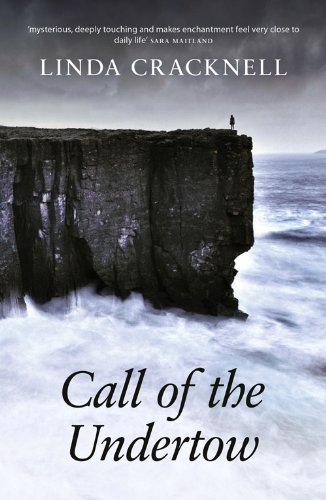
A beautifully written, haunting tale of motherhood, guilt, myth, and redemption set on the rugged coast at Scotland's furthest edge
When Maggie Thame, a childless 40-something woman from Oxford, relocates to a remote village at Scotland's most northern edge, it's clear she's running away. But to the villagers of Duncanby the question remains, from what? Pursuing her career as a freelance cartographer, she lives in self-imposed isolation, seeking refuge in the harsh beauty of her surroundings. This is disturbed when she falls into an uneasy friendship with Trothan Gilbertson, a strange, otherworldly local nine-year-old. Like Maggie, it's unclear where Trothan really comes from, and what secrets might be lurking in his past. The lives of both become intertwined, with violent consequences that will change the lives of the woman and boy forever, forcing Maggie to confront the tragic events that first drew her to this isolated place. This debut novel explores themes of motherhood, guilt, myth, and the elemental forces of nature in a lyrical, taut, and haunting account of damaged lives seeking redemption.
Die Inhaltsangabe kann sich auf eine andere Ausgabe dieses Titels beziehen.
Über die Autorin bzw. den Autor
Linda Cracknell was shortlisted for the Scottish First Book Award for her short story collection Life Drawing. She is also the author of A Searching Glance.Auszug. © Genehmigter Nachdruck. Alle Rechte vorbehalten.
Call of the Undertow
By Linda CracknellFreight Books
Copyright © 2013 Linda Cracknell
All rights reserved.
ISBN: 978-1-908754-30-1All rights reserved.
CHAPTER 1
When Maggie saw through the window that a snowman had appeared in her garden she put on wellies and strode out to face it, fist clenched against an impulse to punch its head off.
She prowled the garden, searching for clues in the blanket of snow that stretched the land even flatter on this bleak March day. From the trails, she could see that the intruders had rolled snow across the garden from her front gate. But she found no footsteps. She walked to the gateway and peered down the silenced lane, rutted with a single pair of tyre tracks. A newcomer still teetering on the edges of her own territory, she had no idea why anyone would sneak up on her like this.
She crept back inside and stood at one of three large windows in the sitting room, looking north to Dunnet Bay. She'd arrived two weeks ago to this place that seemed to scratch at her. Raw winds streamed past the windows carrying grains of ice or sand or both. The newspapers told of trucks lifted from harbour-sides by winter storms and smashed against walls. There was no shelter in the low-lying fields. Cattle, fenced in by flagstones processing like linear graveyards, hoisted their rumps into north-easterlies and sunk their heads. The strange abrasiveness had put her at ease; it suited her. It wasn't an unfriendly place. No one passed her on the street without a greeting, but none of them had imposed further.
She glanced at the snowman. For what was supposed to be an empty place, there was now a sense that there could be people watching her.
From the window she looked through a lattice of bare branches outlining chinks of colour beyond. The effect was like leaded stained glass. She could just make out the jagged rise and fall of the dunes and beyond them a snippet of sea darkened by the nearby snow; the surf a yellowy-pink. No one lived between her and the sea. There was just a cluster of derelict farm buildings and birds that crashed their wings about in the gaunt trees; rooks' nests perched in the dark filigree of topmost twigs.
She left the window, made coffee, and retreated to her study to settle to work. The phone jangled and she leapt to her feet.
'How is it?' she heard when she picked up the phone.
'Good grief, Richard,' she said, her breath ragged. 'Isn't it two months before you have to start harassing me about the atlas deadline?'
During the fortnight in which she'd been freelance and Richard had become her commissioning editor, he seemed to respond to her emails with phone calls, despite their habit of emailing when they'd been colleagues working at adjacent desks.
'I meant life in wolf territory,' he said.
She knew he was referring to Timothy Pont, an early mapmaker they both admired who'd been Minister of Dunnet Church, not far from her new home. In the late 16 century Pont had drawn sketch maps of the whole of Scotland which informed the earliest map of the country in Joan Blaeu's monumental world atlas. Pont's maps of the north coast showed vast white spaces into which only the capillary ends of rivers dared to penetrate; where no people seemed to be. 'Extreem wildernes' he had written across the white, and 'verie great plenty of wolves doo haunt in this desert places'. Even now the road atlas didn't make it look so different and had seemed to summon her here. To the white spaces on the map.
'I'm surrounded by snow,' she said.
'Yikes.'
'Don't worry, there are daffodils coming up through it. Wolf territory is perfect,' she said, trying not to think about the snowman.
'Really?'
„Über diesen Titel“ kann sich auf eine andere Ausgabe dieses Titels beziehen.
Suchergebnisse für Call of the Undertow

Foto des Verkäufers
Call of the Undertow
Anbieter: WeBuyBooks, Rossendale, LANCS, Vereinigtes Königreich
Verkäuferbewertung 5 von 5 Sternen

paperback. Zustand: Good. Most items will be dispatched the same or the next working day. A copy that has been read but remains in clean condition. All of the pages are intact and the cover is intact and the spine may show signs of wear. The book may have minor markings which are not specifically mentioned. Artikel-Nr. rev8872553921
Gebraucht kaufen
EUR 1,34
EUR 6,43 Versand
Versand von Vereinigtes Königreich nach USA
Versand von Vereinigtes Königreich nach USA
Anzahl: 1 verfügbar
Foto des Verkäufers
Call of the Undertow
Anbieter: WeBuyBooks, Rossendale, LANCS, Vereinigtes Königreich
Verkäuferbewertung 5 von 5 Sternen
paperback. Zustand: Like New. Most items will be dispatched the same or the next working day. An apparently unread copy in perfect condition. Dust cover is intact with no nicks or tears. Spine has no signs of creasing. Pages are clean and not marred by notes or folds of any kind. Artikel-Nr. rev5545829069
Gebraucht kaufen
EUR 1,34
EUR 6,43 Versand
Versand von Vereinigtes Königreich nach USA
Versand von Vereinigtes Königreich nach USA
Anzahl: 1 verfügbar
Foto des Verkäufers
Call of the Undertow
Anbieter: WeBuyBooks, Rossendale, LANCS, Vereinigtes Königreich
Verkäuferbewertung 5 von 5 Sternen
paperback. Zustand: Very Good. Most items will be dispatched the same or the next working day. A copy that has been read, but is in excellent condition. Pages are intact and not marred by notes or highlighting. The spine remains undamaged. Artikel-Nr. rev8170345399
Gebraucht kaufen
EUR 2,12
EUR 6,43 Versand
Versand von Vereinigtes Königreich nach USA
Versand von Vereinigtes Königreich nach USA
Anzahl: 1 verfügbar
Beispielbild für diese ISBN
Call of the Undertow
Anbieter: AwesomeBooks, Wallingford, Vereinigtes Königreich
Verkäuferbewertung 5 von 5 Sternen
Paperback. Zustand: Very Good. Call of the Undertow This book is in very good condition and will be shipped within 24 hours of ordering. The cover may have some limited signs of wear but the pages are clean, intact and the spine remains undamaged. This book has clearly been well maintained and looked after thus far. Money back guarantee if you are not satisfied. See all our books here, order more than 1 book and get discounted shipping. Artikel-Nr. 7719-9781908754301
Gebraucht kaufen
EUR 3,70
EUR 4,88 Versand
Versand von Vereinigtes Königreich nach USA
Versand von Vereinigtes Königreich nach USA
Anzahl: 2 verfügbar
Beispielbild für diese ISBN
Call of the Undertow
Anbieter: WorldofBooks, Goring-By-Sea, WS, Vereinigtes Königreich
Verkäuferbewertung 5 von 5 Sternen
Paperback. Zustand: Very Good. The book has been read, but is in excellent condition. Pages are intact and not marred by notes or highlighting. The spine remains undamaged. Artikel-Nr. GOR005574749
Gebraucht kaufen
EUR 2,32
EUR 6,63 Versand
Versand von Vereinigtes Königreich nach USA
Versand von Vereinigtes Königreich nach USA
Anzahl: 7 verfügbar
Beispielbild für diese ISBN
Call of the Undertow
Anbieter: MusicMagpie, Stockport, Vereinigtes Königreich
Verkäuferbewertung 5 von 5 Sternen
Zustand: Very Good. 1785920515. 8/5/2026 9:01:55 AM. Artikel-Nr. U9781908754301
Gebraucht kaufen
EUR 3,69
EUR 6,50 Versand
Versand von Vereinigtes Königreich nach USA
Versand von Vereinigtes Königreich nach USA
Anzahl: 1 verfügbar
Beispielbild für diese ISBN
Call of the Undertow
Anbieter: Better World Books Ltd, Dunfermline, Vereinigtes Königreich
Verkäuferbewertung 5 von 5 Sternen
Zustand: Good. Former library copy. Pages intact with minimal writing/highlighting. The binding may be loose and creased. Dust jackets/supplements are not included. Includes library markings. Stock photo provided. Product includes identifying sticker. Better World Books: Buy Books. Do Good. Artikel-Nr. GRP79702300
Gebraucht kaufen
EUR 5,74
EUR 5,92 Versand
Versand von Vereinigtes Königreich nach USA
Versand von Vereinigtes Königreich nach USA
Anzahl: 2 verfügbar
Beispielbild für diese ISBN
Call of the Undertow
Anbieter: Better World Books Ltd, Dunfermline, Vereinigtes Königreich
Verkäuferbewertung 5 von 5 Sternen
Zustand: Very Good. Former library copy. Pages intact with possible writing/highlighting. Binding strong with minor wear. Dust jackets/supplements may not be included. Includes library markings. Stock photo provided. Product includes identifying sticker. Better World Books: Buy Books. Do Good. Artikel-Nr. GRP83484183
Gebraucht kaufen
EUR 5,74
EUR 5,92 Versand
Versand von Vereinigtes Königreich nach USA
Versand von Vereinigtes Königreich nach USA
Anzahl: 1 verfügbar
Beispielbild für diese ISBN
Call of the Undertow
Anbieter: Bahamut Media, Reading, Vereinigtes Königreich
Verkäuferbewertung 4 von 5 Sternen

Paperback. Zustand: Very Good. This book is in very good condition and will be shipped within 24 hours of ordering. The cover may have some limited signs of wear but the pages are clean, intact and the spine remains undamaged. This book has clearly been well maintained and looked after thus far. Money back guarantee if you are not satisfied. See all our books here, order more than 1 book and get discounted shipping. Artikel-Nr. 6545-9781908754301
Gebraucht kaufen
EUR 4,12
EUR 8,26 Versand
Versand von Vereinigtes Königreich nach USA
Versand von Vereinigtes Königreich nach USA
Anzahl: 2 verfügbar
Beispielbild für diese ISBN
Call of the Undertow
Anbieter: medimops, Berlin, Deutschland
Verkäuferbewertung 5 von 5 Sternen
Zustand: good. Befriedigend/Good: Durchschnittlich erhaltenes Buch bzw. Schutzumschlag mit Gebrauchsspuren, aber vollständigen Seiten. / Describes the average WORN book or dust jacket that has all the pages present. Artikel-Nr. M01908754303-G
Gebraucht kaufen
EUR 4,37
EUR 10,00 Versand
Versand von Deutschland nach USA
Versand von Deutschland nach USA
Anzahl: 1 verfügbar