
Verwandte Artikel zu Understanding Exposure: The Expanded Guide (Expanded...
Inhaltsangabe
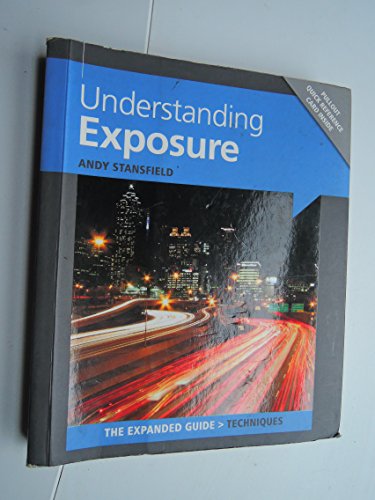
Understanding Exposure is an invaluable guide to taking better photographs using today's sophisticated digital SLR and compact digital cameras. Aimed at the novice or more experienced amateur photographer, jargon-free text explains the theory behind digital photography, how light metering affects exposure, light's relationship to color, color temperature and white balance, focal points, and the expression of mood. Aperture, depth of field, and shutter speed are also thoroughly covered, along with chapters on ISO speeds, dynamic range, use of filters, and making in-camera adjustments. Postprocessing techniques round off this invaluable guide to getting the best results from your photography.
Die Inhaltsangabe kann sich auf eine andere Ausgabe dieses Titels beziehen.
Über die Autorinnen und Autoren
Andy Stansfield is a highly experienced freelance photographer and author whose work has been published around the world in both magazines and books. He has photographed a myriad of diverse subjects from Queen Elizabeth’s 80th birthday celebrations to the wilds of Eastern Europe and Asia.
Andy Stansfield is a hugely experienced freelance photographer and author whose work has been published around the world in both magazines and books. He has photographed a myriad of diverse subjects from Queen Elizabeth's eightieth birthday celebrations to the wilds of Eastern Europe and Asia.
Auszug. © Genehmigter Nachdruck. Alle Rechte vorbehalten.
Understanding Exposure
The Expanded Guide
By Andy Stansfield, Chris GatcumAE Publications Ltd
Copyright © 2010 AE Publications Ltd
All rights reserved.
ISBN: 978-1-906672-99-7All rights reserved.
Contents
Chapter 1 Introduction, 6,
Chapter 2 Light, 30,
Chapter 3 Aperture, 56,
Chapter 4 Depth of field, 74,
Chapter 5 Shutter speed, 102,
Chapter 6 ISO speed, 116,
Chapter 7 Dynamic range, 128,
Chapter 8 Image adjustments, 152,
Glossary, 184,
Useful web sites, 189,
Index, 190,
CHAPTER 1
INTRODUCTION
EXPOSURE
Definition: The camera and lens settings that determine the amount and qualities of light falling on the medium used to record the image. Traditionally shutter speed, aperture, and ISO with film, but the digital age expands this list to include in-camera adjustments that determine how the exposure data is interpreted: color space, white balance, dynamic range, sharpness, noise, filter effects, and more.
Perhaps the first issue to clarify in this book is the difference between the terms "exposure" and "metering." Exposure is a term that describes the actual settings used to capture an image, whereas metering provides only a suggested group of settings that you are free to ignore, override, or adjust as you see fit. It is vital to remember that in-camera metering systems, which many of us rely on quite extensively, may have grown extremely sophisticated, but they are not absolutely perfect for every situation.
The second important point relates to which file format you use to record your images, provided your camera offers both RAW and JPEG options. If you want to print images directly from your memory card, for example, you will need to record images using the JPEG format and you will need to have exposed them with a fair degree of accuracy. However, if you are comfortable with adjusting images on your computer before printing (generally referred to as post-processing), you have a little more leeway with the exposure. This is especially true if you are recording your images as RAW files, as these allow you to adjust almost all of the original camera settings during post-processing, including the exposure.
The three main settings at the heart of exposure are aperture, shutter speed, and ISO. Virtually every camera offers at least one fully automatic mode in which the camera sets all three of these for you. Most will also provide a number of fully or largely automatic modes often referred to as "scene modes" that will also determine the aperture, shutter speed, and ISO automatically, but based on the subject matter of the image or the type of circumstances in which the photograph will be captured. Before we examine their relationship in greater detail, let's first look at these three settings individually.
Aperture
The word aperture means an opening through which something passes, and in this context we are talking about an opening within a camera's lens through which light passes (the mechanics of which are described more fully in Chapter 3).
The light waves project an image onto the film or sensor, with the size of the aperture controlling the amount of light that is allowed through. This obviously has an impact on the brightness of the resulting image.
If you peer into any lens from a camera that takes interchangeable lenses you will clearly see this opening, formed in the center of a number of overlapping blades. The shape of this can be (but usually isn't) a perfect circle.
When we talk about the aperture used for a particular photograph, we are really talking about the size of the opening and, in order to be precise, we refer to it numerically, as a fraction of the focal length. The number used is preceded by a lower-case letter f, sometimes italicized and followed by a slash; for example, f/8. The actual range of numbers used will be explained shortly.
Shutter speed
The shutter speed refers to the amount of time that the light waves passing through the aperture are allowed to fall on the recording medium, be it film or the sensor in a digital camera. There are several types of shutter mechanism (descriptions of which would cloud the issue at this point), so at this stage it is only necessary to appreciate that the shutter offers another mechanism for controlling light, in this case the duration that light waves are allowed to form an image on the recording medium. This is always expressed as whole minutes, whole seconds, or a fraction of a second (1/500 sec., for example).
ISO setting
The ISO setting refers to the sensitivity to light of the recording medium and is expressed numerically; ISO 200, for example. One disadvantage of film is that a constant ISO has to be applied to every frame on the roll of film, whereas with digital cameras the ISO setting can be changed for individual photographs. The acronym ISO stands for International Organization for Standardization, the body responsible for setting regulations that all manufacturers must adhere to.
Stops
A stop is the term used by photographers to describe the doubling or halving of the light received by the recording medium. This means that the term can be used in conjunction with any of the three main settings concerning light: aperture, shutter speed, or ISO. Usually we refer to 1 stop faster, meaning a halving of the light received by the recording medium, or 1 stop slower, meaning twice as much light being received. (It is important to understand that the terms faster and slower in this context do not relate only to shutter speed.)
Summary
The easiest analogy to draw when it comes to the relationship between the aperture and shutter speed is that of cooking a meal in the oven: You can opt for two hours at 150° or one hour at 300° and the outcome will be largely the same. Think of these as being the shutter speed and aperture. Continuing this analogy, you have a third factor that can also affect the outcome — the height of the oven shelf. This equates to the ISO speed. OK, so my cooking skills fall a little short of any photographic expertise I may possess, but you get the idea: the key to exposure is getting the correct balance between these three variables.
A simple way of witnessing the relationship between the shutter speed and aperture is to set your camera to Program mode. If you shift the exposure, you will see that the camera scrolls through a variety of different combinations, each of which will give the same overall result at the selected ISO speed.
Camera modes
The technological rollercoaster that has hurtled through camera development at breakneck speed throughout the last decade should have made life easier. It did, for a while, but even inexpensive compact digital cameras now offer a huge range of settings options. There is much to explore, to learn, and to experiment with these days, but most of the technology can be broken down into several topics that are outlined here and explained in greater detail later in this guide.
Primary and secondary exposure
The terms primary and secondary exposure are not standard terminology, but they have been used here to separate the adjustments made in-camera at the time of shooting from post-capture corrections.
Primary exposure settings are the ones that you will use in-camera when you capture an image. They incorporate the main settings of ISO, aperture, shutter speed, exposure compensation, exposure bracketing, Highlight Tone...
„Über diesen Titel“ kann sich auf eine andere Ausgabe dieses Titels beziehen.
Suchergebnisse für Understanding Exposure: The Expanded Guide (Expanded...

Beispielbild für diese ISBN
Understanding Exposure
Anbieter: World of Books (was SecondSale), Montgomery, IL, USA
Verkäuferbewertung 5 von 5 Sternen

Paperback. Zustand: Very Good. Focuses on photographic techniques to give you a comprehensive grounding in the subject and takes you a step further to enable you to get much more from your photography. Learn how light metering affects exposure and light's relationship to colour, colour temperature and white balance and more. Artikel-Nr. 00074847497
Gebraucht kaufen
EUR 3,19
Versand gratis
Versand innerhalb von USA
Versand innerhalb von USA
Anzahl: 2 verfügbar
Beispielbild für diese ISBN
Understanding Exposure
Anbieter: World of Books (was SecondSale), Montgomery, IL, USA
Verkäuferbewertung 5 von 5 Sternen
Zustand: Good. Item in very good condition! Textbooks may not include supplemental items i.e. CDs, access codes etc. Artikel-Nr. 00077392579
Gebraucht kaufen
EUR 3,19
Versand gratis
Versand innerhalb von USA
Versand innerhalb von USA
Anzahl: 1 verfügbar
Beispielbild für diese ISBN
Understanding Exposure
Anbieter: Better World Books, Mishawaka, IN, USA
Verkäuferbewertung 5 von 5 Sternen
Zustand: Very Good. Pages intact with possible writing/highlighting. Binding strong with minor wear. Dust jackets/supplements may not be included. Stock photo provided. Product includes identifying sticker. Better World Books: Buy Books. Do Good. Artikel-Nr. 39734364-6
Gebraucht kaufen
EUR 6,12
Versand gratis
Versand innerhalb von USA
Versand innerhalb von USA
Anzahl: 1 verfügbar
Beispielbild für diese ISBN
Understanding Exposure
Anbieter: Better World Books: West, Reno, NV, USA
Verkäuferbewertung 5 von 5 Sternen
Zustand: Very Good. Pages intact with possible writing/highlighting. Binding strong with minor wear. Dust jackets/supplements may not be included. Stock photo provided. Product includes identifying sticker. Better World Books: Buy Books. Do Good. Artikel-Nr. 39734364-6
Gebraucht kaufen
EUR 6,12
Versand gratis
Versand innerhalb von USA
Versand innerhalb von USA
Anzahl: 1 verfügbar
Beispielbild für diese ISBN
Understanding Exposure [With Pullout Quick Reference Card]
Anbieter: ThriftBooks-Dallas, Dallas, TX, USA
Verkäuferbewertung 5 von 5 Sternen
Paperback. Zustand: As New. No Jacket. Pages are clean and are not marred by notes or folds of any kind. ~ ThriftBooks: Read More, Spend Less. Artikel-Nr. G1906672997I2N00
Gebraucht kaufen
EUR 7,28
Versand gratis
Versand innerhalb von USA
Versand innerhalb von USA
Anzahl: 1 verfügbar
Beispielbild für diese ISBN
Understanding Exposure [With Pullout Quick Reference Card]
Anbieter: ThriftBooks-Dallas, Dallas, TX, USA
Verkäuferbewertung 5 von 5 Sternen
Paperback. Zustand: Very Good. No Jacket. May have limited writing in cover pages. Pages are unmarked. ~ ThriftBooks: Read More, Spend Less. Artikel-Nr. G1906672997I4N00
Gebraucht kaufen
EUR 7,28
Versand gratis
Versand innerhalb von USA
Versand innerhalb von USA
Anzahl: 1 verfügbar
Beispielbild für diese ISBN
Understanding Exposure (Expanded Guide: Techniques)
Verlag:
Ammonite Press 07/03/2011, 2011
ISBN 10: 1906672997
ISBN 13: 9781906672997
Gebraucht
Softcover
Anbieter: AwesomeBooks, Wallingford, Vereinigtes Königreich
Verkäuferbewertung 5 von 5 Sternen
Zustand: Very Good. This book is in very good condition and will be shipped within 24 hours of ordering. The cover may have some limited signs of wear but the pages are clean, intact and the spine remains undamaged. This book has clearly been well maintained and looked after thus far. Money back guarantee if you are not satisfied. See all our books here, order more than 1 book and get discounted shipping. . Artikel-Nr. 7719-9781906672997
Gebraucht kaufen
EUR 3,97
EUR 4,82 Versand
Versand von Vereinigtes Königreich nach USA
Versand von Vereinigtes Königreich nach USA
Anzahl: 2 verfügbar
Beispielbild für diese ISBN
Understanding Exposure (Expanded Guide: Techniques)
Anbieter: WorldofBooks, Goring-By-Sea, WS, Vereinigtes Königreich
Verkäuferbewertung 5 von 5 Sternen
Paperback. Zustand: Good. The book has been read but remains in clean condition. All pages are intact and the cover is intact. Some minor wear to the spine. Artikel-Nr. GOR006564813
Gebraucht kaufen
EUR 2,30
EUR 6,56 Versand
Versand von Vereinigtes Königreich nach USA
Versand von Vereinigtes Königreich nach USA
Anzahl: 1 verfügbar
Beispielbild für diese ISBN
Understanding Exposure (Expanded Guide: Techniques)
Anbieter: WorldofBooks, Goring-By-Sea, WS, Vereinigtes Königreich
Verkäuferbewertung 5 von 5 Sternen
Paperback. Zustand: Very Good. The book has been read, but is in excellent condition. Pages are intact and not marred by notes or highlighting. The spine remains undamaged. Artikel-Nr. GOR004868972
Gebraucht kaufen
EUR 2,30
EUR 6,56 Versand
Versand von Vereinigtes Königreich nach USA
Versand von Vereinigtes Königreich nach USA
Anzahl: 4 verfügbar
Foto des Verkäufers
Understanding Exposure
Anbieter: MusicMagpie, Stockport, Vereinigtes Königreich
Verkäuferbewertung 5 von 5 Sternen
Zustand: Very Good. 1785922950. 8/5/2026 9:42:30 AM. Artikel-Nr. U9781906672997
Gebraucht kaufen
EUR 3,49
EUR 6,43 Versand
Versand von Vereinigtes Königreich nach USA
Versand von Vereinigtes Königreich nach USA
Anzahl: 1 verfügbar