
Verwandte Artikel zu Middle Eastern Cookery
Inhaltsangabe
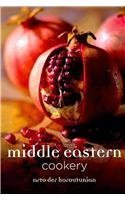
A comprehensive collection of Middle Eastern recipes, spanning from Georgia to Armenia, accompanied by cultural anecdotes and historical insights, makes it a revered culinary resource.All Arto der Haroutunian’s twelve cookbooks written in the 1980s became classics; it was his belief that the rich culinary tradition of the Middle East is the main source of many of our Western cuisines and his books were intended as an introduction to that tradition. His Middle Eastern Cookery is regarded as the seminal work on the subject but it has been out of print for twenty years with second hand copies on offer for over four hundred pounds, such was its scarcity and popularity. At last here in a new redesigned edition is the Middle Eastern cookbook that everyone wants. It is a book containing every possible recipe from the Middle East –there are dishes from the plains of Georgia, from Afganistan, Egypt, Syria, Lebanon, Israel, Persia and Armenia. It is written in the same wonderful style as his other classic cookbooks; peppered with anecdotes on life, food and culture. He guides us first round the mezze table and then leads us on to recipes for soups, salads, savouries, pilaffs, kebabs, casseroles and grills that make the best use of meat, fish and poultry. He teaches the cook about the different spices that are favored by different countries – mint for Armenia, cumin for Iran and with each recipe comes a piece of history or a fable which makes this a book to read as well as an unequaled collection of recipes. Arto der Haroutunian was born in Aleppo, Syria in 1940 and grew up in the Levant, but came to England as a child and remained here for most of his life. In 1970, in partnership with his brother, he opened the first Armenian restaurant in Manchester which eventually became a successful chain of six restaurants and two hotels. He died in 1987 at the untimely age of 47 but is survived by his wife and son who still live in Manchester. As well as his passion for cooking, Arto was a painter of international reputation, a composer and translator of Turkish, Arab, Persian and Armenian authors. He was a true polymath.
Die Inhaltsangabe kann sich auf eine andere Ausgabe dieses Titels beziehen.
Auszug. © Genehmigter Nachdruck. Alle Rechte vorbehalten.
Middle Eastern Cookery
By Arto der HaroutunianGrub Street
Copyright © 2008 Arto der Haroutunian
All rights reserved.
ISBN: 978-1-904010-81-4All rights reserved.
Contents
Preface,
Introduction,
Mezzeh,
Churba — soups,
Salads,
Eggah and kookoo — egg dishes,
Pastas, pies and boreks,
Kibbehs and kuftas,
Yoghurt dishes,
Ganachi — cooked vegetables,
Dolmas — stuffed vegetables,
Pilavs,
Kebabs,
Fish dishes,
Meat dishes,
Poultry and game,
Firin kebabs and khoreshts,
Sauces,
Khubz — bread,
Torshi — pickles,
Desserts and sweet things,
Cakes and biscuits,
Sweets,
Jams and preserves,
Ice cream,
Khumichk — drinks,
Glossary,
Bibliography,
Footnote,
CHAPTER 1
introduction
Geography, history and the people
Ours is the world and all who dwell upon it, and when we assault, we assault with power. When kings deal with their peoples unjustly we refuse to allow injustice among us. We are called oppressors; we never oppressed yet, but shortly we shall be starting oppression! When any body of ours reaches his weaning, the tyrants fall down before him prostrating. We have filled the land till it's too strait for us and we are filling the seas back with our vessels. So let no man act foolishly against us, or we shall exceed the folly of the foolhardiest.
Amr ibnel Kulthum — pre-Islamic poet of the sixth century
The greatest single unifying factor in the Middle East is the climate which, throughout the millennia, has imposed a special way of life and has been the mainspring of all social, economic and cultural diversifications. Within the Middle East are the great rivers Nile, Tigris, Euphrates, Arax and Kura. The Nile is fed by the Blue Nile (rising in the Ethiopian Highlands) and the White Nile (rising in the Central African Highlands). The waters of the rivers Tigris and Euphrates mingle some sixty miles before reaching the Persian Gulf. Their junction creates the Shatt-al-Arab waterway which forms the boundary between Iraq and Iran and has been a bone of contention over the centuries. Both rivers rise in the Armenian Highlands and zig-zag their way to the desert lands of Syria and Iraq. The Tigris (the Arrow), so named because of the swiftness of its waters, also receives several tributaries from the Zagros mountains of Iran. The plain here is threaded by numerous tributaries fed from one river to the other creating naturally formed irrigation schemes.
The Arax and Kura rivers rise in the Caucasian Highlands and flow into the Caspian Sea. The Arax borders the Armenian SSR and Turkey, whilst the Kura passes through the Georgian and Azerbaijanian SSR. The waters of the Arax irrigate the rich Ararat plateau.
Other important rivers are the Kizel Irmak (Turkey), Sefid and Kashka (Iran) and the Karun which waters south west Iran. Whilst the smaller rivers Orontes, Litani and the Jordan irrigate Syria, Lebanon, Israel and Trans-Jordan.
With the exception of the Caspian Littoral of Iran and Azerbaijan, 'Pontic' Turkey, and the Caucasian coastline of the Black Sea, rainfall is not only inadequate, but limited to spring and winter. The entire Mediterranean, therefore, stretching from Libya and Egypt, up the Levant to Turkey receives rainfall similar to California and south western Australia.
In the summer, drought is the general rule. Ninety per cent of the entire region is arid desert or semi-desert and whatever forests it once contained have long since vanished. Only five to six per cent of the Middle East is cultivated today and one-fifth of that needs water desperately.
Water is the most important human factor throughout the region. It has been deified throughout the ages and myths have been created around it. To preserve this scant and precious commodity the Ancient Sumerians, Assyrians, Babylonians, Hittites, Urartians and Romans built cisterns and viaducts, the remains of which can still be traced throughout Iraq, Syria and Turkey.
The Persians built qanats — underground conduits — to bring water for hundreds of miles from the mountains to the plains. In parts of Arabia water is so scarce that, rather than waste it, Bedouin women wash their hair in camel urine. The pious Muslim substitutes sand for water as he ritually 'cleanses' himself during prayer time. In ancient Armenia and Iran there existed (and still does) the Water Festival of 'Vartavar'— Burning of Roses. On this day people drench each other with water and the ecclesiastical procession throws rosewater at the congregation. The aim is to invoke the Gods for rain.
Today extensive work is being done to 'green' the land. Huge irrigation schemes such as the building of the Aswan Dam in Egypt, the Euphrates Dam in Syria and Ataturk Dam in Turkey have been established and already the effects of intensive agricultural techniques are seen in a number of highly productive farming areas such as western Lebanon, the Aleppo region of Syria, the Ararat valley in Armenia, the oasis of Damascus and, perhaps the most spectacular of all, the Jewish settlements of Israel, particularly in the Negev.
The position that the Middle East occupies in history is unique for it was here that man first began to cultivate food-plants and to domesticate wild animals. Wheat was cultivated in Jarmo (Kurdistan) 9000 years ago. Gradually peas, lentils and other crops were added to the 'original cuisine' of the inhabitants. With the full adoption of crop and stock raising man gave up nomadism and settlements grew into villages and then towns. As the population increased in the mountain regions people moved down to the plateaux and plains of the Tigris and Euphrates. There they were confronted with hot, semi-arid earth which they had to irrigate with the abundant waters of the two great rivers. The same process undoubtedly occurred around the Nile delta and further afield in the Ganges Basin of India. Towns produced social order, city states, nations and empires with which came literature, law and order.
By about 5000 BC the Egyptians were making wine and bread, rearing animals and cultivating crops. The produce grown at this time was extensive: wheat, barley, spelt, millet, legumes, root crops, melons, olives, grapes, figs and dates and, at a slightly later date, apples, peaches, pomegranates and apricots.
Around 3000 BC the Sumerians built their irrigation canals and city states and evolved a society divided into technological–social classes — nobility, priests, traders, farmers and artisans — divisions that still hold good for most Middle Eastern people today. The Sumerians, a non-Semitic people, were soon joined in Mesopotamia by Semitic tribes coming from Arabia and, in time, a new, mixed people were formed. Further north along the middle of the Euphrates several Semitic races intermingled and created city states. In 2350 BC the entire region was united under the leadership of Sargon, and his empire, in time, was replaced by that of the Amorites (1688 BC) whose most distinguished member was Hammurabi the law giver. The Amorites fell under the rising power of the Indo-European Hittites and Hurrians from the north — the ancestors of the Armenians and most modern Turks. By 1350 BC the Hittites had occupied Syria and wrested Palestine from Egypt and had become the mightiest power in western Asia.
Meanwhile, Egypt had developed its dynastic and political institutions and created one of the seven wonders of the ancient world — the...
„Über diesen Titel“ kann sich auf eine andere Ausgabe dieses Titels beziehen.
Suchergebnisse für Middle Eastern Cookery

Beispielbild für diese ISBN
Middle Eastern Cookery
Anbieter: AwesomeBooks, Wallingford, Vereinigtes Königreich
Verkäuferbewertung 5 von 5 Sternen

Hardcover. Zustand: Very Good. Middle Eastern Cookery This book is in very good condition and will be shipped within 24 hours of ordering. The cover may have some limited signs of wear but the pages are clean, intact and the spine remains undamaged. This book has clearly been well maintained and looked after thus far. Money back guarantee if you are not satisfied. See all our books here, order more than 1 book and get discounted shipping. Artikel-Nr. 7719-9781904010814
Gebraucht kaufen
EUR 4,23
EUR 4,80 Versand
Versand von Vereinigtes Königreich nach USA
Versand von Vereinigtes Königreich nach USA
Anzahl: 2 verfügbar
Foto des Verkäufers
Middle Eastern Cookery
Anbieter: MusicMagpie, Stockport, Vereinigtes Königreich
Verkäuferbewertung 5 von 5 Sternen
Zustand: Very Good. 1790253340. 9/24/2026 12:35:40 PM. Artikel-Nr. U9781904010814
Gebraucht kaufen
EUR 5,78
EUR 6,40 Versand
Versand von Vereinigtes Königreich nach USA
Versand von Vereinigtes Königreich nach USA
Anzahl: 1 verfügbar
Beispielbild für diese ISBN
Middle Eastern Cookery
Anbieter: Better World Books Ltd, Dunfermline, Vereinigtes Königreich
Verkäuferbewertung 5 von 5 Sternen
Zustand: Very Good. Former library copy. Pages intact with possible writing/highlighting. Binding strong with minor wear. Dust jackets/supplements may not be included. Includes library markings. Stock photo provided. Product includes identifying sticker. Better World Books: Buy Books. Do Good. Artikel-Nr. GRP88458990
Gebraucht kaufen
EUR 6,69
EUR 5,83 Versand
Versand von Vereinigtes Königreich nach USA
Versand von Vereinigtes Königreich nach USA
Anzahl: 1 verfügbar
Beispielbild für diese ISBN
Middle Eastern Cookery
Anbieter: WorldofBooks, Goring-By-Sea, WS, Vereinigtes Königreich
Verkäuferbewertung 5 von 5 Sternen
Hardback. Zustand: Very Good. The book has been read, but is in excellent condition. Pages are intact and not marred by notes or highlighting. The spine remains undamaged. Artikel-Nr. GOR003432837
Gebraucht kaufen
EUR 7,34
EUR 6,53 Versand
Versand von Vereinigtes Königreich nach USA
Versand von Vereinigtes Königreich nach USA
Anzahl: 4 verfügbar
Foto des Verkäufers
Middle Eastern Cookery
Anbieter: WeBuyBooks, Rossendale, LANCS, Vereinigtes Königreich
Verkäuferbewertung 5 von 5 Sternen
hardcover. Zustand: Very Good. Most items will be dispatched the same or the next working day. A copy that has been read, but is in excellent condition. Pages are intact and not marred by notes or highlighting. The spine remains undamaged. Artikel-Nr. rev3136009209
Gebraucht kaufen
EUR 2,14
EUR 11,85 Versand
Versand von Vereinigtes Königreich nach USA
Versand von Vereinigtes Königreich nach USA
Anzahl: 1 verfügbar
Beispielbild für diese ISBN
Middle Eastern Cookery
Anbieter: Sell Books, Elland, YORKS, Vereinigtes Königreich
Verkäuferbewertung 5 von 5 Sternen
hardcover. Zustand: Acceptable. Please see the condition note after this for details, if this is missing please consider Acceptable to mean poor quality that could include major staining, water damage, writing, missing dustjacket, etc etc. Our books are dispatched from a Yorkshire former cotton mill. We list via barcode/ISBN so please note that the images are stock images and may not be the exact copy you receive, furthermore the details about edition and year might not be accurate as many publishers reuse the same ISBN for multiple editions and as we simply scan a barcode or enter an ISBN we do not check the validity of the edition data when listing. If you're looking for an exact edition please don't order (at least not without checking with us first, although we don't always have time to check). We aim to dispatch prompty, the service used will depend on order value and book size. We can ship to most countries, see our shipping policies. Payment is via Abe only. Artikel-Nr. P-BGF00437-RAG-20240213-A
Gebraucht kaufen
EUR 1,59
EUR 14,16 Versand
Versand von Vereinigtes Königreich nach USA
Versand von Vereinigtes Königreich nach USA
Anzahl: 1 verfügbar
Beispielbild für diese ISBN
Middle Eastern Cookery
Anbieter: Bahamut Media, Reading, Vereinigtes Königreich
Verkäuferbewertung 4 von 5 Sternen

Hardcover. Zustand: Very Good. This book is in very good condition and will be shipped within 24 hours of ordering. The cover may have some limited signs of wear but the pages are clean, intact and the spine remains undamaged. This book has clearly been well maintained and looked after thus far. Money back guarantee if you are not satisfied. See all our books here, order more than 1 book and get discounted shipping. Artikel-Nr. 6545-9781904010814
Gebraucht kaufen
EUR 16,09
EUR 8,14 Versand
Versand von Vereinigtes Königreich nach USA
Versand von Vereinigtes Königreich nach USA
Anzahl: 2 verfügbar