
Verwandte Artikel zu How to Make and Use Compost: The Ultimate Guide
Inhaltsangabe
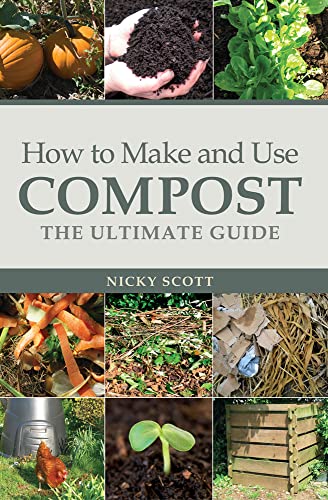
Composting is easy, fun, saves you money and helps you to grow lovely plants. Whether you live in a flat with a balcony or have a family and garden that generate large amounts of food and green waste, this book shows you how to compost everything that can be composted – at home, work or school, and in spaces big or small. It covers:
• creating the right mix for successful garden compost
• how to compost your food waste safely
• the full range of composting systems, from plastic `daleks’ to large-scale units, including prices and suppliers
• composting with a wormery
• making liquid feeds and your own seed and potting compost
• composting in schools, with advice on getting a school scheme started.
How to Make and Use Compost features a comprehensive A–Z guide, which includes what you can and can’t compost, concepts and techniques, and common problems and solutions.
Die Inhaltsangabe kann sich auf eine andere Ausgabe dieses Titels beziehen.
Über die Autorin bzw. den Autor
Nicky Scott is the coordinator of the Devon Community Composting Network; he helps set up community composting groups and advises schools and businesses on composting kitchen waste. He was involved in the development of the `Scotty’s Hot Box’ and the `Ridan’ composter, both now widely used for composting food waste. Nicky is the author of Composting for All and Composting: an easy household guide.
Auszug. © Genehmigter Nachdruck. Alle Rechte vorbehalten.
How to Make and Use Compost
The Ultimate Guide
By Nicky ScottGreen Books Ltd
Copyright © 2010 Nicky Scott
All rights reserved.
ISBN: 978-1-900322-59-1All rights reserved.
Contents
Introduction,
PART ONE,
1 Why make compost?,
2 How does it work?,
3 Making successful compost,
4 Choosing the right composting system,
5 Composting with worms,
6 Using your compost,
7 Community composting,
PART TWO,
8 A–Z Guide,
PART THREE,
9 Composting food waste on a large scale,
10 Composting in schools,
Resources,
Index,
CHAPTER 1
WHY MAKE COMPOST?
"Why would you want to deny the Earth your cauliflower stalk?" – Satish Kumar
At the end of a meal, many leftovers go straight into the bin along with any peelings, etc. from preparing the food. We currently throw away a third of the food we buy, but the tide is turning and more and more people want to grow their own food in healthy soil, and reduce their waste, which is why making compost is so important.
Whatever type of soil you have, compost will improve it. I've heard people talk about how compost is only a 'soil conditioner', as though somehow this was not really important. I think they mean that compost does not add much in the way of nutrients to the soil, but this is not the point. Soil conditioning really means adding humus to the soil. Humus is stable organic matter in the soil and it acts like 'glue', holding on to nutrients and water. In effect humus adds life back to the soil: doing this is the most important thing that we can do for the soil and it's ridiculously easy.
Compost has some nutrient value too, mostly held by the microbes that have proliferated during the composting process. The following are just some of the benefits of adding compost to your soil.
Healthy soil
Compost adds life in the form of microorganisms
Using compost on your soil will dramatically increase the amount of life in that soil – both life that is visible to the naked eye and, more importantly, life that can be seen only through a microscope. The addition of compost builds a healthy soil and so boosts the microbial activity, which provides food for hundreds of thousands of different species of fungi, bacteria and other organisms; these microorganisms are also food for a whole range of other organisms, which in turn are fed off by predators. What we can see when we look at compost are the creatures, mini-beasts on the macro scale; you will need a magnifying glass to see the very small ones, but many are obvious and well known to us. See 'More wildlife', page 18, for more on this.
Crucially, this microscopic world is cycling nutrients from the compost materials into a form that the plants in our gardens can easily assimilate, and holding them in the soil until the plants need them. Of all the soil organisms the worm is the one that we all recognise as invaluable for creating a healthy soil, and it does indeed possess almost miraculous powers – both the compost-dwelling species and the larger soil dwellers – but in fact it is the whole complex web of life in the soil that is kept vibrant by regular additions of compost.
Compost changes the physical structure of the soil
The humus that remains when compost has been further broken down in the soil coats the soil particles and creates the crumb structure that allows the exchange of gases and liquids. So in sandy soils compost increases not only the water-holding capacity but also the nutrient-holding capacity of the soil. In
„Über diesen Titel“ kann sich auf eine andere Ausgabe dieses Titels beziehen.
Suchergebnisse für How to Make and Use Compost: The Ultimate Guide

Beispielbild für diese ISBN
How to Make and Use Compost: The Ultimate Guide
Anbieter: ThriftBooks-Atlanta, AUSTELL, GA, USA
Verkäuferbewertung 5 von 5 Sternen

Paperback. Zustand: Good. No Jacket. Former library book; Pages can have notes/highlighting. Spine may show signs of wear. ~ ThriftBooks: Read More, Spend Less. Artikel-Nr. G1900322595I3N10
Gebraucht kaufen
EUR 10,35
Versand gratis
Versand innerhalb von USA
Versand innerhalb von USA
Anzahl: 1 verfügbar
Beispielbild für diese ISBN
How to Make and Use Compost: The Ultimate Guide
Anbieter: ThriftBooks-Dallas, Dallas, TX, USA
Verkäuferbewertung 5 von 5 Sternen
Paperback. Zustand: Good. No Jacket. Former library book; Pages can have notes/highlighting. Spine may show signs of wear. ~ ThriftBooks: Read More, Spend Less. Artikel-Nr. G1900322595I3N10
Gebraucht kaufen
EUR 10,35
Versand gratis
Versand innerhalb von USA
Versand innerhalb von USA
Anzahl: 1 verfügbar
Beispielbild für diese ISBN
How to Make and Use Compost: The Ultimate Guide
Anbieter: ThriftBooks-Dallas, Dallas, TX, USA
Verkäuferbewertung 5 von 5 Sternen
Paperback. Zustand: Very Good. No Jacket. May have limited writing in cover pages. Pages are unmarked. ~ ThriftBooks: Read More, Spend Less. Artikel-Nr. G1900322595I4N00
Gebraucht kaufen
EUR 10,35
Versand gratis
Versand innerhalb von USA
Versand innerhalb von USA
Anzahl: 1 verfügbar
Beispielbild für diese ISBN
How to Make and Use Compost: The Ultimate Guide
Anbieter: ThriftBooks-Dallas, Dallas, TX, USA
Verkäuferbewertung 5 von 5 Sternen
Paperback. Zustand: Fair. No Jacket. Readable copy. Pages may have considerable notes/highlighting. ~ ThriftBooks: Read More, Spend Less. Artikel-Nr. G1900322595I5N00
Gebraucht kaufen
EUR 10,35
Versand gratis
Versand innerhalb von USA
Versand innerhalb von USA
Anzahl: 1 verfügbar
Beispielbild für diese ISBN
How to Make and Use Compost: The Ultimate Guide
Anbieter: WorldofBooks, Goring-By-Sea, WS, Vereinigtes Königreich
Verkäuferbewertung 5 von 5 Sternen
Paperback. Zustand: Very Good. The book has been read, but is in excellent condition. Pages are intact and not marred by notes or highlighting. The spine remains undamaged. Artikel-Nr. GOR003892361
Gebraucht kaufen
EUR 6,62
EUR 6,62 Versand
Versand von Vereinigtes Königreich nach USA
Versand von Vereinigtes Königreich nach USA
Anzahl: 1 verfügbar
Foto des Verkäufers
How to Make and Use Compost: The Ultimate Guide
Anbieter: WeBuyBooks, Rossendale, LANCS, Vereinigtes Königreich
Verkäuferbewertung 5 von 5 Sternen
paperback. Zustand: Very Good. Most items will be dispatched the same or the next working day. A copy that has been read, but is in excellent condition. Pages are intact and not marred by notes or highlighting. The spine remains undamaged. Artikel-Nr. rev4254489745
Gebraucht kaufen
EUR 6,84
EUR 7,34 Versand
Versand von Vereinigtes Königreich nach USA
Versand von Vereinigtes Königreich nach USA
Anzahl: 1 verfügbar
Foto des Verkäufers
How to Make and Use Compost: The Ultimate Guide
Anbieter: WeBuyBooks, Rossendale, LANCS, Vereinigtes Königreich
Verkäuferbewertung 5 von 5 Sternen
paperback. Zustand: Good. Most items will be dispatched the same or the next working day. A copy that has been read but remains in clean condition. All of the pages are intact and the cover is intact and the spine may show signs of wear. The book may have minor markings which are not specifically mentioned. Ex library copy with usual stamps & stickers. Artikel-Nr. rev2525434208
Gebraucht kaufen
EUR 6,84
EUR 7,34 Versand
Versand von Vereinigtes Königreich nach USA
Versand von Vereinigtes Königreich nach USA
Anzahl: 1 verfügbar
Foto des Verkäufers
How to make and use compost: the ultimate guide
Verlag:
Green Books, 2009
ISBN 10: 1900322595
ISBN 13: 9781900322591
Gebraucht
Softcover
Erstausgabe
Anbieter: Cotswold Internet Books, Cheltenham, Vereinigtes Königreich
Verkäuferbewertung 5 von 5 Sternen
Zustand: Used - Very Good. VG paperback. First Edition. 1st edition, 2009. A clean, bright copy in firm binding. Artikel-Nr. BOOKS314753I
Gebraucht kaufen
EUR 8,52
EUR 16,54 Versand
Versand von Vereinigtes Königreich nach USA
Versand von Vereinigtes Königreich nach USA
Anzahl: 1 verfügbar
Beispielbild für diese ISBN
How to Make and Use Compost: The Ultimate Guide
Anbieter: Anybook.com, Lincoln, Vereinigtes Königreich
Verkäuferbewertung 5 von 5 Sternen
Zustand: Fair. This is an ex-library book and may have the usual library/used-book markings inside.This book has soft covers. In fair condition, suitable as a study copy. Please note the Image in this listing is a stock photo and may not match the covers of the actual item,500grams, ISBN:9781900322591. Artikel-Nr. 3704276
Gebraucht kaufen
EUR 18,66
EUR 15,41 Versand
Versand von Vereinigtes Königreich nach USA
Versand von Vereinigtes Königreich nach USA
Anzahl: 1 verfügbar