
Verwandte Artikel zu Sporting Excellence: Optimising Sport Performance Using...
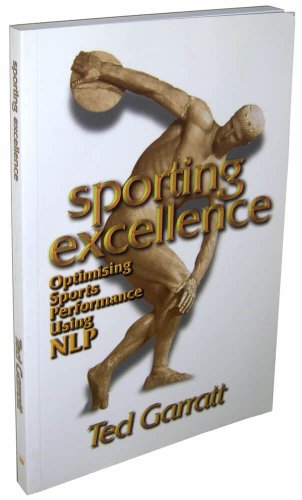
Sporting Excellence: Optimising Sport Performance Using NLP: Optimising Sports Performance Using Nlp - Softcover
Inhaltsangabe
This immensely practical and progressive book introduces new and revolutionary ideas to both professionals and serious amateurs, while also being an ideal tool for the occasional player or beginner. It provides a practical plan for the focused evolution of performance that includes:
- warming up
- practising
- mental rehearsal
- psyching up
- becoming more relaxed
- focusing attention.
The result is a thorough programme of training that comprehensively covers physical preparation, and introduces a fresh approach to mental preparation. It will appeal to all ambitious sportspeople who wish to enhance their performance.
Die Inhaltsangabe kann sich auf eine andere Ausgabe dieses Titels beziehen.
Über die Autorin bzw. den Autor
Ted Garratt founded the organisation Target Resources, a human resources consultancy specialising in training and development. He is involved in all types of organisations and sectors, and specialises in facilitating personal, team and organisational change.
Auszug. © Genehmigter Nachdruck. Alle Rechte vorbehalten.
(Taken form the Preface): Over the last thirty years the focus of attention in sport has shifted dramatically. The traditional ways of building up to a major event, the immediate preparation beforehand, the attitude displayed during the event, and the analysis carried out afterwards, have altered beyond all recognition. It is no longer enough to simply turn up, compete and go home again.
During the same period a similar shift has occurred in most other walks of life: in business, where the whole approach is more rigorous; in education, when people are preparing for examinations; even in politics, where expediency and muddling through become harder to maintain.
So what has contributed towards these shifts? Undoubtedly the pace of life is quicker and the stakes higher. The consequences of failure are more dramatic, careers are made and broken more quickly, and burnout takes a higher toll, and at a younger age. The media attention, focused both on the person and on the performance, means that the effects of success and failure are given greater meaning and substance, creating even more pressure to get things right more quickly.
Developments in the field broadly labelled as sports psychology have mirrored this evolution. Virtually every individual or team has their own coach or fitness guru, coupled with an individual training and development programme. Great attention is paid to diet, relaxation, fitness, mental preparation and many other aspects in order to achieve a greater possibility of success.
Corresponding with these developments has been the advent of NLP which stands for Neuro-Linguistic Programming. NLP was created by Richard Bandler (a mathematician and student of psychology) and John Grinder (a linguist). Their choice of name has probably created more confusion and debate than they ever intended, but each aspect of this name does have particular importance.
Neuro refers to how the brain processes actually work.
Linguistic refers to the way our experiences are represented by the use of language, both externally in communication with others and internally in self-talk.
Programming refers to the specific patterns and programmes of behaviour and thought that we follow, to produce specific results.
We all use well-established strategies and patterns of behaviour in order to live our lives effectively, e.g. when driving a car, carrying out home improvements or writing a report. Most of these strategies and patterns are unconscious, i.e. we do them automatically, without thinking. It is very hard, for example, to consciously consider and act on every single thought and action required to drive a car (think back to how difficult this was when you were first learning to drive).
It would not be possible to live our lives if we had to consciously think about every thought and action we undertake. It is the patterns of thought and behaviour that happen unconsciously that are encompassed by the word 'programming'.
From a sportsperson's point of view, these patterns are of enormous importance, because they determine not only the physical actions we carry out, but also the thought processes that lie behind our actions. These thought processes may be beneficial, and may lead us to great sporting victories, but they may also be negative and may inhibit our performance.
NLP allows us to get inside our minds, analyse these programmes and then change them. Obviously, in sport, these changes can be measured and monitored.
NLP also allows us to analyse the strategies both conscious and unconscious that successful people use, and to adopt aspects of these for ourselves.
In a sporting context this does not mean that every footballer can be an Alan Shearer or every cricketer a Brian Lara. But it does mean that by using some of their key strategies, all of us can substantially improve our game.
To date NLP has been used mainly in the business, self-development and therapy fields. However, aspects of it have been included already within sport, in areas such as mental preparation, dealing with limiting beliefs and building on successful performances.
This book is intended to help sportspeople of all descriptions, and at all levels, without any prior knowledge or training in NLP, to have fun playing with the techniques and substantially improve their, and their team's, performance.
„Über diesen Titel“ kann sich auf eine andere Ausgabe dieses Titels beziehen.
Suchergebnisse für Sporting Excellence: Optimising Sport Performance Using...

Beispielbild für diese ISBN
Sporting Excellence: Optimisin
Anbieter: World of Books (was SecondSale), Montgomery, IL, USA
Verkäuferbewertung 5 von 5 Sternen

Zustand: Good. Item in good condition. Textbooks may not include supplemental items i.e. CDs, access codes etc. Artikel-Nr. 00090721441
Gebraucht kaufen
EUR 3,14
Versand gratis
Versand innerhalb von USA
Versand innerhalb von USA
Anzahl: 1 verfügbar
Beispielbild für diese ISBN
Sporting Excellence: Optimising Sport Performance Using NLP: Optimising Sports Performance Using NLP
Anbieter: AwesomeBooks, Wallingford, Vereinigtes Königreich
Verkäuferbewertung 5 von 5 Sternen
Paperback. Zustand: Very Good. Sporting Excellence: Optimising Sport Performance Using NLP: Optimising Sports Performance Using NLP This book is in very good condition and will be shipped within 24 hours of ordering. The cover may have some limited signs of wear but the pages are clean, intact and the spine remains undamaged. This book has clearly been well maintained and looked after thus far. Money back guarantee if you are not satisfied. See all our books here, order more than 1 book and get discounted shipping. Artikel-Nr. 7719-9781899836260
Gebraucht kaufen
EUR 3,18
EUR 4,80 Versand
Versand von Vereinigtes Königreich nach USA
Versand von Vereinigtes Königreich nach USA
Anzahl: 2 verfügbar
Beispielbild für diese ISBN
Sporting Excellence : Optimising Sports Performance Using Nlp
Verlag:
Crown House Publishing LLC, 1998
ISBN 10: 1899836268
ISBN 13: 9781899836260
Gebraucht
Softcover
Anbieter: Better World Books Ltd, Dunfermline, Vereinigtes Königreich
Verkäuferbewertung 5 von 5 Sternen
Zustand: Very Good. Former library copy. Pages intact with possible writing/highlighting. Binding strong with minor wear. Dust jackets/supplements may not be included. Includes library markings. Stock photo provided. Product includes identifying sticker. Better World Books: Buy Books. Do Good. Artikel-Nr. GRP88241579
Gebraucht kaufen
EUR 5,63
EUR 5,83 Versand
Versand von Vereinigtes Königreich nach USA
Versand von Vereinigtes Königreich nach USA
Anzahl: 1 verfügbar
Beispielbild für diese ISBN
Sporting Excellence: Optimising Sport Performance Using NLP: Optimising Sports Performance Using NLP
Anbieter: Bahamut Media, Reading, Vereinigtes Königreich
Verkäuferbewertung 5 von 5 Sternen
Paperback. Zustand: Very Good. This book is in very good condition and will be shipped within 24 hours of ordering. The cover may have some limited signs of wear but the pages are clean, intact and the spine remains undamaged. This book has clearly been well maintained and looked after thus far. Money back guarantee if you are not satisfied. See all our books here, order more than 1 book and get discounted shipping. Artikel-Nr. 6545-9781899836260
Gebraucht kaufen
EUR 5,57
EUR 8,14 Versand
Versand von Vereinigtes Königreich nach USA
Versand von Vereinigtes Königreich nach USA
Anzahl: 2 verfügbar
Beispielbild für diese ISBN
Sporting Excellence: Optimising Sport Performance Using NLP
Anbieter: Anybook.com, Lincoln, Vereinigtes Königreich
Verkäuferbewertung 5 von 5 Sternen
Zustand: Good. This is an ex-library book and may have the usual library/used-book markings inside.This book has soft covers. Clean from markings. In good all round condition. Please note the Image in this listing is a stock photo and may not match the covers of the actual item,400grams, ISBN:9781899836260. Artikel-Nr. 9721296
Gebraucht kaufen
EUR 3,62
EUR 15,86 Versand
Versand von Vereinigtes Königreich nach USA
Versand von Vereinigtes Königreich nach USA
Anzahl: 1 verfügbar
Beispielbild für diese ISBN
Sporting Excellence: Optimising Sports Performance Using Nlp
Anbieter: Revaluation Books, Exeter, Vereinigtes Königreich
Verkäuferbewertung 5 von 5 Sternen
Paperback. Zustand: Brand New. 208 pages. 9.25x6.25x0.50 inches. In Stock. Artikel-Nr. zk1899836268
Neu kaufen
EUR 26,18
EUR 11,66 Versand
Versand von Vereinigtes Königreich nach USA
Versand von Vereinigtes Königreich nach USA
Anzahl: 1 verfügbar