
Verwandte Artikel zu A Reader in Animation Studies
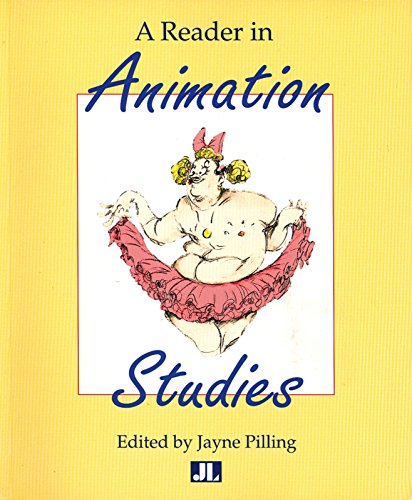
Inhaltsangabe
Discusses animation from aesthetic, cultural, and gender studies perspectives.
Die Inhaltsangabe kann sich auf eine andere Ausgabe dieses Titels beziehen.
Über die Autorinnen und Autoren
Jane Pilling, freelance film programmer, journalist, and translator, also writes and teaches on film and animation, currently at the Royal College of Art in London. She recently made a six-part television series on European animation for UK television.
Jane Pilling, freelance film programmer, journalist, and translator, also writes and teaches on film and animation, currently at the Royal College of Art in London. She recently made a six-part television series on European animation for UK television.
Auszug. © Genehmigter Nachdruck. Alle Rechte vorbehalten.
A Reader in Animation Studies
By Jayne PillingJohn Libbey Publishing Ltd
Copyright © 2011 John Libbey Publishing Ltd
All rights reserved.
ISBN: 978-1-86462-000-9All rights reserved.
Contents
The Society for Animation Studies: A brief history Harvey Deneroff, vii,
Introduction Jayne Pilling, ix,
New technologies,
1 What is animation and who needs to know? An essay on definitions Philip Kelly Denslow, 1,
2 'Reality' effects in computer animation Lev Manovich, 5,
3 Second-order realism and post-modern aesthetics in computer animation Andy Darley, 16,
Text and context: Analyses of individual films,
4 The Quay brothers' The Epic of Gilgamesh and the 'metaphysics of obscenity' Steve Weiner, 25,
5 Narrative strategies for resistance and protest in Eastern European animation William Moritz, 38,
6 Putting themselves in the pictures: Images of women in the work of Joanna Quinn, Candy Guard and Alison de Vere Sandra Law, 48,
7 An analysis of Susan Pitt's Asparagus and Joanna Priestley's All My Relations Sharon Couzin, 71,
8 Clay animation comes out of the inkwell: The Fleischer brothers and clay animation Michael Frierson, 82,
9 Bartosch's The Idea William Moritz, 93,
10 Norman McLaren and Jules Engel: Post-modernists William Moritz, 104,
11 Disney, Warner Bros. and Japanese animation Luca Raffaelli, 112,
Contemporary cartoons and cultural studies,
12 The thief of Buena Vista: Disney's Aladdin and Orientalism Leslie Felperin, 137,
13 Animatophilia, cultural production and corporate interests: The case of Ren & Stimpy Mark Langer, 143,
Theoretical approaches,
14 Francis Bacon and Walt Disney revisited Simon Pummell, 163,
15 Body consciousness in the films of Jan Svankmajer Paul Wells, 177,
16 Eisenstein and Stokes on Disney: Film animation and omnipotence Michael O' Pray, 195,
17 Towards a post-modern animated discourse: Bakhtin, intertextuality and the cartoon carnival Terrance R. Lindvall and J. Matthew Melton, 203,
(Rewriting) history,
18 Restoring the aesthetics of early abstract films William Moritz, 221,
19 Resistance and subversion in animated films of the Nazi era: The case of Hans Fischerkoesen William Moritz, 228,
20 European influences on early Disney feature films Robin Allan, 241,
21 Norm Ferguson and the Latin American films of Walt Disney F.B. Kaufman, 261,
Notes on the contributors, 269,
List of SAS Conference papers – 1989 to 1996, 271,
CHAPTER 1
What is animation and who needs to know?
An essay on definitions
Philip Kelly Denslow
There are many definitions of animation. The most obvious source of one, the Webster dictionary, says animation is:
a: a motion picture made by photographing successive positions of inanimate objects (as puppets or mechanical parts), b: Animated Cartoon, a motion picture made from a series of drawings simulating motion by means of slight progressive changes.
This is a fairly common understanding of the term animation, but it reflects a limited exposure to what the artform has to offer. Whether one agrees with it or not, the Webster definition is useful because one can learn something about who is doing the defining. In this case, the folks at G. & C. Merriam should be encouraged to attend an animation festival.
In the international animation community, many definitions have become established by various organisations and entities. We scholars, teachers and filmmakers would probably not be able to agree on a precise definition, but we would be able to compile a nice list of them. Definitions of animation vary from one another for many reasons, including historical development, production and marketing requirements, and aesthetic preferences.
The reason we are examining this issue is that no matter what definition you chose, it faces challenges from new developments in the technology used to produce and distribute animation. Is virtual reality a form of animation? Does computer-generated lifeform simulation qualify? What about the computerised recording of a mime's movements that are later attached to a character which is rendered a frame at a time? Do digital post-production techniques allowing for undetectable compositing and manipulation of live action scenes reduce the shooting of actors onto film to merely an image acquisition phase of the overall production? Is that production then in reality an animated film? Even a narrow definition of animation that excludes all but classic Disney character animation, and the consequent deification of gallery art from those films, is threatened by the computerised ink-and-paint process with its 'created cels' for the collector. All definitions of animation have to be re-thought in the context of changing technology.
The Association of International Film Animation (ASIFA) uses a definition that might be summed up as 'not live action'. This definition allows as many members as possible of the diverse international community of professionals, independents, amateurs, and audiences toparticipate. The purposeoforganisationslikeASIFA is to gain membership so as to sponsor activity. The more the merrier, as long as the identity of the group, the 'not live action' makers and fans, is not threatened. This bodes well for ASIFA's ability to absorb people interested in new technology, but the ASIFA sponsored festivals, like Annecy, will need to open new categories of competition if full inclusion is desired. ASIFA's name – the Association of International Film Animation (to crudely translate the French) – includes the technological restriction of the word film, which is becoming increasingly anachronisticas electronic and digital media replace chemical-based forms of production and distribution. For the audience, ASIFA's definition of animation is also becoming less useful as compositing techniques continue to improve, leaving less and less a margin of separation between the live action and the not-live action parts of a production.
Hollywood, or 'the industry' (by which I mean production companies that produce theatrical and television material in a factory-like method) has to define an animator by function. Union contracts, command hierarchy, and end-title credits all determine whether or not a worker is performing a task that is defined as animation. But when is an animator not an animator? The studio that produced the first seasons of The Simpsons television series declined to use the job title Animator as part of the process, preferring the term Character Layout for a worker that drew the key poses of a scene. Perhaps this was done to discourage ideas of grandeur and improved wages. The marketing of a studio's services can also influence the naming of that service. Computer-animation studios use the term Technical Director for the person who actually creates the animation on the computer system. Separating such people from the traditional studio animator because of the tools they use serves to highlight the uniqueness of the process for the benefit of clients, and could be a carry-over from the days when the systems used were too crude to create what could be marketed as animation. Most of these Technical Directors still think of themselves as animators, however.
Special Effects, a blurrily defined area of activity within a live action production, can include many methods that resemble animation in every way but by title. A feature film producer might feel more comfortable purchasing something with the name of...
„Über diesen Titel“ kann sich auf eine andere Ausgabe dieses Titels beziehen.
Suchergebnisse für A Reader in Animation Studies

Beispielbild für diese ISBN
A Reader in Animation Studies
Anbieter: ThriftBooks-Dallas, Dallas, TX, USA
Verkäuferbewertung 5 von 5 Sternen

Paperback. Zustand: Very Good. No Jacket. May have limited writing in cover pages. Pages are unmarked. ~ ThriftBooks: Read More, Spend Less. Artikel-Nr. G1864620005I4N00
Gebraucht kaufen
EUR 7,24
Versand gratis
Versand innerhalb von USA
Versand innerhalb von USA
Anzahl: 1 verfügbar
Beispielbild für diese ISBN
A Reader in Animation Studies
Anbieter: ThriftBooks-Atlanta, AUSTELL, GA, USA
Verkäuferbewertung 5 von 5 Sternen
Paperback. Zustand: Good. No Jacket. Pages can have notes/highlighting. Spine may show signs of wear. ~ ThriftBooks: Read More, Spend Less. Artikel-Nr. G1864620005I3N00
Gebraucht kaufen
EUR 7,24
Versand gratis
Versand innerhalb von USA
Versand innerhalb von USA
Anzahl: 1 verfügbar
Beispielbild für diese ISBN
A Reader in Animation Studies
Anbieter: ThriftBooks-Dallas, Dallas, TX, USA
Verkäuferbewertung 5 von 5 Sternen
Paperback. Zustand: Good. No Jacket. Pages can have notes/highlighting. Spine may show signs of wear. ~ ThriftBooks: Read More, Spend Less. Artikel-Nr. G1864620005I3N00
Gebraucht kaufen
EUR 7,24
Versand gratis
Versand innerhalb von USA
Versand innerhalb von USA
Anzahl: 1 verfügbar
Beispielbild für diese ISBN
A Reader in Animation Studies
Verlag:
Indiana University Press, 1998
ISBN 10: 1864620005
ISBN 13: 9781864620009
Gebraucht
Softcover
Anbieter: Better World Books, Mishawaka, IN, USA
Verkäuferbewertung 5 von 5 Sternen
Zustand: Very Good. Former library copy. Pages intact with possible writing/highlighting. Binding strong with minor wear. Dust jackets/supplements may not be included. Includes library markings. Stock photo provided. Product includes identifying sticker. Better World Books: Buy Books. Do Good. Artikel-Nr. GRP87497665
Gebraucht kaufen
EUR 8,76
Versand gratis
Versand innerhalb von USA
Versand innerhalb von USA
Anzahl: 1 verfügbar
Beispielbild für diese ISBN
A Reader in Animation Studies
Verlag:
Indiana University Press, 1998
ISBN 10: 1864620005
ISBN 13: 9781864620009
Gebraucht
Softcover
Anbieter: Better World Books, Mishawaka, IN, USA
Verkäuferbewertung 5 von 5 Sternen
Zustand: Very Good. Pages intact with possible writing/highlighting. Binding strong with minor wear. Dust jackets/supplements may not be included. Stock photo provided. Product includes identifying sticker. Better World Books: Buy Books. Do Good. Artikel-Nr. GRP96093694
Gebraucht kaufen
EUR 8,76
Versand gratis
Versand innerhalb von USA
Versand innerhalb von USA
Anzahl: 1 verfügbar
Beispielbild für diese ISBN
A Reader In Animation Studies
Anbieter: WorldofBooks, Goring-By-Sea, WS, Vereinigtes Königreich
Verkäuferbewertung 5 von 5 Sternen
Paperback. Zustand: Very Good. The book has been read, but is in excellent condition. Pages are intact and not marred by notes or highlighting. The spine remains undamaged. Artikel-Nr. GOR001642053
Gebraucht kaufen
EUR 3,56
EUR 6,57 Versand
Versand von Vereinigtes Königreich nach USA
Versand von Vereinigtes Königreich nach USA
Anzahl: 3 verfügbar
Beispielbild für diese ISBN
A Reader In Animation Studies
Anbieter: WorldofBooks, Goring-By-Sea, WS, Vereinigtes Königreich
Verkäuferbewertung 5 von 5 Sternen
Paperback. Zustand: Good. The book has been read but remains in clean condition. All pages are intact and the cover is intact. Some minor wear to the spine. Artikel-Nr. GOR005834938
Gebraucht kaufen
EUR 3,56
EUR 6,57 Versand
Versand von Vereinigtes Königreich nach USA
Versand von Vereinigtes Königreich nach USA
Anzahl: 1 verfügbar
Beispielbild für diese ISBN
A Reader in Animation Studies
Verlag:
Indiana University Press, 1998
ISBN 10: 1864620005
ISBN 13: 9781864620009
Gebraucht
Softcover
Anbieter: Better World Books Ltd, Dunfermline, Vereinigtes Königreich
Verkäuferbewertung 5 von 5 Sternen
Zustand: Good. Pages intact with minimal writing/highlighting. The binding may be loose and creased. Dust jackets/supplements are not included. Stock photo provided. Product includes identifying sticker. Better World Books: Buy Books. Do Good. Artikel-Nr. GRP81643412
Gebraucht kaufen
EUR 6,97
EUR 5,87 Versand
Versand von Vereinigtes Königreich nach USA
Versand von Vereinigtes Königreich nach USA
Anzahl: 1 verfügbar
Beispielbild für diese ISBN
A Reader in Animation Studies
Verlag:
Indiana University Press, 1998
ISBN 10: 1864620005
ISBN 13: 9781864620009
Gebraucht
Softcover
Anbieter: Better World Books Ltd, Dunfermline, Vereinigtes Königreich
Verkäuferbewertung 5 von 5 Sternen
Zustand: Good. Former library copy. Pages intact with minimal writing/highlighting. The binding may be loose and creased. Dust jackets/supplements are not included. Includes library markings. Stock photo provided. Product includes identifying sticker. Better World Books: Buy Books. Do Good. Artikel-Nr. GRP21268369
Gebraucht kaufen
EUR 6,97
EUR 5,87 Versand
Versand von Vereinigtes Königreich nach USA
Versand von Vereinigtes Königreich nach USA
Anzahl: 1 verfügbar
Beispielbild für diese ISBN
A Reader In Animation Studies
Anbieter: Phatpocket Limited, Waltham Abbey, HERTS, Vereinigtes Königreich
Verkäuferbewertung 5 von 5 Sternen
Zustand: Good. Your purchase helps support Sri Lankan Children's Charity 'The Rainbow Centre'. Ex-library, so some stamps and wear, but in good overall condition. Our donations to The Rainbow Centre have helped provide an education and a safe haven to hundreds of children who live in appalling conditions. Artikel-Nr. Z1-L-021-02687
Gebraucht kaufen
EUR 3,93
EUR 12,48 Versand
Versand von Vereinigtes Königreich nach USA
Versand von Vereinigtes Königreich nach USA
Anzahl: 3 verfügbar