
Verwandte Artikel zu Children with Developmental Coordination
Inhaltsangabe
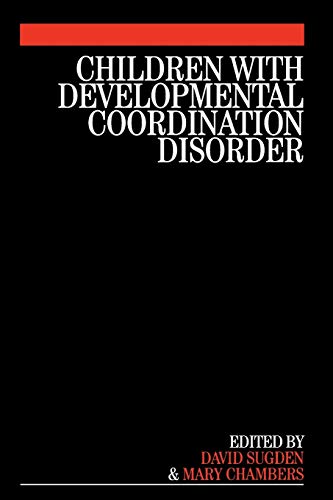
The term Developmental Coordination Disorder (DCD) is used to describe a group of children who have difficulty. with tasks involving movement such that it interferes with their daily living or academic progress. As with other developmental disorders such as autistic spectrum disorder, attention deficit disorder and dyslexia, DCD is now a prominent concern of both researchers and practitioners.
This text is aimed at both researchers and professionals who work in a practical manner with the condition and includes professionals in health, occupational therapists, physiotherapists, health visitors, paediatricians, and - in the educational field - teachers and others who are in daily contact with the children - their parents.
The essence of the text is that work with children should be guided by research evidence driving the clinical practice which in turn raisies more questions for research. The authors in this text have both experience in research and are engaged in the day-to-day clinical work with children and bring both of these to bear in the chapters they have written.
Die Inhaltsangabe kann sich auf eine andere Ausgabe dieses Titels beziehen.
Über die Autorin bzw. den Autor
David Sugden has an academic background in developmental psychology, special education and physical education, his PhD is from the University of California at Los Angeles. He has taught in primary, secondary and special schools as well as lecturing at college and university level in the UK and the USA. His specialist research interests include motor development, motor impairment, motor learning, and children with developmental disorders. His work centres on the characteristics of typically developing children and those with various forms of impairment. He is co-author of the most widely used assessment instrument for motor difficulties, the Movement Assessment Battery for Children. He is currently Professor of Special Needs in Education, University of Leeds, UK.
Von der hinteren Coverseite
The term Developmental Coordination Disorder (DCD) is used to describe a group of children who have difficulty. with tasks involving movement such that it interferes with their daily living or academic progress. As with other developmental disorders such as autistic spectrum disorder, attention deficit disorder and dyslexia, DCD is now a prominent concern of both researchers and practitioners.
This text is aimed at both researchers and professionals who work in a practical manner with the condition and includes professionals in health, occupational therapists, physiotherapists, health visitors, paediatricians, and - in the educational field - teachers and others who are in daily contact with the children - their parents.
The essence of the text is that work with children should be guided by research evidence driving the clinical practice which in turn raisies more questions for research. The authors in this text have both experience in research and are engaged in the day-to-day clinical work with children and bring both of these to bear in the chapters they have written.
Aus dem Klappentext
The term Developmental Coordination Disorder (DCD) is used to describe a group of children who have difficulty. with tasks involving movement such that it interferes with their daily living or academic progress. As with other developmental disorders such as autistic spectrum disorder, attention deficit disorder and dyslexia, DCD is now a prominent concern of both researchers and practitioners.
This text is aimed at both researchers and professionals who work in a practical manner with the condition and includes professionals in health, occupational therapists, physiotherapists, health visitors, paediatricians, and - in the educational field - teachers and others who are in daily contact with the children - their parents.
The essence of the text is that work with children should be guided by research evidence driving the clinical practice which in turn raisies more questions for research. The authors in this text have both experience in research and are engaged in the day-to-day clinical work with children and bring both of these to bear in the chapters they have written.
„Über diesen Titel“ kann sich auf eine andere Ausgabe dieses Titels beziehen.
Suchergebnisse für Children with Developmental Coordination

Beispielbild für diese ISBN
Children with Developmental Coordination
Anbieter: AwesomeBooks, Wallingford, Vereinigtes Königreich
Verkäuferbewertung 5 von 5 Sternen

Paperback. Zustand: Very Good. Children with Developmental Coordination This book is in very good condition and will be shipped within 24 hours of ordering. The cover may have some limited signs of wear but the pages are clean, intact and the spine remains undamaged. This book has clearly been well maintained and looked after thus far. Money back guarantee if you are not satisfied. See all our books here, order more than 1 book and get discounted shipping. Artikel-Nr. 7719-9781861564580
Gebraucht kaufen
EUR 4,79
EUR 4,81 Versand
Versand von Vereinigtes Königreich nach USA
Versand von Vereinigtes Königreich nach USA
Anzahl: 2 verfügbar
Beispielbild für diese ISBN
Children with Developmental Coordination
Anbieter: WorldofBooks, Goring-By-Sea, WS, Vereinigtes Königreich
Verkäuferbewertung 5 von 5 Sternen
Paperback. Zustand: Fine. Artikel-Nr. GOR010390749
Gebraucht kaufen
EUR 3,36
EUR 6,54 Versand
Versand von Vereinigtes Königreich nach USA
Versand von Vereinigtes Königreich nach USA
Anzahl: 1 verfügbar
Beispielbild für diese ISBN
Children with Developmental Coordination Disorder
Verlag:
Wiley & Sons, Incorporated, John, 2005
ISBN 10: 1861564589
ISBN 13: 9781861564580
Gebraucht
Softcover
Anbieter: Better World Books Ltd, Dunfermline, Vereinigtes Königreich
Verkäuferbewertung 5 von 5 Sternen
Zustand: Good. Reprint. Former library copy. Pages intact with minimal writing/highlighting. The binding may be loose and creased. Dust jackets/supplements are not included. Includes library markings. Stock photo provided. Product includes identifying sticker. Better World Books: Buy Books. Do Good. Artikel-Nr. GRP75264717
Gebraucht kaufen
EUR 5,63
EUR 5,84 Versand
Versand von Vereinigtes Königreich nach USA
Versand von Vereinigtes Königreich nach USA
Anzahl: 2 verfügbar
Beispielbild für diese ISBN
Children with Developmental Coordination Disorder
Verlag:
Wiley & Sons, Incorporated, John, 2005
ISBN 10: 1861564589
ISBN 13: 9781861564580
Gebraucht
Softcover
Anbieter: Better World Books Ltd, Dunfermline, Vereinigtes Königreich
Verkäuferbewertung 5 von 5 Sternen
Zustand: Very Good. Reprint. Former library copy. Pages intact with possible writing/highlighting. Binding strong with minor wear. Dust jackets/supplements may not be included. Includes library markings. Stock photo provided. Product includes identifying sticker. Better World Books: Buy Books. Do Good. Artikel-Nr. GRP82411359
Gebraucht kaufen
EUR 5,63
EUR 5,84 Versand
Versand von Vereinigtes Königreich nach USA
Versand von Vereinigtes Königreich nach USA
Anzahl: 1 verfügbar
Beispielbild für diese ISBN
Children with Developmental Coordination
Anbieter: Bahamut Media, Reading, Vereinigtes Königreich
Verkäuferbewertung 5 von 5 Sternen
Paperback. Zustand: Very Good. This book is in very good condition and will be shipped within 24 hours of ordering. The cover may have some limited signs of wear but the pages are clean, intact and the spine remains undamaged. This book has clearly been well maintained and looked after thus far. Money back guarantee if you are not satisfied. See all our books here, order more than 1 book and get discounted shipping. Artikel-Nr. 6545-9781861564580
Gebraucht kaufen
EUR 5,15
EUR 8,16 Versand
Versand von Vereinigtes Königreich nach USA
Versand von Vereinigtes Königreich nach USA
Anzahl: 2 verfügbar
Beispielbild für diese ISBN
Children With Developmental Coordination
Anbieter: Anybook.com, Lincoln, Vereinigtes Königreich
Verkäuferbewertung 5 von 5 Sternen
Zustand: Good. This is an ex-library book and may have the usual library/used-book markings inside.This book has soft covers. In good all round condition. Please note the Image in this listing is a stock photo and may not match the covers of the actual item,650grams, ISBN:9781861564580. Artikel-Nr. 3945399
Gebraucht kaufen
EUR 3,01
EUR 15,89 Versand
Versand von Vereinigtes Königreich nach USA
Versand von Vereinigtes Königreich nach USA
Anzahl: 1 verfügbar
Beispielbild für diese ISBN
Children with Developmental Coordination Disorder
Anbieter: PBShop.store UK, Fairford, GLOS, Vereinigtes Königreich
Verkäuferbewertung 5 von 5 Sternen
PAP. Zustand: New. New Book. Shipped from UK. Established seller since 2000. Artikel-Nr. FW-9781861564580
Neu kaufen
EUR 67,53
EUR 5,87 Versand
Versand von Vereinigtes Königreich nach USA
Versand von Vereinigtes Königreich nach USA
Anzahl: 15 verfügbar
Beispielbild für diese ISBN
Children with Developmental Coordination Disorder
Anbieter: Ria Christie Collections, Uxbridge, Vereinigtes Königreich
Verkäuferbewertung 5 von 5 Sternen
Zustand: New. In English. Artikel-Nr. ria9781861564580_new
Neu kaufen
EUR 77,10
EUR 14,00 Versand
Versand von Vereinigtes Königreich nach USA
Versand von Vereinigtes Königreich nach USA
Anzahl: Mehr als 20 verfügbar
Beispielbild für diese ISBN
Children with Developmental Coordination Disorder
Anbieter: Majestic Books, Hounslow, Vereinigtes Königreich
Verkäuferbewertung 4 von 5 Sternen

Zustand: New. pp. 332. Artikel-Nr. 6446297
Neu kaufen
EUR 85,64
EUR 7,59 Versand
Versand von Vereinigtes Königreich nach USA
Versand von Vereinigtes Königreich nach USA
Anzahl: 3 verfügbar
Beispielbild für diese ISBN
Children with Developmental Coordination Disorder
Anbieter: Kennys Bookstore, Olney, MD, USA
Verkäuferbewertung 5 von 5 Sternen
Zustand: New. The term Developmental Coordination Disorder (DCD) is used to describe a group of children who have difficulty. with tasks involving movement such that it interferes with their daily living or academic progress. Num Pages: 300 pages, Illustrations. BIC Classification: MJW. Category: (P) Professional & Vocational. Dimension: 233 x 157 x 21. Weight in Grams: 568. . 2005. Paperback. . . . . Books ship from the US and Ireland. Artikel-Nr. V9781861564580
Neu kaufen
EUR 104,92
EUR 9,06 Versand
Versand innerhalb von USA
Versand innerhalb von USA
Anzahl: Mehr als 20 verfügbar