
Verwandte Artikel zu The Quiet Man (Ireland into Film)
Inhaltsangabe
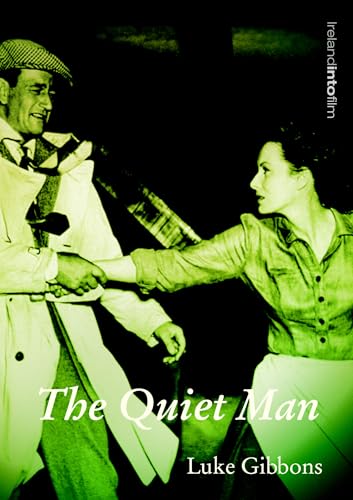
John Ford's "The Quiet Man" (1952) is the most popular cinematic representation of Ireland, and one of Hollywood's classic romantic comedies. For some viewers and critics the film is a powerful evocation of romantic Ireland and the search for home; for others, it is a showcase for the worst stereotypes of stage-Irishry. Much of Irish cinema since the development of an indigenous film industry in the 1980s has set its face firmly against these mythic images of Ireland, but no film has yet attained the enduring appeal of "The Quiet Man". In this radical reappraisal of Ford's Oscar-winning film, Luke Gibbons traces its development from Maurice Walsh's original story (1933) and argues that its romantic excesses are a symptom of much darker undercurrents in the literary text, and the displacement of trauma that often underlies nostalgia. Moreover, Gibbons ably demonstrates how the film, rather than indulging in escapism, actually questions its own romantic illusions and the dream of returning to an Irish paradise lost.
Die Inhaltsangabe kann sich auf eine andere Ausgabe dieses Titels beziehen.
Über die Autorin bzw. den Autor
Luke Gibbons is Professor of English, Film, Television and Theatre, at the University of Notre Dame, Indiana.
„Über diesen Titel“ kann sich auf eine andere Ausgabe dieses Titels beziehen.
Suchergebnisse für The Quiet Man (Ireland into Film)

Beispielbild für diese ISBN
The Quiet Man
Anbieter: World of Books (was SecondSale), Montgomery, IL, USA
Verkäuferbewertung 5 von 5 Sternen

Paperback. Zustand: Good. John Ford's "The Quiet Man" (1952) is the most popular cinematic representation of Ireland, and one of Hollywood's classic romantic comedies. For some viewers and critics the film is a powerful evocation of romantic Ireland and the search for home; for others, it is a showcase for the worst stereotypes of stage-Irishry. Much of Irish cinema since the development of an indigenous film industry in the 1980s has set its face firmly against these mythic images of Ireland, but no film has yet attained the enduring appeal of "The Quiet Man". In this radical reappraisal of Ford's Oscar-winning film, Luke Gibbons traces its development from Maurice Walsh's original story (1933) and argues that its romantic excesses are a symptom of much darker undercurrents in the literary text, and the displacement of trauma that often underlies nostalgia. Moreover, Gibbons ably demonstrates how the film, rather than indulging in escapism, actually questions its own romantic illusions and the dream of returning to an Irish paradise lost. Artikel-Nr. 00110854312
Gebraucht kaufen
EUR 5,72
Versand gratis
Versand innerhalb von USA
Versand innerhalb von USA
Anzahl: 1 verfügbar
Beispielbild für diese ISBN
The Quiet Man
Anbieter: ThriftBooks-Atlanta, AUSTELL, GA, USA
Verkäuferbewertung 5 von 5 Sternen
Paperback. Zustand: Good. No Jacket. Pages can have notes/highlighting. Spine may show signs of wear. ~ ThriftBooks: Read More, Spend Less. Artikel-Nr. G1859182879I3N00
Gebraucht kaufen
EUR 9,41
Versand gratis
Versand innerhalb von USA
Versand innerhalb von USA
Anzahl: 1 verfügbar
Beispielbild für diese ISBN
GIBBONS:THE QUIET MAN P/B (R)
Anbieter: Kennys Bookstore, Olney, MD, USA
Verkäuferbewertung 5 von 5 Sternen
Zustand: New. 2002. Paperback. Series: Ireland into Film S. Num Pages: 122 pages, Illustrations. BIC Classification: APFA. Category: (P) Professional & Vocational; (UP) Postgraduate, Research & Scholarly; (UU) Undergraduate. Dimension: 136 x 190 x 7. Weight in Grams: 200. . . . . . Books ship from the US and Ireland. Artikel-Nr. V9781859182871
Neu kaufen
EUR 13,64
EUR 9,36 Versand
Versand innerhalb von USA
Versand innerhalb von USA
Anzahl: 10 verfügbar