
Verwandte Artikel zu The Rough Guide to Brazil: Fourth Edition
Inhaltsangabe
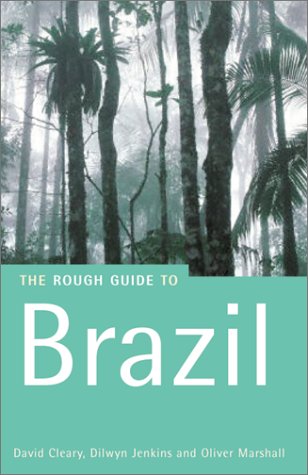
The Rough Guide to Brazil is the ultimate handbook to one of South America's most alluring destinations. In-depth accounts of the major cities, from the beaches and nightlife of Rio to the colonial churches of Salvador. Detailed practical advice on jungle travel in the Amazon and wildlife spotting in the Pantanal. Critical listings of all the best places to eat, drink and sleep, from rainforest lodges to five-star hotels. Expert coverage of Brazil's history, music, ecology and football.
Die Inhaltsangabe kann sich auf eine andere Ausgabe dieses Titels beziehen.
Auszug. © Genehmigter Nachdruck. Alle Rechte vorbehalten.
When to go
Brazil splits into four distinct climatic regions. The coldest part - in fact the only part of Brazil which ever gets really cold - is the South and Southeast, the region roughly from central Minas Gerais to Rio Grande do Sul, which includes Belo Horizonte, São Paulo and Porto Alegre. Here, there's a distinct winter between June and September, with occasional cold, wind and rain. However, although Brazilians complain, it's all fairly mild. Temperatures rarely hit freezing overnight, and when they do it's featured on the TV news. The coldest part is the interior of Rio Grande do Sul, in the extreme south of the country, but even here there are many warm, bright days in winter and the summer (Dec-March) is hot. Only in Santa Catarina's central highlands does it occasionally snow.
The coastal climate is exceptionally good. Brazil has been called a "crab civilization" because most of its population lives on or near the coast - with good reason. Seven thousand kilometres of coastline, from Paraná to near the equator, bask under a warm tropical climate. There is a "winter", when there are cloudy days and sometimes the temperature dips below 25°C (77°F), and a rainy season, when it can really pour. In Rio the rains last from October through to January, but they come much earlier in the Northeast, lasting about three months from April in Fortaleza and Salvador, and from May in Recife. Even in winter or the rainy season, the weather will be excellent much of the time.
The Northeast is too hot to have a winter. Nowhere is the average monthly temperature below 25°C (77°F) and the interior, semi-arid at the best of times, often soars beyond that - regularly to as much as 40°C (104°F). Rain is sparse and irregular, although violent. Amazonia is stereotyped as being steamy jungle with constant rainfall, but much of the region has a distinct dry season - apparently getting longer every year in the most deforested areas of east and west Amazonia. And in the large expanses of savanna in the northern and central Amazon basin, rainfall is far from constant. Belém is closest to the image of a steamy tropical city: it rains there an awful lot from January to May, and merely quite a lot for the rest of the year. Manaus and central Amazonia, in contrast, have a marked dry season from July to October.
„Über diesen Titel“ kann sich auf eine andere Ausgabe dieses Titels beziehen.
Suchergebnisse für The Rough Guide to Brazil: Fourth Edition

Beispielbild für diese ISBN
The Rough Guide to Brazil, 4th Edition (Rough Guide Travel Guides)
Anbieter: Wonder Book, Frederick, MD, USA
Verkäuferbewertung 5 von 5 Sternen

Zustand: Very Good. Very Good condition. 4th edition. A copy that may have a few cosmetic defects. May also contain light spine creasing or a few markings such as an owner's name, short gifter's inscription or light stamp. Artikel-Nr. B15C-01573
Gebraucht kaufen
EUR 6,40
Versand gratis
Versand innerhalb von USA
Versand innerhalb von USA
Anzahl: 1 verfügbar
Beispielbild für diese ISBN
The Rough Guide to Brazil
Verlag:
Rough Guides 26/10/2000, 2000
ISBN 10: 185828564X
ISBN 13: 9781858285641
Gebraucht
Softcover
Anbieter: AwesomeBooks, Wallingford, Vereinigtes Königreich
Verkäuferbewertung 5 von 5 Sternen
Zustand: Very Good. This book is in very good condition and will be shipped within 24 hours of ordering. The cover may have some limited signs of wear but the pages are clean, intact and the spine remains undamaged. This book has clearly been well maintained and looked after thus far. Money back guarantee if you are not satisfied. See all our books here, order more than 1 book and get discounted shipping. . Artikel-Nr. 7719-9781858285641
Gebraucht kaufen
EUR 3,40
EUR 4,83 Versand
Versand von Vereinigtes Königreich nach USA
Versand von Vereinigtes Königreich nach USA
Anzahl: 3 verfügbar
Foto des Verkäufers
The Rough Guide to Brazil: Fourth Edition
Anbieter: WeBuyBooks, Rossendale, LANCS, Vereinigtes Königreich
Verkäuferbewertung 5 von 5 Sternen
paperback. Zustand: Good. Most items will be dispatched the same or the next working day. A copy that has been read but remains in clean condition. All of the pages are intact and the cover is intact and the spine may show signs of wear. The book may have minor markings which are not specifically mentioned. Artikel-Nr. rev3884159772
Gebraucht kaufen
EUR 1,33
EUR 8,24 Versand
Versand von Vereinigtes Königreich nach USA
Versand von Vereinigtes Königreich nach USA
Anzahl: 1 verfügbar
Beispielbild für diese ISBN
The Rough Guide to Brazil
Verlag:
Dorling Kindersley Publishing, Incorporated, 2000
ISBN 10: 185828564X
ISBN 13: 9781858285641
Gebraucht
Softcover
Anbieter: Better World Books: West, Reno, NV, USA
Verkäuferbewertung 5 von 5 Sternen
Zustand: Good. Pages intact with minimal writing/highlighting. The binding may be loose and creased. Dust jackets/supplements are not included. Stock photo provided. Product includes identifying sticker. Better World Books: Buy Books. Do Good. Artikel-Nr. 3810378-75
Gebraucht kaufen
EUR 10,07
Versand gratis
Versand innerhalb von USA
Versand innerhalb von USA
Anzahl: 1 verfügbar
Beispielbild für diese ISBN
The Rough Guide to Brazil: Fourth Edition
Anbieter: WorldofBooks, Goring-By-Sea, WS, Vereinigtes Königreich
Verkäuferbewertung 5 von 5 Sternen
Paperback. Zustand: Very Good. The book has been read, but is in excellent condition. Pages are intact and not marred by notes or highlighting. The spine remains undamaged. Artikel-Nr. GOR010507807
Gebraucht kaufen
EUR 4,31
EUR 6,57 Versand
Versand von Vereinigtes Königreich nach USA
Versand von Vereinigtes Königreich nach USA
Anzahl: 1 verfügbar
Beispielbild für diese ISBN
The Rough Guide to Brazil
Verlag:
Dorling Kindersley Publishing, Incorporated, 2000
ISBN 10: 185828564X
ISBN 13: 9781858285641
Gebraucht
Softcover
Anbieter: Better World Books Ltd, Dunfermline, Vereinigtes Königreich
Verkäuferbewertung 5 von 5 Sternen
Zustand: Good. Former library copy. Pages intact with minimal writing/highlighting. The binding may be loose and creased. Dust jackets/supplements are not included. Includes library markings. Stock photo provided. Product includes identifying sticker. Better World Books: Buy Books. Do Good. Artikel-Nr. 57415275-20
Gebraucht kaufen
EUR 5,70
EUR 5,87 Versand
Versand von Vereinigtes Königreich nach USA
Versand von Vereinigtes Königreich nach USA
Anzahl: 1 verfügbar
Beispielbild für diese ISBN
The Rough Guide to Brazil
Verlag:
Rough Guides 26/10/2000, 2000
ISBN 10: 185828564X
ISBN 13: 9781858285641
Gebraucht
Softcover
Anbieter: Bahamut Media, Reading, Vereinigtes Königreich
Verkäuferbewertung 4 von 5 Sternen

Zustand: Very Good. Shipped within 24 hours from our UK warehouse. Clean, undamaged book with no damage to pages and minimal wear to the cover. Spine still tight, in very good condition. Remember if you are not happy, you are covered by our 100% money back guarantee. Artikel-Nr. 6545-9781858285641
Gebraucht kaufen
EUR 3,85
EUR 8,19 Versand
Versand von Vereinigtes Königreich nach USA
Versand von Vereinigtes Königreich nach USA
Anzahl: 3 verfügbar
Beispielbild für diese ISBN
The Rough Guide to Brazil
Anbieter: Kennys Bookstore, Olney, MD, USA
Verkäuferbewertung 5 von 5 Sternen
Zustand: Good. Good copy with some shelf wear. Books ship from the US and Ireland. Artikel-Nr. KTG0016081
Gebraucht kaufen
EUR 6,60
EUR 9,33 Versand
Versand innerhalb von USA
Versand innerhalb von USA
Anzahl: 1 verfügbar
Beispielbild für diese ISBN
The Rough Guide to Brazil
Anbieter: Kennys Bookshop and Art Galleries Ltd., Galway, GY, Irland
Verkäuferbewertung 5 von 5 Sternen
Zustand: Good. Good copy with some shelf wear. Artikel-Nr. KTG0016081
Gebraucht kaufen
EUR 6,45
EUR 9,50 Versand
Versand von Irland nach USA
Versand von Irland nach USA
Anzahl: 1 verfügbar
Beispielbild für diese ISBN
The Rough Guide to Brazil
Anbieter: Hamelyn, Madrid, M, Spanien
Verkäuferbewertung 5 von 5 Sternen
Zustand: Good. : Guía de viaje completa de Brasil, ideal para planificar tus vacaciones. Incluye información detallada sobre los destinos turísticos más importantes, consejos prácticos, mapas y recomendaciones de hoteles y restaurantes. Esta edición actualizada ofrece una visión completa de la cultura, la historia y la geografía de Brasil, perfecta para viajeros que buscan una experiencia auténtica. EAN: 9781858285641 Tipo: Libros Categoría: Otros Título: The Rough Guide to Brazil Idioma: en Páginas: 688 Formato: tapa blanda. Artikel-Nr. Happ-2025-10-14-ebe9a134
Gebraucht kaufen
EUR 9,07
EUR 11,99 Versand
Versand von Spanien nach USA
Versand von Spanien nach USA
Anzahl: 1 verfügbar