
Verwandte Artikel zu Andalucia: The Rough Guide:3rd Edition (Rough Guide...
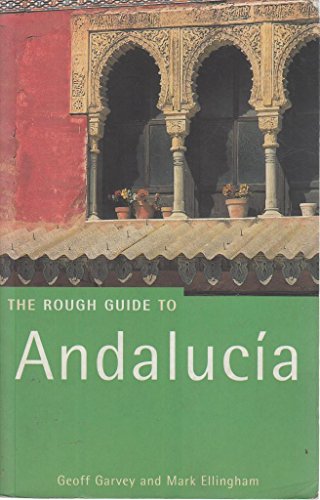
Inhaltsangabe
Features include: Comprehensive coverage of all the sights and historic monuments, from the caves of Guadix to the enchanting Alhambra palace. Expert tips on finding the most alluring beaches, plus a host of exhilarating walks. Up-to-the-minute reviews of the best places to eat, drink, and stay, from rustic fondas to sumptuous paradores. Entertaining background on Andalucia's history, festivals and wildlife = and the afficianado's angle on flamenco.
Die Inhaltsangabe kann sich auf eine andere Ausgabe dieses Titels beziehen.
Über die Autorin bzw. den Autor
Geoff Garvey has been captivated by Andalucia since his first visit as a student in the early 1970s. Garvey first visited Crete as a student of ancient history and developed a great affection for the island and its people. He is the coauthor of The Rough Guide to Crete (with John Fisher), The Rough Guide to Andalucia (with Mark Ellingham), and The Rough Guide to Spain 13 (with Jules Brown, Simon Baskett, Greg Ward, and Annelise Sorensen).
Mark Ellingham founded Rough Guides in 1982 and has created many of the series new ventures over the years, including The Rough Guide to the Internet, The Rough Guide to World Music, and, only a little ashamedly, The Rough Guide to the Da Vinci Code.
Auszug. © Genehmigter Nachdruck. Alle Rechte vorbehalten.
Andalucia is the southernmost territory of Spain and the part of the Iberian peninsula that is most quintessentially Spanish. The popular image of Spain as a land of bullfights, flamenco, sherry and ruined castles derives from this spectacularly beautiful region. The influences that have washed over Andalucma since the first paintings were etched on cave walls here more than twenty-five thousand years ago are many - Phoenicians, Carthaginians, Greeks, Romans, Visigoths and Vandals all came and left their mark. And the most influential invaders of all, the Moors, who ruled the region for seven centuries and named it al-Andalus, have left an enduring imprint on Andalucian culture and customs.
The sight and sound of flamenco, when the guitar laments and heels stamp the boards, or cante jondo, Andalucia's blues, as it mournfully pierces the smoke-laden gloom of a backstreet cafi, also tell you there's something unique about the people here. The Muslim influence on speech and vocabulary, a stoical fatalism in the face of adversity, and an obsession with the drama of death are all facets of the modern Andalucian character. Contrastingly, the andaluces also love nothing more than a party and the colour and sheer energy of the region's countless and legendary fiestas - always in traditional flamenco costume worn with pride - make them among the most exciting in the world. The romermas, wild and semi-religious pilgrimages to honour local saints at country shrines are yet another excuse for a jamboree. And in quieter moments there are few greater pleasures than to join the drinkers at a local bar winding down over a glass of traditional fino (dry sherry from Jerez), while nibbling tapas - Andalucia's great titbit invention.
Few places in the world can boast such a wealth of natural wonders in so compact an area. The mighty Guadalquivir river which crosses and irrigates the region from its source in the Cazorla mountains of Jain in the northeast, reaches the sea 250 miles away at the dune-fringed beaches and marismas of the Coto Doqana National Park, Europe's largest and most important wildlife sanctuary. To the east and towering above Granada, the peaks of the Sierra Nevada include the Spanish peninsula's highest mountain, snowcapped for most of the year, while twenty miles away and close to the sweltering beaches, sugar cane thrives. This crop was another contribution to Europe by the Moors, along with oranges, almonds, aubergines, saffron and most of the spices now used to flavour the region's cooking which features an astonishing variety of seafood. Nestling in the folds of the same mountains are the valleys of the Alpujarras, a wildly picturesque region dotted with dozens of mountain villages, many of them little changed since Moorish times. Further east again come the gulch-ridden badlands and lunar landscapes of Almerma's deserts, sought out by film-makers and astronomers for the clearest skies in Europe.
On the coast it's easy to despair. Extending to the west of Malaga is the Costa del Sol, Europe's most developed resort area, with its beaches hidden behind a remorseless density of concrete hotels and apartment complexes. But even here the real Andalucma is still to be found if you're prepared to seek it out: go merely a few kilometres inland and you'll encounter the timeless Spain of white villages and wholehearted country fiestas. Travel further, both east and west, along the coast and you'll find some of the best beaches in all Spain, along the Costa de la Luz, near Cadiz, or the Costa de Almerma.
Andalucia's sunshine image - projected across the world in advertising campaigns - belies the fact that this is also Spain's poorest region where an economy rooted in near-feudal landownership (two per cent of the landowners possess fifty per cent of the land area) stifles investment and is the cause of desperate poverty. Rural life is bleak; you soon begin to notice the appalling economic structure of vast absentee-landlord estates, and landless peasants. The andaluz villages saw little economic aid or change during the Franco years, or indeed since, even though the former governing Socialist party has its principal power base here. Tourism in coastal areas has brought some respite to the alarmingly high levels of unemployment, and Spain's growing importance as a member of the European Union promises to speed up progress, but there is still a mighty long way to go.
Where to go: Andalucia's manageable size makes it easy to take in something of each of its elements - inland cities, extensive coastline and mountaineous sierras - even on a brief visit. The main characteristics and appeal of each province are covered in the chapter introductions, but the more obvious and compelling highlights include:
Sevilla. Andalucia's capital city, the home of flamenco and all the clichis of the Spanish south has beautiful quarters, major Christian and Moorish monuments and extraordinary festivals at Easter and, afterwards, at the April feria.
Moorish monuments. Granada's Alhambra palace is perhaps the most sensual building in Europe; the exquisite Mezquita, a former mosque, in Csrdoba, and the Alcazar and Giralda tower in Sevilla, are also not to be missed.
Castles. Niebla in Huelva and Baqos de Encina in Jain, as well as those in the cities of Malaga and Almerma are the outstanding Moorish examples; the best Renaissance forts are at La Calahorra in Granada and Vilez Blanco in Almerma, whilst hilltop Segura de la Sierra in Jain has the most dramatic location.
Cathedrals. Sevilla's Gothic monster is the biggest, but those of Cadiz, Granada, Jain, and Almerma are all worthy of a visit.
Renaissance towns and hill villages. Small-scale towns and villages, once grand, now hardly significant, are an Andalucian forte. Baeza and Zbeda in Jain are remarkable treasurehouses of Renaissance architecture, while Ronda and the White Towns to the west are among the most picturesque hill villages in Andalucma.
Baroque. The Baroque splendours of Andalucia are without equal; towns such as Icija and Osuna in Sevilla province, and Priego to the south of Cordoba have clusters of stunning Baroque churches and mansions.
Roman and prehistoric ruins. Italica near Sevilla, Baelo Claudia near Tarifa and Carmona's Roman necropolis are all impressive Roman sites, while for an atmospheric "lost city" Mulva, in the hills of the Sierra Morena, is hard to beat. Andalucma also has some of the most important prehistoric sites in Europe, including a group of third millennium BC dolmens at Antequera, and the remarkable Los Millares site near Almerma.
Beaches and resorts. For brashness and nightlife it has to be the Costa del Sol, but you'll find the more authentic resorts such as Nerja, Almuqecar and Mojacar are less frenzied. The region's best beaches lie along the Atlantic coast and to the east of Almerma.
Hiking. The Sierra Nevada and the nearby foothills of Las Alpujarras in Granada are excellent places for hiking, as are the densely wooded hills of the Sierra de Cazorla and the Sierra de Morena - including the latter's less well-known offshoot, the Sierra de Aracena, in the north of Huelva. Andalucma's dozen or so parques naturales (natural parks) are located in areas of great natural beauty, and are detailed in the Guide.
Seafood. This is Andalucma's speciality and is excellent all along the coast but particularly so in Malaga and seafood-crazy Cadiz. The many good places to try it are listed in the relevant chapters throughout the Guide.
Bars. Spain has the most bars of any country in Europe, and Andalucma has more than its share of these. For sheer character and diversity, the bars of the cities of Csrdoba, Sevilla and Cadiz are some of the best anywhere.
Offbeat. Among the more curious things to see in Andalucia are a self-styled "pope" who has built a "New Vatican" near Utrera in Sevilla province; a rosary museum at...
„Über diesen Titel“ kann sich auf eine andere Ausgabe dieses Titels beziehen.
Suchergebnisse für Andalucia: The Rough Guide:3rd Edition (Rough Guide...

Beispielbild für diese ISBN
The Rough Guide to Andalucia (3rd Edition)
Verlag:
Rough Guides (edition 3), 2000
ISBN 10: 1858285453
ISBN 13: 9781858285450
Gebraucht
Paperback
Anbieter: BooksRun, Philadelphia, PA, USA
Verkäuferbewertung 5 von 5 Sternen

Paperback. Zustand: Fair. 3. The item might be beaten up but readable. May contain markings or highlighting, as well as stains, bent corners, or any other major defect, but the text is not obscured in any way. Artikel-Nr. 1858285453-7-22-13
Gebraucht kaufen
EUR 6,87
Versand gratis
Versand innerhalb von USA
Versand innerhalb von USA
Anzahl: 1 verfügbar
Beispielbild für diese ISBN
The Rough Guide to Andalucia
Verlag:
Rough Guides 31/08/2000, 2000
ISBN 10: 1858285453
ISBN 13: 9781858285450
Gebraucht
Softcover
Anbieter: AwesomeBooks, Wallingford, Vereinigtes Königreich
Verkäuferbewertung 5 von 5 Sternen
Zustand: Very Good. This book is in very good condition and will be shipped within 24 hours of ordering. The cover may have some limited signs of wear but the pages are clean, intact and the spine remains undamaged. This book has clearly been well maintained and looked after thus far. Money back guarantee if you are not satisfied. See all our books here, order more than 1 book and get discounted shipping. . Artikel-Nr. 7719-9781858285450
Gebraucht kaufen
EUR 3,38
EUR 4,80 Versand
Versand von Vereinigtes Königreich nach USA
Versand von Vereinigtes Königreich nach USA
Anzahl: 2 verfügbar
Beispielbild für diese ISBN
The Rough Guide to Andalucia
Verlag:
Dorling Kindersley Publishing, Incorporated, 2000
ISBN 10: 1858285453
ISBN 13: 9781858285450
Gebraucht
Softcover
Anbieter: Better World Books: West, Reno, NV, USA
Verkäuferbewertung 5 von 5 Sternen
Zustand: Good. Former library copy. Pages intact with minimal writing/highlighting. The binding may be loose and creased. Dust jackets/supplements are not included. Includes library markings. Stock photo provided. Product includes identifying sticker. Better World Books: Buy Books. Do Good. Artikel-Nr. 38422058-20
Gebraucht kaufen
EUR 8,39
Versand gratis
Versand innerhalb von USA
Versand innerhalb von USA
Anzahl: 1 verfügbar
Beispielbild für diese ISBN
The Rough Guide to Andalucia
Anbieter: WorldofBooks, Goring-By-Sea, WS, Vereinigtes Königreich
Verkäuferbewertung 5 von 5 Sternen
Paperback. Zustand: Very Good. The book has been read, but is in excellent condition. Pages are intact and not marred by notes or highlighting. The spine remains undamaged. Artikel-Nr. GOR000732701
Gebraucht kaufen
EUR 4,08
EUR 6,53 Versand
Versand von Vereinigtes Königreich nach USA
Versand von Vereinigtes Königreich nach USA
Anzahl: 1 verfügbar
Beispielbild für diese ISBN
The Rough Guide to Andalucia
Verlag:
Dorling Kindersley Publishing, Incorporated, 2000
ISBN 10: 1858285453
ISBN 13: 9781858285450
Gebraucht
Softcover
Anbieter: Better World Books Ltd, Dunfermline, Vereinigtes Königreich
Verkäuferbewertung 5 von 5 Sternen
Zustand: Good. Pages intact with minimal writing/highlighting. The binding may be loose and creased. Dust jackets/supplements are not included. Stock photo provided. Product includes identifying sticker. Better World Books: Buy Books. Do Good. Artikel-Nr. 40837563-20
Gebraucht kaufen
EUR 5,63
EUR 5,83 Versand
Versand von Vereinigtes Königreich nach USA
Versand von Vereinigtes Königreich nach USA
Anzahl: 1 verfügbar
Beispielbild für diese ISBN
The Rough Guide to Andalucia
Anbieter: Reuseabook, Gloucester, GLOS, Vereinigtes Königreich
Verkäuferbewertung 5 von 5 Sternen
Paperback. Zustand: Used; Good. Dispatched, from the UK, within 48 hours of ordering. This book is in good condition but will show signs of previous ownership. Please expect some creasing to the spine and/or minor damage to the cover. Damaged cover. The cover of is slightly damaged for instance a torn or bent corner. Artikel-Nr. CHL4106436
Gebraucht kaufen
EUR 3,76
EUR 8,16 Versand
Versand von Vereinigtes Königreich nach USA
Versand von Vereinigtes Königreich nach USA
Anzahl: 1 verfügbar
Beispielbild für diese ISBN
The Rough Guide to Andalucia
Anbieter: Reuseabook, Gloucester, GLOS, Vereinigtes Königreich
Verkäuferbewertung 5 von 5 Sternen
Paperback. Zustand: Used; Good. Dispatched, from the UK, within 48 hours of ordering. This book is in good condition but will show signs of previous ownership. Please expect some creasing to the spine and/or minor damage to the cover. Artikel-Nr. CHL1084126
Gebraucht kaufen
EUR 3,76
EUR 8,16 Versand
Versand von Vereinigtes Königreich nach USA
Versand von Vereinigtes Königreich nach USA
Anzahl: 1 verfügbar
Beispielbild für diese ISBN
The Rough Guide to Andalucia
Verlag:
Rough Guides 31/08/2000, 2000
ISBN 10: 1858285453
ISBN 13: 9781858285450
Gebraucht
Softcover
Anbieter: Bahamut Media, Reading, Vereinigtes Königreich
Verkäuferbewertung 4 von 5 Sternen

Zustand: Very Good. Shipped within 24 hours from our UK warehouse. Clean, undamaged book with no damage to pages and minimal wear to the cover. Spine still tight, in very good condition. Remember if you are not happy, you are covered by our 100% money back guarantee. Artikel-Nr. 6545-9781858285450
Gebraucht kaufen
EUR 3,79
EUR 8,14 Versand
Versand von Vereinigtes Königreich nach USA
Versand von Vereinigtes Königreich nach USA
Anzahl: 2 verfügbar
Foto des Verkäufers
The Rough Guide to Andalucia
Anbieter: Hamelyn, Madrid, M, Spanien
Verkäuferbewertung 5 von 5 Sternen
Zustand: As New. : Descubre Andalucía con esta guía de Rough Guides. Esta edición, la tercera, te lleva a través de la región más meridional de España, explorando su rica historia, cultura y paisajes impresionantes. Desde la Alhambra de Granada hasta las playas de la Costa de la Luz, esta guía te proporciona información esencial para planificar tu viaje. Incluye detalles sobre flamenco, gastronomía local y los pueblos blancos de las Alpujarras. Ideal para viajeros que buscan una experiencia auténtica y completa en Andalucía. EAN: 9781858285450 Tipo: Libros Categoría: Historia Título: The Rough Guide to Andalucia Autor: Geoff Garvey| Mark Ellingham Editorial: Rough Guides Idioma: en Páginas: 560 Formato: tapa blanda. Artikel-Nr. 9Z-BQ0L-MPAN
Gebraucht kaufen
EUR 5,99
EUR 12,99 Versand
Versand von Spanien nach USA
Versand von Spanien nach USA
Anzahl: 1 verfügbar
Beispielbild für diese ISBN
The Rough Guide to Andalucia
Anbieter: Orbiting Books, Hereford, Vereinigtes Königreich
Verkäuferbewertung 5 von 5 Sternen
Paperback. Zustand: Fine. Tanning to edge of pages Appears unread, may have minor superficial marking. Next day dispatch from the UK (Mon-Fri). Please contact us with any queries. Artikel-Nr. mon0000736061
Gebraucht kaufen
EUR 8,54
EUR 13,99 Versand
Versand von Vereinigtes Königreich nach USA
Versand von Vereinigtes Königreich nach USA
Anzahl: 1 verfügbar