
Verwandte Artikel zu Goa: The Rough Guide: 3rd Edition (Rough Guide Travel...
Inhaltsangabe
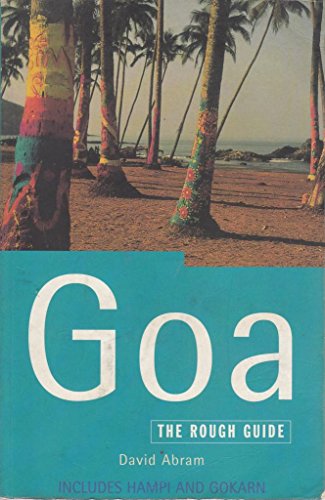
The 3rd edition is more opinionated and detailed in its coverage of Goa's beaches, transport, accommodation from luxury hotels to beach huts, the best places to eat and drink, information on wildlife sanctuaries, waterfalls and prehistoric rock-art sites in the interior, overviews of monuments, temples plus locations in neighbouring Karnataka.
Die Inhaltsangabe kann sich auf eine andere Ausgabe dieses Titels beziehen.
Auszug. © Genehmigter Nachdruck. Alle Rechte vorbehalten.
Fuelled by remittance cheques from expats working in the Gulf and North America, and by the hard currency receipts from tourism, the recent boom has placed a great strain on Goa's fragile natural environment, and green issues nowadays feature prominently in any talk of the region's future. Much anger, in particular, has been directed towards a handful of purpose-built luxury hotels, which have been accused of ignoring environmental laws. We have tried to reflect such concerns in the Guide, indicating which hotels have been taken to task by the green lobby, and what you can do to minimize the impact of your presence in this part of the world.
If you've never travelled in Asia before, Goa may come as something of a shock. Its beaches certainly conform to the glossy holiday brochure image, but once outside the tourist spots many first-time visitors are surprised to find themselves in workaday rural India, where bullock carts far outnumber cars, rice is planted by hand, and the majority of villagers subsist on an average annual wage that is far lower than the cost of a flight from Europe. Don't, however, let this deter you from venturing off the beaten track in Goa. The little-frequented corners of the state are likely to yield some of the most memorable moments of your trip, combining beautiful scenery with the chance to encounter a way of life that is worlds away from the headlong commercialism of the beach resorts.
Where to go
Which beach you opt for when you arrive largely depends on what sort of holiday you have in mind. Heavily developed resorts such as Calangute and Baga, in the north, and Colva (and to a lesser extent Benaulim), in the south, offer more "walk-in" accommodation, shopping and tourist facilities than elsewhere. Even if you don't fancy crowded bars and purpose-built hotels, it can be worth heading for these centres at first, as finding places to stay in less commercialized corners is often difficult. Anjuna, Vagator and Chapora, where accommodation is generally more basic and harder to come by, are the beaches to aim for if you've come to Goa to party. To get a taste of what most of the state must have been like ten or fifteen years ago, however, you'll have to travel further afield - to Arambol, a sleepy fishing village and hippy hang-out in the far north; or to Agonda and Palolem, near the Karnatakan border, where tourism has yet to make much impact.
Foremost among the attractions away from the coast are the ruins of the Portuguese capital at Old Goa, nine kilometres from Panjim - a sprawl of Catholic cathedrals, convents and churches that draws crowds of Christian pilgrims from all over India. Another popular day excursion is to Anjuna's Wednesday flea-market, a sociable place to shop for souvenirs and the latest rave gear. Further inland, the thickly wooded countryside around Ponda harbours numerous temples, where you can experience Goa's peculiar brand of Hindu architecture. The taluka (district) of Salcete, and its main market town, Margao, is littered with wonderful Portuguese mansions, churches and seminaries. In addition, wildlife enthusiasts may be tempted into the interior to visit the nature reserves at Molem, in the far east of Central Goa, and Cotigao in the south, which both support fragile populations of rare animals.
With so many tempting beaches, markets, monuments and nature reserves within the state, it's no surprise that few visitors venture across the Goan border into neighbouring Karnataka. But beyond the shelter of the Western Ghats, amid the parched plateau lands of the Deccan Trap, lie the remnants of several ancient capitals. Among these is one of the most spectacular archeological sites in South India, the ghost city of Hampi. Today, weed-choked palaces, temples and discarded statues are virtually all that remains of this once opulent metropolis, capital of the formidable Vijayanagar dynasty, but a visit here will give you a vivid insight into the extravagant art and culture of pre-colonial Hindu India, while the ten-hour journey to the ruins can be an adventure in itself.
For this reason, we've included a detailed account of Hampi in Chapter 4, Around Goa, which also features the highlights along the Konkan coast, the lush strip running south from Goa in the shadow of the Sahyadri Hills. Previously accessible only by a winding pot-holed highway, the Hindu pilgrimage town of Gokarn can now be painlessly reached by train from Goa on the new Konkan Railway, while India's highest waterfall, spectacular Jog Falls, 154km from Goa, also lies within relatively easy reach of the coast. It's possible to string these two together in a trip of three to four days, but with a week to spare you'll be able to spend time exploring rarely visited fishing villages and forest areas along the way.
When to visit
The best time to come to Goa is during the dry, relatively cool winter months between late October and early April. At other times, either the sun is too hot for comfort, or the monsoon makes life miserable for everyone except the fishers and hoteliers, who get to sit around all day snoozing and playing backgammon; come here during these months hoping to spend a holiday on the beach and you're in for a shock - grey skies, violent storms and heavy seas (not to mention falling coconuts) can make even a stroll along a Goan beach a hazardous exercise. The rains start to subside around late August to early September, usually petering out by early October, though expect the odd hazy day around then. Peak season, from mid-December to the end of January, sees near perfect weather, with the temperature gauge rarely nudging above a manageable 32C. Finding a room or a house to rent at that time, however - particularly over the Christmas and New Year fortnight when the tariffs double, or triple - can be a real hassle in some resorts, notably Anjuna, which is inundated with party-goers at this time. If you're travelling without pre-booked accommodation, it may be worthwhile reserving a room by phone before you leave.
„Über diesen Titel“ kann sich auf eine andere Ausgabe dieses Titels beziehen.
Suchergebnisse für Goa: The Rough Guide: 3rd Edition (Rough Guide Travel...

Beispielbild für diese ISBN
Goa: The Rough Guide: 3rd Edition (Rough Guide Travel Guides)
Anbieter: AwesomeBooks, Wallingford, Vereinigtes Königreich
Verkäuferbewertung 5 von 5 Sternen

Paperback. Zustand: Very Good. Goa: The Rough Guide: 3rd Edition (Rough Guide Travel Guides) This book is in very good condition and will be shipped within 24 hours of ordering. The cover may have some limited signs of wear but the pages are clean, intact and the spine remains undamaged. This book has clearly been well maintained and looked after thus far. Money back guarantee if you are not satisfied. See all our books here, order more than 1 book and get discounted shipping. Artikel-Nr. 7719-9781858284415
Gebraucht kaufen
EUR 2,82
EUR 4,80 Versand
Versand von Vereinigtes Königreich nach USA
Versand von Vereinigtes Königreich nach USA
Anzahl: 2 verfügbar
Foto des Verkäufers
Goa: The Rough Guide: 3rd Edition (Rough Guide Travel Guides)
Anbieter: WeBuyBooks, Rossendale, LANCS, Vereinigtes Königreich
Verkäuferbewertung 5 von 5 Sternen
Zustand: Good. Most items will be dispatched the same or the next working day. A copy that has been read but remains in clean condition. All of the pages are intact and the cover is intact and the spine may show signs of wear. The book may have minor markings which are not specifically mentioned. Artikel-Nr. rev2923504253
Gebraucht kaufen
EUR 1,19
EUR 6,47 Versand
Versand von Vereinigtes Königreich nach USA
Versand von Vereinigtes Königreich nach USA
Anzahl: 3 verfügbar
Beispielbild für diese ISBN
Goa: The Rough Guide: 3rd Edition (Rough Guide Travel Guides)
Anbieter: Bahamut Media, Reading, Vereinigtes Königreich
Verkäuferbewertung 5 von 5 Sternen
Paperback. Zustand: Very Good. This book is in very good condition and will be shipped within 24 hours of ordering. The cover may have some limited signs of wear but the pages are clean, intact and the spine remains undamaged. This book has clearly been well maintained and looked after thus far. Money back guarantee if you are not satisfied. See all our books here, order more than 1 book and get discounted shipping. Artikel-Nr. 6545-9781858284415
Gebraucht kaufen
EUR 3,25
EUR 8,14 Versand
Versand von Vereinigtes Königreich nach USA
Versand von Vereinigtes Königreich nach USA
Anzahl: 2 verfügbar
Beispielbild für diese ISBN
Goa: The Rough Guide (Rough Guide Travel Guides)
Anbieter: Reuseabook, Gloucester, GLOS, Vereinigtes Königreich
Verkäuferbewertung 5 von 5 Sternen
Paperback. Zustand: Used; Good. Dispatched, from the UK, within 48 hours of ordering. This book is in good condition but will show signs of previous ownership. Please expect some creasing to the spine and/or minor damage to the cover. Artikel-Nr. CHL1324001
Gebraucht kaufen
EUR 3,76
EUR 8,16 Versand
Versand von Vereinigtes Königreich nach USA
Versand von Vereinigtes Königreich nach USA
Anzahl: 1 verfügbar