
Verwandte Artikel zu Poland: The Rough Guide (4th Edition) (Rough Guide...
Inhaltsangabe
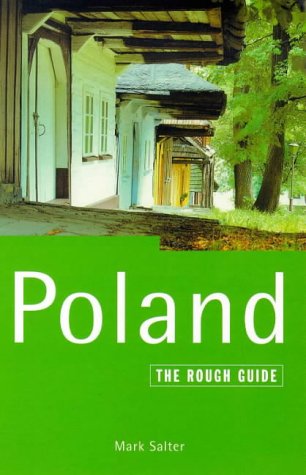
A guide to this complex country, with up-to-the minute accounts of fast-changing Warsaw, Krakow, Gdansk and others. It includes critical reviews of restaurants and accommodation in all regions and price ranges, historical background, culture and today's politics, hiking/transport tips and more.
Die Inhaltsangabe kann sich auf eine andere Ausgabe dieses Titels beziehen.
Über die Autorin bzw. den Autor
Mark Salter is the author, with John McCain, of several books, including Thirteen Soldiers and Faith of My Fathers. He served on Senator McCain’s staff for more than fifteen years.
Auszug. © Genehmigter Nachdruck. Alle Rechte vorbehalten.
Where to go
Poles delineate their country's attractions as "the mountains, the sea and the lakes", their emphasis firmly slanted to the traditional, rural heartlands. To get the most out of your time, it's perhaps best to follow their preferences. The mountains - above all the Carpathian range of the Tatras - are a delight, with a well-established network of hiking trails; the lakes provide opportunities for canoeing and a host of other outdoor pursuits; and the dozen or so national parks retain areas of Europe's last primeval forests, inhabited still by bison, elks, wolves, bears and eagles. Yet you will not want to miss the best of the cities - Krak-w, especially - nor a ramble down rivers like the Wis'a for visits to Teutonic castles, ancient waterside towns and grand, Polish country mansions, redolent of a vanished aristocratic order. The ethnic regions offer insights into cultures quite distinct from the Catholicism of the majority, while the former centres of the Jewish community, and the concentration camps in which the Nazis carried out their extermination, are the most moving testimony to the complexity and tragedy of the nation's past.
Unless you're driving to Poland, you're likely to begin your travels with one of the three major cities: Warsaw, Krak-w or Gda7sk. Each provides an immediate immersion in the fast-paced changes of the 1990s and a backdrop of monuments that reveal the complexities of the nation's history.
Warsaw, the capital, had to be rebuilt from scratch after World War II, and much of the city conforms to the stereotype of Eastern European greyness, but the reconstructed Baroque palaces, churches and public buildings of the historic centre, the burgeoning street markets and the bright shopfronts of Poland's new enterprise culture are diverting enough. Krak-w, however, the ancient royal capital, is the real crowd puller for Poles and foreign visitors alike, rivalling the Central European elegance of Prague and Vienna. This is the city where history hits you most powerfully, in the royal Wawel complex, in the fabulous open space of the Rynek, in the one-time Jewish quarter of Kazimierz, and in the chilling necropolis of nearby Auschwitz-Birkenau, the bloodiest killing field of the Third Reich. Gdansk, formerly Danzig, the largest of the Baltic ports and home of the legendary shipyards, presents a dynamic brew of politics and commerce against a townscape reminiscent of mercantile towns in the Netherlands.
German and Prussian influences abound in the north of the country, most notably in the austere castles and fortified settlements constructed by the Teutonic Knights at Malbork, Chemno and other strategic points along the River Wisa - as the Vistula is known in Poland. Torun is one of the most atmospheric and beautiful of the old Hanseatic towns here.
Over in the east, numerous minority communities embody the complexities of national boundaries in Central Europe. The one-time Jewish centre of Bialystok, with its Belarusian minority, is a springboard for the eastern borderlands, where onion-domed Orthodox churches stand close to Tartar mosques. Further south, beyond Lublin, a famous centre of Hassidic Jewry, and Zamosc, with its magnificent Renaissance centre, lie the homelands of Ukrainians, Lemks and Boyks - and a chance to see some of Poland's extraordinary wooden churches.
In the west, ethnic Germans populated regions of the divided province of Silesia, where Wrocaw sustains the dual cultures of the former German city of Breslau and the Ukrainian city of L'viv, whose displaced citizens were moved here at the end of World War II. The other main city in western Poland is the quintessentially Polish Pozna9, a vibrant and increasingly prosperous university town.
Despite its much-publicized pollution problems - problems it is now finally making a serious attempt to address - Poland has many regions of unspoilt natural beauty, of which none is more pristine than the Biaowie3a Forest, straddling the Belarusian border; the last virgin forest of the European mainland, it is the habitat of the largest surviving herd of European bison. Along the southern borders of the country lie the wild Bieszczady mountains and the alpine Tatras and further west, the bleak Karkonosze mountains - all of them excellent walking country, interspersed with less demanding terrain. North of the central Polish plain, the wooded lakelands of Mazury and Pomerania are as tranquil as any lowland region on the continent, while the Baltic coast can boast not just the domesticated pleasures of its beach resorts, but also the extraordinary desert-like dunes of the Slowinski Park - one of a dozen National Parks.
When to go
Spring is arguably the ideal season for some serious hiking in Poland's mountainous border regions, as the days tend to be bright - if showery - and the distinctive flowers are at their most profuse. Summer, the tourist high season, sees plenty of sun, particularly on the Baltic coast, where the resorts are crowded from June to August and temperatures consistently around 24C. The major cities can get pretty stifling at these times, with the effects of the heat compounded by the influx of visitors; accommodation can be tricky in the really busy spots, but a good network of summer hostels provides a low-budget fall-back.
Autumn is the best time to come if you're planning to sample the whole spread of the country's attractions: in the cities the cultural seasons are beginning at this time, and the pressure on hotel rooms is lifting; in the countryside, the golden "Polish October" is especially memorable, the rich colours of the forests heightened by brilliantly crisp sunshine that's often warm enough for T-shirts.
In winter the temperatures drop rapidly, icy Siberian winds blanketing many parts of the country with snow for anything from one to three months. Though the central Polish plain is bleak and unappealing at the end of the year, in the south of the country skiers and other winter-sports enthusiasts will find themselves in their element. By mid-December the slopes of the Tatras and the other border ranges are thronged with holidaymakers, straining the established facilities to the limit.
„Über diesen Titel“ kann sich auf eine andere Ausgabe dieses Titels beziehen.
Suchergebnisse für Poland: The Rough Guide (4th Edition) (Rough Guide...

Beispielbild für diese ISBN
The Rough Guide to Poland
Anbieter: World of Books (was SecondSale), Montgomery, IL, USA
Verkäuferbewertung 5 von 5 Sternen

Zustand: Good. Item in good condition. Textbooks may not include supplemental items i.e. CDs, access codes etc. Artikel-Nr. 00070200756
Gebraucht kaufen
EUR 3,17
Versand gratis
Versand innerhalb von USA
Versand innerhalb von USA
Anzahl: 1 verfügbar
Beispielbild für diese ISBN
The Rough Guide to Poland
Anbieter: Wonder Book, Frederick, MD, USA
Verkäuferbewertung 5 von 5 Sternen
Zustand: Very Good. Very Good condition. A copy that may have a few cosmetic defects. May also contain light spine creasing or a few markings such as an owner's name, short gifter's inscription or light stamp. Artikel-Nr. Z14B-04146
Gebraucht kaufen
EUR 6,33
Versand gratis
Versand innerhalb von USA
Versand innerhalb von USA
Anzahl: 1 verfügbar
Beispielbild für diese ISBN
Poland: The Rough Guide (Rough Guide Travel Guides)
Anbieter: AwesomeBooks, Wallingford, Vereinigtes Königreich
Verkäuferbewertung 5 von 5 Sternen
Paperback. Zustand: Very Good. Poland: The Rough Guide (Rough Guide Travel Guides) This book is in very good condition and will be shipped within 24 hours of ordering. The cover may have some limited signs of wear but the pages are clean, intact and the spine remains undamaged. This book has clearly been well maintained and looked after thus far. Money back guarantee if you are not satisfied. See all our books here, order more than 1 book and get discounted shipping. . Artikel-Nr. 7719-9781858284231
Gebraucht kaufen
EUR 3,38
EUR 4,80 Versand
Versand von Vereinigtes Königreich nach USA
Versand von Vereinigtes Königreich nach USA
Anzahl: 2 verfügbar
Beispielbild für diese ISBN
Poland: The Rough Guide (4th Edition) (Rough Guide Travel Guides)
Verlag:
APA Publications, United Kingdom, London, 1999
ISBN 10: 1858284236
ISBN 13: 9781858284231
Gebraucht
Paperback
Anbieter: WorldofBooks, Goring-By-Sea, WS, Vereinigtes Königreich
Verkäuferbewertung 5 von 5 Sternen
Paperback. Zustand: Very Good. A guide to this complex country, with up-to-the minute accounts of fast-changing Warsaw, Krakow, Gdansk and others. It includes critical reviews of restaurants and accommodation in all regions and price ranges, historical background, culture and today's politics, hiking/transport tips and more. The book has been read, but is in excellent condition. Pages are intact and not marred by notes or highlighting. The spine remains undamaged. Artikel-Nr. GOR008282196
Gebraucht kaufen
EUR 2,52
EUR 6,53 Versand
Versand von Vereinigtes Königreich nach USA
Versand von Vereinigtes Königreich nach USA
Anzahl: 1 verfügbar
Beispielbild für diese ISBN
The Rough Guide to Poland
Verlag:
Dorling Kindersley Publishing, Incorporated, 1999
ISBN 10: 1858284236
ISBN 13: 9781858284231
Gebraucht
Softcover
Anbieter: Better World Books Ltd, Dunfermline, Vereinigtes Königreich
Verkäuferbewertung 5 von 5 Sternen
Zustand: Very Good. Former library copy. Pages intact with possible writing/highlighting. Binding strong with minor wear. Dust jackets/supplements may not be included. Includes library markings. Stock photo provided. Product includes identifying sticker. Better World Books: Buy Books. Do Good. Artikel-Nr. 50535605-20
Gebraucht kaufen
EUR 5,67
EUR 5,83 Versand
Versand von Vereinigtes Königreich nach USA
Versand von Vereinigtes Königreich nach USA
Anzahl: 1 verfügbar
Beispielbild für diese ISBN
Poland: The Rough Guide (Rough Guide Travel Guides)
Anbieter: Reuseabook, Gloucester, GLOS, Vereinigtes Königreich
Verkäuferbewertung 5 von 5 Sternen
Paperback. Zustand: Used; Good. Dispatched, from the UK, within 48 hours of ordering. This book is in good condition but will show signs of previous ownership. Please expect some creasing to the spine and/or minor damage to the cover. Damaged cover. The cover of is slightly damaged for instance a torn or bent corner. Artikel-Nr. CHL5943976
Gebraucht kaufen
EUR 3,76
EUR 8,16 Versand
Versand von Vereinigtes Königreich nach USA
Versand von Vereinigtes Königreich nach USA
Anzahl: 1 verfügbar
Beispielbild für diese ISBN
Poland: The Rough Guide (Rough Guide Travel Guides)
Verlag:
Rough Guides 24/06/1999, 1999
ISBN 10: 1858284236
ISBN 13: 9781858284231
Gebraucht
Softcover
Anbieter: Bahamut Media, Reading, Vereinigtes Königreich
Verkäuferbewertung 4 von 5 Sternen

Zustand: Very Good. Shipped within 24 hours from our UK warehouse. Clean, undamaged book with no damage to pages and minimal wear to the cover. Spine still tight, in very good condition. Remember if you are not happy, you are covered by our 100% money back guarantee. Artikel-Nr. 6545-9781858284231
Gebraucht kaufen
EUR 10,35
EUR 8,14 Versand
Versand von Vereinigtes Königreich nach USA
Versand von Vereinigtes Königreich nach USA
Anzahl: 2 verfügbar
Foto des Verkäufers
The Rough Guide to Poland
Anbieter: Hamelyn, Madrid, M, Spanien
Verkäuferbewertung 5 von 5 Sternen
Zustand: Fair. : La guía de viaje 'The Rough Guide to Poland' es una herramienta esencial para cualquier persona que planee explorar este fascinante país. Ofrece información detallada y actualizada sobre la historia, la cultura y la geografía de Polonia, así como consejos prácticos para viajeros de todos los presupuestos. Desde las bulliciosas calles de Varsovia y Cracovia hasta los tranquilos paisajes rurales, esta guía proporciona recomendaciones de alojamiento, restaurantes, transporte y lugares de interés para garantizar una experiencia inolvidable. EAN: 9781858284231 Tipo: Libros Categoría: Otros Título: The Rough Guide to Poland Autor: Mark Salter Editorial: Rough Guides Idioma: en Páginas: 704 Formato: tapa blanda. Artikel-Nr. Happ-2025-07-22-8d7910b1
Gebraucht kaufen
EUR 9,46
EUR 11,99 Versand
Versand von Spanien nach USA
Versand von Spanien nach USA
Anzahl: 1 verfügbar