
Verwandte Artikel zu Italy - Culture Smart!: The Essential Guide to Customs...
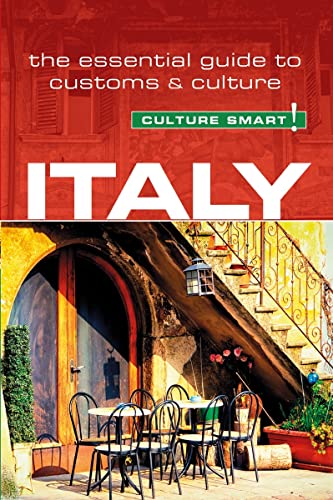
Inhaltsangabe
Italy delights and stimulates with its magnificent cities and monuments, its stunningly beautiful landscapes, the glory of its art and architecture, the richness and variety of its food, the elegance of its design and fashion, and the vitality and charm of its people. Italian style and culture have been exported all over the world.
What is it like at home? Almost ten years after the 2008 banking crisis, Italy struggles to maintain its standard of living, the stability of the currency, and its ability to provide jobs for its school leavers and university graduates, many of whom now leave to work elsewhere in Europe. In addition, the influx of refugees from southeast Europe and across the Mediterranean is putting pressure on both its security and its economy. How are traditional Italian society and politics changing to deal with these challenges, with its most famous political personality of the last ten years, the former prime minister Silvio Berlusconi, still apparently waiting in the wings?
The Italians are the most European-minded of nations, having emerged from a long history of regional fragmentation. Culture Smart! Italy introduces you to their history and culture and offers an insider's guide to their daily lives, passions, and preoccupations. This is your chance to get to know them better.
Die Inhaltsangabe kann sich auf eine andere Ausgabe dieses Titels beziehen.
Über die Autorin bzw. den Autor
Barry Tomalin is Senior Lecturer in International Communication and Cultural Awareness at the London Academy of Diplomacy and Director of the Business Cultural Trainers Certificate at International House, London. He has taught at Link University in Rome, and run training programs in Milan, Rome, Genoa, and Naples. He has traveled extensively in Italy and provides the visitor with his firsthand experience and professional insight into this fascinating country and its people.
Auszug. © Genehmigter Nachdruck. Alle Rechte vorbehalten.
Italy
By Barry TomalinBravo Ltd
Copyright © 2016 Kuperard
All rights reserved.
ISBN: 978-1-85733-830-0All rights reserved.
Contents
Cover,
Title Page,
Copyright,
About the Author,
Map of Italy,
Introduction,
Key Facts,
Chapter 1: LAND AND PEOPLE,
Chapter 2: VALUES AND ATTITUDES,
Chapter 3: FESTIVALS AND TRADITIONS,
Chapter 4: MAKING FRIENDS,
Chapter 5: DAILY LIFE,
Chapter 6: TIME OUT,
Chapter 7: GETTING AROUND,
Chapter 8: BUSINESS BRIEFING,
Chapter 9: COMMUNICATING,
Further Reading,
Acknowledgments,
CHAPTER 1
LAND & PEOPLE
GEOGRAPHY
Bordered on the north and west by Switzerland and France, and to the northeast by Austria and Slovenia, Italy's landmass extends south into the Mediterranean, between the Ligurian and Tyrrhenian seas in the west and the Adriatic and Ionian seas in the east. Italy is first and foremost a Mediterranean country and the Italians share characteristics with other Latin nations — spontaneity, and a relationship-based and not particularly time-conscious society. Of the three main islands off its coast, Sicily and Sardinia are Italian, while Corsica — birthplace of Napoleon Bonaparte — is French. The capital, Rome, lies more or less in the center.
Italy is shaped like a boot, reaching down from central southern Europe with its toe, Sicily, in the Mediterranean and its heel, the town of Brindisi, in the Ionian Sea. From top to toe it is about 1,000 miles (1,600 km) by the national expressway (autostrada) network. The Brenner Pass in the north is on the same latitude as Berne in Switzerland, whereas the toe of southern Sicily is on the same latitude as Tripoli in Libya. Only a quarter of the country is arable lowland, watered by rivers such as the Po, Adige, Arno, and Tiber. The whole of the northern frontier region is fringed by the Alps, including the jagged peaks of the Dolomites, while the Apennine Mountains run like a backbone down the peninsula from the Gulf of Genoa to the Straits of Messina, with snow-covered peaks until early summer.
CLIMATE AND WEATHER
Italy's climate is Mediterranean, but northern Italy is on average four degrees cooler than the south because the country extends over ten degrees of latitude. The inhabitants of Milan, in the great northern plain of the River Po, endure winters as cold as Copenhagen in Denmark (40°F/5°C in January), whereas their summers are almost as hot as in Naples in the south (88°F/31°C in July) — but without the refreshing sea breezes. Turin, at the foot of the Alps, is even colder in winter (39°F/4°C in January) but has less torrid summers (75°F/24°C in July).
All the coastal areas are hot and dry in summer but subject also to violent thunderstorms, which can cause sudden flash floods. Inland cities such as Florence and Rome can be delightful early in the year (68°F/20°C in April), but unpleasantly heavy and sticky in July and August (88°F/31°C).
Spring and early summer and fall are the best times to visit, though in Easter week Italian town centers are full of tourists, and in April and May they are packed with crowds of Italian schoolchildren on excursions. September and early October, when hotel rates and plane fares are cheaper, are often especially beautiful with clear fresh sunny days at the time of the grape harvest. October and November, the months of the olive harvest, have the heaviest rainfall of the year, but the winter months can also be wet, so take a waterproof coat and a good comfortable pair of walking shoes. (Naples has a higher average annual rainfall than London!) This is the time for the operagoer, and the winter sports enthusiast, or to enjoy crowd-free shopping in Milan, Rome, or Venice. But before February is out, the pink almond is already blossoming in the South.
POPULATION
Italy's population is about 61 million, in spite of having one of Europe's lowest birth rates and the greatest gaps between births and deaths. The population has fallen 3.7 percent since 2009. The greatest decline, according to the Italian Statistics Office ISTAT is in the northeast and the islands.
Changes in the population are due to three factors; lower birth rates, greater emigration, and a longer-lived population. Italy now has one of the oldest populations in Europe, second only to Germany, and the level of population has been boosted by immigration. According to statistics, 4.9 million foreigners now have Italian citizenship.
One reason for this is smaller families as more and more women seek their own careers, even though women still make up only a relatively small percentage of the professional and technical workforce. While 88 percent of all Italian women have one child, over half decide not to have another. Interestingly, the life expectancy of Italian women has doubled in fifty years to an average age of eighty-two.
According to UN estimates, some 300,000 immigrant workers a year will be needed to maintain Italy's workforce. There has been a steady stream of migrants from North Africa and the Far East, but the majority now come from central and southeastern Europe. Although Italy has made some attempts to curb immigration, these foreign workers are also regarded as "useful invaders." For decades, Italy was a land of emigration (principally to the USA and Latin America, and later Australia). The presence of immigrants in Italy's cities is a relatively new phenomenon and many Italians are still coming to terms with it.
A noted issue in recent Italian politics has been the influx of refugees from southeastern Europe and the war-torn areas of Syria, Libya, and the Sahel, many via Istanbul.
Stories of refugees crossing the Mediterranean in ageing hulks of boats, trafficked by criminals, often abandoned and left to drift toward the Italian shores maybe to be rescued by Italian coastguards, was one of the recurring tragedies in international news in 2014–15 and one which the inadequately resourced EU Mediterranean fleet could not successfully resolve.
The Italian navy said it could no longer resource the rescue operations at the level needed, and at the end of 2014 EU backers were also announcing cutbacks in their support.
REGIONS AND CITIES
Italy contains two mini-states, the Republic of San Marino and the Vatican. San Marino covers just 24 square miles (61 sq. km), and is the world's oldest (and second smallest) republic, dating from the fourth century CE. The Vatican City, a tiny enclave in the heart of Rome, is the seat of the Pope, head of the Roman Catholic Church.
The Vatican City (Stato della Città del Vaticano)
Measuring 109 acres (0.4 sq. km), less than a third of the size of Monaco, the Vatican is a sovereign state on the west bank of the Tiber. This tiny area is what remains of the Papal States, which were created by Pope Innocent II (1198–1216) by playing off rival candidates for the title of Holy Roman Emperor. Before their conquest by the Piedmontese in the 1860s, the Papal States stretched from the Tyrrhenian Sea in the west to the Adriatic in the east, and had a population of three million souls. Today the Vatican is the world's smallest state, with an army of Swiss Guards (actually mainly Italians on temporary posting), and a population of about a thousand. Most of the workers in the Vatican City live outside and commute in every working day. As a state, it has all it needs: a post office, a railway station, a helipad, a TV...
„Über diesen Titel“ kann sich auf eine andere Ausgabe dieses Titels beziehen.
Suchergebnisse für Italy - Culture Smart!: The Essential Guide to Customs...

Beispielbild für diese ISBN
Italy - Culture Smart!: The Essential Guide to Customs & Culture
Anbieter: Wonder Book, Frederick, MD, USA
Verkäuferbewertung 5 von 5 Sternen

Zustand: Very Good. Very Good condition. A copy that may have a few cosmetic defects. May also contain light spine creasing or a few markings such as an owner's name, short gifter's inscription or light stamp. Artikel-Nr. G07A-02750
Gebraucht kaufen
EUR 6,41
Versand gratis
Versand innerhalb von USA
Versand innerhalb von USA
Anzahl: 1 verfügbar
Beispielbild für diese ISBN
Italy - Culture Smart! (Second Edition, Second)
Anbieter: ThriftBooks-Atlanta, AUSTELL, GA, USA
Verkäuferbewertung 5 von 5 Sternen
Paperback. Zustand: Fair. No Jacket. Readable copy. Pages may have considerable notes/highlighting. ~ ThriftBooks: Read More, Spend Less. Artikel-Nr. G1857338308I5N00
Gebraucht kaufen
EUR 7,32
Versand gratis
Versand innerhalb von USA
Versand innerhalb von USA
Anzahl: 1 verfügbar
Beispielbild für diese ISBN
Italy - Culture Smart! (Second Edition, Second)
Anbieter: ThriftBooks-Atlanta, AUSTELL, GA, USA
Verkäuferbewertung 5 von 5 Sternen
Paperback. Zustand: Good. No Jacket. Pages can have notes/highlighting. Spine may show signs of wear. ~ ThriftBooks: Read More, Spend Less. Artikel-Nr. G1857338308I3N00
Gebraucht kaufen
EUR 7,32
Versand gratis
Versand innerhalb von USA
Versand innerhalb von USA
Anzahl: 1 verfügbar
Beispielbild für diese ISBN
Italy - Culture Smart! (Second Edition, Second)
Anbieter: ThriftBooks-Atlanta, AUSTELL, GA, USA
Verkäuferbewertung 5 von 5 Sternen
Paperback. Zustand: Very Good. No Jacket. May have limited writing in cover pages. Pages are unmarked. ~ ThriftBooks: Read More, Spend Less. Artikel-Nr. G1857338308I4N00
Gebraucht kaufen
EUR 7,32
Versand gratis
Versand innerhalb von USA
Versand innerhalb von USA
Anzahl: 1 verfügbar
Beispielbild für diese ISBN
Italy - Culture Smart! (Second Edition, Second)
Anbieter: ThriftBooks-Reno, Reno, NV, USA
Verkäuferbewertung 5 von 5 Sternen
Paperback. Zustand: Very Good. No Jacket. May have limited writing in cover pages. Pages are unmarked. ~ ThriftBooks: Read More, Spend Less. Artikel-Nr. G1857338308I4N00
Gebraucht kaufen
EUR 7,32
Versand gratis
Versand innerhalb von USA
Versand innerhalb von USA
Anzahl: 1 verfügbar
Beispielbild für diese ISBN
Italy - Culture Smart! (Second Edition, Second)
Anbieter: ThriftBooks-Dallas, Dallas, TX, USA
Verkäuferbewertung 5 von 5 Sternen
Paperback. Zustand: Good. No Jacket. Former library book; Pages can have notes/highlighting. Spine may show signs of wear. ~ ThriftBooks: Read More, Spend Less. Artikel-Nr. G1857338308I3N10
Gebraucht kaufen
EUR 7,32
Versand gratis
Versand innerhalb von USA
Versand innerhalb von USA
Anzahl: 1 verfügbar
Beispielbild für diese ISBN
Italy - Culture Smart! (Second Edition, Second)
Anbieter: ThriftBooks-Dallas, Dallas, TX, USA
Verkäuferbewertung 5 von 5 Sternen
Paperback. Zustand: Very Good. No Jacket. Former library book; May have limited writing in cover pages. Pages are unmarked. ~ ThriftBooks: Read More, Spend Less. Artikel-Nr. G1857338308I4N10
Gebraucht kaufen
EUR 7,32
Versand gratis
Versand innerhalb von USA
Versand innerhalb von USA
Anzahl: 1 verfügbar
Beispielbild für diese ISBN
Italy - Culture Smart! (Second Edition, Second)
Anbieter: ThriftBooks-Dallas, Dallas, TX, USA
Verkäuferbewertung 5 von 5 Sternen
Paperback. Zustand: Good. No Jacket. Pages can have notes/highlighting. Spine may show signs of wear. ~ ThriftBooks: Read More, Spend Less. Artikel-Nr. G1857338308I3N00
Gebraucht kaufen
EUR 7,32
Versand gratis
Versand innerhalb von USA
Versand innerhalb von USA
Anzahl: 1 verfügbar
Beispielbild für diese ISBN
Italy - Culture Smart!: The Essential Guide to Customs & Culture
Anbieter: WorldofBooks, Goring-By-Sea, WS, Vereinigtes Königreich
Verkäuferbewertung 5 von 5 Sternen
Paperback. Zustand: Fair. A readable copy of the book which may include some defects such as highlighting and notes. Cover and pages may be creased and show discolouration. Artikel-Nr. GOR015130978
Gebraucht kaufen
EUR 4,94
EUR 6,68 Versand
Versand von Vereinigtes Königreich nach USA
Versand von Vereinigtes Königreich nach USA
Anzahl: 1 verfügbar
Beispielbild für diese ISBN
Italy - Culture Smart!: The Essential Guide to Customs & Culture
Anbieter: WorldofBooks, Goring-By-Sea, WS, Vereinigtes Königreich
Verkäuferbewertung 5 von 5 Sternen
Paperback. Zustand: Very Good. The book has been read, but is in excellent condition. Pages are intact and not marred by notes or highlighting. The spine remains undamaged. Artikel-Nr. GOR009421707
Gebraucht kaufen
EUR 4,94
EUR 6,68 Versand
Versand von Vereinigtes Königreich nach USA
Versand von Vereinigtes Königreich nach USA
Anzahl: 2 verfügbar