
Verwandte Artikel zu Mongolia - Culture Smart!: The Essential Guide to Customs...
Inhaltsangabe
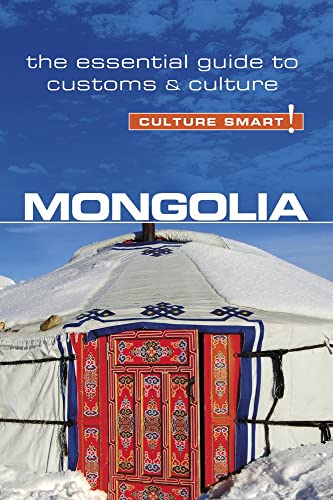
Mongolia is landlocked between its neighbors China and Russia in the heart of Asia. For centuries after the disintegration of Genghis Khan's empire it was ruled by one or the other, but in 1990 the Mongols embraced democracy. Now, after two centuries of Manchu stagnation and seventy years of Soviet communism, they are rebuilding their national heritage.
Rarely in the news but making progress toward a market economy, this resource-rich but infrastructure-poor country is a land of pioneers, and its greatest asset is the Mongol people, who are friendly, cooperative, ambitious, and well educated. English is now the first foreign language and the country's leaders are forging new partnerships with international investors.
Travelers from across the world are drawn to the "land of blue sky" by its picturesque mountains and lakes, flower-carpeted steppes and stony deserts, home to the snow leopard, the wild horse and camel, and the Gobi bear. The broad pasturelands, with herds of grazing livestock, and the traditional lifestyle of the nomads contrast with the busy streets of the capital Ulan Bator, a bustling metropolis of over one million people, modern hotels, apartments, and shops, interspersed with Buddhist monasteries and temples, surrounded by crowded suburbs of traditional felt tents. Mongolia's many attractions range from dinosaur skeletons and the remains of ancient civilizations to relics and reenactments of the Genghis Khan era, and the traditional sports of wrestling, archery, and horse-racing.
Culture Smart! Mongolia provides rare insights into contemporary Mongolian society, and offers practical tips on what to expect and how to conduct yourself in order to get the most out of your visit. Despite the undeniable challenges posed by modernity, these warm, tough, adaptable, and hospitable people welcome visitors and are open to the world.
Die Inhaltsangabe kann sich auf eine andere Ausgabe dieses Titels beziehen.
Über die Autorinnen und Autoren
Alan Sanders is the leading British authority on Mongolia. A former lecturer in Mongolian Studies at London’s School of Oriental and African Studies, he worked for many years at the BBC and is now a freelance consultant, writing about Mongolia’s political and economic scene. He is a member of the International Association of Mongolian Studies, Ulan Bator, and contributes to seminars and publications of the Mongolia and Inner Asia Studies Unit of the University of Cambridge. He was awarded the Mongolian Order of the Pole Star for promoting British–Mongolian relations and knowledge about Mongolia.
Alan Sanders is the leading British authority on Mongolia. A former lecturer in Mongolian Studies at London's School of Oriental and African Studies, he worked for many years at the BBC and is now a freelance consultant, writing about Mongolia's political and economic scene. He is a member of the International Association of Mongolian Studies, Ulan Bator, and contributes to seminars and publications of the Mongolia and Inner Asia Studies Unit of the University of Cambridge. He was awarded the Mongolian Order of the Pole Star for promoting British'mongolian relations and knowledge about Mongolia.
Auszug. © Genehmigter Nachdruck. Alle Rechte vorbehalten.
Mongolia
By Alan SandersBravo Ltd
Copyright © 2016 Alan Sanders
All rights reserved.
ISBN: 978-1-85733-717-4All rights reserved.
Contents
Cover,
Title Page,
Copyright,
About the Author,
Map of Mongolia,
Introduction,
Key Facts,
Chapter 1: LAND AND PEOPLE,
Chapter 2: VALUES AND ATTITUDES,
Chapter 3: CUSTOMS AND TRADITIONS,
Chapter 4: MAKING FRIENDS,
Chapter 5: THE MONGOLS AT HOME,
Chapter 6: TIME OUT,
Chapter 7: TRAVEL, HEALTH, AND SAFETY,
Chapter 8: BUSINESS BRIEFING,
Chapter 9: COMMUNICATING,
Conclusion,
Further Reading,
Acknowledgment,
CHAPTER 1
LAND & PEOPLE
GEOGRAPHY
An independent landlocked country in the heart of Asia between N41° and 52° and E88° and 120°, Mongolia borders Russia (RF) for 2,202 miles (3,543 km) to the north and China (PRC) for 2,926 miles (4,709 km) to the east, south, and west. Mongolia's area of 603,909 square miles (1,564,116 sq. km) makes it the eighteenth-largest country in the world, but with a population of three million the average density is fewer than five persons per square mile (or 2 per sq. km). The capital, Ulan Bator (Ulaanbaatar), 4,400 feet (1,350 m) above sea level, has a population of 1.3 million.
The western and northern borders and central plateau are mountainous, the south and east flat, mostly steppe and govi (gobi), or gravel semi-desert. The highest peak, Khüiten ("cold"), rises to 14,355 feet (4,374 m) at the western junction of Mongolia's borders with China and Russia in the Tavan Bogd ("holy five") range of the Mongol Altai Mountains. The lowest point is Lake Khökhnuur (1,745 feet, or 532 m. above sea level) in the eastern plains, but the biggest lakes are in the west and north: Lake Uvs (1,446 sq. miles, or 3,376 sq. km), and Lake Khövsgöl (1,057 sq. miles, or 2,738 sq. km). The longest river, the Kherlen, 754 miles (1,213 km), rises in the northern Khentii Mountains, loops east and, via Chinese Inner Mongolia, joins the Argun tributary of the Amur (Heilongjiang, Black Dragon River) forming the Russian–Chinese border. The Orkhon, 698 miles (1,124 km), rises in the Khangai Mountains and flows north, near the Russian border joining the Selenge, which enters Lake Baikal.
Forest, mostly Siberian larch, covers about 8 percent of Mongolia, mainly on the northern mountain slopes. Some 36 percent is desert and govi, but dunes form only a small proportion. The Gobi mesas are the source of dinosaur fossils and eggs. Altan Els ("golden sands"), east of Lake Uvs, is the world's northernmost desert. The steppe, which accounts for 55 percent of the country, is where most nomads live, in ger, or circular, felt-covered, lattice-walled tents, grazing their herds of sheep, goats, cattle, horses, and camels (52 million head at the end of 2014).
Mongolia's continental climate has long, cold winters and short, hot summers. Ulan Bator's average January temperature is -40°F (-40°C) and its July average 63°F (17°C). Spring is windy and dusty; summer downpours can flood rivers. In winter frozen snow may cover pastures, so livestock cannot graze and would starve if not moved or fed emergency fodder.
THE PEOPLE
Mongols
Genghis Khan united Turkic and Tungusic "people of the felt tents" as the Mongol nation in 1206. Because of his belief in "eternal blue heaven" (see Tengerism, this page), Genghis called his people "Blue Mongols." They are born with a blue spot (khökh tolbo) on the buttocks, a common feature of Japanese and Koreans. After the Mongol Empire's collapse the heartland was incorporated in the Qing Empire of China's Manchu conquerors, the southern Mongols' territory as Inner Mongolia, and the northern Mongols' lands as Outer Mongolia. Russia expanded into Siberia, bringing the Buryats at Lake Baikal under the Tsar's rule. The Oirats, or western Mongols, were destroyed by the Qing as a political power, but remain a distinctive cultural group. The Kalmyks fled Qing China and migrated to Russia, occupying the Caspian steppes. Outer Mongolia came under Soviet control in 1921, while Inner Mongolia remained part of China. The world population of Mongols is estimated at nine million, and more live outside Mongolia than in it. The Mongol population of China's Inner Mongolia Autonomous Region alone is more numerous, although a minority among the Han Chinese. Most Mongols living in Mongolia today are Khalkh, constituting 82.4 percent of the population (2010). The largest Mongol minorities are Dörvöd (2.8 percent) in the northwest, and Buryat (1.7 percent) along the Russian border.
Kazakhs
Living as nomads in the Altai Mountain borderlands of China in the nineteenth century, Kazakh tribes moved into western Mongolia, where they constitute the majority in Bayan-Ölgii province and a significant minority in neighboring Khovd and Uvs provinces. They account for 3.9 percent of Mongolia's population (2010). Some Kazakhs claim descent from Genghis Khan's eldest son, Jochi. The word Kazakh (qazaq), meaning "marauder," comes from the fourteenth century and is also the source of the Russian word Cossack. In the twentieth century Mongolia's Kazakhs worked in the coalmines of Nalaikh and Darkhan. Many of Bayan-Ölgii's Kazakhs are herders; some are hunters with eagles.
After the birth of democracy in Mongolia in 1990, thousands of Kazakhs emigrated to Kazakhstan, but many later returned. Mongolia's Kazakhs speak a dialect of the same Altaic language as the Kazakhs of Kazakhstan, but their speech and customs were hardly understood there, and they found assimilation difficult.
The Turkic minorities of Mongolia include the Khoton, perhaps of Uighur origin, living in Uvs province, and the Tannu Uriankhai or Dukhan reindeer herders of the Lake Khövsgöl area, related to the Tuvans of the neighboring RF Republic of Tuva.
Language
The official language of the country is Mongol, and its Khalkh dialect is spoken by 80 percent of the population. Other dialects are spoken in neighboring countries. Mongol is a Ural-Altaic language and most closely resembles the Turkic languages of some Central Asian republics and Turkey. Tibetan, Chinese, and Russian terms have been absorbed over the centuries.
Mongol is unusual in having two scripts. The Mongolian Cyrillic alphabet was adopted for everyday use after the Second World War. The earlier "Uighur" syllabary, written in vertical columns, was introduced under Genghis Khan. It was banned during the Soviet period, and revived after the birth of democracy in 1990. While Mongolia was "building socialism" after the Second World War the second language of Mongols was Russian, which was taught in all schools. Today the foreign language of choice is English.
Because Kazakh is not an official language in Mongolia, Mongolia's Kazakhs have to use Mongol in contacts with the authorities. For a brief description of languages and scripts, see this page.
A BRIEF HISTORY
The Founding State
The 2,220th anniversary of Modun Shanyui's proclamation of the Hun state in 209 BCE was decreed by Mongolian President Elbegdorj in 2011 as the anniversary of the "founding state" of the Mongols, and the Huns (Khünnü, Xiongnu) are considered the Mongols' ancestors. Our knowledge about them comes mostly from the archaeology of northern Mongolia. The Hun state disintegrated in the fourth century CE, and in the sixth to seventh centuries Turkic people ruled what is...
„Über diesen Titel“ kann sich auf eine andere Ausgabe dieses Titels beziehen.
Suchergebnisse für Mongolia - Culture Smart!: The Essential Guide to Customs...

Beispielbild für diese ISBN
Mongolia - Culture Smart!: The Essential Guide to Customs & Culture
Anbieter: AwesomeBooks, Wallingford, Vereinigtes Königreich
Verkäuferbewertung 5 von 5 Sternen

paperback. Zustand: Very Good. Mongolia - Culture Smart!: The Essential Guide to Customs & Culture This book is in very good condition and will be shipped within 24 hours of ordering. The cover may have some limited signs of wear but the pages are clean, intact and the spine remains undamaged. This book has clearly been well maintained and looked after thus far. Money back guarantee if you are not satisfied. See all our books here, order more than 1 book and get discounted shipping. Artikel-Nr. 7719-9781857337174
Gebraucht kaufen
EUR 8,41
EUR 4,80 Versand
Versand von Vereinigtes Königreich nach USA
Versand von Vereinigtes Königreich nach USA
Anzahl: 2 verfügbar
Beispielbild für diese ISBN
Mongolia - Culture Smart!: The Essential Guide to Customs & Culture
Anbieter: Bahamut Media, Reading, Vereinigtes Königreich
Verkäuferbewertung 5 von 5 Sternen
Paperback. Zustand: Very Good. Shipped within 24 hours from our UK warehouse. Clean, undamaged book with no damage to pages and minimal wear to the cover. Spine still tight, in very good condition. Remember if you are not happy, you are covered by our 100% money back guarantee. Artikel-Nr. 6545-9781857337174
Gebraucht kaufen
EUR 11,30
EUR 8,14 Versand
Versand von Vereinigtes Königreich nach USA
Versand von Vereinigtes Königreich nach USA
Anzahl: 1 verfügbar
Beispielbild für diese ISBN
Culture Smart! Mongolia: The Essential Guide to Customs & Culture
Anbieter: Revaluation Books, Exeter, Vereinigtes Königreich
Verkäuferbewertung 5 von 5 Sternen
Paperback. Zustand: Brand New. 168 pages. 6.75x4.50x0.40 inches. In Stock. Artikel-Nr. __1857337174
Neu kaufen
EUR 13,21
EUR 11,66 Versand
Versand von Vereinigtes Königreich nach USA
Versand von Vereinigtes Königreich nach USA
Anzahl: 2 verfügbar
Beispielbild für diese ISBN
Mongolia - Culture Smart!: The Essential Guide to Customs & Culture
Anbieter: Ria Christie Collections, Uxbridge, Vereinigtes Königreich
Verkäuferbewertung 5 von 5 Sternen
Zustand: New. In English. Artikel-Nr. ria9781857337174_new
Neu kaufen
EUR 14,90
EUR 10,93 Versand
Versand von Vereinigtes Königreich nach USA
Versand von Vereinigtes Königreich nach USA
Anzahl: 4 verfügbar
Beispielbild für diese ISBN
Mongolia - Culture Smart!: The Essential Guide to Customs & Culture
Anbieter: WorldofBooks, Goring-By-Sea, WS, Vereinigtes Königreich
Verkäuferbewertung 5 von 5 Sternen
Paperback. Zustand: Very Good. The book has been read, but is in excellent condition. Pages are intact and not marred by notes or highlighting. The spine remains undamaged. Artikel-Nr. GOR009792922
Gebraucht kaufen
EUR 19,94
EUR 6,53 Versand
Versand von Vereinigtes Königreich nach USA
Versand von Vereinigtes Königreich nach USA
Anzahl: 1 verfügbar
Beispielbild für diese ISBN
Mongolia - Culture Smart!
Anbieter: Kennys Bookstore, Olney, MD, USA
Verkäuferbewertung 5 von 5 Sternen
Zustand: New. Series: Culture Smart! Num Pages: 168 pages. BIC Classification: 1FPM; JFCA; WTH. Category: (G) General (US: Trade). Weight in Grams: 367. . 2016. Paperback. . . . . Books ship from the US and Ireland. Artikel-Nr. V9781857337174
Neu kaufen
EUR 19,08
EUR 9,14 Versand
Versand innerhalb von USA
Versand innerhalb von USA
Anzahl: Mehr als 20 verfügbar
Foto des Verkäufers
Mongolia - Culture Smart! : The Essential Guide to Customs & Culture
Anbieter: AHA-BUCH GmbH, Einbeck, Deutschland
Verkäuferbewertung 5 von 5 Sternen
Taschenbuch. Zustand: Neu. Neuware - Mongolia is landlocked between its neighbors China and Russia in the heart of Asia. For centuries after the disintegration of Genghis Khan's empire it was ruled by one or the other, but in 1990 the Mongols embraced democracy. Now, after two centuries of Manchu stagnation and seventy years of Soviet communism, they are rebuilding their national heritage.Rarely in the news but making progress toward a market economy, this resource-rich but infrastructure-poor country is a land of pioneers, and its greatest asset is the Mongol people, who are friendly, cooperative, ambitious, and well educated. English is now the first foreign language and the country's leaders are forging new partnerships with international investors.Travelers from across the world are drawn to the 'land of blue sky' by its picturesque mountains and lakes, flower-carpeted steppes and stony deserts, home to the snow leopard, the wild horse and camel, and the Gobi bear. The broad pasturelands, with herds of grazing livestock, and the traditional lifestyle of the nomads contrast with the busy streets of the capital Ulan Bator, a bustling metropolis of over one million people, modern hotels, apartments, and shops, interspersed with Buddhist monasteries and temples, surrounded by crowded suburbs of traditional felt tents. Mongolia's many attractions range from dinosaur skeletons and the remains of ancient civilizations to relics and reenactments of the Genghis Khan era, and the traditional sports of wrestling, archery, and horse-racing.Culture Smart! Mongolia provides rare insights into contemporary Mongolian society, and offers practical tips on what to expect and how to conduct yourself in order to get the most out of your visit. Despite the undeniable challenges posed by modernity, these warm, tough, adaptable, and hospitable people welcome visitors and are open to the world. Artikel-Nr. 9781857337174
Neu kaufen
EUR 15,55
EUR 30,50 Versand
Versand von Deutschland nach USA
Versand von Deutschland nach USA
Anzahl: 1 verfügbar
Beispielbild für diese ISBN
MONGOLIA CULTURE SMART THE ESSENTIAL GUI
Anbieter: Speedyhen, Hertfordshire, Vereinigtes Königreich
Verkäuferbewertung 5 von 5 Sternen
Zustand: NEW. Artikel-Nr. NW9781857337174
Neu kaufen
EUR 13,21
EUR 47,81 Versand
Versand von Vereinigtes Königreich nach USA
Versand von Vereinigtes Königreich nach USA
Anzahl: 4 verfügbar
Foto des Verkäufers
Mongolia - Culture Smart!
Anbieter: moluna, Greven, Deutschland
Verkäuferbewertung 5 von 5 Sternen
Zustand: New. Culture Smart guides help travellers have a more meaningful and successful time abroad through a better understanding of the local culture. Chapters on values, attitudes, customs, and daily life will help you make the most of your visit, while tips on etiqu. Artikel-Nr. 116445934
Neu kaufen
EUR 17,93
EUR 48,99 Versand
Versand von Deutschland nach USA
Versand von Deutschland nach USA
Anzahl: 4 verfügbar
Foto des Verkäufers
Mongolia - Culture Smart! | The Essential Guide to Customs & Culture
Anbieter: preigu, Osnabrück, Deutschland
Verkäuferbewertung 5 von 5 Sternen
Taschenbuch. Zustand: Neu. Mongolia - Culture Smart! | The Essential Guide to Customs & Culture | Alan Sanders (u. a.) | Taschenbuch | 168 S. | Englisch | 2016 | Kuperard | EAN 9781857337174 | Verantwortliche Person für die EU: Petersen Buchimport GmbH, Vertrieb, Weidestr. 122a, 22083 Hamburg, gpsr[at]petersen-buchimport[dot]com | Anbieter: preigu. Artikel-Nr. 104953248
Neu kaufen
EUR 18,25
EUR 70,00 Versand
Versand von Deutschland nach USA
Versand von Deutschland nach USA
Anzahl: 1 verfügbar