
Verwandte Artikel zu Conjugated Linoleic Acids and Conjugated Vegetable...
Inhaltsangabe
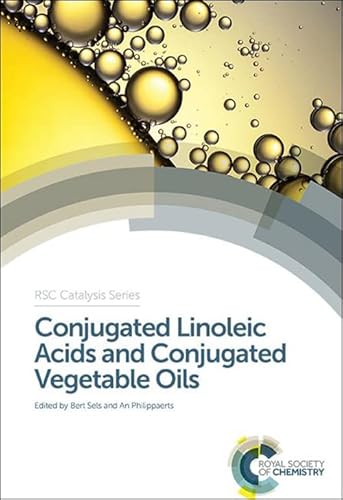
Conjugated linoleic acids (CLA) isomers of linoleic acid – a compound derived from meat and dairy products. Attention was first drawn to their potential anti-carcinogen properties in the 1980’s; since then further health benefits have been reported, and applications in the glue and paint industries as a renewable resource have been explored.
This comprehensive book presents an overview of the background and research into CLA and examines each of their applications in the context of the chemistry surrounding them and CLA-enriched oils. The biosynthesis of CLA is presented, with a discussion on how animal husbandry could promote CLA production. Other chapters examine the current strategies for their synthesis using bespoke catalysts and enzymes. Readers from academia and industry will find the layout of the book highly accessible, with sections for each application.
The editors are both active researchers in the field, and have brought together a wealth of expertise from across the globe, presenting a comprehensive guide to this valuable group of compounds and their potential applications.
Die Inhaltsangabe kann sich auf eine andere Ausgabe dieses Titels beziehen.
Von der hinteren Coverseite
Conjugated linoleic acids (CLA) isomers of linoleic acid – a compound derived from meat and dairy products. Attention was first drawn to their potential anti-carcinogen properties in the 1980’s; since then further health benefits have been reported, and applications in the glue and paint industries as a renewable resource have been explored.
This comprehensive book presents an overview of the background and research into CLA and examines each of their applications in the context of the chemistry surrounding them and CLA-enriched oils. The biosynthesis of CLA is presented, with a discussion on how animal husbandry could promote CLA production. Other chapters examine the current strategies for their synthesis using bespoke catalysts and enzymes. Readers from academia and industry will find the layout of the book highly accessible, with sections for each application.
The editors are both active researchers in the field, and have brought together a wealth of expertise from across the globe, presenting a comprehensive guide to this valuable group of compounds and their potential applications.
Aus dem Klappentext
Conjugated linoleic acids (CLA) isomers of linoleic acid a compound derived from meat and dairy products. Attention was first drawn to their potential anti-carcinogen properties in the 1980 s; since then further health benefits have been reported, and applications in the glue and paint industries as a renewable resource have been explored.
This comprehensive book presents an overview of the background and research into CLA and examines each of their applications in the context of the chemistry surrounding them and CLA-enriched oils.  The biosynthesis of CLA is presented, with a discussion on how animal husbandry could promote CLA production. Other chapters examine the current strategies for their synthesis using bespoke catalysts and enzymes. Readers from academia and industry will find the layout of the book highly accessible, with sections for each application.
The editors are both active researchers in the field, and have brought together a wealth of expertise from across the globe, presenting a comprehensive guide to this valuable group of compounds and their potential applications.
Auszug. © Genehmigter Nachdruck. Alle Rechte vorbehalten.
Conjugated Linoleic Acids and Conjugated Vegetable Oils
By Bert SelsThe Royal Society of Chemistry
Copyright © 2014 The Royal Society of Chemistry
All rights reserved.
ISBN: 978-1-84973-900-9All rights reserved.
Contents
Chapter 1 Synthesis of Conjugated Linoleic Acid in Ruminants and Humans K. J. Shingfield and R. J. Wallace, 1,
Chapter 2 Use of CLA in Animal Feed N. Everaert, A. Koppenol and J. Buyse, 66,
Chapter 3 Health Benefits of Conjugated Fatty Acids Yeonhwa Park and Yan Wu, 94,
Chapter 4 Commercial CLA and its Chemical Use Rafael Lopes Quirino, 117,
Chapter 5 Recent Advances in the Production of CLA and Conjugated Vegetable Oils: Microbial and Enzymatic Production of Conjugated Fatty Acids and Related Fatty Acids in Biohydrogenation Metabolism Jun Ogawa, Michiki Takeuchi and Shigenobu Kishino, 131,
Chapter 6 Recent Advances in the Production of CLA and Conjugated Vegetable Oils: Production of CLA and Conjugated Vegetable Oils via Metal Catalysis K. Belkacemi, N. Chorfa and S. Hamoudi, 151,
Chapter 7 Analysis of Conjugated and Other Fatty Acids Pierluigi Delmonte, Ali Reza Fardin-Kia, Noelia Aldai, Magdi M. Mossoba and John K. G. Kramer, 172,
Subject Index 232,
CHAPTER 1
Synthesis of Conjugated Linoleic Acid in Ruminants and Humans
K. J. SHINGFIELD AND R. J. WALLACE
1.1 Introduction
There is increasing evidence that nutrition plays an important role in the development of human chronic diseases including cancer, cardiovascular disease, insulin resistance and obesity. Developing foods and diets that promote human health is central to public health initiatives for preventing and lowering the economic and social impact of chronic disease. Direct and indirect costs of cardiovascular disease (CVD) have been estimated at $445 billion in the United States and h200 billion within the European Union. Global costs of CVD in 2010 totalled US$863 billion. These costs are projected to increase several-fold by 2030, reaching unsustainable levels due to people living longer and the rapid increase in obesity in developed and developing countries.
Following the identification of the anti-mutagenic properties of conjugated linoleic acid (CLA) isomers in cooked beef, numerous studies have investigated the biological activity of CLA isomers in cell culture and animal models (http://fri.wisc.edu/cla.php). Much of the research has focused on the effects of cis-9, trans-11 18 : 2 (trivial name rumenic acid) or trans-10, cis-12 18 : 2 due to the cost and availability in a range of mammalian and avian species. In addition to the inhibition of mutagenesis, specific isomers of CLA have been demonstrated to modulate energy metabolism, immunity, inflammation, insulin resistance and bone metabolism in several animal models. However, evidence that the physiological effects described in vitro or in other mammalian species are also replicated in humans remains inconclusive.
The optimal intake of one or more isomers of CLA in humans remains to be established. Direct or exponential extrapolation of data from studies in the rat model of carcinogenesis implicate intakes of cis-9, trans-11 18 : 2 between 95 and 3500 mg per day being required for significant decreases in cancer risk in human populations. Estimates of cis-9, trans-11 18 : 2 consumption in human populations vary between 15 and 1500 mg per day depending on the methodology used to estimate dietary intakes, with marked differences between countries, gender and socioeconomic groups. Isomers of CLA are present in a wide range of foods including milk, beef and lamb, and to a much lesser extent in pork, poultry, fish and eggs, with trace amounts in some vegetable sources. Milk and dairy products are the major source of CLA in the human diet contributing to between 66 and 80% of total intake. Typically concentrations of CLA in pork, chicken and fish are lower than 0.1 g per 100 g lipid, whereas the consumption of lamb, beef and other ruminant meat products account for 15–32% of average daily CLA intakes in developed countries.
The CLA status of humans can be increased using oral supplements or fortification of foods with synthetic sources, which typically contain equal amounts of cis-9, trans-11 18 : 2 and trans-10, cis-12 18 : 2, or from a higher consumption of ruminant-derived foods. In contrast to synthetic sources, meat and milk from ruminants contain numerous positional and geometric isomers of CLA with conjugated double bonds at positions 6,8 through to 13,15, with cis-9, trans-11 18 : 2 being the major isomer, and trans-7, cis-9 18 : 2 or trans-11, cis-13 18 : 2 as the second most abundant.
Producing ruminant-derived foods containing higher amounts of CLA offers the opportunity to increase the consumption of CLA, principally cis-9, trans-11 18 : 2, without requiring major changes in the habitual diet or eating habits. For this reason, a considerable amount of research has been dedicated to understanding the nutritional, physiological and genetic factors influencing CLA concentrations in meat and milk. The present chapter provides a comprehensive review of the most recent evidence on the biochemical, microbial, nutritional and physiological factors influencing the biosynthesis of CLA isomers in ruminants and humans.
1.2 Lipid Metabolism in the Rumen
1.2.1 Substrate Supply
Ruminant diets vary in composition depending on species, physiological state, and the cost and availability of feed ingredients. Diets often contain forage species (grasses, legumes or forage maize) of variable maturity and nutritional value, and differ in composition from those containing forages as the sole feed to combinations of forage, cereals and protein supplements. By-products of the food industry or lipid supplements may also be included. A general characteristic of ruminant diets is the relatively high fibre content (<300 g cell wall constituents per kg dry matter (DM)) and low amounts of lipid (<50 g per kg DM). Lipid in cereal grains, plant oils, marine lipids and by-products are predominantly in the form of triacylglycerol (TAG). Most of the lipid in grasses and legume forages is present as phospholipids (PL) and glycolipids (GL) located within thylakoid membranes of chloroplasts. In forages, GL are the major lipid class, with galactolipids (monoand digalactosyl diacylglyerol) being the most prevalent. These differ from TAG in that one or more carbohydrate molecules are linked to one position of the glycerol backbone. Forages and oilseeds also contain several PL species, (phosphatidylcholine, phosphatidylglycerol and phosphatidylethanolamine) as structural components of cell membranes. Most PL contain a diacylglycerol covalently bonded to a phosphate group, which is often esterified to a simple organic molecule such as choline. In general, both fatty acid moieties bound to glycerol in glycolipids or PL are unsaturated. Non-esterified fatty acids (NEFA) are minor components of most ruminant feeds, but are the major lipid class in ensiled grasses and forage legumes and in certain proprietary fat supplements. Changes arising during fermentation in silo are characterized by a substantial decrease in the relative abundance of polar membrane lipid and an increase in NEFA, TAG, diacylglycerol (DAG) and monoacylglycerol (MAG) fractions attributable to the activity of plant and microbial lipases.
The amount and composition of constituent fatty acids differs substantially between ingredients...
„Über diesen Titel“ kann sich auf eine andere Ausgabe dieses Titels beziehen.
Suchergebnisse für Conjugated Linoleic Acids and Conjugated Vegetable...

Beispielbild für diese ISBN
Conjugated Linoleic Acids and Conjugated Vegetable Oils: Volume 19 (Catalysis Series)
Anbieter: Romtrade Corp., STERLING HEIGHTS, MI, USA
Verkäuferbewertung 5 von 5 Sternen

Zustand: New. This is a Brand-new US Edition. This Item may be shipped from US or any other country as we have multiple locations worldwide. Artikel-Nr. ABBB-147924
Beispielbild für diese ISBN
Conjugated Linoleic Acids and Conjugated Vegetable Oils (Catalysis Series, Volume 19)
Verlag:
Royal Society of Chemistry, 2014
ISBN 10: 1849739005
ISBN 13: 9781849739009
Gebraucht
Hardcover
Anbieter: Books From California, Simi Valley, CA, USA
Verkäuferbewertung 4 von 5 Sternen

hardcover. Zustand: Very Good. Artikel-Nr. mon0004159522
Gebraucht kaufen
EUR 52,94
EUR 4,44 Versand
Versand innerhalb von USA
Versand innerhalb von USA
Anzahl: 1 verfügbar
Beispielbild für diese ISBN
CONJUGATED LINOLEIC ACIDS AND CONJUGATED VEGETABLE OILS
Anbieter: Romtrade Corp., STERLING HEIGHTS, MI, USA
Verkäuferbewertung 5 von 5 Sternen
Zustand: New. This is a Brand-new US Edition. This Item may be shipped from US or any other country as we have multiple locations worldwide. Artikel-Nr. ABBB-3934
Beispielbild für diese ISBN
Conjugated Linoleic Acids and Conjugated Vegetable Oils.
Verlag:
Royal Society of Chemistry, 2014
ISBN 10: 1849739005
ISBN 13: 9781849739009
Gebraucht
Hardcover
Anbieter: Majestic Books, Hounslow, Vereinigtes Königreich
Verkäuferbewertung 4 von 5 Sternen
Zustand: Used. Artikel-Nr. 142527800
Gebraucht kaufen
EUR 57,69
EUR 7,74 Versand
Versand von Vereinigtes Königreich nach USA
Versand von Vereinigtes Königreich nach USA
Anzahl: 1 verfügbar
Beispielbild für diese ISBN
Conjugated Linoleic Acids and Conjugated Vegetable Oils.
Verlag:
Royal Society of Chemistry, 2014
ISBN 10: 1849739005
ISBN 13: 9781849739009
Gebraucht
Hardcover
Anbieter: Biblios, Frankfurt am main, HESSE, Deutschland
Verkäuferbewertung 4 von 5 Sternen
Zustand: Used. Artikel-Nr. 18134836973
Gebraucht kaufen
EUR 58,02
EUR 9,95 Versand
Versand von Deutschland nach USA
Versand von Deutschland nach USA
Anzahl: 1 verfügbar