
Verwandte Artikel zu Dr. Strangelove or: How I learned to Stop Worrying...
Dr. Strangelove or: How I learned to Stop Worrying and Love the Bomb (BFI Film Classics) - Softcover
Buch 54 von 229: BFI Film Classics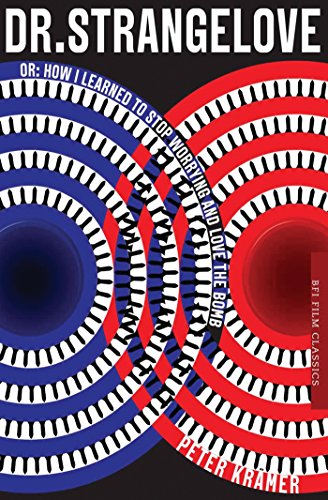
Inhaltsangabe
Stanley Kubrick's Dr. Strangelove or: How I Learned to Stop Worrying and Love the Bomb (1964) has long been recognised as one of the key artistic expressions of the nuclear age. Made at a time when nuclear war between the United States and the Soviet Union was a real possibility, the film is menacing, exhilarating, thrilling, insightful and very funny.
Combining a scene-by-scene analysis of Dr. Strangelove with new research in the Stanley Kubrick Archive, Peter Krämer's study foregrounds the connections the film establishes between the Cold War and World War II, and between sixties America and Nazi Germany. How did the film come to be named after a character who only appears in it very briefly? Why does he turn out to be a Nazi? And how are his ideas for post-apocalyptic survival in mineshafts connected to the sexual fantasies of the military men who destroy life on the surface of the Earth?
This special edition features original cover artwork by Marian Bantjes.
Die Inhaltsangabe kann sich auf eine andere Ausgabe dieses Titels beziehen.
Über die Autorin bzw. den Autor
Peter Krämer is Senior Lecturer in Film Studies at the University of East Anglia, UK. He is the author of The New Hollywood: From Bonnie and Clyde to Star Wars (2005), A Clockwork Orange (2011) and the BFI Film Classic on 2001: A Space Odyssey (2010).
Von der hinteren Coverseite
Stanley Kubrick's Dr. Strangelove or: How I Learned to Stop Worrying and Love the Bomb (1964) has long been recognised as one of the key artistic expressions of the nuclear age. Made at a time when nuclear war between the United States and the Soviet Union was a real possibility, the film is menacing, exhilarating, thrilling, insightful and very funny.
Combining a scene-by-scene analysis of Dr. Strangelove with new research in the Stanley Kubrick Archive, Peter Krämer's study foregrounds the connections the film establishes between the Cold War and World War II, and between sixties America and Nazi Germany. How did the film come to be named after a character who only appears in it very briefly? Why does he turn out to be
a Nazi? And how are his ideas for post-apocalyptic survival in mineshafts connected to the sexual fantasies of the military men who destroy life on the surface of the Earth?
This special edition features original cover artwork by Marian Bantjes.
„Über diesen Titel“ kann sich auf eine andere Ausgabe dieses Titels beziehen.
Suchergebnisse für Dr. Strangelove or: How I learned to Stop Worrying...

Beispielbild für diese ISBN
Dr. Strangelove or: How I learned to Stop Worrying and Love the Bomb (BFI Film Classics)
Anbieter: World of Books (was SecondSale), Montgomery, IL, USA
Verkäuferbewertung 5 von 5 Sternen

Zustand: Very Good. Item in very good condition! Textbooks may not include supplemental items i.e. CDs, access codes etc. Artikel-Nr. 00108279330
Gebraucht kaufen
EUR 8,38
Versand gratis
Versand innerhalb von USA
Versand innerhalb von USA
Anzahl: 1 verfügbar
Beispielbild für diese ISBN
Dr. Strangelove or: How I Learned to Stop Worrying and Love the Bomb
Verlag:
Bloomsbury Publishing Plc, 2014
ISBN 10: 1844577783
ISBN 13: 9781844577781
Gebraucht
Softcover
Anbieter: Better World Books: West, Reno, NV, USA
Verkäuferbewertung 5 von 5 Sternen
Zustand: Very Good. Pages intact with possible writing/highlighting. Binding strong with minor wear. Dust jackets/supplements may not be included. Stock photo provided. Product includes identifying sticker. Better World Books: Buy Books. Do Good. Artikel-Nr. 16737752-20
Gebraucht kaufen
EUR 10,18
Versand gratis
Versand innerhalb von USA
Versand innerhalb von USA
Anzahl: 1 verfügbar
Beispielbild für diese ISBN
Dr. Strangelove or: How I Learned to Stop Worrying and Love the Bomb
Verlag:
Bloomsbury Publishing Plc, 2014
ISBN 10: 1844577783
ISBN 13: 9781844577781
Gebraucht
Softcover
Anbieter: Better World Books Ltd, Dunfermline, Vereinigtes Königreich
Verkäuferbewertung 5 von 5 Sternen
Zustand: Good. Pages intact with minimal writing/highlighting. The binding may be loose and creased. Dust jackets/supplements are not included. Stock photo provided. Product includes identifying sticker. Better World Books: Buy Books. Do Good. Artikel-Nr. 40796451-6
Gebraucht kaufen
EUR 8,98
EUR 5,83 Versand
Versand von Vereinigtes Königreich nach USA
Versand von Vereinigtes Königreich nach USA
Anzahl: 1 verfügbar
Beispielbild für diese ISBN
Dr. Strangelove Or: How I Learned to Stop Worrying and Love.
Anbieter: Majestic Books, Hounslow, Vereinigtes Königreich
Verkäuferbewertung 4 von 5 Sternen

Zustand: New. pp. 120. Artikel-Nr. 355909858
Neu kaufen
EUR 17,55
EUR 7,58 Versand
Versand von Vereinigtes Königreich nach USA
Versand von Vereinigtes Königreich nach USA
Anzahl: 3 verfügbar
Beispielbild für diese ISBN
Dr. Strangelove: Or: How I Learned to Stop Worrying and Love the Bomb
Anbieter: Revaluation Books, Exeter, Vereinigtes Königreich
Verkäuferbewertung 5 von 5 Sternen
Paperback. Zustand: Brand New. 114 pages. 7.50x5.25x0.50 inches. In Stock. Artikel-Nr. __1844577783
Neu kaufen
EUR 15,65
EUR 11,66 Versand
Versand von Vereinigtes Königreich nach USA
Versand von Vereinigtes Königreich nach USA
Anzahl: 2 verfügbar
Beispielbild für diese ISBN
Dr. Strangelove or: How I learned to Stop Worrying and Love the Bomb
Anbieter: Kennys Bookstore, Olney, MD, USA
Verkäuferbewertung 5 von 5 Sternen
Zustand: New. Stanley Kubrick's Dr. Strangelove, or: How I learned to Stop Worrying and Love the Bomb (1964) is the definitive film about the nuclear age. Peter Kramer analyses its key scenes and complex production history, highlighting major themes such as Strangelove's Nazi past and the film's close relationship with real-world nuclear strategy and politics. Series: BFI Film Classics. Num Pages: 120 pages, 50 black & white halftones. BIC Classification: APFA. Category: (U) Tertiary Education (US: College). Dimension: 193 x 137 x 9. Weight in Grams: 216. . 2014. 2014th Edition. Paperback. . . . . Books ship from the US and Ireland. Artikel-Nr. V9781844577781
Neu kaufen
EUR 20,27
EUR 9,17 Versand
Versand innerhalb von USA
Versand innerhalb von USA
Anzahl: 10 verfügbar
Beispielbild für diese ISBN
Dr. Strangelove or: How I learned to Stop Worrying and Love the Bomb (BFI Film Classics)
Anbieter: Ria Christie Collections, Uxbridge, Vereinigtes Königreich
Verkäuferbewertung 5 von 5 Sternen
Zustand: New. In English. Artikel-Nr. ria9781844577781_new
Neu kaufen
EUR 18,61
EUR 10,92 Versand
Versand von Vereinigtes Königreich nach USA
Versand von Vereinigtes Königreich nach USA
Anzahl: 2 verfügbar
Foto des Verkäufers
Dr. Strangelove or: How I learned to Stop Worrying and Love the Bomb
Verlag:
Bloomsbury Publishing PLC Okt 2014, 2014
ISBN 10: 1844577783
ISBN 13: 9781844577781
Neu
Taschenbuch
Anbieter: AHA-BUCH GmbH, Einbeck, Deutschland
Verkäuferbewertung 5 von 5 Sternen
Taschenbuch. Zustand: Neu. Neuware - Stanley Kubrick's Dr. Strangelove or: How I Learned to Stop Worrying and Love the Bomb (1964) has long been recognised as one of the key artistic expressions of the nuclear age. Made at a time when nuclear war between the United States and the Soviet Union was a real possibility, the film is menacing, exhilarating, thrilling, insightful and very funny.Combining a scene-by-scene analysis of Dr. Strangelove with new research in the Stanley Kubrick Archive, Peter Krämer's study foregrounds the connections the film establishes between the Cold War and World War II, and between sixties America and Nazi Germany. How did the film come to be named after a character who only appears in it very briefly Why does he turn out to be a Nazi And how are his ideas for post-apocalyptic survival in mineshafts connected to the sexual fantasies of the military men who destroy life on the surface of the Earth This special edition features original cover artwork by Marian Bantjes. Artikel-Nr. 9781844577781
Neu kaufen
EUR 27,86
EUR 30,50 Versand
Versand von Deutschland nach USA
Versand von Deutschland nach USA
Anzahl: 2 verfügbar
Beispielbild für diese ISBN
DR STRANGELOVE
Anbieter: Speedyhen, Hertfordshire, Vereinigtes Königreich
Verkäuferbewertung 5 von 5 Sternen
Zustand: NEW. Artikel-Nr. NW9781844577781
Neu kaufen
EUR 14,76
EUR 47,79 Versand
Versand von Vereinigtes Königreich nach USA
Versand von Vereinigtes Königreich nach USA
Anzahl: 2 verfügbar
Foto des Verkäufers
Dr. Strangelove or: How I learned to Stop Worrying and Love the Bomb
Anbieter: moluna, Greven, Deutschland
Verkäuferbewertung 5 von 5 Sternen
Zustand: New. Stanley Kubrick s Dr. Strangelove, or: How I learned to Stop Worrying and Love the Bomb (1964) is the definitive film about the nuclear age. Peter Kramer analyses its key scenes and complex production history, highlighting major themes such as Strangelove s. Artikel-Nr. 597067047
Neu kaufen
EUR 19,99
EUR 48,99 Versand
Versand von Deutschland nach USA
Versand von Deutschland nach USA
Anzahl: 2 verfügbar