
Verwandte Artikel zu Forgiveness is Power: A User's Guide to Why and...
Inhaltsangabe
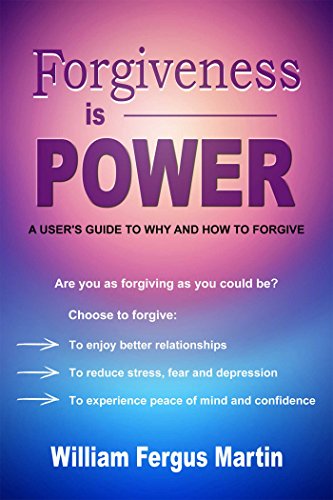
In this manual on how to forgive, there are insights and exercises without a preachy message or assumption that people “should” forgive. With chapters that explain what forgiveness is and how to deal with obstacles to it, it also addresses reconciliation with others and one’s own self. Practical and accessible, the book does not require religious practice or philosophy; it simply shows how to forgive in order to enhance self-esteem, be happier, and break free from limitations that can hold a person back.
Die Inhaltsangabe kann sich auf eine andere Ausgabe dieses Titels beziehen.
Über die Autorin bzw. den Autor
William Martin has more than 30 years of involvement with the Findhorn community, including the role of chairman of the executive committee.
Auszug. © Genehmigter Nachdruck. Alle Rechte vorbehalten.
When we forgive we turn painful lesions into useful lessons.
Do we want to stay wounded or do we want to be wise? We only gain in wisdom if we actually learn from our experiences. Yet, we are unlikely to gain any wisdom, or helpful insights, from an experience if we are too wounded to feel anything other than bitterness and resentment about it.
We need to be willing to release painful feelings around an event to fully gain the benefits, which are available from it. We may wonder what possible benefit we can obtain from a particularly painful event; however, we could turn this around and decide that the more painful the event the more important it is to derive some benefit out of it. A benefit is good, no matter how small. The ability to find a benefit, or derive meaning, from an event can have a profound effect on our healing process, as it reconnects us with what is good in life and what is good in ourselves.
If we hold onto our wounds in an area of life then we hold back the growth of wisdom in that area too. If we stay wounded, and do not engage with the forgiveness process, we are less likely to have the necessary wisdom to avoid or prevent similar types of painful events. Even if a painful sense of aversion stops us from creating exactly the same type of situation with the same person, we may stumble into similar experiences, as we will be running blind.
When we hold on tightly to a painful experience we are holding ourselves hostage to that pain. Have you ever met a person who is so embittered by something that it is hard to reach them? Bitterness is not exactly passive is it? It spills out all over the place and can affect the people around the embittered person. People who get locked into, “They did this to me,” and who do not get past that, then go on to do similar things to others. Bitterness makes people abusive, and it make them assume that their abusiveness is justified as they feel that they are the “victim”. Alternatively it makes them so withdrawn that they are unavailable to connect with in a healthy way. If we had a parent, teacher, or carer like this, it can be very damaging. If we feel bitter it is important to know that bitterness is an active and harmful process of thinking and feeling. Bitter and resentful people as parents are unable to give their children the love they need. Bitter and resentful bosses are unable to support their staff. Bitter people go after “the money” and do not care about much else, as they feel uncared for and can only connect with others who are the same. Most of us tend to avoid a bitter person – which gives them something else to be bitter about. It is vital to release bitter wounds and step into the wisdom, which is awakened through forgiveness. If we want to have a happy and healthy life then forgiveness is essential; it is not optional. Forgiveness is not something separate and distinct from such things as wisdom, insight or emotional intelligence. Forgiveness particularly has a lot to do with developing wisdom. A more forgiving attitude makes it easier to develop wisdom, as we are more able to look beyond our own initial reactions and look deeper. We may then see that what was going on with the other person was nothing to do with us and was them acting out some pain or fear of their own. Likewise a deeper capacity for wisdom makes it easier to forgive. It makes us more understanding of other people and their motive and less likely that we will take things personally. Wisdom is, in part, our capacity to extract meaning and value from our experiences. The more capacity we have to extract meaning from an experience the more likely that we see ways in which good will come out of it. This makes it easier to forgive. Wisdom is not an abstract quality as it brings very practical benefits in handling even very tricky situations.
Situations in our life which may seem like complex mazes, and difficult or impossible to get out of when we are stuck in them, can be easily handled when we have a view from above. When we see a maze from above it is easy to see the way out. Wisdom lets us see the mazes we confront in our lives from above and lets us see the simple answer, which may have been right in front of us. When I was about ten years old I lived in a rough area in Glasgow, Scotland where there were many street gangs. Some of the gangs were loyal to two soccer teams, Celtic and Rangers, and there was fierce and extreme rivalry between them. The Celtic and Rangers fans very often had violent clashes that were reported in the local news. As I was walking home from school one day I was suddenly surrounded by a gang who demanded to know, “What team do you support, Celtic or Rangers!” I saw no clue as to the right answer as none of them were wearing team colours, so at first I did not know what to say. I did know that it would not be a good idea to give the wrong answer, as I would probably get beat up. Then I suddenly knew what to answer and how to say it. I loudly proclaimed, “I support Scotland!” As that was the name of our national team, they cheered enthusiastically and I walked away before they could think of something else to make trouble about. This kind of resolution to a situation comes from the natural wisdom of our forgiving mind. The forgiving mind thinks “outside of the box” and is not constrained by the limits placed on it by others. It naturally looks for win/win solutions no matter what the problem. It looks to ennoble and enhance, and to help and to heal. Therefore the development of forgiveness, which leads to the development of our natural wisdom, not only helps us handle our wounds, it helps us prevent further wounds happening in the first place. It helps us handle crises, make better choices and create better relationships.
We have the capacity to transform what could have turned out to be ugly and painful experiences into something much more positive for all concerned, or at least get through them relatively unscathed. When we listen to the part of us that wants to offer forgiveness and accept forgiveness, such transformation becomes more accessible to us. We become more the author of our experience.
If we have not forgiven, other things masquerading as wisdom may take its place. Attitudes like, “People can’t be trusted,” “Men are just impossible,” and the like, fill the void and set us up for more difficulty in the future. Such attitudes are lesions not lessons: they are wounds not wisdom. Our true lessons bring a sense of freedom and lightness not a sense of restriction and heaviness.
Unforgiveness is the regular and ongoing maintenance of an old pain. If someone hits us with a stick and we then pick up the same stick and strike ourselves with it ten times, who has hurt us the most? It is obviously our own action that is hurting us the most. Yet that is what we do when we stay in a state of unforgiveness; we are hitting ourselves with our assailant’s stick – many times, often for years.
Imagine we had a meter that clocked up how much pain we were in and for how long (like an electric meter for pain), let’s call it the Painometer. Whereas an electric meter measures kilowatt-hours, the Painometer measures pain-I-got hours.
The original event may be, say, one pain-I-got hour. How many units of pain do we clock up every time we have angry or upset thoughts about the event? Over months and years we could clock up many times more pain than caused by the original event. We could be turning an event that caused us only one pain-I-got hour into ten or a hundred pain-I-got hours. If the other person intended to hurt us we are helping them by doing a better job than they did! If they did not intend to hurt us there is even less reason to be hurting ourselves needlessly. When we...
„Über diesen Titel“ kann sich auf eine andere Ausgabe dieses Titels beziehen.
Suchergebnisse für Forgiveness is Power: A User's Guide to Why and...

Beispielbild für diese ISBN
Forgiveness is Power: A User's Guide to Why and How to Forgive
Verlag:
Inner Traditions Bear and Company, 2013
ISBN 10: 1844096289
ISBN 13: 9781844096282
Gebraucht
Paperback
Anbieter: World of Books (was SecondSale), Montgomery, IL, USA
Verkäuferbewertung 5 von 5 Sternen

Paperback. Zustand: Very Good. In this manual on how to forgive, there are insights and exercises without a preachy message or assumption that people should forgive. Artikel-Nr. 00095377185
Gebraucht kaufen
EUR 3,99
Versand gratis
Versand innerhalb von USA
Versand innerhalb von USA
Anzahl: 2 verfügbar
Beispielbild für diese ISBN
Forgiveness Is Power : A User's Guide to Why and How to Forgive
Verlag:
Inner Traditions International, Limited, 2013
ISBN 10: 1844096289
ISBN 13: 9781844096282
Gebraucht
Softcover
Anbieter: Better World Books, Mishawaka, IN, USA
Verkäuferbewertung 5 von 5 Sternen
Zustand: Good. Pages intact with minimal writing/highlighting. The binding may be loose and creased. Dust jackets/supplements are not included. Stock photo provided. Product includes identifying sticker. Better World Books: Buy Books. Do Good. Artikel-Nr. 16854430-20
Gebraucht kaufen
EUR 8,21
Versand gratis
Versand innerhalb von USA
Versand innerhalb von USA
Anzahl: 1 verfügbar
Beispielbild für diese ISBN
Forgiveness is Power: A User's Guide to Why and How to Forgive
Anbieter: WorldofBooks, Goring-By-Sea, WS, Vereinigtes Königreich
Verkäuferbewertung 5 von 5 Sternen
Paperback. Zustand: Very Good. The book has been read, but is in excellent condition. Pages are intact and not marred by notes or highlighting. The spine remains undamaged. Artikel-Nr. GOR005372935
Gebraucht kaufen
EUR 3,35
EUR 6,51 Versand
Versand von Vereinigtes Königreich nach USA
Versand von Vereinigtes Königreich nach USA
Anzahl: 2 verfügbar
Beispielbild für diese ISBN
Forgiveness is Power: A User's Guide to Why and How to Forgive
Anbieter: Books From California, Simi Valley, CA, USA
Verkäuferbewertung 4 von 5 Sternen

paperback. Zustand: Good. Artikel-Nr. mon0003608285
Gebraucht kaufen
EUR 6,70
EUR 4,38 Versand
Versand innerhalb von USA
Versand innerhalb von USA
Anzahl: 1 verfügbar
Beispielbild für diese ISBN
Forgiveness Is Power : A User's Guide to Why and How to Forgive
Verlag:
Inner Traditions International, Limited, 2013
ISBN 10: 1844096289
ISBN 13: 9781844096282
Gebraucht
Softcover
Anbieter: Better World Books Ltd, Dunfermline, Vereinigtes Königreich
Verkäuferbewertung 5 von 5 Sternen
Zustand: Very Good. Former library copy. Pages intact with possible writing/highlighting. Binding strong with minor wear. Dust jackets/supplements may not be included. Includes library markings. Stock photo provided. Product includes identifying sticker. Better World Books: Buy Books. Do Good. Artikel-Nr. GRP81481588
Gebraucht kaufen
EUR 6,00
EUR 5,81 Versand
Versand von Vereinigtes Königreich nach USA
Versand von Vereinigtes Königreich nach USA
Anzahl: 1 verfügbar
Beispielbild für diese ISBN
Forgiveness is Power: A User's Guide to Why and How to Forgive
Anbieter: Books From California, Simi Valley, CA, USA
Verkäuferbewertung 4 von 5 Sternen
paperback. Zustand: Fine. Artikel-Nr. mon0003890831
Gebraucht kaufen
EUR 7,80
EUR 4,38 Versand
Versand innerhalb von USA
Versand innerhalb von USA
Anzahl: 1 verfügbar
Beispielbild für diese ISBN
Forgiveness Is Power: A User's Guide on How and Why to Forgive
Anbieter: Revaluation Books, Exeter, Vereinigtes Königreich
Verkäuferbewertung 5 von 5 Sternen
Paperback. Zustand: Brand New. 192 pages. 8.98x5.98x0.63 inches. In Stock. Artikel-Nr. __1844096289
Neu kaufen
EUR 11,53
EUR 11,63 Versand
Versand von Vereinigtes Königreich nach USA
Versand von Vereinigtes Königreich nach USA
Anzahl: 2 verfügbar
Beispielbild für diese ISBN
Forgiveness is Power: A User's Guide to Why and How to Forgive
Anbieter: WYEMART LIMITED, HEREFORD, Vereinigtes Königreich
Verkäuferbewertung 5 von 5 Sternen
Paperback. Zustand: Good. Artikel-Nr. mon0000341658
Gebraucht kaufen
EUR 9,58
EUR 13,95 Versand
Versand von Vereinigtes Königreich nach USA
Versand von Vereinigtes Königreich nach USA
Anzahl: 2 verfügbar
Beispielbild für diese ISBN
Forgiveness is Power: A User's Guide to Why and How to Forgive
Anbieter: WYEMART LIMITED, HEREFORD, Vereinigtes Königreich
Verkäuferbewertung 5 von 5 Sternen
Paperback. Zustand: New. Artikel-Nr. mon0000361451
Neu kaufen
EUR 10,57
EUR 13,95 Versand
Versand von Vereinigtes Königreich nach USA
Versand von Vereinigtes Königreich nach USA
Anzahl: Mehr als 20 verfügbar
Foto des Verkäufers
Forgiveness is Power
Anbieter: moluna, Greven, Deutschland
Verkäuferbewertung 5 von 5 Sternen
Kartoniert / Broschiert. Zustand: New. Über den AutorWilliam Martin has more than 30 years of involvement with the Findhorn community, including the role of chairman of the executive committee.InhaltsverzeichnisrnrnDedication Acknowledgements . Artikel-Nr. 606326927
Neu kaufen
EUR 18,62
EUR 48,99 Versand
Versand von Deutschland nach USA
Versand von Deutschland nach USA
Anzahl: 4 verfügbar