Inhaltsangabe
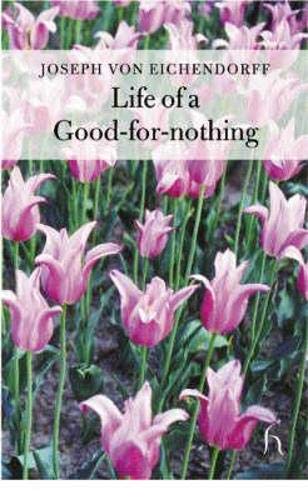
Despaired of by his father and impatient with his lot, a young man hears the enticing call of life on the road. Leaving his home and all that he knows, he embarks on a journey in search of adventure and glory. One day enjoying fortune and plenty, the next at the mercy of villains and rogues, his is a life of chance and wonder that, despite its strange twists and turns, ultimately leads him to his heart’s desire. Primarily a lyrical poet, Joseph von Eichendorff is a key figure in Germany’s literary heritage.
Die Inhaltsangabe kann sich auf eine andere Ausgabe dieses Titels beziehen.
Über die Autorin bzw. den Autor
German lyric poet and novelist, Joseph Karl Benedikt Freiherr von Eichendorff, was born in March 1788. He was a Silesian nobleman by birth, living much of his early life on his parents estate, Schloss Lubowitz. Eichendorff, alongside his older brother, William, studied law at the universities of Halle, Heidelberg, and Berlin, and his first extant poems date from 1804, the year before his matriculation at Halle. Early military zeal saw him abandon study for the Prussian War of Liberation (1813) against Napoleon, and again obey a call to arms in 1815. In October 1814 he had married Luise von Larisch. After university, Eichendorff wrote a novel, entitled Future and Present (1815), a work composed in Lubowitz and Vienna, where he studied to enter the Prussian civil service. He later worked as a government official from 1816- 44, initially as a junior lawyer in Breslau, and then as a government adviser. A devout Catholic, Eichendorff wrote to honour Nature, which he deemed to exist wherever God s work was untarnished by humanity.His poems have inspired composers such as Mendelssohn and Richard Strauss, and his songs are now as popular as Volkslieder (folk-songs). A master of the short story, and a versatile dramatist, Eichendorff also translated Calderón s religious dramas, and devoted his later years to a history of German literature. His most famous work, however, remains his novella of 1826, 'Life of a Good-for-nothing', which is considered a perfect example of Romantic narrative fiction. He died in 1857.
„Über diesen Titel“ kann sich auf eine andere Ausgabe dieses Titels beziehen.
Suchergebnisse für The Life of a Good-for-nothing (Hesperus Classics)

Beispielbild für diese ISBN
The Life of a Good-for-nothing (Hesperus Classics)
Verlag:
Hesperus Press Ltd, United Kingdom, London, 2002
ISBN 10: 1843910047
ISBN 13: 9781843910046
Gebraucht
Paperback
Anbieter: WorldofBooks, Goring-By-Sea, WS, Vereinigtes Königreich
Verkäuferbewertung 5 von 5 Sternen

Paperback. Zustand: Very Good. The book has been read, but is in excellent condition. Pages are intact and not marred by notes or highlighting. The spine remains undamaged. Artikel-Nr. GOR003977355
Gebraucht kaufen
EUR 6,58
Versand:
EUR 6,41
Von Vereinigtes Königreich nach USA
Anzahl: 3 verfügbar
Beispielbild für diese ISBN
Life of a Good-for-Nothing (Hesperus Classics)
Anbieter: ThriftBooks-Dallas, Dallas, TX, USA
Verkäuferbewertung 5 von 5 Sternen
Paperback. Zustand: Very Good. No Jacket. May have limited writing in cover pages. Pages are unmarked. ~ ThriftBooks: Read More, Spend Less. Artikel-Nr. G1843910047I4N00
Beispielbild für diese ISBN
Life of a Good-for-Nothing (Hesperus Classics)
Anbieter: ThriftBooks-Atlanta, AUSTELL, GA, USA
Verkäuferbewertung 5 von 5 Sternen
Paperback. Zustand: Good. No Jacket. Pages can have notes/highlighting. Spine may show signs of wear. ~ ThriftBooks: Read More, Spend Less. Artikel-Nr. G1843910047I3N00
Beispielbild für diese ISBN
Life of a Good-For-Nothing (Hesperus Classics)
Anbieter: Norbert Kretschmann, Bad Aibling, Deutschland
Verkäuferbewertung 5 von 5 Sternen
Taschenbuch. Zustand: Wie neu. 112 Seiten 2002. Umschlag an den Rändern minimalst berieben. Innenteil tadellos - u n g e l e s e n - keine Risse, Knicke, Anmerkungen. ! KEIN Mängelexemplar. Versand aus München 19-3777 Sprache: Englisch Gewicht in Gramm: 354. Artikel-Nr. 43742
Gebraucht kaufen
EUR 20,00
Versand:
EUR 22,00
Von Deutschland nach USA
Anzahl: 1 verfügbar
Beispielbild für diese ISBN
The Life of a Good-for-nothing (Hesperus Classics)
Anbieter: Hay-on-Wye Booksellers, Hay-on-Wye, HEREF, Vereinigtes Königreich
Verkäuferbewertung 5 von 5 Sternen
Zustand: Good. Some outer edges have minor scuffs. Cover has light scratches. Reading content is in very good condition. Artikel-Nr. 093170-30-10-2024-EE
Gebraucht kaufen
EUR 3,54
Versand:
EUR 74,37
Von Vereinigtes Königreich nach USA
Anzahl: 1 verfügbar