
Verwandte Artikel zu Kubernetes and Docker - An Enterprise Guide: Effectively...
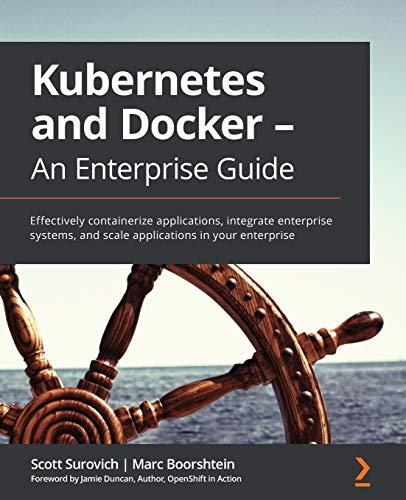
Kubernetes and Docker - An Enterprise Guide: Effectively containerize applications, integrate enterprise systems, and scale applications in your enterprise - Softcover
Inhaltsangabe
Apply Kubernetes beyond the basics of Kubernetes clusters by implementing IAM using OIDC and Active Directory, Layer 4 load balancing using MetalLB, advanced service integration, security, auditing, and CI/CD
Key Features
- Find out how to add enterprise features to a Kubernetes cluster with theory and exercises to guide you
- Understand advanced topics including load balancing, externalDNS, IDP integration, security, auditing, backup, and CI/CD
- Create development clusters for unique testing requirements, including running multiple clusters on a single server to simulate an enterprise environment
Book Description
Containerization has changed the DevOps game completely, with Docker and Kubernetes playing important roles in altering the flow of app creation and deployment. This book will help you acquire the knowledge and tools required to integrate Kubernetes clusters in an enterprise environment.
The book begins by introducing you to Docker and Kubernetes fundamentals, including a review of basic Kubernetes objects. You'll then get to grips with containerization and understand its core functionalities, including how to create ephemeral multinode clusters using kind. As you make progress, you'll learn about cluster architecture, Kubernetes cluster deployment, and cluster management, and get started with application deployment. Moving on, you'll find out how to integrate your container to a cloud platform and integrate tools including MetalLB, externalDNS, OpenID connect (OIDC), pod security policies (PSPs), Open Policy Agent (OPA), Falco, and Velero. Finally, you will discover how to deploy an entire platform to the cloud using continuous integration and continuous delivery (CI/CD).
By the end of this Kubernetes book, you will have learned how to create development clusters for testing applications and Kubernetes components, and be able to secure and audit a cluster by implementing various open-source solutions including OpenUnison, OPA, Falco, Kibana, and Velero.
What you will learn
- Create a multinode Kubernetes cluster using kind
- Implement Ingress, MetalLB, and ExternalDNS
- Configure a cluster OIDC using impersonation
- Map enterprise authorization to Kubernetes
- Secure clusters using PSPs and OPA
- Enhance auditing using Falco and EFK
- Back up your workload for disaster recovery and cluster migration
- Deploy to a platform using Tekton, GitLab, and ArgoCD
Who this book is for
This book is for anyone interested in DevOps, containerization, and going beyond basic Kubernetes cluster deployments. DevOps engineers, developers, and system administrators looking to enhance their IT career paths will also find this book helpful. Although some prior experience with Docker and Kubernetes is recommended, this book includes a Kubernetes bootcamp that provides a description of Kubernetes objects to help you if you are new to the topic or need a refresher.
Table of Contents
- Docker and Containers Essentials
- Working with Docker Data
- Understanding Docker Networking
- Deploying Kubernetes using Kind
- Kubernetes Bootcamp
- Services, Load Balancing, and External DNS
- Integrating Authentication into your Cluster
- RBAC Policies and Auditing
- Deploying a Secured Kubernetes Dashboard
- Creating Pod Security Policies
- Extending Security using Open Policy Agent
- Auditing using Falco and EFK
- Backing up Workloads
- Provisioning a Platform
Die Inhaltsangabe kann sich auf eine andere Ausgabe dieses Titels beziehen.
Über die Autorin bzw. den Autor
Scott Surovich has been in the enterprise for over 20 years and is currently the Global container engineering lead at a Global Tier 1 bank, working on global Kubernetes design and delivery standards, including the surrounding echo-system. His previous roles include working on other global engineering teams including Windows, Linux, and Virtualization. His enterprise experience has allowed him to work with multiple companies on their early Kubernetes offerings, including Kasten, Reduxio, VMware, and Google.
Scott also holds the CKA, CKAD, and Mirantis Kubernetes certifications. As part of the pilot group, he was one of the first people to receive Google's premier certification as a Google Certified Hybrid Multi-Cloud Fellow.
Marc Boorshtein has been a software engineer and consultant for nearly twenty years and is currently the CTO of Tremolo Security, Inc. Marc has spent most of his career building identity management solutions for large enterprises, U.S. Government civilian agencies, and local government public safety systems. In recent years, Marc has focused on applying identity to DevOps and Kubernetes building open source tools for automating the security of infrastructure. Marc is a CKAD, and can often be found in the Kubernetes slack channels answering questions about authentication and authorization.
Von der hinteren Coverseite
Apply Kubernetes beyond the basics of Kubernetes clusters by implementing IAM using OIDC and Active Directory, Layer 4 load balancing using MetalLB, advanced service integration, security, auditing, and CI/CD Key FeaturesFind out how to add enterprise features to a Kubernetes cluster with theory and exercises to guide you Understand advanced topics including load balancing, externalDNS, IDP integration, security, auditing, backup, and CI/CD Create development clusters for unique testing requirements, including running multiple clusters on a single server to simulate an enterprise environment Description Containerization has changed the DevOps game completely, with Docker and Kubernetes playing important roles in altering the flow of app creation and deployment. This book will help you acquire the knowledge and tools required to integrate Kubernetes clusters in an enterprise environment. The book begins by introducing you to Docker and Kubernetes fundamentals, including a review of basic Kubernetes objects. You'll then get to grips with containerization and understand its core functionalities, including how to create ephemeral multinode clusters using kind. As you make progress, you'll learn about cluster architecture, Kubernetes cluster deployment, and cluster management, and get started with application deployment. Moving on, you'll find out how to integrate your container to a cloud platform and integrate tools including MetalLB, externalDNS, OpenID connect (OIDC), pod security policies (PSPs), Open Policy Agent (OPA), Falco, and Velero. Finally, you will discover how to deploy an entire platform to the cloud using continuous integration and continuous delivery (CI/CD). By the end of this Kubernetes book, you will have learned how to create development clusters for testing applications and Kubernetes components, and be able to secure and audit a cluster by implementing various open-source solutions including OpenUnison, OPA, Falco, Kibana, and Velero. What you will learnCreate a multinode Kubernetes cluster using kind Implement Ingress, MetalLB, and ExternalDNS Configure a cluster OIDC using impersonation Map enterprise authorization to Kubernetes Secure clusters using PSPs and OPA Enhance auditing using Falco and EFK Back up your workload for disaster recovery and cluster migration Deploy to a platform using Tekton, GitLab, and ArgoCD Who is this book for This book is for anyone interested in DevOps, containerization, and going beyond basic Kubernetes cluster deployments. DevOps engineers, developers, and system administrators looking to enhance their IT career paths will also find this book helpful. Although some prior experience with Docker and Kubernetes is recommended, this book includes a Kubernetes bootcamp that provides a description of Kubernetes objects to help you if you are new to the topic or need a refresher.
„Über diesen Titel“ kann sich auf eine andere Ausgabe dieses Titels beziehen.
Suchergebnisse für Kubernetes and Docker - An Enterprise Guide: Effectively...

Beispielbild für diese ISBN
Kubernetes and Docker - An Enterprise Guide: Effectively containerize applications, integrate enterprise systems, and scale applications in your enterprise
Verlag:
Packt Publishing Limited, 2020
ISBN 10: 183921340X
ISBN 13: 9781839213403
Gebraucht
Paperback
Anbieter: World of Books (was SecondSale), Montgomery, IL, USA
Verkäuferbewertung 5 von 5 Sternen

Paperback. Zustand: Good. Complete with practical examples and explanations to address running Kubernetes in an enterprise, this book guides you to integrating Kubernetes clusters with load-balancers, external name resolution for services, OIDC using an enterprise directory, Kubernetes impersonation, security using PSPs and OPA, advanced auditing and reporting, backing up workloads, and provisioning a platform. Artikel-Nr. 00102319605
Gebraucht kaufen
EUR 20,26
Versand gratis
Versand innerhalb von USA
Versand innerhalb von USA
Anzahl: 1 verfügbar
Beispielbild für diese ISBN
Kubernetes and Docker - An Enterprise Guide: Effectively containerize applications, integrate enterprise systems, and scale applications in your enterprise
Anbieter: Ria Christie Collections, Uxbridge, Vereinigtes Königreich
Verkäuferbewertung 5 von 5 Sternen
Zustand: New. In English. Artikel-Nr. ria9781839213403_new
Neu kaufen
EUR 66,53
EUR 17,61 Versand
Versand von Vereinigtes Königreich nach USA
Versand von Vereinigtes Königreich nach USA
Anzahl: Mehr als 20 verfügbar