
Verwandte Artikel zu Goose of Hermogenes (Pushkin Press Classics)
Inhaltsangabe
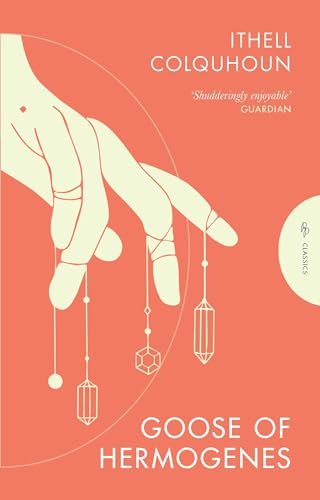
A trance-like feminist fairy tale of magic, alchemy, and the battle of the sexes--for fans of Angela Carter, Leonora Carrington, and O Caledonia
Britain's foremost surrealist painter puts a lushly visual spin on the Philosopher's Stone in her first-ever novel! In this modern fairy tale inspired by alchemy, a nameless narrator is determined to protect the precious jewels in her possession from her uncle, the Prospero-like ruler of an island stronghold. Locked in a battle of wills, her uncle is equally determined to steal the jewels and use their power in his attempts to conquer death by magic. Trapped in his house, she must use guile, strength, and the knowledge unlocked by a series of dreamlike encounters to escape without becoming herself a victim of his dark rituals. By the end of the novel, she has passed through numerous stages of transformation, discovered sexual ecstasy, spoken with the dead, and returned to where she began--her family home. Enchanted islands, journeys across water, myth, magic and mystery define this narrative of twists and turns. The Goose of Hermogenes, which is another name for the philosopher's stone, can transmute base metals into gold and confer eternal life. Structured around the process of alchemical transformation, rife with symbolic imagery, hallucinatory trances and cries from the unconscious, Colquhoun's novel is a feminist fable and its creator's supreme artistic vision.Die Inhaltsangabe kann sich auf eine andere Ausgabe dieses Titels beziehen.
Über die Autorin bzw. den Autor
Ithell Colquhoun (1906-1988) was born in British India and brought up in the United Kingdom. She studied at the Slade School of Fine Art and started exhibiting her paintings in the 1930s, gaining some renown as one of the few women associated with British Surrealism. She began visiting Cornwall during the Second World War, and eventually moved there, continuing to write, paint, and pursue the study of the occult until her death. As well as her novel Goose of Hermogenes, she is the author of two travelogues, The Living Stones: Cornwall and The Crying of the Wind: Ireland, both forthcoming from Pushkin Press.
Auszug. © Genehmigter Nachdruck. Alle Rechte vorbehalten.
Foreword by Peter Owen
I first met lthell Colquhoun in the early 1950s, in a Soho pub called the Wheatsheaf, an establishment frequented by impecunious bohemians when they could afford to do so. Soho at that time was the haunt of writers, painters, down-and-outs, drunks, drug addicts and people on the fringes of the arts, some of whom subsequently became successful. I was there with the poet Thomas Blackburn and some others with an interest in writing. lthell was of that party. At the time she was in her forties and still a very attractive woman: slim, with a soft and unaffected voice, ash-blonde hair and a fair complexion. She also had an endearing giggle. I was told that she was a painter and that she also wrote poetry. I bumped into her a number of times in the Wheatsheaf and I grew to like her. She was multi-talented, affable, with a vivid and unconventional imagination. Coming from a well-to-do family, she had a private income, and her background and education at Cheltenham Ladies' College gave her a veneer of respectability, but this was tempered by her exceptional creativity. She told me that she had written a short novel called Goose of Hermogenes, and I agreed to read it. The book was unusual and memorable, very well written, with a strong mystical element.
I had only just started publishing under my own imprint and had very little money, and I wasn't sure about whether I would be able to sell the novel. It was short, which at that time was problematic, as bookshops did not like books of only a hundred pages or so. I told her I would think about it, which I did, and from time to time she used to press me for an answer.
I got to know lthell better after my marriage in 1953, as she became friends with my wife Wendy, and she often visited us in Holland Road, near Shepherd's Bush, for coffee. She once invited us to a dinner given by the PEN Club at the Rembrandt Hotel in South Kensington. It was there that I first met Peter Vansittart, whom I later published. Ithell and I continued to meet periodically at parties - in the 1950s and 1960s the less well off among our friends, many of them writers and artists, were famous for hosting so-called 'bottle parties', at which each guest contributed a bottle (a favourite was strong, cheap Merrydown cider), and lthell often accompanied us or came over to our flat. Sometimes Wendy and I visited her studio in Windmill Hill, one of the most attractive parts of Hampstead, near the High Street. It was large and comfortably furnished, and lthell lived there most of the year except for the periods when she stayed in her Comish cottage. She was a good hostess, easy to talk to and with a good sense of humour, and we would sit surrounded by her paintings in the studio. These were mostly bleak landscapes, probably of Cornwall, the majority of which incorporated some sort of phallic symbol.
lthell was unpretentious and on the surface appeared relatively conventional - although she sometimes wore a caftan - but we knew she had leanings towards the occult and that she had had some dealings with Aleister Crowley. (She once told me that Crowley had tried to seduce her and had chased her around his house.) We also knew that she had previously been married to an art historian and critic.
In the mid-1950s Ithell suggested to me that she write a travel book about Ireland, so I commissioned her to do so. The book, The Crying of the Wmd,was distinctive and highly original, and Ithell supplied her own illustrations and designed the cover. The book, although unusual, sold reasonably well, and we followed it with The Living Stones, a book about Cornwall. Distinctly out of the ordinary, both books incorporated lthell's interest in the occult and Celtic lore. However, partly because oflthell's reminders, I couldn't get Goose of Hermogenes out of my mind, and in 1961 I decided to publish it. Yet again lthell designed a very good cover, and the novel eventually sold out.
I had known that she was a painter of distinction but did not have a chance tosee her earlier surrealist paintings until she had an exhibition at the Parkin Gallery in Sloane Square in the 1970s. This exhibition was an eye-opener for me; I came to the conclusion that her early work was her best. At any rate, it was a breakthrough for her, and on the strength of it the organizers sold lthell's work on to major galleries.
By this time lthell, who suffered from asthma, had, on her doctor's advice, moved permanently to Cornwall. After this Wendy and I saw very little of her, and the Parkin exhibition was the first time that I'd seen her in a long time - it turned out to be the last. She offered me a fine painting at a good price, but I stupidly did not take up her offer.
This was, of course, an indication that there was not yet any great demand for her paintings, and it was only after her death in 1988 that real national and international regard for her work came about. I believe she was aware of her unusual ability and disappointed that she did not receive the recognition she deserved during her lifetime.
But she was never bitter.
I miss Ithell. She was one of the few really brilliant and exceptionally talented people I ever met who was good company, genuinely unassuming and always a pleasure to be with.
Peter Owen, 2003
ITHELL COLQl.JHOUN (1906-88)
A Background to the Artist by Eric Ratcliffe
It was in 1955 that, using his gift for selecting promising manuscripts, the independent publisher Peter Owen produced the first travel/biographical book by the surrealist artist lthell Colquhoun. Entitled The Crying of the Wind: Ireland, it had been written following a trip she took with friends, travelling from Dublin up to the north west coast of Ireland and back, taking in various detours en route. The travel element of the book was secondary to a descriptive feast of Irish lore and habits, ancient wells, fairy traditions and legends. She was obviously deeply attracted to these features of the landscape. The Times Literary Supplement, on 30 September 1955, referred to it as 'a rare and beautiful travel book' and mentioned the air of mystery that it exuded: 'Here is the authentic touch of the Gothic novelist, and one wishes that Miss Colquhoun had both the canvas large enough and the unrestricted scope to introduce the mysterious figures that should flit across this darkling landscape.'
This 'authentic touch' was to be fulfilled six years later, when Peter Owen published the first edition of Goose of Hermogenes in 1961. The manuscript had been completed some time previously, and its publication followed Colquhoun's second travel book, The Living Stones: Cornwall, published by Peter Owen in 1957, which had been inspired by the landscape surrounding a converted hut in the Lamorna Valley in Cornwall in which Ithell had lived and painted for a time before she moved along the coast to Paul, near Newlyn. It iswith The Living Stones that we fully comprehend that Ithell Colquhoun regarded nature as she found it in the valley and on the cliffs beyond as a part of her, she as one with the flowers and birds - the long-tailed tits, the whistle of the goldcrest, the bluebells and the campion, the sea pinks along the cliffs: 'I am identified with every leaf and pebble, and any threatened hurt to the wilderness of the valley seems to me like a rape.'
Ithell Colquhoun's psychic sensitivity to nature cannot be over emphasized. She was not simply romanticizing about her feeling of being magnetically attracted to the wonders she found in standing stones, circles, wells, the old saints and nature's life. It was a living landscape, not simply a backdrop for tourists or a means to an end for those who made their living from the land.
After a sound education at Cheltenham Ladies'...
„Über diesen Titel“ kann sich auf eine andere Ausgabe dieses Titels beziehen.
Suchergebnisse für Goose of Hermogenes (Pushkin Press Classics)

Beispielbild für diese ISBN
Goose of Hermogenes
Anbieter: World of Books (was SecondSale), Montgomery, IL, USA
Verkäuferbewertung 5 von 5 Sternen

Paperback. Zustand: Good. 'An extraordinary book. Part Gothic fantasy, part emblematic progress through a dream world. It has a gripping hallucinogenic clarity' - Snoo Wilson A trancelike feminist fable by Britain's foremost surrealist painter Calcination. Putrefaction. Exaltation. Trapped on an enchanted island ruled by her uncle, a young woman must pass through the stages of alchemical transformation to escape. He wants to conquer death by magic - and she may pay the price for his ambition. Lushly visual, rife with symbols and cries from the unconscious, Colquhoun's first novel is a surreal feminist fable, and a supreme artistic vision. Includes 'Hexentanz', a lost chapter from the original manuscript. Part of the Pushkin Press Classics series: timeless storytelling by icons of literature, hand-picked from around the globe. With a new introduction by Jennifer Higgie, author of The Other Side: A Journey Into Women, Art and the Spirit World. Ithell Colquhoun (1906-1988) was born in British India and brought up in the United Kingdom. She studied at the Slade School of Fine Art and started exhibiting her paintings in the 1930s, gaining some renown as one of the few women associated with British Surrealism. She began visiting Cornwall during the Second World War, and eventually moved there, continuing to write, paint, and pursue the study of the occult until her death. As well as her novel Goose of Hermogenes, she is the author of two travelogues, The Living Stones: Cornwall and The Crying of the Wind: Ireland, both forthcoming from Pushkin Press. Artikel-Nr. 00107742315
Gebraucht kaufen
EUR 12,38
Versand gratis
Versand innerhalb von USA
Versand innerhalb von USA
Anzahl: 1 verfügbar
Beispielbild für diese ISBN
Goose of Hermogenes
Anbieter: World of Books (was SecondSale), Montgomery, IL, USA
Verkäuferbewertung 5 von 5 Sternen
Paperback. Zustand: Fair. 'An extraordinary book. Part Gothic fantasy, part emblematic progress through a dream world. It has a gripping hallucinogenic clarity' - Snoo Wilson A trancelike feminist fable by Britain's foremost surrealist painter Calcination. Putrefaction. Exaltation. Trapped on an enchanted island ruled by her uncle, a young woman must pass through the stages of alchemical transformation to escape. He wants to conquer death by magic - and she may pay the price for his ambition. Lushly visual, rife with symbols and cries from the unconscious, Colquhoun's first novel is a surreal feminist fable, and a supreme artistic vision. Includes 'Hexentanz', a lost chapter from the original manuscript. Part of the Pushkin Press Classics series: timeless storytelling by icons of literature, hand-picked from around the globe. With a new introduction by Jennifer Higgie, author of The Other Side: A Journey Into Women, Art and the Spirit World. Ithell Colquhoun (1906-1988) was born in British India and brought up in the United Kingdom. She studied at the Slade School of Fine Art and started exhibiting her paintings in the 1930s, gaining some renown as one of the few women associated with British Surrealism. She began visiting Cornwall during the Second World War, and eventually moved there, continuing to write, paint, and pursue the study of the occult until her death. As well as her novel Goose of Hermogenes, she is the author of two travelogues, The Living Stones: Cornwall and The Crying of the Wind: Ireland, both forthcoming from Pushkin Press. Artikel-Nr. 00110901824
Gebraucht kaufen
EUR 12,38
Versand gratis
Versand innerhalb von USA
Versand innerhalb von USA
Anzahl: 1 verfügbar
Beispielbild für diese ISBN
Goose of Hermogenes (Pushkin Press Classics)
Verlag:
Pushkin Press, United Kingdom, London, 2025
ISBN 10: 1805331469
ISBN 13: 9781805331469
Gebraucht
Paperback
Anbieter: WorldofBooks, Goring-By-Sea, WS, Vereinigtes Königreich
Verkäuferbewertung 5 von 5 Sternen
Paperback. Zustand: Very Good. 'An extraordinary book. Part Gothic fantasy, part emblematic progress through a dream world. It has a gripping hallucinogenic clarity' - Snoo Wilson A trancelike feminist fable by Britain's foremost surrealist painter Calcination. Putrefaction. Exaltation. Trapped on an enchanted island ruled by her uncle, a young woman must pass through the stages of alchemical transformation to escape. He wants to conquer death by magic - and she may pay the price for his ambition. Lushly visual, rife with symbols and cries from the unconscious, Colquhoun's first novel is a surreal feminist fable, and a supreme artistic vision. Includes 'Hexentanz', a lost chapter from the original manuscript. Part of the Pushkin Press Classics series: timeless storytelling by icons of literature, hand-picked from around the globe. With a new introduction by Jennifer Higgie, author of The Other Side: A Journey Into Women, Art and the Spirit World. Ithell Colquhoun (1906-1988) was born in British India and brought up in the United Kingdom. She studied at the Slade School of Fine Art and started exhibiting her paintings in the 1930s, gaining some renown as one of the few women associated with British Surrealism. She began visiting Cornwall during the Second World War, and eventually moved there, continuing to write, paint, and pursue the study of the occult until her death. As well as her novel Goose of Hermogenes, she is the author of two travelogues, The Living Stones: Cornwall and The Crying of the Wind: Ireland, both forthcoming from Pushkin Press. The book has been read, but is in excellent condition. Pages are intact and not marred by notes or highlighting. The spine remains undamaged. Artikel-Nr. GOR014169044
Gebraucht kaufen
EUR 7,18
EUR 6,53 Versand
Versand von Vereinigtes Königreich nach USA
Versand von Vereinigtes Königreich nach USA
Anzahl: 1 verfügbar
Beispielbild für diese ISBN
Goose of Hermogenes
Anbieter: Majestic Books, Hounslow, Vereinigtes Königreich
Verkäuferbewertung 4 von 5 Sternen

Zustand: New. Artikel-Nr. 396294434
Neu kaufen
EUR 9,15
EUR 7,58 Versand
Versand von Vereinigtes Königreich nach USA
Versand von Vereinigtes Königreich nach USA
Anzahl: 10 verfügbar
Beispielbild für diese ISBN
Goose of Hermogenes
Anbieter: PBShop.store UK, Fairford, GLOS, Vereinigtes Königreich
Verkäuferbewertung 5 von 5 Sternen
PAP. Zustand: New. New Book. Shipped from UK. Established seller since 2000. Artikel-Nr. FC-9781805331469
Neu kaufen
EUR 13,09
EUR 3,83 Versand
Versand von Vereinigtes Königreich nach USA
Versand von Vereinigtes Königreich nach USA
Anzahl: 15 verfügbar
Beispielbild für diese ISBN
Goose of Hermogenes
Anbieter: Revaluation Books, Exeter, Vereinigtes Königreich
Verkäuferbewertung 5 von 5 Sternen
Paperback. Zustand: Brand New. 144 pages. 7.81x5.06x0.59 inches. In Stock. Artikel-Nr. __1805331469
Neu kaufen
EUR 11,05
EUR 11,66 Versand
Versand von Vereinigtes Königreich nach USA
Versand von Vereinigtes Königreich nach USA
Anzahl: 2 verfügbar
Beispielbild für diese ISBN
Goose of Hermogenes (Pushkin Press Classics)
Anbieter: Ria Christie Collections, Uxbridge, Vereinigtes Königreich
Verkäuferbewertung 5 von 5 Sternen
Zustand: New. In English. Artikel-Nr. ria9781805331469_new
Neu kaufen
EUR 13,35
EUR 10,92 Versand
Versand von Vereinigtes Königreich nach USA
Versand von Vereinigtes Königreich nach USA
Anzahl: 11 verfügbar
Beispielbild für diese ISBN
Goose of Hermogenes (Pushkin Press Classics)
Anbieter: Kennys Bookstore, Olney, MD, USA
Verkäuferbewertung 5 von 5 Sternen
Zustand: New. 2025. paperback. . . . . . Books ship from the US and Ireland. Artikel-Nr. V9781805331469
Neu kaufen
EUR 15,76
EUR 9,23 Versand
Versand innerhalb von USA
Versand innerhalb von USA
Anzahl: Mehr als 20 verfügbar
Beispielbild für diese ISBN
Goose of Hermogenes
Anbieter: Revaluation Books, Exeter, Vereinigtes Königreich
Verkäuferbewertung 5 von 5 Sternen
Paperback. Zustand: Brand New. 144 pages. 7.81x5.06x0.59 inches. In Stock. Artikel-Nr. x-1805331469
Neu kaufen
EUR 17,58
EUR 11,66 Versand
Versand von Vereinigtes Königreich nach USA
Versand von Vereinigtes Königreich nach USA
Anzahl: 2 verfügbar
Foto des Verkäufers
Goose of Hermogenes
Anbieter: AHA-BUCH GmbH, Einbeck, Deutschland
Verkäuferbewertung 5 von 5 Sternen
Taschenbuch. Zustand: Neu. Neuware - A trance-like feminist fairy tale of magic, alchemy, and the battle of the sexes--for fans of Angela Carter, Leonora Carrington, and O Caledonia Britain's foremost surrealist painter puts a lushly visual spin on the Philosopher's Stone in her first-ever novel! In this modern fairy tale inspired by alchemy, a nameless narrator is determined to protect the precious jewels in her possession from her uncle, the Prospero-like ruler of an island stronghold. Locked in a battle of wills, her uncle is equally determined to steal the jewels and use their power in his attempts to conquer death by magic. Trapped in his house, she must use guile, strength, and the knowledge unlocked by a series of dreamlike encounters to escape without becoming herself a victim of his dark rituals. By the end of the novel, she has passed through numerous stages of transformation, discovered sexual ecstasy, spoken with the dead, and returned to where she began--her family home. Enchanted islands, journeys across water, myth, magic and mystery define this narrative of twists and turns. The Goose of Hermogenes, which is another name for the philosopher's stone, can transmute base metals into gold and confer eternal life. Structured around the process of alchemical transformation, rife with symbolic imagery, hallucinatory trances and cries from the unconscious, Colquhoun's novel is a feminist fable and its creator's supreme artistic vision. Artikel-Nr. 9781805331469
Neu kaufen
EUR 14,47
EUR 35,00 Versand
Versand von Deutschland nach USA
Versand von Deutschland nach USA
Anzahl: 2 verfügbar