
Verwandte Artikel zu Designing Disorder: Experiments and Disruptions in...
Inhaltsangabe
Rethinking the open city
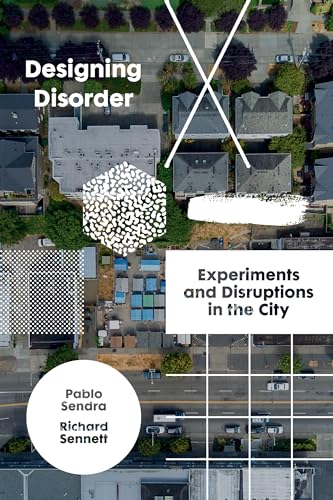
Planners, privatisation, and police surveillance are laying siege to urban public spaces. The streets are becoming ever more regimented as life and character are sapped from our cities. What is to be done? Is it possible to maintain the public realm as a flexible space that adapts over time? Can disorder be designed?
Fifty years ago, Richard Sennett wrote his groundbreaking work The Uses of Disorder, arguing that the ideal of a planned and ordered city was flawed, likely to produce a fragile, restrictive urban environment. The need for the Open City, the alternative, is now more urgent that ever. In this provocative essay, Pablo Sendra and Richard Sennett propose a reorganisation of how we think and plan the life of our cities. What the authors call 'infrastructures for disorder' combine architecture, politics, urban planning and activism in order to develop places that nurture rather than stifle, bring together rather than divide, remain open to change rather than rapidly stagnate.
Designing Disorder is a radical and transformative manifesto for the future of twenty-first-century cities.
Die Inhaltsangabe kann sich auf eine andere Ausgabe dieses Titels beziehen.
Über die Autorin bzw. den Autor
Pablo Sendra is Lecturer in Planning and Urban Design at the Bartlett School of Planning, University College London. He combines his academic career with professional practice in urban design. He is Co-founder of the urban design practice Lugadero and Co-founder of Civicwise. He co-edited and co-authored, respectively, the books Civic Practices and Community-Led Regeneration. He is part of the City Collective for the journal City.
Richard Sennett’s first book was The Uses of Disorder in 1970. His other books include The Fall of Public Man, Flesh and Stone and Respect, as well as the recent Homo Faber trilogy: The Craftsman; Together; Building and Dwelling.
Von der hinteren Coverseite
In 1970, Richard Sennett published the groundbreaking The Uses of Disorder, arguing that the ideal of a planned and ordered city was flawed. Fifty years later, Sennett returns to these still fertile ideas and, alongside campaigner and architect Pablo Sendra, sets out an agenda for the design and ethics of the Open City. The public spaces of our cities are under siege from planners, privatisation and increased surveillance. Our streets are becoming ever more lifeless and ordered. What is to be done? Can disorder be designed? In this provocative essay Sendra and Sennett propose a reorganisation of how we think and plan the social life of our cities. ‘Infrastructures of disorder’ combine architecture, politics, urban planning and activism in order to develop places that nurture rather than stifle, bring together rather than divide up, remain open to change rather than closed off.
„Über diesen Titel“ kann sich auf eine andere Ausgabe dieses Titels beziehen.
Suchergebnisse für Designing Disorder: Experiments and Disruptions in...

Beispielbild für diese ISBN
Designing Disorder Experiments
Anbieter: World of Books (was SecondSale), Montgomery, IL, USA
Verkäuferbewertung 5 von 5 Sternen

Zustand: Good. Item in good condition. Textbooks may not include supplemental items i.e. CDs, access codes etc. Artikel-Nr. 00104861564
Gebraucht kaufen
EUR 12,51
Versand gratis
Versand innerhalb von USA
Versand innerhalb von USA
Anzahl: 1 verfügbar
Beispielbild für diese ISBN
Designing Disorder: Experiments and Disruptions in the City
Anbieter: Revaluation Books, Exeter, Vereinigtes Königreich
Verkäuferbewertung 5 von 5 Sternen
Paperback. Zustand: Brand New. 160 pages. 8.25x5.50x0.67 inches. In Stock. Artikel-Nr. 1788737830
Neu kaufen
EUR 35,76
EUR 11,69 Versand
Versand von Vereinigtes Königreich nach USA
Versand von Vereinigtes Königreich nach USA
Anzahl: 1 verfügbar