
Inhaltsangabe
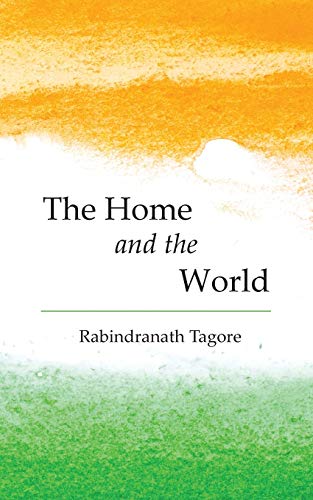
The novel is set against the backdrop of the Partition of Bengal in 1905. It was Lord Curzon's most unpopular measure, and sparked off a public outcry and protests by the people of Bengal. Rabindranath Tagore's Home and the World played a pivotal role in providing leadership to the movement against the Partition. The movement developed into a call for swaraj or self-rule centering on the use of swadeshi or Indian made goods. Tagore however was to distance himself from the Swadeshi movement after the outbreak of communal riots in Bengal in 1907.
Die Inhaltsangabe kann sich auf eine andere Ausgabe dieses Titels beziehen.
Über die Autorin bzw. den Autor
Indian polymath Rabindranath Tagore was a well-known poet, philosopher, musician, and artist who had a significant impact on changing the country's intellectual and cultural landscape in the late 19th and early 20th centuries. In Calcutta (now Kolkata), Tagore was born into a well-to-do Bengali family and started writing poems at a young age. He was the first non-European laureate to win the Nobel Prize in Literature in 1913 for his most well-known work, "Gitanjali" (Song Offerings). In addition to being a brilliant poet, Tagore was a well-known participant in the Indian Renaissance. In Santiniketan, he established Visva-Bharati University, putting a strong emphasis on a holistic education that combined the arts, culture, and environment. Poems, plays, essays, and short tales are among Tagore's literary works, which showcase his profound understanding of spirituality, human nature, and the nexus of tradition and modernity. He wrote both the music and the words to "Jana Gana Mana," which is India's national song. His influence affected India's political and cultural domains in addition to literature. As a fervent supporter of internationalism and humanism, Tagore's achievements have created a lasting legacy that has elevated him to a respected status both in India and around the world.
„Über diesen Titel“ kann sich auf eine andere Ausgabe dieses Titels beziehen.
Weitere beliebte Ausgaben desselben Titels

Suchergebnisse für The Home and the World

Foto des Verkäufers
The Home and the World
Anbieter: moluna, Greven, Deutschland
Verkäuferbewertung 4 von 5 Sternen

Zustand: New. Artikel-Nr. 448326653
Neu kaufen
EUR 21,99
EUR 48,99 Versand
Versand von Deutschland nach USA
Versand von Deutschland nach USA
Anzahl: Mehr als 20 verfügbar