
Verwandte Artikel zu Blank: Why It's Fine to Falter and Fail, and How...
Inhaltsangabe
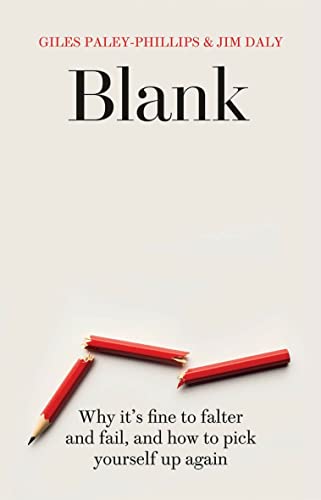
From Blank the podcast comes Blank: Why It's Fine to Falter and Fail, and How to Pick Yourself up Again.
Blank is an informal, insightful podcast in which well-known people from acting, writing, politics and sports chat about their lives and how they get through tough moments like public failure, writer's block, social anxiety, imposter syndrome, identity crisis, and how they deal with parenting, grief, social media, their careers and switching off.
The book is a compendium of the common experiences and lessons encountered while talking to guests such as Jon Ronson, Dawn French, Michael Rosen, Gary Lineker, Stephen Mangan, Dame Kelly Holmes, Reece Shearsmith, Mark Gatiss, Fiona Murden, Rufus Sewell and many more.
Blank moments allow us to reset and see things differently. Far from being setbacks, they can be the impetus for clarity and creativity. Identify your blank moments and jump in – you never know what you might find.
Die Inhaltsangabe kann sich auf eine andere Ausgabe dieses Titels beziehen.
Über die Autorin bzw. den Autor
Giles Paley-Phillips is an award-winning author of children’s books, co-host on Blank podcast, ambassador for Action Aid, and member of a band. Jim Daly is a comedian and presenter, and writes for sketch shows. They launched the Blank podcast in November 2018 and have hosted a stellar line-up of guests from TV, sport, politics, comedy, film and media.
Von der hinteren Coverseite
Whether in your personal life, career, relationship, or in a public situation, writer's block, social anxiety, imposter syndrome, being off-form or having an identity crisis can affect anyone at any time. It's part of the human condition and yet it can throw us off course and make us feel helpless.
Giles Paley-Phillips and Jim Daly host an informal, insightful podcast in which they chat to well-known people from comedy, acting, writing, broadcasting, politics and sports about their careers and how they get through these moments when things aren't going to plan. Some of the recurring themes include public failure, social anxieties, fear, mental health, grief and more. This, their first book, looks at the common experiences and lessons they've encountered while talking to guests such as Amanda Abbington, Rufus Hound, Reginald D Hunter, Jon Ronson, Dawn French, Rufus Sewell and Gary Lineker.
Blank moments allow us to reset and see things differently. Far from being setbacks, they can be the impetus for clarity and creativity. Identify your blank moments and jump in - you never know what you might find.
Auszug. © Genehmigter Nachdruck. Alle Rechte vorbehalten.
Going Blank: An Introduction to the Blank Podcast
GILES
In 2004, while I was going through a downward period in my creativity, feeling unfocused and despondent, I decided to write down all the things I wanted to achieve or do in the next ten years.
A bold move, you might think, but I reckoned it would give me a set of problems to solve, tests to pass, goals to score. Some were fairly doable, some were downright ludicrous (or so I believed at the time), many were forgettable, but one really stayed with me, even after I’d lost that piece of paper two or three years in!
The sorts of things I put on that piece of paper ranged from visiting New York (not done that yet) to having five books published (I have done that one); from learning the piano (nope, not yet) to running the London Marathon (tick! Did it in 2016, a bit behind schedule).
But that one idea I always kept in the recesses of my own creative locker?
Making a podcast.
Why this particular idea continued to appeal to me when so many others evaporated remains a mystery, but for many years it was just a pipe dream. I’d never had any real broadcast experience or learned production skills, and furthermore, I had no clue what this podcast would be about.
Fast-forward to 2018. I was in a similar slump to the one I’d been in in 2004 – nothing was coming out of me creatively, my mojo was flaccid, and I was in need of some artistic Viagra to kick- start a new project. Could a podcast be just the thing to help?
It was the start of a golden age for podcasts, with some 550,000 in existence at the time, covering a huge number of topics and genres – the arts, politics, comedy, sports, fanzines, drama, music, kids’ shows and so on. One kind of podcast that was fairly prevalent was the long-form interview, and this was the type of show that intrigued me the most: the chance to sit and shoot the shit with inspirational individuals was something that truly appealed to me.
But how do you approach that in a different way to everyone else? I thought about what I’d like to listen to, what would benefit me as a creative person, what would help me right now, but I found I couldn’t think of anything: my mind was blank. And that’s when it hit me.
Attempting to find those little universalities that are very human experiences is not always easy, but in precisely that moment of blankness – when I seemingly couldn’t think of anything – I’d stumbled upon the very thing that would be perfect to investigate.
The blankness I was experiencing was not just about struggling to think of a podcast subject – it was the very thing I was battling in my creative life as a whole. If I was honest with myself, I’d been going blank for quite some time, and would be blank again many more times in the future – so what better subject to tackle?
But how do you set up a podcast? What are the mechanics? How does it work? I didn’t think I could do this on my own, so I needed a co-pilot – someone to collaborate with. Collaboration has been something I’ve long enjoyed, going back to my days playing in bands. I find that team spirit incredibly energising.
Enter stage left: Jim Daly.
Jim and I knew each other through social media, having had a few interactions, and those who listen to the podcast will be very aware of our love of Crystal Palace FC, and that Jim hosts and produces FYP, a Crystal Palace fanzine podcast. As a listener, I’d always enjoyed Jim’s relaxed, light-hearted delivery, and I knew he would be great for this project I was dreaming up.
The concept I had at that point was a long-form interview podcast with various well-known people, talking to them about those blank moments in their creative lives when things were not working quite so well. Initially, I thought we would just be talking to writers and actors, but when Jim and I sat down together in a café in Brighton one afternoon in July 2018, we started to see the potential for widening our scope.
Why stop with writers and actors? Sportspeople, comedians, business people, politicians – they’d definitely have blank moments too. Indeed, quite early on in our first meeting, it became obvious that Jim himself was having a blank period in his career. He’d got the fear of doing stand-up comedy, and as much as I felt for him in his situation, I was also pleased to find a like-minded person who would have the level of empathy we would need to allow our guests to feel comfortable enough to open up about their own blanks.
So, that afternoon we hatched a plan, we recorded a little promo video, and the Blank Podcast was born. Then I went home and threw together some artwork on Photoshop, and set about trying to find some guests!
I cast the net out far and wide, thinking that maybe one or two people might say yes. I even thought I’d try my luck with a few big names – after all, the worst that could happen was a no. But to my utter astonishment, my Twitter DMs starting filling up with yes after yes; people were totally getting the concept and looking forward to the idea of talking about it!
The very best thing about podcasts, and I think this is what attracts guests to the medium, is that you can really be yourself, and it’s an opportunity to talk candidly without any big sells. And that’s exactly what we wanted: an hour of unedited chat over a cup of tea, and for our listeners to feel like they were sitting at the next table, listening in.
We decided early on that, as a cottage-industry-style endeavour, we’d be doing everything ourselves – booking guests and venues, hosting, recording, producing, editing and marketing – and it might be wise to work with a podcast platform that could have our back when we needed it. So, we signed up with Acast, and set up our inaugural recording sessions.
Our first day of recording was at my house, with three guests from my local area spaced out over the course of the day: the screenwriter Warren Dudley, children’s author Lindsay Galvin and Game of Thrones actor Daniel Tuite. It was always our intention to be a little bit different from the kind of long-form interview podcasts that often reminded us of the now infamous – and at times tense – one-to-one between Sir David Frost and President Richard Nixon. These work well, of course, but having a third voice felt like a nice dynamic for us and provided another perspective to the discussion. I was a little nervous at first, but within minutes I forgot we were being recorded. It felt just like I wanted it to feel – three people around a table with a cup of tea, chatting about life, careers and those difficult blank moments.
The thing that struck me then and continues to amaze me now – and it’s why this podcast has continued to evolve as much as it has – is the sheer scope of what ‘blank’ can mean to different people. It isn’t just about how we ‘go blank’ creatively; it’s about when things are not going well in any given situation. It’s a state of mind that comes out in different ways for each individual, whether that’s public failure, social anxiety, grief or imposter syndrome. As we’ve continued along this journey, it has continued to be interpreted in so many new and different ways.
By September of that first year, when we sat down with the wonderful Jon Ronson in his hotel room in Soho one dreary Friday afternoon, I almost felt like I was having an out-of- body experience and that it must be someone else doing this...
„Über diesen Titel“ kann sich auf eine andere Ausgabe dieses Titels beziehen.
Suchergebnisse für Blank: Why It's Fine to Falter and Fail, and How...

Beispielbild für diese ISBN
Blank: Why It's Fine to Falter and Fail, and How to Pick Yourself Up Again
Verlag:
Quadrille Publishing Ltd 15/04/2021, 2021
ISBN 10: 1787136167
ISBN 13: 9781787136168
Gebraucht
Hardcover
Anbieter: AwesomeBooks, Wallingford, Vereinigtes Königreich
Verkäuferbewertung 5 von 5 Sternen

Zustand: Very Good. This book is in very good condition and will be shipped within 24 hours of ordering. The cover may have some limited signs of wear but the pages are clean, intact and the spine remains undamaged. This book has clearly been well maintained and looked after thus far. Money back guarantee if you are not satisfied. See all our books here, order more than 1 book and get discounted shipping. . Artikel-Nr. 7719-9781787136168
Gebraucht kaufen
EUR 3,73
EUR 4,92 Versand
Versand von Vereinigtes Königreich nach USA
Versand von Vereinigtes Königreich nach USA
Anzahl: 1 verfügbar
Beispielbild für diese ISBN
Blank
Anbieter: WorldofBooks, Goring-By-Sea, WS, Vereinigtes Königreich
Verkäuferbewertung 5 von 5 Sternen
Paperback. Zustand: Very Good. The book has been read, but is in excellent condition. Pages are intact and not marred by notes or highlighting. The spine remains undamaged. Artikel-Nr. GOR011954362
Gebraucht kaufen
EUR 4,60
EUR 6,69 Versand
Versand von Vereinigtes Königreich nach USA
Versand von Vereinigtes Königreich nach USA
Anzahl: 4 verfügbar
Beispielbild für diese ISBN
Blank : Why It's Fine to Falter and Fail, and How to Pick Yourself up Again
Verlag:
Quadrille Publishing, Limited, 2021
ISBN 10: 1787136167
ISBN 13: 9781787136168
Gebraucht
Hardcover
Anbieter: Better World Books Ltd, Dunfermline, Vereinigtes Königreich
Verkäuferbewertung 5 von 5 Sternen
Zustand: Very Good. Former library copy. Pages intact with possible writing/highlighting. Binding strong with minor wear. Dust jackets/supplements may not be included. Includes library markings. Stock photo provided. Product includes identifying sticker. Better World Books: Buy Books. Do Good. Artikel-Nr. 54392927-20
Gebraucht kaufen
EUR 5,72
EUR 5,97 Versand
Versand von Vereinigtes Königreich nach USA
Versand von Vereinigtes Königreich nach USA
Anzahl: 1 verfügbar
Beispielbild für diese ISBN
Blank: Why It's Fine to Falter and Fail, and How to Pick Yourself Up Again
Verlag:
Quadrille Publishing Ltd 15/04/2021, 2021
ISBN 10: 1787136167
ISBN 13: 9781787136168
Gebraucht
Hardcover
Anbieter: Bahamut Media, Reading, Vereinigtes Königreich
Verkäuferbewertung 4 von 5 Sternen

Zustand: Very Good. Shipped within 24 hours from our UK warehouse. Clean, undamaged book with no damage to pages and minimal wear to the cover. Spine still tight, in very good condition. Remember if you are not happy, you are covered by our 100% money back guarantee. Artikel-Nr. 6545-9781787136168
Gebraucht kaufen
EUR 10,60
EUR 8,33 Versand
Versand von Vereinigtes Königreich nach USA
Versand von Vereinigtes Königreich nach USA
Anzahl: 1 verfügbar
Beispielbild für diese ISBN
Blank
Anbieter: PBShop.store UK, Fairford, GLOS, Vereinigtes Königreich
Verkäuferbewertung 5 von 5 Sternen
HRD. Zustand: New. New Book. Shipped from UK. Established seller since 2000. Artikel-Nr. GO-9781787136168
Neu kaufen
EUR 19,56
EUR 5,99 Versand
Versand von Vereinigtes Königreich nach USA
Versand von Vereinigtes Königreich nach USA
Anzahl: 5 verfügbar
Beispielbild für diese ISBN
Blank: Why it's fine to falter and fail, and how to pick yourself up again
Anbieter: Seagull Books, Hove, Vereinigtes Königreich
Verkäuferbewertung 5 von 5 Sternen
Hardcover. Zustand: Very Good. Has some light general reading/shelfwear - otherwise this is a clean, tight copy. Quick dispatch from the UK. Book. Artikel-Nr. 074313
Gebraucht kaufen
EUR 11,01
EUR 16,12 Versand
Versand von Vereinigtes Königreich nach USA
Versand von Vereinigtes Königreich nach USA
Anzahl: 1 verfügbar
Beispielbild für diese ISBN
Blank: Why It's Fine to Falter and Fail, and How to Pick Yourself Up Again
Anbieter: Revaluation Books, Exeter, Vereinigtes Königreich
Verkäuferbewertung 5 von 5 Sternen
Hardcover. Zustand: Brand New. 256 pages. 8.75x5.75x1.02 inches. In Stock. Artikel-Nr. zk1787136167
Neu kaufen
EUR 15,44
EUR 11,94 Versand
Versand von Vereinigtes Königreich nach USA
Versand von Vereinigtes Königreich nach USA
Anzahl: 1 verfügbar
Beispielbild für diese ISBN
Blank
Verlag:
Quadrille Publishing, Limited, 2021
ISBN 10: 1787136167
ISBN 13: 9781787136168
Neu
Hardcover
Anbieter: Majestic Books, Hounslow, Vereinigtes Königreich
Verkäuferbewertung 4 von 5 Sternen
Zustand: New. pp. 224. Artikel-Nr. 382804692
Neu kaufen
EUR 21,72
EUR 7,76 Versand
Versand von Vereinigtes Königreich nach USA
Versand von Vereinigtes Königreich nach USA
Anzahl: 3 verfügbar
Beispielbild für diese ISBN
Blank: Why It's Fine to Falter and Fail, and How to Pick Yourself Up Again
Verlag:
Quadrille Publishing Ltd, 2021
ISBN 10: 1787136167
ISBN 13: 9781787136168
Gebraucht
Hardcover
Anbieter: Pearlydewdrops, Streat, Vereinigtes Königreich
Verkäuferbewertung 5 von 5 Sternen
hardcover. Zustand: Very Good. New and unread, however has shelf wear and marking to the fron and back covers. MAY have a fold on page 200. Shipped from the UK within 2 business days of order being placed. Artikel-Nr. mon0000236373
Gebraucht kaufen
EUR 7,38
EUR 26,27 Versand
Versand von Vereinigtes Königreich nach USA
Versand von Vereinigtes Königreich nach USA
Anzahl: 5 verfügbar
Beispielbild für diese ISBN
Blank: Why It's Fine to Falter and Fail, and How to Pick Yourself Up Again
Verlag:
Quadrille Publishing Ltd, 2021
ISBN 10: 1787136167
ISBN 13: 9781787136168
Gebraucht
Hardcover
Anbieter: Pearlydewdrops, Streat, Vereinigtes Königreich
Verkäuferbewertung 5 von 5 Sternen
hardcover. Zustand: Fine. New & unread, however may have light shelf wear to cover face, edges or corners. Shipped from the UK within 2 business days of order being placed. Artikel-Nr. mon0000321476
Gebraucht kaufen
EUR 8,29
EUR 26,27 Versand
Versand von Vereinigtes Königreich nach USA
Versand von Vereinigtes Königreich nach USA
Anzahl: 11 verfügbar