
Verwandte Artikel zu Pathway to the Stable
Inhaltsangabe
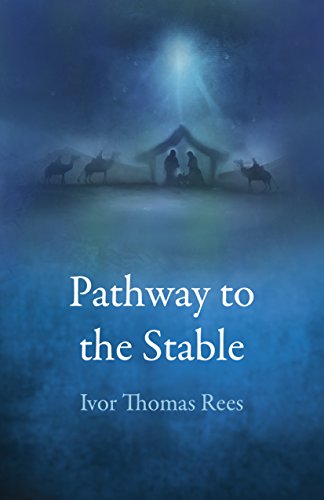
Ideal for individuals or groups seeking a deeper understanding of the Christmas story and its links with the Hebrew Bible, Pathway to the Stable offers a twenty-first century introduction to the people and places central to the story of the birth of Jesus, with reference to the promises of the Old Testament and its setting in the contemporary Jewish and Roman worlds. 'In this rich and rewarding series of studies, Ivor Rees has taken us deep into the biblical world in order to show us once more the glory of the coming of Our Lord, the nativity and childhood of Jesus Christ.' Revd. D. Densil Morgan, Professor of Theology, University of Wales Trinity Saint David
Die Inhaltsangabe kann sich auf eine andere Ausgabe dieses Titels beziehen.
Über die Autorinnen und Autoren
Ivor Rees was born in the Rhondda Valley, the son of a Welsh coal miner. A retired minister of the United Reformed Church, Ivor was appointed by the Bishop of Swansea and Brecon to serve as Ecumenical Adviser of the first College of Saint Mary. He continues to preach in Welsh and English, and has published several books and many articles, drawing on his experiences spent travelling and preaching around the world. Ivor lives in Swansea, Wales.
Ivor Rees was born in the Rhondda Valley, the son of a Welsh coal miner. A retired minister of the United Reformed Church, Ivor was appointed by the Bishop of Swansea and Brecon to serve as Ecumenical Adviser of the first College of Saint Mary. He continues to preach in Welsh and English, and has published several books and many articles, drawing on his experiences spent travelling and preaching around the world. Ivor lives in Swansea, Wales.
Auszug. © Genehmigter Nachdruck. Alle Rechte vorbehalten.
Pathway to the Stable
By Ivor Thomas ReesJohn Hunt Publishing Ltd.
Copyright © 2017 Ivor Thomas Rees
All rights reserved.
ISBN: 978-1-78535-860-9All rights reserved.
Contents
Forewords,
Preface,
1 Belonging,
2 Prototypes and Promises,
3 Cousin John,
4 Mary's Visitor,
5 Family Get-Together,
6 Joseph the Carpenter,
7 City of David,
8 A Common Lot,
9 Faithful Ones,
10 Four Songs,
11 Foreigners!,
12 Herod the King,
13 Refugees and Asylum Seekers,
14 Growing Up,
15 Fanfare,
16 Bugle Call,
Notes,
CHAPTER 1
Belonging
In thy seed shall all the nations of the earth be blessed; because thou hast obeyed my voice.
(Genesis 23.18)
It has been said that when one meets an Englishman, if he asks a question it will be about the nature of one's work or business. My own experience tells me that, though this can be the case, it is far from being a universal truth. Television drama suggests that perhaps the aristocracy is more concerned with family and blood. Members of other nations, including the Welsh, will begin with "Where are you from?" followed by "Who do you belong to?" This concern for relationship is to be found too among the Jews and other ancient peoples. Thus, Paul describes himself as "a member of the people of Israel, of the tribe of Benjamin, a Hebrew born of the Hebrews." Kinship was important and each family needed to know and declare its ancestral pedigree for such knowledge was the basis of all social relationship.
Matthew sets out the genealogy of Jesus through Joseph's line, a chapter rarely read but deserving of better treatment. In beginning with the phrase "book of the generations," Matthew is following a pattern to be found in the Book of Genesis. Chapter 5 opens with "the list of the descendants of Adam" and its list of generations leads to Noah, "a righteous man, blameless in his generation. Noah walked with God." Noah was God's agent of the new beginning for the human race after the flood and thus a prototype of the Saviour who was to come. Matthew's account sets out the generations: from Abraham to David with a list of patriarchs, David to the Exile, listing kings, and the Exile to Christ, giving the names of individuals, suggesting that the revelation of God's plan of redemption continues through each epoch. The call of Abraham marks a new beginning after Babel and reaches its climax in David. Then come the events leading to the Exile. The return from Exile is another new beginning, reaching its climax in the coming of Christ. Three kings are omitted from the list – Ahaziah, Joseph and Amaziah – these were not of the house of David, indeed, they were opposed to it.
Surprisingly, there are four women: Tamar (Genesis 38. 11ff), Rahab the harlot (Joshua 6. 17, 22-25), Ruth the Moabitess (Ruth) and Bethsheba (2 Samuel 11-12), wife of Uriah the Hittite. These are not only female but also foreign and the relationships of all four were unusual. What is stressed is that each of these women either kept the Covenant or entered into it by an act of faith. God's kingdom is based on his covenant of grace and is open to women and foreigners on equal terms, to pagans and prostitutes alike.
Matthew is concerned to tell his readers, Jewish Christians, that Jesus is the anointed King, of the royal line of David and Israel's promised Messiah. Jesus is too the descendant of Abraham, the Father of the People, by whom all the nations of earth are to be blessed. This evangelist is concerned to explain why Gentiles are to have a place in the Kingdom of Heaven and therefore among God's people on earth. He is preparing the way for his record of the denunciation of the Pharisees and Sadducees by John the Baptist (3.7-10): 'Do not presume to say to yourselves, "We have Abraham as our ancestor," for I tell you, God is able from these stones to raise up children to Abraham,"' as well as the declaration by Jesus in the story of the centurion's servant (Matthew 8.5-13) that "many will come from east and west and will eat with Abraham, Isaac and Jacob in the kingdom of heaven, while the heirs of the kingdom will be thrown into outer darkness." Matthew is concerned to stress that the news he records is the fulfilment of the eternal purposes of God. So, in 1.22-23, he quotes Isaiah 7.14: "Look, the virgin shall conceive and bear a son, and they shall name him Emmanuel." On at least three other occasions in the first two chapters he refers to Scripture to confirm what he is claiming. There are, too, close resemblances between the flight into Egypt and its return with the story of Moses (see Chapter 12). Christ sacrifices relationship with God, family and the respectable for the sake of outsiders.
Whereas Matthew opens his Gospel with his genealogy table, Luke places his account between that of the Baptism of Jesus and his temptation in the wilderness. Luke works backwards from Joseph to Adam, through Nathan, a less important son to his father David and on through Jacob, Isaac and Abraham, through Shem, Noah and Seth to Adam. It has been suggested that his purpose in working this way is to draw his readers' immediate attention to Jesus himself. The lists between Abraham and David are almost identical but are vastly different from David to Joseph; in this section only two names appear on both lists, those of Shealtiel and Zerubbabel. The differences in these two genealogies have caused debate among scholars down the ages, especially since such details were usually painstakingly recorded by Jewish scribes. For example, it was said at Tantur in 1989 that there was a Jewish family in Galilee which had never left its village, which could trace its ancestry back to around 150 B.C.
Luke's list begins at Luke 3.23 with "He [Joseph] was the son (as was thought) of Heli ..." This creates a problem from the start because Matthew 1.16 declares: "and Jacob the father of Joseph, the husband of Mary, of whom Jesus was born, who is called the Christ." One of the earlier theories explains this by the tradition of "Levirite marriage," whereby if two brothers live together and one dies, leaving no son to succeed him; his brother would marry the widow to provide sons to carry on the name and line of the deceased brother (Deuteronomy 25.5-10). By this, Joseph was the legal son of Heli, who had died, and the natural son of Jacob. By this theory, Joseph's grandfathers - Luke's 'Matthat' and Matthew's 'Matthan' - are brothers, both of whom married the same woman, so that Matthat's son (Heli) is the legal father of Joseph and Matthan his natural father. Perhaps such theorising is really beside the point. Martin Luther said that Joseph's line is recorded by Matthew and that of Mary by Luke whilst Julius Africanus suggested that, as has been noted, Matthew follows the natural line and Luke the legal.
The evangelists' concern with ancestry was quite common in the ancient world and is still important in many parts of the world. Being able to recite the names of your forefathers was proof of belonging. Being "one of us, not one of them" was essential for survival. Questions of status too were settled by reference to ancestry. Ezra 2.62 tells of the search for proof of priestly status after the return from exile: "They looked for their entries in the genealogical records but they were not there and were excluded from the priesthood as unclean."
Both Matthew and Luke, however, though setting out to present history, are concerned with more than history. Both are concerned with the kerygma, the proclamation of the Gospel. Jesus is not another pagan demi-god;...
„Über diesen Titel“ kann sich auf eine andere Ausgabe dieses Titels beziehen.
Suchergebnisse für Pathway to the Stable

Beispielbild für diese ISBN
Pathway to the Stable
Anbieter: WorldofBooks, Goring-By-Sea, WS, Vereinigtes Königreich
Verkäuferbewertung 5 von 5 Sternen

Paperback. Zustand: Fine. Artikel-Nr. GOR014905881
Gebraucht kaufen
EUR 8,95
EUR 6,51 Versand
Versand von Vereinigtes Königreich nach USA
Versand von Vereinigtes Königreich nach USA
Anzahl: 1 verfügbar
Beispielbild für diese ISBN
Pathway to the Stable
Anbieter: PBShop.store US, Wood Dale, IL, USA
Verkäuferbewertung 5 von 5 Sternen
PAP. Zustand: New. New Book. Shipped from UK. Established seller since 2000. Artikel-Nr. FW-9781785358609
Beispielbild für diese ISBN
Pathway to the Stable
Anbieter: PBShop.store UK, Fairford, GLOS, Vereinigtes Königreich
Verkäuferbewertung 5 von 5 Sternen
PAP. Zustand: New. New Book. Shipped from UK. Established seller since 2000. Artikel-Nr. FW-9781785358609
Neu kaufen
EUR 14,86
EUR 3,83 Versand
Versand von Vereinigtes Königreich nach USA
Versand von Vereinigtes Königreich nach USA
Anzahl: 15 verfügbar
Beispielbild für diese ISBN
Pathway to the Stable
Anbieter: Revaluation Books, Exeter, Vereinigtes Königreich
Verkäuferbewertung 5 von 5 Sternen
Paperback. Zustand: Brand New. 99 pages. 8.75x5.75x0.25 inches. In Stock. Artikel-Nr. __178535860X
Neu kaufen
EUR 11,00
EUR 11,63 Versand
Versand von Vereinigtes Königreich nach USA
Versand von Vereinigtes Königreich nach USA
Anzahl: 2 verfügbar
Beispielbild für diese ISBN
Pathway to the Stable
Anbieter: Ria Christie Collections, Uxbridge, Vereinigtes Königreich
Verkäuferbewertung 5 von 5 Sternen
Zustand: New. In English. Artikel-Nr. ria9781785358609_new
Neu kaufen
EUR 15,27
EUR 10,90 Versand
Versand von Vereinigtes Königreich nach USA
Versand von Vereinigtes Königreich nach USA
Anzahl: Mehr als 20 verfügbar
Beispielbild für diese ISBN
Pathway to the Stable
Anbieter: Kennys Bookstore, Olney, MD, USA
Verkäuferbewertung 5 von 5 Sternen
Zustand: New. 2018. Paperback. . . . . . Books ship from the US and Ireland. Artikel-Nr. V9781785358609
Neu kaufen
EUR 19,25
EUR 9,22 Versand
Versand innerhalb von USA
Versand innerhalb von USA
Anzahl: Mehr als 20 verfügbar