
Verwandte Artikel zu Are We Smart Enough to Know How Smart Animals Are?
Inhaltsangabe
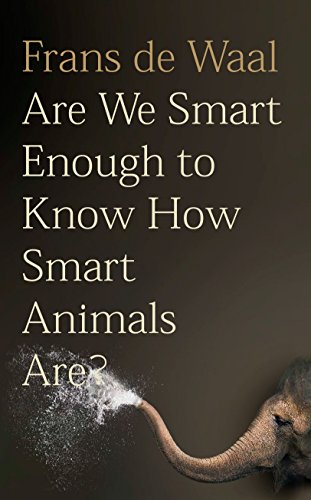
What separates your mind from an animal's? Maybe you think it's your ability to design tools, your sense of self, or your grasp of past and future; all traits that have helped us define ourselves as the preeminent species on Earth. But in recent decades, these claims have been eroded, or disproven outright, by a revolution in the study of animal cognition. Take the way octopuses use coconut shells as tools; elephants that classify humans by age, gender, and language; or Ayumu, the young male chimpanzee at Kyoto University whose photographic memory puts that of humans to shame.
Based on research involving crows, dolphins, parrots, sheep, wasps, bats, whales, and of course chimpanzees and bonobos, Frans de Waal explores the scope and the depth of animal intelligence, revealing how we have grossly underestimated their abilities. People often assume there is a cognitive ladder, from lower to higher forms, with human intelligence at the top. But what if it is more like a bush, with cognition taking different forms that are often incomparable to ours? Would you presume yourself dumber than a squirrel because you're less adept at recalling the locations of hundreds of buried acorns?Or judge your perception of your surroundings as more sophisticated than that of a echolocating bat? De Waal tells of the rise and fall of a view of animals as stimulus-reponse beings, and opens our eyes to their complex and intrricate minds.
Die Inhaltsangabe kann sich auf eine andere Ausgabe dieses Titels beziehen.
Über die Autorin bzw. den Autor
Frans de Waal has been named one of Time magazine's 100 Most Influential People. The New York Times bestselling author of Are We Smart Enough to Know How Smart Animals Are? (Granta, 2016) and Our Inner Ape (Granta, 2005) among many other works, he is the C. H. Candler Professor in Emory University's Psychology Department and director of the Living Links Center at the Yerkes National Primate Research Center. He lives in Atlanta, Georgia.
„Über diesen Titel“ kann sich auf eine andere Ausgabe dieses Titels beziehen.
Weitere beliebte Ausgaben desselben Titels

Suchergebnisse für Are We Smart Enough to Know How Smart Animals Are?

Beispielbild für diese ISBN
Are We Smart Enough to Know How Smart Animals Are?
Verlag:
Granta Books, United Kingdom, London, 2016
ISBN 10: 1783783044
ISBN 13: 9781783783045
Gebraucht
Paperback
Anbieter: WorldofBooks, Goring-By-Sea, WS, Vereinigtes Königreich
Verkäuferbewertung 5 von 5 Sternen

Paperback. Zustand: Very Good. What separates your mind from the mind of an animal? Maybe you think it's your ability to design tools, your sense of self, or your grasp of past and future - all traits that have helped us define ourselves as the pre-eminent species on Earth. But in recent decades, claims of human superiority have been eroded by a revolution in the study of animal cognition. Take the way octopuses use coconut shells as tools, or how elephants can classify humans by age, gender, and language. Take Ayumu, the young male chimpanzee at Kyoto University who demonstrates his species' exceptional photographic memory. Based on research on a range of animals, including crows, dolphins, parrots, sheep, wasps, bats, whales, and, of course, chimpanzees and bonobos, Frans de Waal explores the scope and depth of animal intelligence, revealing how we have grossly underestimated non-human brains. He overturns the view of animals as stimulus-response beings and opens our eyes to their complex and intricate minds. With astonishing stories of animal cognition, Are We Smart Enough to Know How Smart Animals Are? challenges everything you thought you knew about animal - and human - intelligence. The book has been read, but is in excellent condition. Pages are intact and not marred by notes or highlighting. The spine remains undamaged. Artikel-Nr. GOR007664704
Gebraucht kaufen
EUR 2,16
EUR 6,55 Versand
Versand von Vereinigtes Königreich nach USA
Versand von Vereinigtes Königreich nach USA
Anzahl: 1 verfügbar
Foto des Verkäufers
Are We Smart Enough to Know How Smart Animals Are?
Anbieter: WeBuyBooks, Rossendale, LANCS, Vereinigtes Königreich
Verkäuferbewertung 5 von 5 Sternen
Zustand: Very Good. Most items will be dispatched the same or the next working day. A copy that has been read, but is in excellent condition. Pages are intact and not marred by notes or highlighting. The spine remains undamaged. Artikel-Nr. rev4929192803
Gebraucht kaufen
EUR 2,58
EUR 7,62 Versand
Versand von Vereinigtes Königreich nach USA
Versand von Vereinigtes Königreich nach USA
Anzahl: 1 verfügbar
Foto des Verkäufers
Are We Smart Enough to Know How Smart Animals Are?
Anbieter: WeBuyBooks, Rossendale, LANCS, Vereinigtes Königreich
Verkäuferbewertung 5 von 5 Sternen
Zustand: Good. Most items will be dispatched the same or the next working day. A copy that has been read but remains in clean condition. All of the pages are intact and the cover is intact and the spine may show signs of wear. The book may have minor markings which are not specifically mentioned. Ex library copy with usual stamps & stickers. Artikel-Nr. rev8016505645
Gebraucht kaufen
EUR 4,14
EUR 7,62 Versand
Versand von Vereinigtes Königreich nach USA
Versand von Vereinigtes Königreich nach USA
Anzahl: 1 verfügbar
Beispielbild für diese ISBN
Are We Smart Enough to Know How Smart Animals Are?
Anbieter: medimops, Berlin, Deutschland
Verkäuferbewertung 5 von 5 Sternen
Zustand: good. Befriedigend/Good: Durchschnittlich erhaltenes Buch bzw. Schutzumschlag mit Gebrauchsspuren, aber vollständigen Seiten. / Describes the average WORN book or dust jacket that has all the pages present. Artikel-Nr. M01783783044-G
Gebraucht kaufen
EUR 12,97
EUR 20,00 Versand
Versand von Deutschland nach USA
Versand von Deutschland nach USA
Anzahl: 1 verfügbar
Beispielbild für diese ISBN
Are We Smart Enough to Know How Smart Animals Are?
Anbieter: Antiquariat J. Hünteler, Hamburg, Deutschland
Verkäuferbewertung 5 von 5 Sternen
8°, Pappband mit Umschlag-O. Zustand: Gut. Gebundene Ausgabe Mit Abbildungen, sehr sauberes Exemplar. A27394 Sprache: Englisch Gewicht in Gramm: 850. Artikel-Nr. 71684
Gebraucht kaufen
EUR 25,00
EUR 45,00 Versand
Versand von Deutschland nach USA
Versand von Deutschland nach USA
Anzahl: 1 verfügbar
Foto des Verkäufers
Are We Smart Enough to Know How Smart Animals Are?
Anbieter: AHA-BUCH GmbH, Einbeck, Deutschland
Verkäuferbewertung 5 von 5 Sternen
Hardcover. Zustand: Gut. Gebraucht - Gut Gu - Beschädigungen, Verschmutzungen, ungelesenes Mängelexemplar, gestempelt - What separates your mind from an animal's Maybe you think it's your ability to design tools, your sense of self, or your grasp of past and future; all traits that have helped us define ourselves as the preeminent species on Earth. But in recent decades, these claims have been eroded, or disproven outright, by a revolution in the study of animal cognition. Take the way octopuses use coconut shells as tools; elephants that classify humans by age, gender, and language; or Ayumu, the young male chimpanzee at Kyoto University whose photographic memory puts that of humans to shame.Based on research involving crows, dolphins, parrots, sheep, wasps, bats, whales, and of course chimpanzees and bonobos, Frans de Waal explores the scope and the depth of animal intelligence, revealing how we have grossly underestimated their abilities. People often assume there is a cognitive ladder, from lower to higher forms, with human intelligence at the top. But what if it is more like a bush, with cognition taking different forms that are often incomparable to ours Would you presume yourself dumber than a squirrel because you're less adept at recalling the locations of hundreds of buried acorns Or judge your perception of your surroundings as more sophisticated than that of a echolocating bat De Waal tells of the rise and fall of a view of animals as stimulus-reponse beings, and opens our eyes to their complex and intrricate minds. Artikel-Nr. INF1000787815
Gebraucht kaufen
EUR 13,18
EUR 62,17 Versand
Versand von Deutschland nach USA
Versand von Deutschland nach USA
Anzahl: 1 verfügbar