
Radical Space: Exploring Politics and Practice (Radical Cultural Studies) - Softcover
Buch 2 von 13: Radical Cultural Studies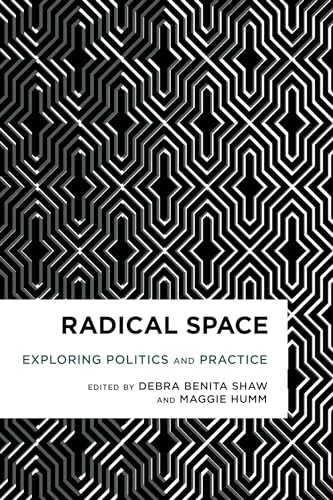
Inhaltsangabe
A multidisciplinary collection which brings together cutting edge research about the cultural politics of space.
Die Inhaltsangabe kann sich auf eine andere Ausgabe dieses Titels beziehen.
Über die Autorinnen und Autoren
Debra Benita Shaw is a Reader in Cultural Theory at the University of East London.
Maggie Humm is an Emeritus Professor of Cultural Studies at the University of East London.
Auszug. © Genehmigter Nachdruck. Alle Rechte vorbehalten.
Radical Space
Exploring Politics and Practice
By Debra Benita Shaw, Maggie HummRowman & Littlefield International, Ltd
Copyright © 2016 Debra Benita Shaw and Maggie Humm
All rights reserved.
ISBN: 978-1-78348-152-1All rights reserved.
Contents
List of Figures, ix,
Acknowledgements, xi,
Introduction: Radical Space Debra Benita Shaw, xiii,
Part I: Art, Public Space and the Body, 1,
1 The Peterborough Child and Joanna Rajkowska: Themes, Influences, Art Joanna Rajkowska and Maggie Humm, 3,
2 Contemporary Curatorial Practice and the Politics of Public Space Connell Vaughan, 21,
3 The Alternative Urbanism of Psychogeography in the Mediated City Zlatan Krajina, 39,
4 Radicalising Institutional Space: Revealing the Site through Phenomenological-Movement Inquiry Victoria Hunter, 65,
Part II: Heterotopias, 85,
5 Return to Battleship Island Carl Lavery with Lee Hassall, Deborah Dixon, Carina Fearnley, Mark Pendleton and Brian Burke-Gaffney, 87,
6 Contested Spaces/Radical Places: Squatting, Place and Subjectivity Matt Fish, 109,
7 Radical, Ethical Spaces Angie Voela, 129,
Part III: Extraterritorialities, 145,
7 Composting Space Dimitris Papadopoulos, 147,
8 Mapping the Contours of Vectoral Space: Inaugural Statement of the Committee for Aeronautical Psychogeography Rob Coley, 157,
9 Gravity, Gender and Spatial Theory Kat Deerfield, 181,
Afterword: Contingency, Acceleration and Repurposing Debra Benita Shaw, 197,
Index, 209,
About the Contributors, 219,
CHAPTER 1
The Peterborough Child and Joanna Rajkowska
Themes, Influences, Art
Joanna Rajkowska and Maggie Humm
From Berlin, we moved to Peterborough in England. Our rented apartment on Manor House Street smelt of damp, although it had recently been given a fresh coat of paint. The low windows looked out onto a small garden where there were clothes hanging out to dry, a fallen plastic garden chair and a piece of low brick wall. Next door was a funeral parlour, part of a Victorian-style terraced arrangement previously occupied by a homeless shelter. Apparently the noise used to bother the neighbours. The sound of cocks crowing woke us, even though we were in the heart of the city. Next door were two families — Lithuanians and Poles. It was darker and colder than in London. We were further north.
Peterborough is as old as the world itself. The most-ancient unearthed human remains date back to 5000 BCE, from Neolithic times. The City Museum welcomes visitors with a display of a huge elephant skull, which became a road sign in my search of the city's identity. There is not much that can be learnt about the people of Peterborough today, nowhere near as much as you can learn about the remains of those who lived here thousands of years ago. One of the most powerful images re-created in the museum is of sacrifices in nearby peat bogs — near Fengate, where archaeologists are still unearthing tools, jewellery and bones. Peterborough is one of those towns that people are forever moving to and away from. This migration both enhances and erodes its cultural fabric.
I imagined time as a pyramid — on the very top were Russians, Lithuanians, Poles, Roma and other newcomers from Eastern and Southeastern Europe; followed by Asians, mostly Pakistanis, Indians and Afghans; followed by Italians and Vikings, Normans, Anglo-Saxons, Romans, Britons and our ancestors from the Iron, Bronze and Neolithic Ages. I had the impression that, walking the streets of Peterborough, one could hear things crunching underfoot. We were standing on top of hundreds of layers of past communities. The earth was constantly feeding on our cast-off remains — nail clippings, spit, bodies coming to rest in cemeteries, toys brought over from Eastern Europe, fabrics from Pakistan, Russian sunglasses, plastic Tesco carrier bags. Archaeologists are able to read layers of land like we read lines of text. Sometimes they find a particularly impressive object that becomes a prism of a historical moment and allows our imagination to reinvent life as it was.
A BRONZE AGE CHILD AND BLOOD TRANSFUSION
An old quarry became one such key site following a discovery in 2007 in the vicinity of Peterborough. A small body had been unearthed and called 'Bronze Age Baby'. I stared for a long time at the pixelated photograph of a childlike form lying on its side. Beside it were some clay pots and plates. Back in 1980, rows of graves, with skeletons, had been found around Peterborough Cathedral. The scene was captured by local photographer Chris Porsz during the initial digs. This confirmed my first intuitions.
Around the same time my daughter Rosa's health began to deteriorate. Successive chemotherapy sessions had completely destroyed her immune system. Along with my psychological defences. From my diary:
It might seem that it was simply another week, and not six or seven days filled with constant trembling, fear that Rosa and her organism will surrender to fevers, waves of infection, that we will be back in hospital. Hurry, hands shaking, tension [that] tightens the lips, causing paralysis, sand beneath eye-lids. I cannot describe the stress, which is causing me to lose touch with my own body, turning me into pure fear.
This is how it was this time. Waves of fever, each one greater than the last, caused us to pack her things, run to the car and race for an address we had found online. Our old GPS had problems, because the new hospital had been built in 2010. It was spacious and airy; the chaos of admission only lasted a moment, then a series of highly professional procedures were performed. Quiet, discretion, calls to London, to the hospital where Rosa is registered.
The three days we spent there were hard. Not stuffy — rather the opposite: I remember them as breaths of cold air while cycling to hospital. One day I saw Andrew, who, dozing, was sitting in a chair with his head leant against a wall. Rosa, with her head tilted back, as if echoing his position, was lying in his lap. She looked grey, slightly bruised. Chemo kills bone marrow; the production of blood platelets is dramatically reduced. Hence the bruises. She looked as if she [were] saying goodbye to life. Her mouth was half open.
The doctors decided to give her a blood transfusion. A red, plastic sack pumped its contents into Rosa through a drip. After only quarter of an hour her skin began to change colour. From a pale-white complexion, pink shades began to emerge, as if filling her with colour from within. It was one of the most powerful experiences I have ever known. I cried in the beautiful, black, wide arms of a nurse, while I hid in a kitchen somewhere.
I am constantly thinking about death, about the extinguishing of life, about dust. There is no pain like the pain a mother can experience. If a child dies, the mother dies with them. I will never forget a young woman, a mother, [whom] I saw in a Warsaw hospital before I knew Rosa was ill with cancer. She was collapsed, bent in half in a chair, and was nodding rhythmically, bowing low, in the most terrifying way.
CAN-DO DISTRICT
The transfusion became a part of my description of Peterborough. From that moment on, whenever I thought about the city, somewhere in the back of my mind I could again see Rosa's skin shades, that mysterious, delicate, perfect pinkness, which began to slowly overwhelm the waxy greyness.
We were living in and researching the CAN-Do area (short for Central And North area). Very visible...
„Über diesen Titel“ kann sich auf eine andere Ausgabe dieses Titels beziehen.
Weitere beliebte Ausgaben desselben Titels

Suchergebnisse für Radical Space: Exploring Politics and Practice (Radical...

Foto des Verkäufers
Radical Space (Radical Cultural Studies)
Anbieter: BoundlessBookstore, Wallingford, Vereinigtes Königreich
Verkäuferbewertung 5 von 5 Sternen

Paperback. Zustand: Good. Very good condition paperback with minimal wear, some minor surface marks to rear wtih label residue. Contents are clean and bright throughout with no markings. Artikel-Nr. 9999-9992201534
Gebraucht kaufen
EUR 3,64
EUR 8,22 Versand
Versand von Vereinigtes Königreich nach USA
Versand von Vereinigtes Königreich nach USA
Anzahl: 1 verfügbar
Beispielbild für diese ISBN
Radical Space (Radical Cultural Studies)
Anbieter: Ria Christie Collections, Uxbridge, Vereinigtes Königreich
Verkäuferbewertung 5 von 5 Sternen
Zustand: New. In. Artikel-Nr. ria9781783481521_new
Neu kaufen
EUR 67,83
EUR 14,11 Versand
Versand von Vereinigtes Königreich nach USA
Versand von Vereinigtes Königreich nach USA
Anzahl: Mehr als 20 verfügbar
Beispielbild für diese ISBN
Radical Space
Verlag:
Rowman & Littlefield International, 2016
ISBN 10: 1783481528
ISBN 13: 9781783481521
Neu
Softcover
Anbieter: Kennys Bookstore, Olney, MD, USA
Verkäuferbewertung 5 von 5 Sternen
Zustand: New. A multidisciplinary collection which brings together cutting edge research about the cultural politics of space. Editor(s): Brauer, Fae; Humm, Maggie; Shaw, Debra Benita. Series: Radical Cultural Studies. Num Pages: 248 pages, 22 black & white illustrations. BIC Classification: HPS; JFC; JPS; RGC. Category: (P) Professional & Vocational. Dimension: 229 x 153 x 25. Weight in Grams: 382. . 2016. Paperback. . . . . Books ship from the US and Ireland. Artikel-Nr. V9781783481521
Neu kaufen
EUR 95,06
EUR 9,17 Versand
Versand innerhalb von USA
Versand innerhalb von USA
Anzahl: Mehr als 20 verfügbar
Beispielbild für diese ISBN
Radical Space: Exploring Politics and Practice
Anbieter: Revaluation Books, Exeter, Vereinigtes Königreich
Verkäuferbewertung 5 von 5 Sternen
Paperback. Zustand: Brand New. 222 pages. 9.00x6.00x0.75 inches. In Stock. Artikel-Nr. x-1783481528
Neu kaufen
EUR 94,90
EUR 11,78 Versand
Versand von Vereinigtes Königreich nach USA
Versand von Vereinigtes Königreich nach USA
Anzahl: 2 verfügbar