
Verwandte Artikel zu Fan Phenomena: Marilyn Monroe
Inhaltsangabe
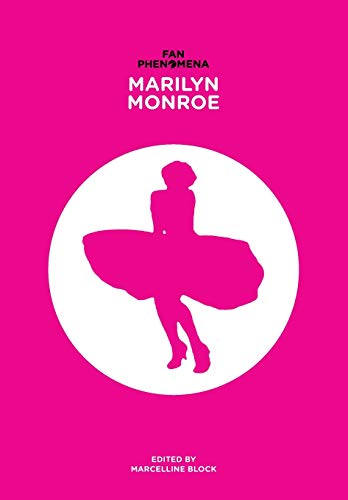
Born Norma Jeane Mortenson, Marilyn Monroe was an actress, singer, and sex symbol whose influence far outlasted her short life. These essays explore representations of Monroe in visual culture by looking at the ways she is reimagined in visual art and considering how her posthumous appearance and image are appropriated in current advertisements.
Die Inhaltsangabe kann sich auf eine andere Ausgabe dieses Titels beziehen.
Über die Autorin bzw. den Autor
Marcelline Block is a lecturer in history at Princeton University. She is the editor of Intellect's World Film Locations books on Paris, Las Vegas, Marseilles, and Prague.
Auszug. © Genehmigter Nachdruck. Alle Rechte vorbehalten.
Marilyn Monroe
By Marcelline BlockIntellect Ltd
Copyright © 2015 Intelect Ltd
All rights reserved.
ISBN: 978-1-78320-201-0All rights reserved.
Contents
Introduction MARCELLINE BLOCK, 5—17,
Timeless Stars and New Spotlights: Looking for Marilyn Monroe on YouTube LOUISE ELALI AND CATALINA VÁZQUEZ, 18—27,
Fan Appeciation no.1 Mary Sims, Owner of the Immortal Marilyn Fan Club Website, 28—35,
Lipstick Thespians: Being Marilyn Monroe after 5 August 1962 ROSS SLOAN, 36—53,
Marilyn is a Smash: Depicting the Icon in NBC's Musical Drama RAQUEL CRISÓSTOMO, 54—65,
Fan Appeciation no.2 Gianandrea Colombo Marilyn Monroe Italia, 66—73,
Marilyn Monroe's Dresses ANGE WEBB, 74—85,
Fan Appeciation no.3 Scott Fortner, The Marilyn Monroe Collection, 86—93,
Performing Marilyn: Michelle Williams in My Week with Marilyn ZACHARY INGLE, 94—105,
Fan Appeciation no.4 Tara Hanks, author of The MMM Girl, 106—113,
The 50th Anniversary of Marilyn Monroe's Death SCOTT FORTNER, 114—l19,
Fan Appeciation no.5 Melinda Mason, the 'Marilyn Geek', 120—123,
Fan Appeciation no.6 Marijane Gray, 124—129,
Editor and Contributor Biographies, 130—133,
CHAPTER 1
Timeless Stars and New Spotlights: Looking for Marilyn Monroe on Youtube
Louise Elali and Catalina Vázquez
I've never fooled anyone. I've let people fool themselves. They didn't bother to find out who and what I was. Instead they would invent a character for me. I wouldn't argue with them. They were obviously loving somebody I wasn't.
- Marilyn Monroe
In 2006, PBS aired a Marilyn Monroe tribute entitled Marilyn Monroe: Still Life (dir. Gail Levin), which featured American feminist icon Gloria Steinem, who, in her 1986 essay 'The Woman Who Will Not Die', wrote that,
It has been nearly a quarter of a century since the death of a minor American actress named Marilyn Monroe [...] If you add her years of movie stardom to the years since her death, Marilyn Monroe has been a part of our lives and imaginations for nearly four decades. That's a very long time for one celebrity to survive in a throwaway culture [...] As I write this, she is still better known than most living movie stars, most world leaders, and most television personalities.
More recently, University of Southern California Professor Emerita Lois W. Banner, author of MM-Personal: From the Private Archive of Marilyn Monroe (2010) as well as Marilyn: The Passion and the Paradox (2012), wrote an opinion piece in the 5 August 2012 edition of the Los Angeles Times, which marked the 50th anniversary of Marilyn's death:
Why is Marilyn Monroe still an American icon 50 years after her death? She is end-lessly analyzed in films and biographies; her image appears on T-shirts and posters; her popularity is reflected in the 52,000 Marilyn-related items for sale on EBay. My USC students, fixated on contemporary pop culture, know little about 1950s Hollywood stars, except for Monroe. Like everyone else, they puzzle over her death, respond to her beauty, and recognize her paradoxes: the ur-blond child-woman, the virgin-whore of the Western imagination.
Although it might be hard to explain why, it is rather easy to observe that Marilyn's figure is still as effervescent and inspiring as it has ever been, even more than half a century after her death. In a culture where celebrities are 'the flavour of the week'-they quickly gain exposure, become over-exposed and fade away – Marilyn seems to be more popular than ever, and interest in her persona has only increased. She is often featured in an array of mass media productions, from television shows like NBC's Smash (Theresa Rebeck, 2012-13) and its 'duelling Marilyns' – as the press referred to Ivy Lynn (Megan Hilty) and Karen Cartwright (Katharine McPhee), the show's characters competing to play Marilyn in a Broadway musical based on her life – to Michelle Williams's lauded and award-winning portrayal of the star in the film My Week with Marilyn (Simon Curtis, 2011), to countless books about her life [Editor's note: see the chapters elsewhere in this volume about Smash and My Week with Marilyn]. The test of time has proven that Marilyn Monroe is a lasting cultural icon as the quintessential sex symbol and pop culture motif.
Indeed, Marilyn remains avibrant presence in the world's collective memory to this day. However, what does she truly represent? While alive, Monroe longed to be seen as a serious actress, but she struggled with the reality that many people only saw her as a sex symbol. One of her famous quotes describes her thoughts on this matter: 'Some people have been unkind. If I say I want to grow as an actress, they look at my figure. If I say I want to develop, to learn my craft, they laugh. Somehow they don't expect me to be serious about my work.'
While she was indeed a successful and highly recognized actress, it seems she felt that her on-screen roles did not match her off-screen strength and individuality. Although she often played the stereotypical dumb blonde in comedy films, she ultimately wanted to be accepted as a serious artist, taking steps like moving to New York so she could participate in classes on the Method, a highly disciplined acting technique based on the great Russian director Constantin Stanislavski. In her final interview, Marilyn pleaded: 'Please don't make me a joke. End the interview with what I believe. I don't mind making jokes, but I don't want to look like one [...] I want to be an artist, an actress with integrity.'
Although biographies state that Marilyn herself never managed to change the public's perception of her while she was alive, she now has many fans that defend both her on-screen and off-screen personalities with incredible fervour, which piqued our curiosity. We wanted to find out if these fans have managed to do the very thing that Marilyn could not accomplish during her lifetime: are they indeed turning Marilyn's iconic sex symbol image into that of a serious actress? In order to answer this question, we decided to take a look at the 'Marilyn Monroe' videos posted on YouTube. More specifically, we wanted to see what Marilyn-related content is being produced and reproduced these days, and equally as important, what that means for the star's time-honoured iconic image.
YouTube is the perfect social media platform to use in addressing such a socially complex query. Not only is it currently the third most visited site in the world (coming in just after Facebook and Google), but this social media-based website seriously gives way to a growing bottom-up, user-generated approach to creating stardom, since it is guided by 'prosumption' – a word used to describe the users' role in social media platforms by combining 'production' and 'consumption'. On the other hand, it still incorporates the long-standing Hollywood star system. In this newer and visual space, Hollywood idols reclaim their status as timeless icons that are found, re-found, reintroduced and re-created within this cluster of participant-led content.
Like Marilyn Monroe herself, the YouTube platform came from left field, unexpected but explosive, and, like the beloved actress that demanded and gained attention from people all over the world, this social media tool we have all come to know – and in many ways, depend upon – has requested and received participation from all kinds of people.
It has become truly...
„Über diesen Titel“ kann sich auf eine andere Ausgabe dieses Titels beziehen.
Suchergebnisse für Fan Phenomena: Marilyn Monroe

Beispielbild für diese ISBN
Fan Phenomena: Marilyn Monroe
Anbieter: PBShop.store US, Wood Dale, IL, USA
Verkäuferbewertung 5 von 5 Sternen

PAP. Zustand: New. New Book. Shipped from UK. Established seller since 2000. Artikel-Nr. CX-9781783202010
Beispielbild für diese ISBN
Fan Phenomena: Marilyn Monroe
Anbieter: PBShop.store UK, Fairford, GLOS, Vereinigtes Königreich
Verkäuferbewertung 5 von 5 Sternen
PAP. Zustand: New. New Book. Shipped from UK. Established seller since 2000. Artikel-Nr. CX-9781783202010
Neu kaufen
EUR 30,08
EUR 4,92 Versand
Versand von Vereinigtes Königreich nach USA
Versand von Vereinigtes Königreich nach USA
Anzahl: 15 verfügbar
Beispielbild für diese ISBN
Fan Phenomena
Anbieter: Majestic Books, Hounslow, Vereinigtes Königreich
Verkäuferbewertung 4 von 5 Sternen

Zustand: New. pp. 164 Illus. (Col.). Artikel-Nr. 96417228
Neu kaufen
EUR 30,17
EUR 7,68 Versand
Versand von Vereinigtes Königreich nach USA
Versand von Vereinigtes Königreich nach USA
Anzahl: 1 verfügbar
Beispielbild für diese ISBN
Fan Phenomena: Marilyn Monroe
Anbieter: Romtrade Corp., STERLING HEIGHTS, MI, USA
Verkäuferbewertung 5 von 5 Sternen
Zustand: New. This is a Brand-new US Edition. This Item may be shipped from US or any other country as we have multiple locations worldwide. Artikel-Nr. ABBB-185400
Beispielbild für diese ISBN
Fan Phenomena: Marilyn Monroe
Anbieter: Ria Christie Collections, Uxbridge, Vereinigtes Königreich
Verkäuferbewertung 5 von 5 Sternen
Zustand: New. In English. Artikel-Nr. ria9781783202010_new
Neu kaufen
EUR 39,22
EUR 11,07 Versand
Versand von Vereinigtes Königreich nach USA
Versand von Vereinigtes Königreich nach USA
Anzahl: Mehr als 20 verfügbar
Beispielbild für diese ISBN
Fan Phenomena: Marilyn Monroe
Anbieter: Revaluation Books, Exeter, Vereinigtes Königreich
Verkäuferbewertung 5 von 5 Sternen
Paperback. Zustand: Brand New. 164 pages. 9.25x6.50x0.50 inches. In Stock. Artikel-Nr. __1783202017
Neu kaufen
EUR 58,69
EUR 11,82 Versand
Versand von Vereinigtes Königreich nach USA
Versand von Vereinigtes Königreich nach USA
Anzahl: 1 verfügbar