
Verwandte Artikel zu Body and Mind in Motion: Dance and Neuroscience in...
Inhaltsangabe
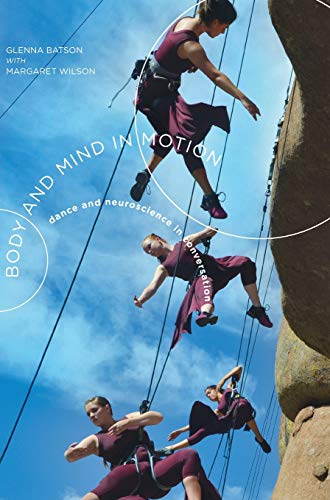
Western contemporary dance and body-mind education have engaged in a pas de deux for more than four decades. The rich interchange of somatics and dance has altered both fields, but scholarship that substantiates these ideas through the findings of twentieth-century scientific advances has been missing. This book fills that gap and brings to light contemporary discoveries of neuroscience and somatic education as they relate to dance. Drawing from the burgeoning field of “embodiment”―itself an idea at the intersection of the sciences, humanities, arts, and technologies―Body and Mind in Motion highlights the relevance of somatic education within dance education, dance science, and body-mind studies.
Die Inhaltsangabe kann sich auf eine andere Ausgabe dieses Titels beziehen.
Über die Autorinnen und Autoren
Glenna Batson is a movement muse, educator, and mentor who has worked at the intersection of dance, movement science, and somatic education for more than five decades.
Margaret Wilson is associate professor at the University of Wyoming.
Auszug. © Genehmigter Nachdruck. Alle Rechte vorbehalten.
Body and Mind in Motion
Dance and Neuroscience in Conversation
By Glenna Batson, Margaret WilsonIntellect Ltd
Copyright © 2014 Intellect Ltd
All rights reserved.
ISBN: 978-1-78320-179-2All rights reserved.
Contents
Acknowledgments, ix,
Preface, xiii,
Introduction, 1,
Chapter 1: From Conversation to Discourse, 13,
Chapter 2: Locating the Discourse, 33,
Chapter 3: Researching Dance Cognition – Task-Based Analysis, 53,
Chapter 4: Reframing Embodiment, 71,
Chapter 5: Enaction, 87,
Chapter 6: Attention and Effort, 101,
Chapter 7: Training Attention – The Somatic Learning Environment, 125,
Chapter 8: Somatic Approaches to Training Attention: Part I, 139,
Chapter 9: Somatic Approaches to Training Attention: Part II, 155,
Chapter 10: Vertical Dance: Re-Experiencing the World, 173,
Chapter 11: The Road Forward, 185,
Appendix I: Primer on Balance, 195,
Appendix II: Explorations and Reflections, 203,
Index, 227,
CHAPTER 1
From Conversation to Discourse
... the aesthetic has long located art within a science of sensuous knowing. What neurosciences and cognitive science are now adding to the equation is this exciting possibility of getting closer to the underlying conditions fueling that ancient relationship. ...
(Barbara Stafford 2011: 1)
Overview
At the turn of the twenty-first century, dancers found themselves in a new and compelling conversation around the topic of cognitive processes within dancemaking. The now-global dialogue on embodied cognition has opened a space for artistic and scientific exchange. Synthetic theories and emergent technologies have charted new methodologies for researching embodied processes. The results have been tangible, spawning new movement creation, bolstering interdisciplinary studies and benefiting sociocultural, scientific and medical sectors. This chapter highlights early formal initiatives in this exchange.
Focusing in ...
• What topics are dancers currently researching within embodied cognition?
• What exchanges are happening globally in research, choreography and pedagogy?
• What forms are these exchanges taking – artistic, scientific, social/humanitarian, synthetic and beyond?
• What benefits have been realized in different sociocultural and technological sectors?
• What potential obstacles to future development merit our attention?
Experiential prelude
From where do you draw choreographic inspiration outside of dance praxis? How do you work with other fields of study, social networks and digital or other technologies to enhance your growth and development, personally and professionally? Where do you locate your work within history and historicity, from conservation (archiving) at one end to preservation (sustainability) at the other?
Create a 'mind map' – a graphic drawing of your tree of knowledge. Are you surprised by the results? Make a list of words that embrace embodied cognition in dancemaking. Now consider these questions: Where are you positioned within this conversation? What challenges do you see within the conversation and exchange? In what ways is dance influencing perspectives on embodiment in science or other disciplines?
Open-sourced dance
'May you live in interesting times' is a colloquial Chinese proverb containing within it the paradox of opportunity and curse. These times are interesting, indeed. Today, globalization and technology are driving a culture of continuous innovation. The message (overt or covert) is a call to constantly change. Within western post-modern dance, this spirit of innovation is a potent modus operandi. The processes of dancemaking have been likened to an irrepressible 'evolutionary urge' (Mason 2009: 27), struggling to thrive through complex processes of selection and variation. One major difference exists, however: Compared to the actual process of Darwinian evolution, the timeline is sped up exponentially.
As various trends continue to shape the evolution of dance, the threat of ossification and extinction loom. Tension exists between preserving the past and future survival (Lansdale 2005). Over the last century, dance has made an enormous impact on social capital and community cohesion. Meta-analyses have shattered the perception of dance as an esoteric, elite discipline devoted solely to art making (Guetzkow 2002; Mitchell, Innoue and Blumenthal 2002; Reid 2011; Burns 2007).
Paradoxically, the impact of continuous innovation offers the promise of sustainability in dance. Simultaneously, it demands that dancers lead 'hybrid lives', (Risner 2012: 185). One emblem of survival has been the thrust towards open-sourced knowledge and interdisciplinarity. Relational and cooperative in its ethos (Warburton 2011), dance largely has challenged single discipline hegemony (Melrose 2009). Throughout the last half of the twentieth century particularly, dancers sourced from everywhere for inspiration and artistic development (Borgdorff 2009). Collaborations have ramified into a system with many interacting parts offering multiple possibilities for connection (Stafford 2011). Dancers engaged in cross-disciplinary, multi-disciplinary, trans-disciplinary, post -disciplinary and even anti-disciplinary collaborations (Liu 2010; Burt 2009). These were remarkable for their heterogeneity, diversity, originality (Borgdorff 2009: 3, 13) and debatable success (Liu 2010). Interdisciplinarity within dance implies that projects have enough body and momentum to survive a contextual flash-in-the-pan. After all, sourcing in dance is not only a matter of acquiring knowledge, but also embodying knowledge through dynamical movement processes.
The exchange around cognitive processes in dancemaking is of particular interest. In the last two decades, dance has captured the imagination of many scientists interested in embodiment and cognition, exceeding that of other movement studies (gymnastics, sports or martial arts, for example). Interest in embodied cognition has stretched across a wider spectrum of domains, such as cognitive and affective neuroscience, phenomenology, neuropsychology, human movement science and digital technology. Discourses on embodiment have proliferated and cross-pollenated. Dancemakers now can source from a growing number of sub-disciplines and knowledge bases heretofore unrecognized and inaccessible (Figure 1.1).
Science and its supporting technologies offer dance a unique lens through which to examine dancemaking; dance likewise offers science a dynamic laboratory for investigation. Novel research threads and artistic collaborations have emerged (Bläsing, Puttke and Schack, 2010; Reynolds, Jola and Pollick 2012; Gehm, Husemann, and von Wilcke 2007). Exchanges are co-creating new methodologies, new platforms for exchange and new spaces for discussion and design. The engagement generates new questions in building and sharing competencies (Lapuente 2012; Borgdorff 2009). Whether formal or informal, this engagement has engendered new ideas that bridge across creative processes and research outcomes (Barnard and deLahunta 2011). Two decades of exchange have sown the seeds of new research that is both applied (praxis-based) and praxis-driven (Borgdorff 2006; Bläsing et al. 2012; deLahunta, Clarke and Barnard 2012).
The engagement offers mutual inspiration, affirmation and perhaps, confirmation to an understanding of embodied cognitive processes within dance....
„Über diesen Titel“ kann sich auf eine andere Ausgabe dieses Titels beziehen.
Suchergebnisse für Body and Mind in Motion: Dance and Neuroscience in...

Beispielbild für diese ISBN
Body and Mind in Motion : Dance and Neuroscience in Conversation
Anbieter: Better World Books Ltd, Dunfermline, Vereinigtes Königreich
Verkäuferbewertung 5 von 5 Sternen

Zustand: Good. Former library copy. Pages intact with minimal writing/highlighting. The binding may be loose and creased. Dust jackets/supplements are not included. Includes library markings. Stock photo provided. Product includes identifying sticker. Better World Books: Buy Books. Do Good. Artikel-Nr. 58113491-20
Gebraucht kaufen
EUR 41,74
EUR 5,93 Versand
Versand von Vereinigtes Königreich nach USA
Versand von Vereinigtes Königreich nach USA
Anzahl: 2 verfügbar
Beispielbild für diese ISBN
Body and Mind in Motion
Anbieter: PBShop.store UK, Fairford, GLOS, Vereinigtes Königreich
Verkäuferbewertung 5 von 5 Sternen
HRD. Zustand: New. New Book. Shipped from UK. Established seller since 2000. Artikel-Nr. CX-9781783201792
Neu kaufen
EUR 55,43
EUR 5,95 Versand
Versand von Vereinigtes Königreich nach USA
Versand von Vereinigtes Königreich nach USA
Anzahl: 15 verfügbar
Beispielbild für diese ISBN
Body and Mind in Motion
Anbieter: PBShop.store US, Wood Dale, IL, USA
Verkäuferbewertung 5 von 5 Sternen
HRD. Zustand: New. New Book. Shipped from UK. Established seller since 2000. Artikel-Nr. CX-9781783201792
Beispielbild für diese ISBN
Body and Mind in Motion: Dance and Neuroscience in Conversation
Anbieter: Ria Christie Collections, Uxbridge, Vereinigtes Königreich
Verkäuferbewertung 5 von 5 Sternen
Zustand: New. In English. Artikel-Nr. ria9781783201792_new
Neu kaufen
EUR 71,04
EUR 13,39 Versand
Versand von Vereinigtes Königreich nach USA
Versand von Vereinigtes Königreich nach USA
Anzahl: Mehr als 20 verfügbar
Foto des Verkäufers
Batson, G: Body and Mind in Motion
Anbieter: moluna, Greven, Deutschland
Verkäuferbewertung 5 von 5 Sternen
Zustand: New. Drawing from the burgeoning field of embodiment - itself an idea at the intersection of the sciences, humanities, arts and technologies - Body and Mind in Motion highlights the relevance of somatic education within dance education, dance science and body-. Artikel-Nr. 596838525
Neu kaufen
EUR 60,25
EUR 48,99 Versand
Versand von Deutschland nach USA
Versand von Deutschland nach USA
Anzahl: Mehr als 20 verfügbar