
Verwandte Artikel zu Fan Phenomena: Batman
Inhaltsangabe
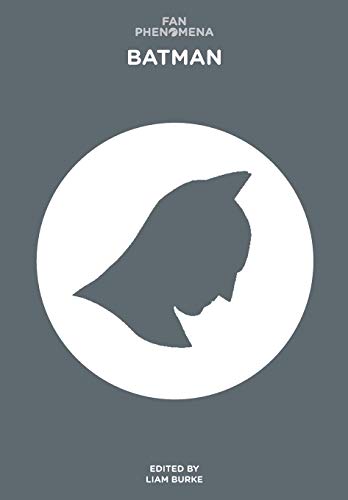
Fan Phenomena: Batman explores the worldwide devotion to the Dark Knight, from his inauspicious beginnings on the comic book page to the cult television series of the 1960s and the critically acclaimed films and video games of today. Considering everything from convention cosplay to fan fiction that imagines the Joker as a romantic lead, the essays here acknowledge and celebrate fan responses that go far beyond the scope of the source material. As the gatekeepers of Gotham, fans have stood vigil over a seventy year mythos, ensuring their icon has become more than a comic book character, cartoon hero or big-screen star. As this collection will demonstrate, through the enthusiasm of fans Batman has become what Ra's al Ghul predicted in Batman Begins: a legend. Packed with revealing interviews from all corners of the fan spectrum including Paul Levitz, who rose through the ranks of fan culture to become the president of DC Comics, and Michael E. Uslan, who has executive produced every Batman adaptation since Tim Burton's blockbuster in 1989, as well as film reviewers, academics, movie buffs, comic store clerks and costume-clad convention attendees, this book is sure to be a bestseller in Gotham City, as well as everywhere Bruce Wayne's alter-ego continues to intrigue and inspire.
Die Inhaltsangabe kann sich auf eine andere Ausgabe dieses Titels beziehen.
Über die Autorin bzw. den Autor
Liam Burke is a media studies lecturer at Swinburne University of Technology in Melbourne, Australia.
Auszug. © Genehmigter Nachdruck. Alle Rechte vorbehalten.
Batman
By Liam BurkeIntellect Ltd
Copyright © 2013 Intellect Ltd
All rights reserved.
ISBN: 978-1-78320-017-7All rights reserved.
Contents
Foreword WILL BROOKER,
Introduction LIAM BURKE,
A Fan's History LIAM BURKE,
FAN APPRECIATION (INTERVIEWS),
Paul Levitz,
E. Paul Zehr,
Josh Hook and Kendal Coombs,
Dennis and Elijah Vasquez,
Travis Langley,
Seamus Keane,
Kim Newman,
Michael E. Uslan,
Contributor Biographies,
Image Credits,
Part 1: BEING BATMAN,
Dark Hero Rising: How Online Batman Fandom Helped Create a Cultural Archetype JENNIFER DONDERO,
Heroes with Issues: Fan identification with Batman ANNA-MARIA COVICH,
Being Batman: From Board Games to Computer Platforms ROBERT DEAN,
Part 2: EMBRACING THE KNIGHT,
The Passive Case: How Warner Bros. Employed Viral Marketing and Alternate Reality Gaming to Bring Fandom Back into the Culture Industry MARGARET ROSSMAN,
Canonizing The Dark Knight: A Digital Fandom Response TIM POSADA,
Mad, Bad, and Dangerous to Know: The Nolan/Ledger Joker, Morality, and the Hetero-Fictional Fan Impulse LESLIE MCMURTRY,
Part 3: REPRESENTATIONS OF FANDOM,
Inspired, Obsessive and Nostalgic: The Facets of Fandom in 'Beware the Gray Ghost' JOSEPH DAROWSKI,
Villainous Adoration: The Role of Foe as Fan in Batman Narratives TONY W. GARLAND,
Part 4: INSPIRATIONS AND ADAPTATIONS,
"Elementary, My Dear Robin!": Batman, Sherlock Holmes, and Detective Fiction Fandom MARC NAPOLITANO,
Dark Knight Triumphant: Fandom, Hegemony and the Rebirth of Batman on Film WILLIAM PROCTOR,
CHAPTER 1
Batman: A Fan's History
Liam Burke
[right arrow] It is difficult to remember a time when the world was not in a perpetual state of Batmania. Today, Batman is the basis of a blockbuster film series, a universally-adored video game and a host of other media and entertainments. However, like the penniless Wayne in The Dark Knight Rises (Nolan, 2012), the character has experienced many hard times, including the post-World War II decline in superhero popularity, the camp hangover from the television series that prevented mainstream audiences from recognizing the renewed complexity of the comics, and the mid-1990s' film adaptations that pushed the Dark Knight back into the neon mire he had spent decades clambering out from. Yet, throughout, Batman fans have kept their hero at the forefront of popular culture. What follows is a history of Batman from the point of view of those who know him best – the fans.
It is appropriate, given the important role that fans have played over Batman's undulating career that the creation of the hero was, in itself, an act of fandom. Bob Kane was already an established cartoonist in 1939 when editor Vin Sullivan tasked him with creating a character to complement DC Comics' already soaring star, Superman. Kane's first attempt was the red unitard and domino mask-wearing 'Bird-Man', but fortunately for Kane (and legions of future Bat-fans), the cartoonist had enlisted the services of his frequent collaborator Bill Finger. On Finger's advice Bird-Man's colour scheme shifted to black, his mechanical wings became a scalloped cape and his domino mask morphed into a cowl with pointed ears – Batman was born.
Kane shrewdly ensured that his was the only name that would appear on Batman comics, even if he was not directly involved in the particular issue's creation. This saw many of the early innovators of Batman, including Finger, go unrecognized during the first decades of the hero's comic book career. Kane was equally as astute when it came to developing Batman, with the cartoonist, and his growing roster of ghost artists, cherry picking from the best of pulp magazines, novels and the movies. Before Batman, Zorro featured a nobleman who emerged from a subterranean lair to right wrongs, while another darkly-clad pulp hero, The Shadow, was one of the first to use theatricality and deception 'to cloud men's minds'. Stretching back before pulp magazines, Batman's analytical mind is indebted to the world's first 'greatest detective', Sherlock Holmes, while the hero's style draws on cinematic representations of Dracula and the caped killer of the 1930 mystery film, The Bat Whispers (dir. Roland West). This defanged Dracula with The Shadow's style and Zorro's toys may have 'borrowed' from pulp, film and literary precursors, but Batman blossomed in the superhero genre. By serving as the golden halo around the darker figure of the bat, Superman's example lifted the nocturnal vigilante out of the gutter and placed him into a new genre populated by modern mythological icons.
Batman mirrored Superman's success, and quickly annexed anthology series Detective Comics following his introduction in issue 27 (cover date May 1939). By Spring of 1940, Batman was rewarded with his own, eponymous title. Like Detective Comics #27, the cover found the hero swinging across a canary yellow sky, but now Batman was not alone, and he even seemed to be smiling. Premiering one month earlier, Batman's sidekick was introduced as 'The Sensational Character Find of 1940 ... Robin the Boy Wonder'. Since his addition, Robin has divided fans, with many suggesting that his Technicolour presence diminished the gritty realism of the Dark Knight, while others argue that he introduced necessary warmth to Batman's brooding austerity. However, in this era before letters pages, fanzines and the Internet, approval was registered through sales, and as Bill Boichel notes, Robin 'was an immediate success and so widely imitated that the junior sidekick emerged as one of the most important terms in the superhero lexicon'.
In the same month Robin was introduced, Nazis troops invaded Denmark and Norway on their march across Europe. Soon comic books, many of which were produced by first generation European immigrants, joined the war effort; Duncan and Smith identify 61 patriotic comic book heroes that appeared between 1940 and 1944 including The Shield, The Patriot and most famously Captain America. The covers of Batman and Detective Comics during this time found the dynamic duo also doing their part. For instance, in Batman #15 (February–March 1943) the hero waived his 'no guns' policy by taking hold of a smoking machine gun as a caption reminded readers to 'Keep Those Bullets Flying! Keep On Buying War Bonds & Stamps!' However, Batman did not engage as fully in the conflict as those heroes created in direct response to the war effort. In Batman Unmasked, Will Brooker identifies only four stories during this period that can be described as 'war-related'. Nonetheless, the war effort had a massive impact on Batman fandom, as many servicemen who missed home comforts and sought escape became avid comic book readers.
While the comic book Batman may not have fully engaged in the jingoism of the time, the hero's first foray into cinema certainly did. Batman (dir. Lambert Hillyer) was a low-budget serial produced by Columbia in 1943. With hyperbolic chapter titles like 'Slaves of the Rising Sun', the 15-part adventure saw the dynamic duo tackling Axis criminal Dr. Daka. Although posters promised that Batman would be '[a] hundred times more thrilling on the screen!' the serial's paltry budget, with its ill-fitting costumes, cheap effects and basic sets, could not have met reader expectations. However, as Brooker explains, the serial was designed 'to reach a wider viewing public than the established Batman fan-base'. This desire to target a...
„Über diesen Titel“ kann sich auf eine andere Ausgabe dieses Titels beziehen.
Suchergebnisse für Fan Phenomena: Batman

Beispielbild für diese ISBN
Fan Phenomena: Batman
Anbieter: ThriftBooks-Atlanta, AUSTELL, GA, USA
Verkäuferbewertung 5 von 5 Sternen

Paperback. Zustand: Good. No Jacket. Pages can have notes/highlighting. Spine may show signs of wear. ~ ThriftBooks: Read More, Spend Less. Artikel-Nr. G1783200170I3N00
Gebraucht kaufen
EUR 9,38
Versand gratis
Versand innerhalb von USA
Versand innerhalb von USA
Anzahl: 1 verfügbar
Beispielbild für diese ISBN
Fan Phenomena â" Batman
Anbieter: WorldofBooks, Goring-By-Sea, WS, Vereinigtes Königreich
Verkäuferbewertung 5 von 5 Sternen
Paperback. Zustand: Very Good. The book has been read, but is in excellent condition. Pages are intact and not marred by notes or highlighting. The spine remains undamaged. Artikel-Nr. GOR008096132
Gebraucht kaufen
EUR 5,53
EUR 6,51 Versand
Versand von Vereinigtes Königreich nach USA
Versand von Vereinigtes Königreich nach USA
Anzahl: 1 verfügbar
Foto des Verkäufers
Fan Phenomena: Batman
Anbieter: MusicMagpie, Stockport, Vereinigtes Königreich
Verkäuferbewertung 5 von 5 Sternen
Zustand: Very Good. 1785510453. 7/31/2026 3:07:33 PM. Artikel-Nr. U9781783200177
Gebraucht kaufen
EUR 8,87
EUR 6,38 Versand
Versand von Vereinigtes Königreich nach USA
Versand von Vereinigtes Königreich nach USA
Anzahl: 1 verfügbar
Beispielbild für diese ISBN
Fan Phenomena: Batman
Anbieter: PBShop.store US, Wood Dale, IL, USA
Verkäuferbewertung 5 von 5 Sternen
PAP. Zustand: New. New Book. Shipped from UK. Established seller since 2000. Artikel-Nr. CX-9781783200177
Beispielbild für diese ISBN
Fan Phenomena: Batman
Anbieter: PBShop.store UK, Fairford, GLOS, Vereinigtes Königreich
Verkäuferbewertung 5 von 5 Sternen
PAP. Zustand: New. New Book. Shipped from UK. Established seller since 2000. Artikel-Nr. CX-9781783200177
Neu kaufen
EUR 30,02
EUR 4,84 Versand
Versand von Vereinigtes Königreich nach USA
Versand von Vereinigtes Königreich nach USA
Anzahl: 15 verfügbar
Beispielbild für diese ISBN
Fan Phenomena: Batman
Anbieter: Majestic Books, Hounslow, Vereinigtes Königreich
Verkäuferbewertung 4 von 5 Sternen

Zustand: New. pp. 224. Artikel-Nr. 58223580
Neu kaufen
EUR 27,47
EUR 7,56 Versand
Versand von Vereinigtes Königreich nach USA
Versand von Vereinigtes Königreich nach USA
Anzahl: 1 verfügbar
Beispielbild für diese ISBN
FAN PHENOMENA: BATMAN - FAN PHENOMENA
Anbieter: Romtrade Corp., STERLING HEIGHTS, MI, USA
Verkäuferbewertung 5 von 5 Sternen
Zustand: New. This is a Brand-new US Edition. This Item may be shipped from US or any other country as we have multiple locations worldwide. Artikel-Nr. ABBB-185398
Beispielbild für diese ISBN
Fan Phenomena: Batman
Anbieter: Ria Christie Collections, Uxbridge, Vereinigtes Königreich
Verkäuferbewertung 5 von 5 Sternen
Zustand: New. In English. Artikel-Nr. ria9781783200177_new
Neu kaufen
EUR 38,59
EUR 13,13 Versand
Versand von Vereinigtes Königreich nach USA
Versand von Vereinigtes Königreich nach USA
Anzahl: Mehr als 20 verfügbar