
Verwandte Artikel zu A Good Life to the End: Taking Control of Our Inevitable...
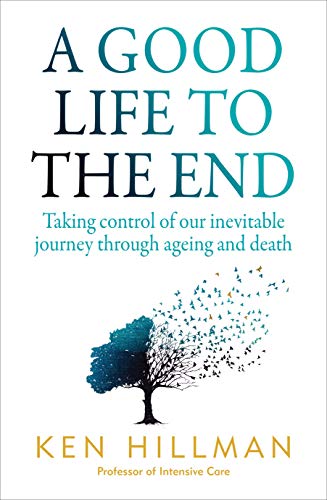
A Good Life to the End: Taking Control of Our Inevitable Journey Through Ageing and Death - Softcover
Inhaltsangabe
A huge majority of people at the end of their lives want to die at home, but only a small number manage to do this. This vital book asks why. Many of us have experienced an elderly loved one coming to the end of their life in a hospital&;over-treated, infantilized, and, worst of all, facing a death without dignity. Families are being herded into making decisions that are not to the benefit of the patient. Professor Ken Hillman has worked in intensive care since its inception. But he is appalled by the way the ICU has become a place where the frail, soon-to-die, and dying are given unnecessary operations and life-prolonging treatments without their wishes being taken into account. A Good Life to the End will embolden and equip us to ask about the options that doctors in hospital should offer us but mostly don't. It lets us know that there are other, gentler options for patients and their loved ones that can be much more sympathetic to the final wishes of most people facing the end of their lives. An invaluable support for the elderly as well as their families, and a rallying cry for anyone who's had to witness the unnecessary suffering of a loved one, A Good Life to the End will spark debate, challenge the status quo, and change lives.
Die Inhaltsangabe kann sich auf eine andere Ausgabe dieses Titels beziehen.
Über die Autorin bzw. den Autor
Ken Hillman is an intensive care specialist who is a Professor of Intensive Care at the University of New South Wales, the Foundation Director of The Simpson Centre for Health Services Research, and a member of the Ingham Institute of Applied Medical Research. He is a pioneer in the introduction of the Medical Emergency Team. He is the author of Vital Signs.
Auszug. © Genehmigter Nachdruck. Alle Rechte vorbehalten.
10
Diagnostic dilemmas
I was dealing with two angry colleagues who were arguing about who ‘owned’ Madeleine, the eighty-five-year-old woman in bed 4. Both specialists had heavy clinical workloads and were manoeuvring to avoid yet another admission. Ironically, the patient was an elderly woman for whom little more could be done in terms of curative treatment. Maybe that was the reason why neither wanted the patient admitted under them.
Madeleine came in with shortness of breath on the back of a long history of smoking. She had been in hospital six times over the last few months, each time for shortness of breath related to her smoking. Unfortunately, you can’t smoke as much as she had for over sixty years without also destroying other organs, including the heart. Accordingly, Madeleine also had some heart failure, contributing to the shortness of breath. The respiratory physician responsible for the lung damage as a result of smoking was heatedly point-ing out that her chest X-ray had changes consistent with heart failure. The cardiologist acknowledged that but said the main reason for the shortness of breath was the underlying damage caused by the smoking. Possession is everything in this game and the patient had already been admitted under the respiratory representative. He was stuck with her. This occurs every day. It drives the emergency doctors to despair, as it is left to them to negotiate the conflict.
Diseases in conventional medicine are divided into acute and chronic. Acute refers to the rapidity of onset, not the severity of the disease. Chronic refers to the underlying and usually permanent state of health. An example is the acute onset of a urinary tract infection in an elderly frail person who has multiple chronic problems, such as heart failure, dementia and chronic kidney disease. The acute problem is easily fixed: anti-biotics and maybe intravenous fluid. However, the real problem, the major determinant of the patient’s prognosis, is the underlying chronic health status.
The seventeenth-century English physician Thomas Sydenham described acute diseases as those when God is the author and chronic
as those that originate in ourselves. Medicine concentrates on the acute disease. It is what doctors are trained to treat. The acute diagnosis is how the hospital classifies the admission; it is the basis for financial reimbursement; it is the source of most of the data on which we plan our health systems. This ignores the fact that, in the case of the urinary tract infection in the elderly, the chronic health status is not only the underlying reason for the acute disease but will ultimately determine the outcome. Unfortunately, many elderly frail people are usu-ally admitted to acute hospitals for management of their so-called acute condition. In an age of medical specialisation, and because most elderly admissions have multiple problems, a patient could be admitted under any of four or five medical subspecialists. It is a largely random process and may vary at every admission.
Like most elderly patients being admitted to hospital, Madeleine had a host of age-related conditions, or co-morbidities, that did not lend themselves to the concept of a single diagnosis. She also had diabetes, high blood pressure and chronic renal failure. Other age-related chronic health problems include coronary heart disease, elevated cholesterol, gastro-oesophageal regurgitation syndrome, osteoarthritis, previous stroke, heart failure, peripheral vascular disease and chronic respiratory problems. They are such a common feature of the patients admitted to our intensive care unit that we are considering having a stamp made so all we have to do is tick those that are present. The conditions all have medical labels but are almost invariably only found as one ages. Unfortunately, these underlying conditions do not lend themselves well to treatment by conventional medicine. Our hospitals increasingly contain these elderly frail patients. However, very few doctors honestly explain the impact of ageing and that, despite the miracles of modern medicine, little can be done in terms of a cure. But a lot could be done in terms of honest discussion about the patient’s chronic health status and its probable course.
The concept of a diagnosis is integral to the teach-ing and practice of medicine. We ‘reach’ or ‘make’ a diagnosis. ‘What is wrong with me, Doctor?’ has to be unravelled by finding a diagnosis. The assumption is that there is a single diagnosis. Medical practice is based on the concept of the diagnosis. Getting to the bottom of a patient’s problem is one of the prime goals of clinical practice. It is based on taking a history from the patient; performing a physical examination; establishing differential diagnoses; performing inves-tigations; and, bingo, there it is—the diagnosis!
Diseases are classified by the World Health Organization using the International Classification of Diseases (ICD). It is used in over 110 countries, in forty-two languages, for clinical and epidemi-ological purposes as well as for health management, reimbursement and resource allocation. The ICD codes for diseases, signs and symptoms, abnormal findings, complaints, social circumstances and external causes of injury and disease, allowing for more than 14,400 different codes and up to 16,000 codes when optional sub-classifications are added.
In an attempt to make sense of diagnoses, the concept of diagnosis-related groups (DRGs) was introduced by the Yale School of Management in the early 1980s. The fact that it was developed by a School of Management should have rung alarm bells. It was developed to identify ‘products’ that hospitals provide. A specific diagnosis was assigned a certain reimbursement. If you managed the diagnostic problem quickly and without complications you would make a profit. If not, you didn’t. It was a financial tool, not a medical one, constructed around reducing health care to costs. Nevertheless, the system is used universally.
In theory, it made sense. If you were having a simple procedure, such as the removal of your gall bladder, there was a specific diagnostic label: cholecystectomy. If the operation went well, you were reimbursed a certain amount. If there were complications which increased hospital stay, it was your fault and you bore the cost.
It’s not surprising that a whole industry has developed, aimed at ‘gaming’ the system. A diagnos-tic system built on such flexible interpretations means the accountants can designate the most financially advantageous label. Hospitals with the most imaginative accountants are seen as the better hospitals. For example, savvy hospitals with the right accountants can improve their mortality from pneumonia by recoding such deaths under other labels such as ‘respiratory failure’ or ‘sepsis’. Similarly, certain labels attracting less funding are recoded under high reimbursement codes. This has nothing to do with the delivery of good health care.
Madeleine didn’t fit this accountancy-based construct and neither do most of the elderly patients who are currently admitted to our hospitals. The population of patients in the developed world has changed and the concept of a single diagnosis is less relevant. People are now living longer and have an increasing number of chronic age-related conditions. No matter how the ICD and DRG systems have modified their codes, the name or number or even collections of names and numbers do not accurately define the clinical state of the patient. The list of...
„Über diesen Titel“ kann sich auf eine andere Ausgabe dieses Titels beziehen.
Suchergebnisse für A Good Life to the End: Taking Control of Our Inevitable...

Beispielbild für diese ISBN
A Good Life to the End: Taking Control of Our Inevitable Journey Through Ageing and Death
Anbieter: WorldofBooks, Goring-By-Sea, WS, Vereinigtes Königreich
Verkäuferbewertung 5 von 5 Sternen

Paperback. Zustand: Very Good. The book has been read, but is in excellent condition. Pages are intact and not marred by notes or highlighting. The spine remains undamaged. Artikel-Nr. GOR012218257
Gebraucht kaufen
EUR 13,43
EUR 6,62 Versand
Versand von Vereinigtes Königreich nach USA
Versand von Vereinigtes Königreich nach USA
Anzahl: 1 verfügbar
Beispielbild für diese ISBN
A Good Life to the End: Taking control of our inevitable journey through ageing and death
Anbieter: World of Books (was SecondSale), Montgomery, IL, USA
Verkäuferbewertung 5 von 5 Sternen
Paperback. Zustand: Good. A huge majority of people at the end of their lives want to die at home, but only a small number manage to do this. This vital book asks why. Many of us have experienced an elderly loved one coming to the end of their life in a hospital - over-treated, infantilised and, worst of all, facing a death without dignity. Families are being herded into making decisions that are not to the benefit of the patient. Professor Ken Hillman has worked in intensive care since its inception. But he is appalled by the way the ICU has become a place where the frail, soon-to-die and dying are given unnecessary operations and life-prolonging treatments without their wishes being taken into account.A Good Life to the End will embolden and equip us to ask about the options that doctors in hospital should offer us but mostly don't. It lets us know that there are other, gentler options for patients and their loved ones that can be much more sympathetic to the final wishes of most people facing the end of their lives. An invaluable support for the elderly as well as their families, and a rallying cry for anyone who's had to witness the unnecessary suffering of a loved one, A Good Life to the End will spark debate, challenge the status quo and change lives. Artikel-Nr. 00103828734
Gebraucht kaufen
EUR 33,60
Versand gratis
Versand innerhalb von USA
Versand innerhalb von USA
Anzahl: 1 verfügbar