
Verwandte Artikel zu Diane Arbus: Documents
Inhaltsangabe
A groundbreaking publication offering insight into the critical conversations and misconceptions around this unrivaled artist’s works.
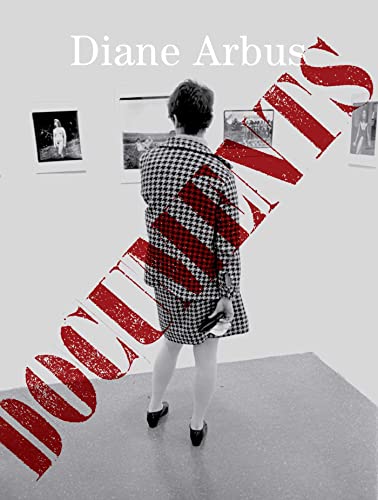
Best known for her penetrating images exploring what it means to be human, Diane Arbus is a pivotal and singular figure in American postwar photography. Arbus’s black-and-white photographs demolish aesthetic conventions and upend all certainties. Both lauded and criticized for her photographs of people deemed “outsiders,” Arbus continues to be a lightning rod for a wide range of opinions surrounding her subject matter and approach. Critics and writers have described her work as “sinister” and “appalling” as well as “revelatory,” “sincere,” and “compassionate.” Through an assemblage of articles, criticism, and essays from 1967 to the present, Diane Arbus Documents charts the reception of the revolutionary photographer's work.
Illuminating fifty years of evolution in the field of art criticism, Documents provides a new template for understanding the work of any formidable artist. Organized in eleven sections that focus on major exhibitions and significant events emerging from Arbus’s work, as well as on her methods and intentions, the sixty-nine facsimiles of previously published articles and essays––an archive by all accounts––trace the discourse on Arbus, contextualizing her inimitable oeuvre. Supplemented by an annotated bibliography of more than six hundred entries and a comprehensive exhibition history, Documents serves as an important resource for photographers, researchers, art historians, and art critics, in addition to students of art criticism and the interested reader alike.
Die Inhaltsangabe kann sich auf eine andere Ausgabe dieses Titels beziehen.
Über die Autorin bzw. den Autor
Diane Arbus (1923–1971) is one of the most original and influential artists of the twentieth century. She studied photography with Berenice Abbott, Alexey Brodovitch, and Lisette Model and had her first published photographs appear in Esquire in 1960. In 1963 and 1966 she was awarded John Simon Guggenheim Fellowships and was one of three photographers whose work was the focus of New Documents, John Szarkowski’s landmark exhibition at The Museum of Modern Art, New York, in 1967. Arbus’s depictions of couples, children, female impersonators, nudists, New York City pedestrians, suburban families, circus performers, and celebrities, among others, span the breadth of the postwar American social sphere and constitute a diverse and singularly compelling portrait of humanity.
Max Rosenberg is an art historian and associate director of research and exhibitions at David Zwirner. He has worked on exhibitions on Josef Albers, Philip-Lorca diCorcia, William Eggleston, Paul Klee, Giorgio Morandi, Raymond Pettibon, and Christopher Williams, among others. He has received grants and awards from the Dedalus Foundation, the Fulbright Program, the German Academic Exchange Service (DAAD), and the Getty Research Institute, among other institutions. His writings have appeared in various publications, including The Getty Research Journal, Texte zur Kunst, and Art in America.
Lucas Zwirner is Head of Content at David Zwirner where he oversees all aspects of gallery publishing through books, web, video, and the podcast Dialogues. Lucas has contributed texts to gallery publications, including Rudolf Zwirner: Give Me the Now (2021), A Balthus Notebook (2020), and Tell Me Something Good: Artist Interviews from The Brooklyn Rail (2017). At David Zwirner Books, he began the ekphrasis series, dedicated to publishing short texts on visual culture by artists and writers, rarely available in English. He has also written on contemporary art and literature for publications The Drift and The Paris Review, and translated books from German and French. His translation of Elias Cannetti's The Profession of the Poet is forthcoming in I WANT TO KEEP SMASHING MYSELF UNTIL I'M WHOLE: An Elias Canetti Reader, edited by Josh Cohen and published by Farrar, Straus and Giroux.
Since founding Fraenkel Gallery in San Francisco in 1979, Jeffrey Fraenkel has presented almost 400 exhibitions about photography and its interconnections to the other arts.
Von der hinteren Coverseite
Known for her evocative portraits, Diane Arbus is a pivotal figure in American postwar photography. Undeniably striking, Arbus’s black-and-white photographs capture a unique gaze. Criticized as well as lauded for her photographs of people deemed “outsiders,” Arbus continues to attract a diversity of opinions surrounding her subjects and practice. Critics and writers have described her work as “sinister” and “appalling” as well as “revelatory,” “sincere,” and “compassionate.” In the absence of Arbus’s own voice, art criticism and cultural shifts have shaped the language attributed to her work.
Organized in eleven sections that focus on major exhibitions and significant events in Arbus’s life, as well as on her practice and her subjects, the seventy facsimiles of articles and essays––an archive by all accounts––trace the discourse on Diane Arbus, contextualizing her hugely successful oeuvre. Also with an annotated bibliography of more than six hundred entries and a comprehensive exhibition history, Documents serves as an important resource for photographers, researchers, art historians, and art critics, in addition to students of art criticism and the interested reader alike.
Auszug. © Genehmigter Nachdruck. Alle Rechte vorbehalten.
Hilton Als, The New Yorker, 1995
“The harsh light Arbus leveled at her subjects—‘A Jewish giant at home with his parents in the Bronx, N.Y. 1970,’ ‘Loser at a Diaper Derby, N.J. 1967’—was an indication not of a merciless vision but of her desire to enhance her subjects’ presence, which she considered ‘terrific.’ Like [Andy] Warhol, Arbus used the dumbest language possible to describe her work. As though she were a child always on the verge of rebuilding the universe through found objects—or found images—no language but the most rudimentarily joyful could describe the moment when she happened upon the signposts leading toward her self-expression.”
Cindy Nemser, The Feminist Art Journal, 1973
“She makes us squirm, twist, avert our eyes, sneak a look back, giggle, and ultimately convince ourselves that our state is infinitely superior to the one that confronts us in the black and white two-dimensional image before us.”
Susan Sontag, The New York Review of Books, 1973
“Arbus’s work shows people who are pathetic, pitiable, as well as horrible, repulsive, but it does not arouse any compassionate feelings. Nevertheless, despite this evident coolness of tone, the photographs have been scoring moral points all along with critics. For what might be judged as their dissociated and naïve point of view, the photographs have been praised for their candor and for an unsentimental empathy with their subjects. What is actually their aggressiveness toward the public has been turned into a moral accomplishment: that the photographs don’t allow the viewer any distance from the subject.”
Peter Schjeldahl, The New Yorker, 2005
“Sontag’s notorious attack on Arbus, in an essay from 1973 that became the linchpin of her book ‘On Photography’ (1977), passed one test of great criticism. It asked the right question—about photography’s claim to be a full-fledged and legitimate art—at the right time, when Arbus’s work had advanced that claim with unprecedented force. Otherwise, the essay is an exercise in aesthetic insensibility, eschewing description of the art for aspersions, often pithy, on the artist’s ethics. ‘Arbus’s interest in freaks expresses a desire to violate her own innocence,’ Sontag wrote. That’s probably right, but it’s incidental to photographs that transcend the interest and desire of their maker and, in the process, shatter the idea of ‘freaks’ as a stable category of experience. Sontag rushed to rescue the idea.
“‘In photographing dwarfs, you don’t get majesty and beauty,’ she insisted. ‘You get dwarfs.’ She noted with bemusement that in Arbus’s pictures people who are ‘pathetic, pitiable, as well as repulsive’ look ‘cheerful, self-accepting, matter-of-fact.’ She wondered, ‘Do they know how grotesque they are? It seems as if they don’t.’ It’s an interesting complaint, suggesting that people who look or behave in unusual ways merit sympathy from the rest of us only if they visibly assent to our disgust with them. Saying such things shows how far Sontag was willing to go in a campaign that aimed, beyond Arbus, at photography itself.”
Hilton Kramer, The New York Times, 1972
“The power of these pictures does not derive from their subject matter alone. It derives in equal degree from the style Miss Arbus developed to deal with them. This style, which lavishes an extraordinary candor and sympathy on her subjects, is almost an antistyle. It is the complete opposite of the kind of photographic vision that aspires to ‘catch’ a split-second moment of glimpsed experience and ‘frame’ it forever in a perfect composition.”
Holland Cotter, The New York Times, 2016
“Street photography was the advanced mode of the day, and practitioners like Lee Friedlander, William Klein, Helen Levitt and Garry Winogrand all claimed New York City as their turf. So did Lisette Model, a Viennese émigré with whom Arbus studied briefly. Ms. Model didn’t give her student much formal advice. Instead, she urged her to ease away from the stance of objectivity then considered requisite for serious photography and instead establish emotional relationships with her subjects, and see where that would take her. For Arbus, the advice was heaven-sent. It gave her permission to be the artist she was ready to be.”
Germaine Greer, The Guardian, 2005
“What [Arbus’s] work does not show is compassion, which is something to be grateful for. If I’d thought Arbus felt compassion for me, I’d have socked her.”
„Über diesen Titel“ kann sich auf eine andere Ausgabe dieses Titels beziehen.
Suchergebnisse für Diane Arbus: Documents

Foto des Verkäufers
Documents
Verlag:
David Zwirner Books / Fraenkel, New York / San Francisco, 2022
ISBN 10: 1644230658
ISBN 13: 9781644230657
Gebraucht
Hardcover
Erstausgabe
Anbieter: Between the Covers-Rare Books, Inc. ABAA, Gloucester City, NJ, USA
Verkäuferbewertung 5 von 5 Sternen

Hardcover. Zustand: Near Fine. First Edition. First edition. Foreword by Jeffrey Fraenkel and Lucas Zwirner. Editor's note by Max Rosenberg. Quarto. 495pp. Binding slightly cocked and spine base with one very gentle bump, very near fine. Artikel-Nr. 627589
Gebraucht kaufen
EUR 55,01
EUR 4,90 Versand
Versand innerhalb von USA
Versand innerhalb von USA
Anzahl: 1 verfügbar
Foto des Verkäufers
Diane Arbus: Documents
Verlag:
David Zwirner, New York, 2022
ISBN 10: 1644230658
ISBN 13: 9781644230657
Gebraucht
Hardcover
Anbieter: Argosy Book Store, ABAA, ILAB, New York, NY, USA
Verkäuferbewertung 5 von 5 Sternen
hardcover. Zustand: fine. ARBUS, Diane (illustrator). Illustrated abundantly throughout. 496 pages, 69 texts in facsimile. 4to, silver metallic pictorial boards with exposed spine, as issued. New York: David Zwirner, (2022). Rear cover lightly scratched, else a fine copy. Artikel-Nr. 326127
Gebraucht kaufen
EUR 59,60
EUR 5,34 Versand
Versand innerhalb von USA
Versand innerhalb von USA
Anzahl: 1 verfügbar
Foto des Verkäufers
Diane Arbus: Documents
Verlag:
David Zwirner, New York, 2022
ISBN 10: 1644230658
ISBN 13: 9781644230657
Gebraucht
Hardcover
Anbieter: Argosy Book Store, ABAA, ILAB, New York, NY, USA
Verkäuferbewertung 5 von 5 Sternen
hardcover. Zustand: very good(+). Diane Arbus (illustrator). Illustrated abundantly throughout. 496 pages, 69 texts in facsimile. 4to, silver metallic pictorial boards with exposed spine, as issued. New York: David Zwirner, (2022). Covers scuffed but still a very good(+) copy, internally fine. Artikel-Nr. 330364
Gebraucht kaufen
EUR 68,76
EUR 5,34 Versand
Versand innerhalb von USA
Versand innerhalb von USA
Anzahl: 1 verfügbar
Beispielbild für diese ISBN
Diane Arbus Documents
Anbieter: PBShop.store UK, Fairford, GLOS, Vereinigtes Königreich
Verkäuferbewertung 5 von 5 Sternen
HRD. Zustand: New. New Book. Shipped from UK. Established seller since 2000. Artikel-Nr. HU-9781644230657
Neu kaufen
EUR 62,53
EUR 13,22 Versand
Versand von Vereinigtes Königreich nach USA
Versand von Vereinigtes Königreich nach USA
Anzahl: 15 verfügbar
Foto des Verkäufers
Diane Arbus - Documents.
Verlag:
Davis Zwirner Books, New York 2022., 2022
ISBN 10: 1644230658
ISBN 13: 9781644230657
Gebraucht
Hardcover
Erstausgabe
Anbieter: Antiquariat Carl Wegner, Berlin, B, Deutschland
Verkäuferbewertung 5 von 5 Sternen
Hardcover. 28 x 21,5 cm. Original hardback with silver covers. Front- and backcover are scratched a bit; book ist still wrapped in foil (unused copy). 496 pages. Outside with some traces of use, inside as good as new. -- Bitte Portokosten außerhalb EU erfragen! / Please ask for postage costs outside EU! / S ' il vous plait demander des frais de port en dehors de l ' UE! // Bitte beachten Sie auch unsere Fotos! / Please also note our photos! / Veuillez noter nos photos -- Genießen Sie den goldenen Herbst! Machen Sie es sich gemütlich , bei uns finden Sie sicher die passende Lektüre! -- Wir kaufen Ihre werthaltigen Bücher! Foto. Artikel-Nr. 619768
Gebraucht kaufen
EUR 67,00
EUR 9,00 Versand
Versand von Deutschland nach USA
Versand von Deutschland nach USA
Anzahl: 1 verfügbar
Beispielbild für diese ISBN
Diane Arbus Documents
Anbieter: Majestic Books, Hounslow, Vereinigtes Königreich
Verkäuferbewertung 4 von 5 Sternen

Zustand: New. pp. 496. Artikel-Nr. 402228641
Neu kaufen
EUR 79,05
EUR 7,75 Versand
Versand von Vereinigtes Königreich nach USA
Versand von Vereinigtes Königreich nach USA
Anzahl: 3 verfügbar
Beispielbild für diese ISBN
Diane Arbus Documents
Anbieter: Kennys Bookstore, Olney, MD, USA
Verkäuferbewertung 5 von 5 Sternen
Zustand: New. 2022. 1st Edition. Hardcover. . . . . . Books ship from the US and Ireland. Artikel-Nr. V9781644230657
Neu kaufen
EUR 90,91
EUR 9,35 Versand
Versand innerhalb von USA
Versand innerhalb von USA
Anzahl: 1 verfügbar
Beispielbild für diese ISBN
DIANE ARBUS DOCUMENTS
Anbieter: Speedyhen, Hertfordshire, Vereinigtes Königreich
Verkäuferbewertung 5 von 5 Sternen
Zustand: NEW. Artikel-Nr. NW9781644230657
Neu kaufen
EUR 60,58
EUR 48,89 Versand
Versand von Vereinigtes Königreich nach USA
Versand von Vereinigtes Königreich nach USA
Anzahl: 1 verfügbar
Beispielbild für diese ISBN
Diane Arbus Documents
Anbieter: Ria Christie Collections, Uxbridge, Vereinigtes Königreich
Verkäuferbewertung 5 von 5 Sternen
Zustand: New. In English. Artikel-Nr. ria9781644230657_new
Neu kaufen
EUR 87,15
EUR 22,68 Versand
Versand von Vereinigtes Königreich nach USA
Versand von Vereinigtes Königreich nach USA
Anzahl: 1 verfügbar
Foto des Verkäufers
Diane Arbus : Documents
Verlag:
David Zwirner Books ; Fraenkel Gallery, San Francisco, 2022
ISBN 10: 1644230658
ISBN 13: 9781644230657
Gebraucht
Hardcover
Anbieter: Springhead Books, Rochester, Vereinigtes Königreich
Verkäuferbewertung 5 von 5 Sternen
Hardcover. Zustand: Very Good. Through an assemblage of articles, criticism, and essays from 1967 to the present, Diane Arbus Documents charts the reception of the groundbreaking photographer's work and offers comprehensive insight into the critical conversations, as well as misconceptions, around the artist and her work. Illuminating fifty years of evolution in the field of art criticism, Documents provides a new template for understanding the work of this formidable artist. 495 pages : illustrations (some color) ; 28 cm. First edition, first impression. Illustrated boards, slight shelf wear to cover, no inscriptions, tight and square binding. Photographs available on request. All books dispatched same or next working day in robust packaging. Artikel-Nr. 017108
Gebraucht kaufen
EUR 92,05
EUR 21,46 Versand
Versand von Vereinigtes Königreich nach USA
Versand von Vereinigtes Königreich nach USA
Anzahl: 1 verfügbar